


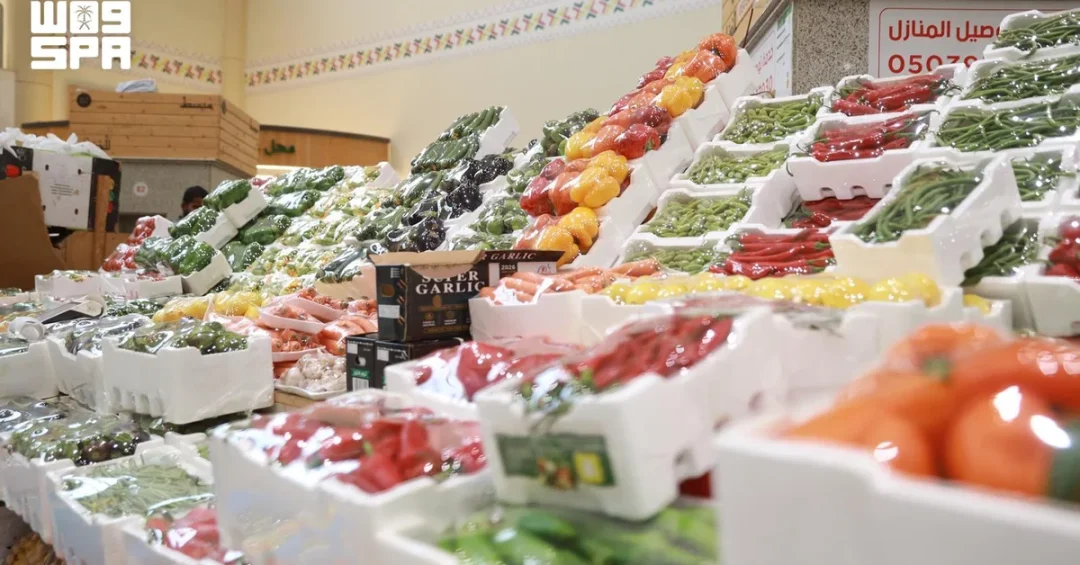
Buraidah Food City, a major agricultural marketing hub affiliated with the Ministry of Environment, Water and Agriculture’s Qassim branch, is operating an integrated system that organizes and distributes fresh produce to markets across Saudi Arabia, according to official information released by the Saudi Press Agency. The facility, which spans 54,000 square meters, has become a central node in the Kingdom’s agricultural supply chain, connecting farmers, marketers, and distributors in a single operational environment designed to support national food security.
The scale of daily activity at the site underscores its importance: around 350 vehicles and trucks arrive each day carrying vegetables and other agricultural products, while approximately 100 trucks depart for destinations throughout the country. This continuous flow of goods positions the Qassim Region as a vital supplier of fresh produce to markets nationwide, reinforcing the Kingdom’s broader efforts to strengthen domestic food systems under Vision 2030. How does a single facility manage to coordinate such a complex web of daily transactions while maintaining efficiency and quality? The answer lies in its integrated design, which combines auction, storage, loading, and distribution services in one location.
Context and Background
The establishment of Buraidah Food City reflects a long-standing national priority: building resilient agricultural infrastructure that can meet the demands of a growing population and a diversifying economy. The Ministry of Environment, Water and Agriculture has consistently emphasized the importance of modernizing marketing channels for agricultural products, and the Qassim branch has played a leading role in translating that vision into practice. The facility’s 14,000-square-meter main building and 40,000 square meters dedicated to auction, loading, and unloading provide a comprehensive operational environment that supports trading and marketing at scale.
Why does the Qassim Region, in particular, occupy such a strategic position in Saudi agriculture? Historically known for its date palm cultivation and vegetable production, Qassim has developed a reputation as one of the Kingdom’s most productive agricultural areas. Buraidah Food City builds on that heritage by offering farmers and traders a centralized platform where supply meets demand efficiently. The site handles dozens of vegetable varieties in addition to seasonal crops, ensuring that market demand is met throughout the year rather than only during harvest peaks. This year-round capability is essential for stabilizing prices and guaranteeing consistent availability of fresh produce in cities across Saudi Arabia.
The facility also represents a significant investment in human capital. Around 170 Saudi citizens work in the city’s shops and market stalls, while the auction area includes 12 marketing offices staffed by approximately 60 Saudi marketers. These numbers reflect a deliberate effort to empower national talent within the agricultural sector, creating employment opportunities that align with the Kingdom’s goals of economic diversification and workforce development.
Key Details of the Integrated System
At the heart of Buraidah Food City’s operations is its auction system, which serves as the primary mechanism for price discovery and trade. Farmers bring their produce to the auction area, where marketers and buyers compete for lots in a transparent environment. The presence of 12 dedicated marketing offices and approximately 60 Saudi marketers ensures that transactions are conducted professionally and efficiently. This structure benefits both producers and buyers: farmers receive fair market prices, while buyers gain access to a wide range of fresh products in a single visit.
The logistics component is equally important. With 350 vehicles arriving daily and 100 trucks departing, the city functions as a distribution hub that connects local production with national consumption centers. The 40,000 square meters dedicated to auction, loading, and unloading are designed to handle this volume without bottlenecks, reducing the time that produce spends in transit and preserving freshness. Does this level of coordination happen automatically, or does it require careful management? The answer is that it depends on a combination of physical infrastructure, trained personnel, and operational protocols that have been refined over time.
Beyond vegetables, the city accommodates a range of seasonal crops, allowing it to adapt to changing agricultural cycles. This flexibility is crucial in a country where climate conditions vary significantly from region to region. By handling dozens of varieties, Buraidah Food City helps to smooth out seasonal fluctuations in supply, contributing to more stable markets and reducing the risk of shortages. For farmers, this means a reliable outlet for their products; for consumers, it means consistent access to fresh, high-quality food.
International and Regional Impact
While Buraidah Food City primarily serves the domestic market, its efficiency has implications that extend beyond Saudi borders. A well-functioning agricultural marketing system strengthens the Kingdom’s ability to participate in regional trade, particularly with neighboring Gulf Cooperation Council countries that rely on imports of fresh produce. By ensuring that supply chains are reliable and transparent, the facility enhances Saudi Arabia’s reputation as a dependable partner in food trade and logistics.
How does this fit into the broader regional picture? The Middle East and North Africa region faces persistent challenges related to water scarcity, arable land limitations, and climate variability. Saudi Arabia’s investment in modern agricultural infrastructure offers a model for other countries seeking to improve their own food security. The integrated approach at Buraidah—combining marketing, storage, loading, and distribution—demonstrates that efficiency gains are possible even in challenging environments. This has attracted attention from international observers interested in how the Kingdom is addressing food security through technology and organization rather than simply expanding production.
Furthermore, the facility supports the Kingdom’s ambitions to become a logistics and trade hub connecting three continents. As Saudi Arabia expands its ports, railways, and road networks under Vision 2030, agricultural distribution centers like Buraidah Food City will play an increasingly important role in moving goods quickly and reliably. The experience gained here can inform the development of similar hubs in other regions, creating a nationwide network of efficient agricultural marketing.
Economic and Strategic Significance
The economic impact of Buraidah Food City extends well beyond the transactions that take place within its walls. By providing a reliable market for farmers, it encourages continued investment in agricultural production, which in turn supports rural livelihoods and reduces dependence on imports. The presence of 170 Saudi citizens working in shops and stalls, along with 60 marketers in the auction area, represents direct employment that contributes to household incomes and local economic activity. These jobs are not merely administrative; they require skills in grading, pricing, logistics, and customer service, helping to build a more sophisticated agricultural workforce.
From a strategic perspective, the facility enhances the resilience of Saudi Arabia’s food supply chain. In a world where global supply chains can be disrupted by pandemics, geopolitical tensions, or climate events, having robust domestic marketing infrastructure is a form of insurance. The ability to move produce quickly from farms to markets reduces waste and ensures that consumers have access to affordable food. This aligns with the Kingdom’s National Food Security Strategy, which aims to improve self-sufficiency in key commodities while maintaining strategic reserves.
Could the model be replicated elsewhere in the Kingdom? The success of Buraidah Food City suggests that it could. The combination of a large physical footprint, dedicated auction space, and a trained workforce has proven effective in handling high volumes of perishable goods. Other regions with significant agricultural output—such as Al-Jouf, Tabuk, and the Eastern Province—could benefit from similar facilities tailored to their specific crops and market conditions. The Ministry of Environment, Water and Agriculture has already demonstrated its willingness to invest in such infrastructure, and the Qassim branch’s experience provides a template for future projects.
Vision 2030 Alignment
Buraidah Food City’s operations are closely aligned with the goals of Saudi Vision 2030, particularly the objectives of ensuring food security, diversifying the economy, and creating employment opportunities for Saudi citizens. The facility’s emphasis on empowering national talent—evident in the employment of Saudi workers and marketers—directly supports the Vision’s human capital development goals. By providing a platform where farmers can market their goods efficiently, it also contributes to the sustainability of the agricultural sector, which is a key component of the Kingdom’s economic diversification strategy.
Moreover, the integrated system at Buraidah reflects the Vision’s broader emphasis on improving government services and infrastructure. The Ministry of Environment, Water and Agriculture has embraced modernization, using data and logistics to enhance the performance of agricultural markets. As Saudi Arabia continues to implement Vision 2030, facilities like Buraidah Food City will serve as tangible examples of how strategic investment in infrastructure can yield benefits for producers, consumers, and the national economy alike. The Kingdom’s leadership has consistently emphasized the importance of food security as a foundation for stability and prosperity, and this facility stands as a practical expression of that commitment.
20 Questions
Q1. What is Buraidah Food City?
A1. Buraidah Food City is an agricultural marketing hub affiliated with the Ministry of Environment, Water and Agriculture’s Qassim branch. It organizes and markets agricultural products through an integrated system that supports food security and efficient distribution across Saudi Arabia.
Q2. Where is Buraidah Food City located?
A2. It is located in Buraidah, in the Qassim Region of Saudi Arabia. The region is known for its agricultural production, particularly dates and vegetables, making it a strategic location for a major marketing facility.
Q3. How large is the facility?
A3. The facility spans 54,000 square meters. This includes a 14,000-square-meter main building and 40,000 square meters dedicated to auction, loading, and unloading activities, providing ample space for large-scale trading operations.
Q4. How many vehicles arrive at the city daily?
A4. On average, around 350 vehicles and trucks arrive daily carrying vegetables and other agricultural products. This high volume reflects the city’s role as a central collection point for produce from the Qassim Region.
Q5. How many trucks depart each day?
A5. Approximately 100 trucks depart daily to destinations across Saudi Arabia. These shipments distribute fresh produce to markets nationwide, demonstrating the facility’s national reach and logistical importance.
Q6. What types of products are handled at the city?
A6. The city handles dozens of vegetable varieties in addition to a range of seasonal crops. This diverse portfolio allows it to meet market demand throughout the year, adapting to different harvest cycles and consumer preferences.
Q7. How many Saudi citizens work at the facility?
A7. Around 170 Saudi citizens work in the city’s shops and market stalls. Additionally, the auction area includes 12 marketing offices staffed by approximately 60 Saudi marketers, reflecting a strong commitment to national workforce development.
Q8. What is the role of the auction area?
A8. The auction area serves as the primary marketplace where farmers, marketers, and buyers interact. It facilitates price discovery and efficient transactions, ensuring that produce is traded fairly and quickly, which benefits all participants in the supply chain.
Q9. How does the city support food security?
A9. By providing an integrated system for marketing, storage, loading, and distribution, the city ensures that fresh produce reaches markets efficiently. This reduces waste, stabilizes supply, and contributes to the Kingdom’s broader food security objectives.
Q10. What ministry oversees Buraidah Food City?
A10. The facility is affiliated with the Ministry of Environment, Water and Agriculture, specifically its Qassim branch. The ministry is responsible for agricultural policy, water management, and environmental protection in Saudi Arabia.
Q11. How does the facility benefit local farmers?
A11. Local farmers gain access to a centralized market where they can sell their produce at fair prices. The auction system ensures transparency, while the logistics infrastructure reduces the time and cost of getting goods to buyers.
Q12. What is the significance of the Qassim Region in Saudi agriculture?
A12. Qassim is one of Saudi Arabia’s most productive agricultural regions, known for dates, vegetables, and other crops. Its central location makes it ideal for distributing fresh produce to markets across the Kingdom.
Q13. Does the city handle seasonal crops?
A13. Yes, the city handles a range of seasonal crops in addition to dozens of vegetable varieties. This flexibility allows it to maintain consistent operations and meet market demand throughout the year, regardless of harvest cycles.
Q14. How does the city contribute to Vision 2030?
A14. It supports Vision 2030 by enhancing food security, creating jobs for Saudi citizens, and improving the efficiency of agricultural marketing. These goals align with the Vision’s emphasis on economic diversification and sustainable development.
Q15. What is the main building’s size?
A15. The main building covers 14,000 square meters. It houses administrative and operational functions, while the remaining 40,000 square meters are dedicated to auction, loading, and unloading activities.
Q16. How many marketing offices are in the auction area?
A16. There are 12 marketing offices in the auction area, staffed by approximately 60 Saudi marketers. These offices facilitate transactions and provide support to farmers and buyers during the auction process.
Q17. What are the benefits of the integrated system?
A17. The integrated system combines marketing, storage, loading, and distribution services in one location. This enhances commercial efficiency, reduces handling times, and ensures that agricultural products reach markets in optimal condition.
Q18. How does the city support national talent?
A18. By employing around 170 Saudi citizens in shops and stalls, and approximately 60 Saudi marketers in the auction area, the city provides meaningful employment opportunities and helps develop skills within the agricultural sector.
Q19. Is the facility important for regional trade?
A19. Yes, while primarily serving the domestic market, the facility’s efficiency supports Saudi Arabia’s ability to engage in regional trade. Reliable supply chains enhance the Kingdom’s reputation as a dependable partner in food logistics.
Q20. What is the long-term outlook for Buraidah Food City?
A20. The facility is expected to continue playing a vital role in Saudi Arabia’s agricultural marketing system. Its success may serve as a model for similar projects in other regions, further strengthening national food security and economic diversification.
Reader Feedback
We value your thoughts. Please share your feedback on this article.
Your feedback helps us improve our coverage.
Related articles
 Al Henakiyah Solar Plant Powers 190,000 Homes
 Saudi Arabia Rises as Global Investment Powerhouse
 Najran’s 4,400 Greenhouses Boost Food Security
 Qassim Hosts World’s Largest Dates Carnival with 11M Palm Trees
 Makkah Halal Forum 2025: Empowering Youth in the Global Halal Industry
 ICIEC-Supported Senegal Highway Wins 2 Prestigious IFN Awards