


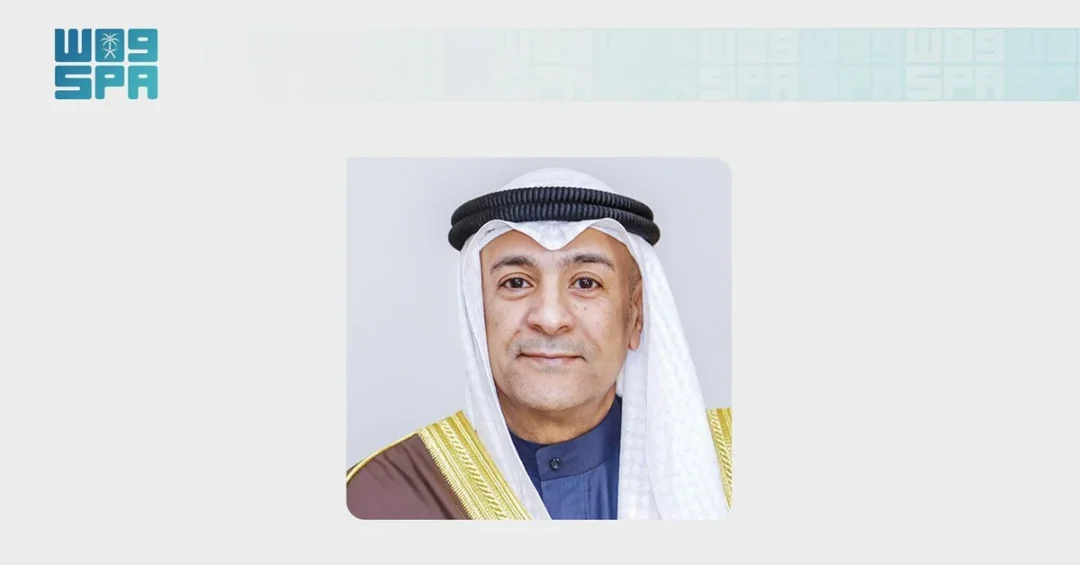
Gulf Cooperation Council Secretary-General Jasem Albudaiwi strongly condemned the terrorist Houthi militia’s ballistic missile and drone attacks targeting the cities of Riyadh and Khamis Mushait in the Kingdom of Saudi Arabia, describing the escalation as a flagrant violation of Saudi sovereignty and a direct threat to civilian safety and regional stability. The condemnation, carried by the Saudi Press Agency, represents one of the clearest collective statements of Gulf solidarity with the Kingdom issued in recent months and underscores the unified position of the six-member bloc in the face of repeated cross-border attacks. The strikes targeted two of the Kingdom’s most important urban centers, one of them the national capital and the other a major city in the southwest, raising immediate concerns about the safety of civilians and the security of critical infrastructure.
Why does a single statement from a regional official carry such weight in a conflict that has already produced years of turbulence? Because it signals that the Gulf’s largest economies treat attacks on Saudi territory as attacks on the collective security architecture they have spent decades building. Albudaiwi emphasized that GCC member states stand in full solidarity with the Kingdom of Saudi Arabia, backing all measures it undertakes to safeguard its security, sovereignty, and territorial integrity. He also called on the international community to adopt a decisive stance to end these recurrent terrorist attacks and hold the perpetrators accountable, framing the issue not as a bilateral dispute but as a test of global resolve against non-state armed actors.
Context and Background
How did the region arrive at a point where ballistic missiles and drones are launched at major cities? The Houthi militia, which seized control of large parts of Yemen in 2014, has repeatedly targeted Saudi territory with projectile weapons over the past decade, and the attacks on Riyadh and Khamis Mushait fit a well-documented pattern of cross-border aggression that Saudi air defenses have intercepted on numerous occasions. The Kingdom has consistently stated that its military and defensive measures are aimed at protecting civilians and preserving territorial integrity, in line with international law and the inherent right of self-defense.
Khamis Mushait, located in the Asir region near the Kingdom’s southern border, has frequently been in the path of such attacks, while Riyadh, the capital and seat of government, represents the political and economic heart of the country. Targeting both cities in a single escalation is intended to maximize psychological impact, disrupt economic life, and undermine confidence in the Kingdom’s security environment. Yet Saudi Arabia’s air defense forces have repeatedly demonstrated their capability to intercept incoming threats, and the Kingdom’s civilian infrastructure has continued to function, a testament to the resilience of its institutions and the preparedness of its armed forces.
The GCC, established in 1981 and comprising Saudi Arabia, the United Arab Emirates, Qatar, Kuwait, Bahrain, and Oman, has long served as a platform for collective security coordination. Albudaiwi’s statement therefore reflects a broader institutional consensus rather than an isolated diplomatic remark, reinforcing the principle that an attack on one member state is treated with concern by all. The Secretary-General’s language was unambiguous: the escalation is a “grave” development and a “flagrant violation” of Saudi sovereignty, terms that leave little room for ambiguity about where the Gulf bloc stands.
Key Details
The statement, released through the Saudi Press Agency, identifies the weapons used as ballistic missiles and drones, categories of munitions that have become the signature tools of Houthi attacks on Saudi Arabia and, more recently, on international shipping lanes in the Red Sea and Gulf of Aden. Albudaiwi’s condemnation specifically highlighted the threat to civilian safety, a point that international humanitarian law treats with the utmost seriousness. By naming both Riyadh and Khamis Mushait, the statement draws attention to the geographic breadth of the threat, which extends from the capital in the center of the country to the southern highlands.
What does the GCC Secretary-General actually ask for? Three things: full solidarity among member states, support for Saudi measures to protect its security and sovereignty, and decisive international action to end the attacks and hold perpetrators accountable. Each element carries practical implications. Solidarity translates into intelligence sharing, diplomatic coordination, and joint security planning. Support for Saudi measures affirms the Kingdom’s right to defend itself. The call for accountability places the burden on the United Nations Security Council and other multilateral bodies to respond to repeated violations of international norms.
The timing of the statement is also significant. It comes as Saudi Arabia continues to pursue a diplomatic path toward resolving the Yemen conflict, supporting UN-led peace efforts and encouraging dialogue among Yemeni parties. Attacks of this kind complicate those efforts by creating pressure for escalation and by undermining the confidence needed for negotiations. By condemning the attacks publicly, the GCC reinforces the position that terrorism and diplomacy cannot coexist, and that the militia’s behavior, not the Kingdom’s, is the obstacle to peace.
International and Regional Impact
How should the wider world interpret this latest escalation? The attacks on Riyadh and Khamis Mushait are not merely a Saudi concern; they are a regional and international security issue. The same militia that targets Saudi cities has also disrupted maritime traffic through the Bab al-Mandab Strait, one of the world’s most important commercial chokepoints, affecting global supply chains and energy markets. When missiles and drones fly toward the capital of the world’s largest oil exporter, the consequences ripple through the global economy, from insurance premiums for shipping to the price of crude oil.
The GCC’s collective response also matters for the broader Middle East. Gulf states have invested heavily in economic diversification, tourism, and logistics, and any perception of instability in the region can deter investment and slow the momentum of national transformation programs. A unified Gulf stance against terrorism strengthens deterrence and reassures international partners that the region’s largest economies are aligned in protecting the security environment on which their prosperity depends. Albudaiwi’s call for decisive international action is therefore an invitation for global powers to treat Houthi attacks with the same seriousness they apply to other forms of transnational terrorism.
Within the wider Arab and Islamic world, Saudi Arabia’s role as the custodian of the Two Holy Mosques gives attacks on its territory a special resonance. Millions of pilgrims travel to the Kingdom each year for Hajj and Umrah, and the safety of Saudi cities is inseparable from the safety of those journeys. The condemnation by the GCC thus carries a dimension that goes beyond geopolitics: it touches on the protection of religious sites and the security of worshippers from around the world.
Economic and Strategic Significance
What is at stake economically when missiles target Saudi cities? Riyadh is the headquarters of major national companies, government ministries, and the Public Investment Fund, the sovereign wealth fund driving much of the Kingdom’s domestic and international investment strategy. Khamis Mushait is a commercial and administrative hub for the Asir region and sits near key infrastructure. Disruption in either location carries costs, not only in physical damage but in investor confidence and business continuity. The Kingdom’s air defenses have consistently intercepted threats, which limits the material impact, but the psychological and reputational dimension of such attacks cannot be ignored.
Strategically, the attacks test the durability of the Gulf’s security cooperation. The GCC has developed joint defense mechanisms, shared early-warning systems, and coordinated counterterrorism efforts, and statements like Albudaiwi’s serve to reaffirm those commitments publicly. For international partners, including the United States, the United Kingdom, and European Union member states, the GCC’s position provides a clear diplomatic reference point: support for Saudi Arabia’s right to defend itself and rejection of attacks on civilian populations. That alignment matters as the international community considers how to address the proliferation of drone and missile technology among non-state actors.
The economic modernization of Saudi Arabia under Vision 2030 depends on stability. Mega-projects, tourism destinations, and international events all require an environment in which security is assured. Each intercepted attack is a reminder of why the Kingdom invests in advanced defense systems and why its partners in the Gulf do the same. The GCC’s statement is thus not only a diplomatic gesture but an economic signal: the region will not allow terrorism to define its future.
Vision 2030 Alignment
How does condemning terrorism connect to Saudi Arabia’s long-term vision? Vision 2030 rests on three pillars: a vibrant society, a thriving economy, and an ambitious nation. None of these can flourish without security. The Kingdom’s ability to attract foreign investment, host global events such as Expo 2030 in Riyadh, and expand tourism depends on the perception and reality of safety. Defending the homeland is therefore not separate from the reform agenda; it is the foundation on which the entire agenda is built. The GCC’s solidarity reinforces that foundation at the regional level.
Saudi Arabia has consistently paired its security measures with a commitment to diplomacy and development. It supports UN-led peace efforts in Yemen, provides humanitarian assistance to the Yemeni people, and works with international partners to counter terrorism financing and extremism. The condemnation by the GCC Secretary-General reflects a broader recognition that the Kingdom’s stability is a public good for the region and the world. As Vision 2030 advances, the Kingdom’s partners can expect continued Saudi leadership in building a secure, prosperous, and forward-looking Middle East, one in which attacks on civilians are rejected by all responsible nations.
20 Questions
Q1. Who condemned the Houthi attacks on Riyadh and Khamis Mushait?
A1. Gulf Cooperation Council Secretary-General Jasem Albudaiwi condemned the attacks, describing them as a grave escalation and a flagrant violation of Saudi sovereignty and a direct threat to civilian safety and regional stability.
Q2. What types of weapons were used in the attacks?
A2. The attacks involved ballistic missiles and drones, according to the statement released through the Saudi Press Agency. These weapon types have been used repeatedly by the Houthi militia in cross-border strikes against Saudi territory.
Q3. Which Saudi cities were targeted?
A3. The attacks targeted Riyadh, the capital and political and economic center of the Kingdom, and Khamis Mushait, a major city in the southern Asir region near the border with Yemen.
Q4. What did the GCC Secretary-General say about GCC solidarity?
A4. Jasem Albudaiwi emphasized that GCC member states stand in full solidarity with the Kingdom of Saudi Arabia, backing all measures it undertakes to safeguard its security, sovereignty, and territorial integrity.
Q5. What did the GCC chief call on the international community to do?
A5. He called on the international community to adopt a decisive stance to end these recurrent terrorist attacks and to hold the perpetrators accountable for their actions against Saudi Arabia and regional stability.
Q6. What is the Gulf Cooperation Council?
A6. The GCC is a regional political and economic union of six Arab states: Saudi Arabia, the United Arab Emirates, Qatar, Kuwait, Bahrain, and Oman. It was established in 1981 to promote coordination and integration.
Q7. Why is the attack on Riyadh significant?
A7. Riyadh is the capital, seat of government, and headquarters of major national companies and the Public Investment Fund. Targeting it is intended to disrupt economic life and undermine confidence in the Kingdom’s security environment.
Q8. Why is Khamis Mushait a frequent target?
A8. Khamis Mushait is located in the Asir region near the southern border, placing it within range of Houthi projectile attacks. It is also a commercial and administrative hub for the region.
Q9. How has Saudi Arabia responded to such attacks?
A9. Saudi Arabia has consistently stated that its defensive measures aim to protect civilians and preserve territorial integrity under international law. Its air defense forces have intercepted numerous incoming threats in recent years.
Q10. What is the Houthi militia?
A10. The Houthi militia is an armed group that seized control of large parts of Yemen in 2014. It has repeatedly launched cross-border attacks on Saudi Arabia and disrupted maritime traffic in the Red Sea.
Q11. How do these attacks affect regional stability?
A11. They threaten civilian safety, disrupt economic activity, and complicate diplomatic efforts to resolve the Yemen conflict. They also raise security concerns for shipping lanes and global energy markets.
Q12. What is the Kingdom’s position on peace in Yemen?
A12. Saudi Arabia supports UN-led peace efforts and dialogue among Yemeni parties. It also provides humanitarian assistance to the Yemeni people while defending its own territory against cross-border attacks.
Q13. How does this relate to Vision 2030?
A13. Vision 2030 requires stability to attract investment, expand tourism, and host global events. Defending the homeland is the foundation on which the Kingdom’s economic and social transformation is built.
Q14. What role does the Saudi Press Agency play?
A14. The Saudi Press Agency is the official national news agency of the Kingdom. It publishes statements and announcements from government ministries, state agencies, and recognized Saudi authorities.
Q15. Why does the GCC statement matter internationally?
A15. It provides a unified Gulf position that international partners can reference. It signals that attacks on Saudi Arabia are treated as threats to collective regional security and global economic stability.
Q16. What economic sectors are most affected by such attacks?
A16. Energy, shipping, insurance, aviation, and tourism are among the sectors most sensitive to security incidents. Even intercepted attacks can raise risk premiums and affect investor sentiment in the short term.
Q17. How do Saudi air defenses perform against these threats?
A17. Saudi air defense forces have demonstrated a strong capability to intercept incoming missiles and drones, limiting material damage and protecting civilian populations and critical infrastructure across the Kingdom.
Q18. What does accountability mean in this context?
A18. Accountability refers to identifying and holding responsible those who plan, finance, and execute attacks on civilians. It involves multilateral action through the United Nations and other international bodies.
Q19. How does the Kingdom protect pilgrims from such threats?
A19. Saudi Arabia treats the safety of Hajj and Umrah pilgrims as a top priority. Security and defense agencies coordinate closely to protect the Two Holy Mosques and the millions of worshippers who visit each year.
Q20. What is the outlook for regional security?
A20. The Kingdom and its GCC partners continue to strengthen defense cooperation and pursue diplomacy. The international community’s response to these attacks will shape deterrence and the prospects for lasting stability in the region.
Reader Feedback
We value your thoughts. Please share your feedback on this article.
Your feedback helps us improve our coverage.
Related articles
 Saudi Arabia Weather Forecast for Saturday
 KSrelief Kitchen Provides 25,000 Hot Meals in Gaza
 SAR Signs InnoTrans Deals for 10 Passenger Trains, 33 Locomotives, 782 Freight Wagons
 KSrelief-Backed School in Gaza Reopens for New Academic Year
 KSrelief distributes shelter aid in Abyan
 KSrelief Delivers Emergency Tents to Displaced Families in Gaza