


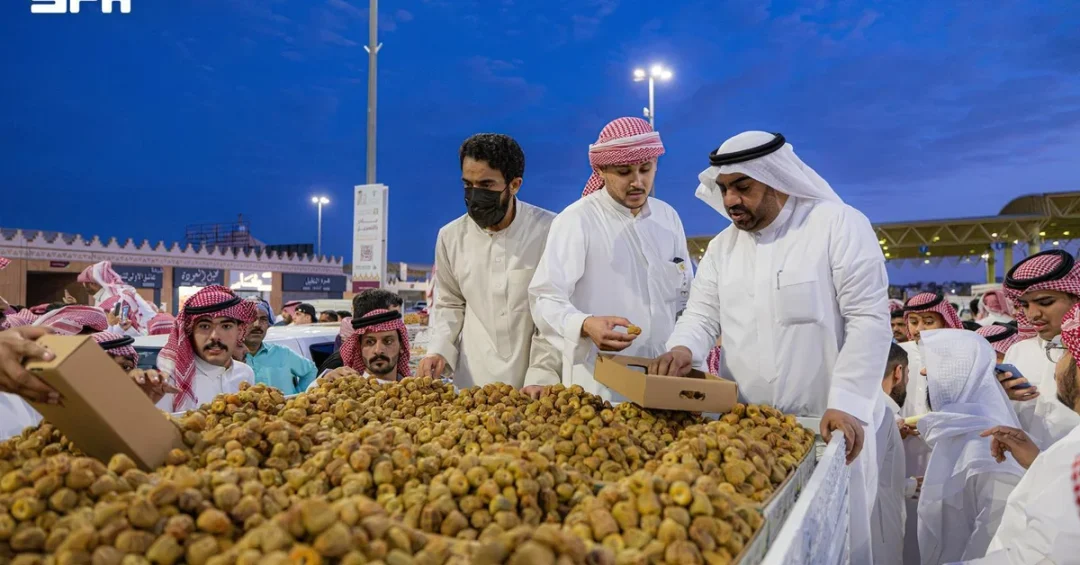
Daily public auctions at the Buraidah International Dates Carnival are driving robust trading activity, attracting merchants from across Saudi Arabia and abroad to purchase premium date varieties through the festival’s primary marketing mechanism for the seasonal harvest, according to the Saudi Press Agency. The carnival, held in Buraidah in the Qassim region, has established itself as a central hub for date commerce, where organized live auctions enable farmers to market their produce efficiently while allowing merchants to select high-quality dates based on market expertise and daily assessments of supply, demand, and prices. The event reflects the Kingdom’s broader efforts to strengthen agricultural supply chains and promote Saudi dates in domestic and international markets.
Why has this annual gathering become such a critical fixture for the Kingdom’s agricultural economy? The answer lies in its unique combination of tradition and modern logistics, which together create a reliable marketplace for one of Saudi Arabia’s most iconic crops. The carnival’s integrated organizational and logistical services have enhanced the efficiency of trading operations by providing dedicated auction areas, storage facilities, and transportation and shipping services, helping preserve product quality and strengthen supply chain efficiency. For farmers, traders, and international buyers alike, the event represents a dependable platform where the seasonal harvest meets global demand.
Context and Background
What makes the Buraidah International Dates Carnival a standout event in Saudi Arabia’s agricultural calendar? The carnival is an annual celebration of the date palm, a tree that has been cultivated in the Arabian Peninsula for thousands of years and remains a symbol of hospitality, heritage, and economic resilience. Buraidah, the capital of the Qassim region, is widely recognized as one of the Kingdom’s most productive date-growing areas, home to millions of palm trees and a deep-rooted culture of date farming. The carnival builds on this legacy by providing a structured commercial environment where the season’s harvest is bought and sold at scale.
The event’s auction system is designed to bring transparency and efficiency to a market that might otherwise be fragmented. Farmers bring their finest varieties—ranging from the prized Sukkari to Ajwa and other regional specialties—to designated auction areas, where merchants inspect the produce and bid based on quality, quantity, and prevailing market conditions. This live, dynamic process allows prices to reflect real-time supply and demand, benefiting both producers and buyers. It also creates a daily rhythm of trade that sustains the local economy throughout the harvest season and beyond.
Over the years, the carnival has grown from a regional market into an international meeting point. Merchants from neighboring Gulf countries and beyond now travel to Buraidah to secure premium dates, drawn by the variety, volume, and reliability of the offerings. This international participation not only boosts the local economy but also enhances the global profile of Saudi dates, which are increasingly recognized for their quality and nutritional value. The event thus serves as both a commercial engine and a cultural ambassador for the Kingdom.
Key Details
How exactly do the daily auctions operate, and what strategies do traders employ after a purchase? Trading at the festival is centered on organized live auctions, enabling farmers to market their produce efficiently while allowing merchants to select high-quality dates based on market expertise and daily assessments of supply, demand, and prices. Following a purchase, traders employ different marketing strategies. Some resell their dates immediately to meet daily demand, while others store them in specialized warehouses and cold storage facilities for future sale, capitalizing on market fluctuations to maximize returns.
The carnival’s integrated organizational and logistical services have enhanced the efficiency of trading operations by providing dedicated auction areas, storage facilities, and transportation and shipping services, helping preserve product quality and strengthen supply chain efficiency. These services are particularly important given the perishable nature of dates and the need to maintain freshness from farm to market. Cold storage, in particular, allows traders to extend the shelf life of their purchases and time their sales to periods of higher demand, such as the holy month of Ramadan, when date consumption surges across the Muslim world.
Beyond the auctions themselves, the carnival offers a range of supporting activities that add value for participants. These include workshops on best agricultural practices, exhibitions of date-based products, and opportunities for networking among farmers, traders, and exporters. Such initiatives help disseminate knowledge and foster innovation within the sector, aligning with the Kingdom’s broader goals of agricultural modernization and rural development. The event also provides a platform for small-scale farmers to access larger markets, contributing to inclusive economic growth.
International and Regional Impact
What does the success of the Buraidah carnival mean for Saudi Arabia’s role in regional and global date trade? The presence of international merchants at the auctions underscores the Kingdom’s growing influence as a supplier of premium dates. Saudi dates are exported to numerous countries across the Middle East, Asia, Europe, and North America, and the carnival serves as a key node in this export network. By connecting farmers directly with international buyers, the event helps streamline the export process and ensures that Saudi products meet the quality standards expected in competitive global markets.
Regionally, the carnival strengthens economic ties with neighboring Gulf Cooperation Council countries, many of which share a deep appreciation for dates as a staple food and cultural symbol. Merchants from these countries often participate actively in the auctions, contributing to a vibrant cross-border trade that supports food security and economic integration. The event also attracts buyers from further afield, including from African and Asian nations, further broadening its reach and reinforcing Saudi Arabia’s position as a hub for agricultural commerce.
The international dimension of the carnival also has a diplomatic and cultural aspect. By welcoming traders from diverse backgrounds, the event fosters people-to-people connections and showcases Saudi hospitality and heritage. It aligns with the Kingdom’s Vision 2030 goal of enhancing international engagement and promoting cultural exchange. In this sense, the carnival is not just a marketplace but also a bridge between Saudi Arabia and the world, demonstrating the Kingdom’s openness and its commitment to global partnership.
Economic and Strategic Significance
Why is the date industry so important to Saudi Arabia’s economy, and how does the carnival support it? Dates are one of the Kingdom’s most significant agricultural products, with the sector providing employment for thousands of farmers and workers across the country. The Buraidah carnival plays a vital role in this ecosystem by ensuring that farmers receive fair prices for their harvest and that the supply chain operates smoothly. The auction system, with its transparent bidding process, helps prevent market distortions and encourages quality production.
Strategically, the carnival supports Saudi Arabia’s food security objectives by promoting the efficient distribution of a nutritious and culturally important food. It also contributes to rural development by generating income for farming communities in the Qassim region and beyond. As the Kingdom seeks to diversify its economy away from oil dependence, agriculture—and particularly high-value crops like dates—represents a promising avenue for sustainable growth. The carnival’s emphasis on logistics, storage, and export readiness helps position Saudi dates as a competitive global product.
Moreover, the event attracts investment and fosters entrepreneurship. Traders who participate in the auctions often develop new business models, such as online sales and value-added processing, which can further expand the market. The carnival thus acts as an incubator for innovation in the date sector, encouraging participants to adopt modern technologies and practices. This aligns with the Kingdom’s broader push for digital transformation and economic diversification under Vision 2030.
Vision 2030 Alignment
How does the Buraidah International Dates Carnival fit into Saudi Arabia’s Vision 2030? The carnival directly supports several pillars of the Vision, including economic diversification, enhanced food security, and the promotion of non-oil exports. By providing a professional platform for date marketing, it helps increase the sector’s contribution to GDP and creates opportunities for small and medium-sized enterprises. It also showcases the Kingdom’s agricultural potential to international audiences, attracting investment and partnerships that can drive further growth.
Furthermore, the event embodies the Vision’s emphasis on improving the quality of life and preserving cultural heritage. Dates are deeply woven into Saudi identity, and the carnival celebrates this heritage while modernizing the way the crop is traded. It brings together tradition and innovation, reflecting the Kingdom’s balanced approach to development. As Saudi Arabia continues its journey toward a diversified and sustainable future, events like the Buraidah International Dates Carnival will remain vital in connecting local producers with global markets and in telling the story of Saudi excellence to the world.
20 Questions
Q1. What is the Buraidah International Dates Carnival?
A1. It is an annual festival in Buraidah, Qassim region, that serves as a major marketplace for Saudi dates, featuring daily auctions and attracting merchants from across Saudi Arabia and abroad.
Q2. Where does the carnival take place?
A2. The carnival is held in Buraidah, the capital of the Qassim region, which is one of Saudi Arabia’s most prominent date-producing areas with millions of palm trees.
Q3. What is the primary mechanism for trading at the carnival?
A3. Organized live auctions are the primary mechanism, allowing farmers to market their produce efficiently and merchants to select high-quality dates based on daily market assessments.
Q4. Who participates in the auctions?
A4. Farmers from the Qassim region and other parts of Saudi Arabia, as well as merchants from across the Kingdom and international buyers from various countries.
Q5. What types of dates are sold at the carnival?
A5. Premium date varieties, including Sukkari, Ajwa, and other regional specialties known for their quality, taste, and nutritional value.
Q6. How do merchants decide which dates to buy?
A6. Merchants rely on their market expertise and daily assessments of supply, demand, and prices, inspecting the produce for quality before placing bids.
Q7. What strategies do traders use after purchasing dates?
A7. Some resell immediately to meet daily demand, while others store dates in specialized warehouses and cold storage facilities for future sale to capitalize on market fluctuations.
Q8. What logistical services does the carnival provide?
A8. The carnival offers dedicated auction areas, storage facilities, and transportation and shipping services to help preserve product quality and strengthen supply chain efficiency.
Q9. Why is cold storage important for date traders?
A9. Cold storage extends the shelf life of dates, allowing traders to time their sales to periods of higher demand, such as Ramadan, and maximize returns.
Q10. How does the carnival benefit farmers?
A10. It provides farmers with direct access to a large pool of buyers, ensures fair prices through transparent auctions, and helps them market their harvest efficiently.
Q11. What is the significance of the carnival for the local economy?
A11. It stimulates economic activity in Buraidah and the Qassim region, creates jobs, supports local businesses, and generates income for farming communities.
Q12. How does the carnival support Saudi Arabia’s food security goals?
A12. By facilitating the efficient distribution of dates, a nutritious staple food, the carnival helps ensure a stable supply for domestic consumption and export.
Q13. Does the carnival attract international merchants?
A13. Yes, merchants from Gulf countries and beyond participate, enhancing the global profile of Saudi dates and fostering cross-border trade.
Q14. What role does the carnival play in promoting Saudi dates globally?
A14. It connects Saudi farmers with international buyers, showcases the quality of Saudi dates, and helps expand exports to markets in Asia, Europe, and North America.
Q15. How does the carnival align with Vision 2030?
A15. It supports economic diversification, boosts non-oil exports, enhances food security, and promotes rural development, all key objectives of Vision 2030.
Q16. Are there any workshops or exhibitions at the carnival?
A16. Yes, the carnival often includes workshops on best agricultural practices, exhibitions of date-based products, and networking opportunities for participants.
Q17. How long does the carnival last?
A17. The carnival typically runs for several weeks during the date harvest season, with daily auctions and activities attracting continuous participation.
Q18. What makes Buraidah ideal for date cultivation?
A18. Buraidah’s climate, soil, and agricultural heritage make it one of the best regions for date palm cultivation, producing high-quality varieties.
Q19. How does the carnival ensure fair pricing?
A19. The live auction system allows prices to be determined by open bidding based on real-time supply and demand, ensuring transparency and fairness for all participants.
Q20. What is the future outlook for the Buraidah International Dates Carnival?
A20. With continued support under Vision 2030, the carnival is expected to grow as a global hub for date trade, further enhancing Saudi Arabia’s position in international agricultural markets.
Reader Feedback
We value your thoughts. Please share your feedback on this article.
Your feedback helps us improve our coverage.
Related articles
 Buraidah Food City: Integrated Agricultural Marketing Hub
 Al Henakiyah Solar Plant Powers 190,000 Homes
 Saudi Arabia Rises as Global Investment Powerhouse
 Najran’s 4,400 Greenhouses Boost Food Security
 Qassim Hosts World’s Largest Dates Carnival with 11M Palm Trees
 Makkah Halal Forum 2025: Empowering Youth in the Global Halal Industry