


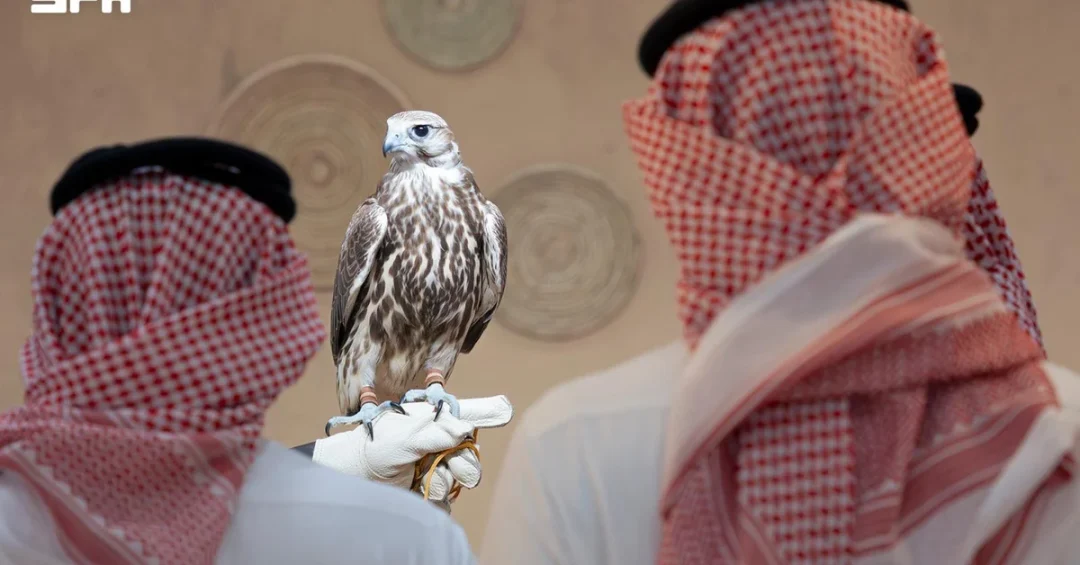
The National Center for Falcons opened the International Falcon Breeders Auction 2026 on Wednesday at its headquarters in Malham, north of Riyadh, launching a 21-day event that runs from August 5 to 25 and brings together a select group of local and international falcon breeding farms. The auction, announced through official Saudi channels including the Saudi Press Agency, establishes a specialized marketplace where breeding farms, falconers, and buyers meet under one roof, with sales conducted through a live, competitive bidding platform and dedicated pavilions showcasing birds from participating farms.
Have you ever wondered why a single bird can command a price higher than a luxury car in the Arabian Peninsula? The answer lies in a heritage that stretches back centuries across the Gulf, where falconry is not merely a sport but a living cultural tradition passed between generations. The 2026 edition arrives with significant momentum behind it: the 2025 auction generated sales exceeding SAR13 million, a 23 percent increase over 2024, while the number of falcons sold rose by 27 percent to 1,103. Participation climbed to 67 breeding farms from 23 countries, including 19 Saudi farms, representing a 20 percent rise in participating farms and a 21 percent increase in participating countries. This year’s event aims to build on that trajectory with expanded breeder participation and a wider selection of falcons for buyers.
Context and Background
How did a traditional desert pursuit become a multi-million-riyal international industry? The transformation reflects decades of deliberate investment by the Kingdom of Saudi Arabia in preserving falconry as a cornerstone of national heritage while simultaneously developing the infrastructure that supports it. The National Center for Falcons, a government body dedicated to the protection, breeding, and sustainable development of falconry, operates the Malham headquarters as a year-round facility that culminates each August in the International Falcon Breeders Auction. The center’s mandate encompasses veterinary care, breeding programs, research, and the organization of competitions that keep the tradition vibrant for new generations.
The auction’s origins trace to a recognition that falconry enthusiasts required a centralized, regulated marketplace where the provenance, health, and legal status of every bird could be verified. Over successive editions, the event has evolved from a regional gathering into what organizers describe as the world’s largest assembly of falcon breeding farms. The 2025 figures illustrate that evolution: 67 farms from 23 countries, with 19 Saudi farms participating alongside international breeders from the United States, Europe, and across the Middle East. The presence of so many Saudi farms signals the growth of a domestic breeding sector that reduces reliance on imports and creates skilled employment in veterinary science, animal husbandry, logistics, and event management.
Preparations for international participation begin well before the auction opens. Specialized arrangements cover transportation, reception, and veterinary care, with falcons flown into King Khalid International Airport before being transported to the Malham venue. There, each bird undergoes health examinations and receives necessary care before being presented for sale. This logistical framework ensures that animals arrive in optimal condition and that buyers can bid with confidence in the health and legal standing of their purchases.
Key Details
What distinguishes the 2026 edition from its predecessors? According to Talal Al-Shamaisi, CEO of the National Center for Falcons, this year’s auction marks a new phase in the center’s operations by offering a diverse selection of premium falcon breeds, streamlining the exhibition and sales process, and providing comprehensive services to breeding farms and their falcons from arrival in Riyadh through ownership transfer. Al-Shamaisi described the auction as the world’s largest gathering of falcon breeding farms, bringing together leading breeders from around the globe under one roof and providing a valuable platform for exchanging expertise and hosting workshops for falconers and breeders.
A notable innovation for 2026 is the decision to limit all rounds of the farkh category in the Melwah competitions exclusively to falcons sold through the International Falcon Breeders Auction. This directly links auction purchases to the competition circuit, giving participants access to elite falcons from local and international breeders and reinforcing the auction’s role as the primary gateway to competitive falconry. The venue also features exhibitors of falconry equipment, with television coverage and live streaming across social media platforms expanding the event’s reach to local and international audiences.
The sales process follows a structured sequence designed to protect both buyer and seller. It begins with an agreement between the parties, followed, when requested, by a veterinary examination. The falcon’s species and category are then verified, legal and financial procedures are completed, ownership records are updated, and an identification band is fitted before the official transfer of ownership is finalized. This rigor has helped the auction earn the trust of international breeders and explains why participation has grown year after year in terms of sales, farms, countries, and the number of falcons offered.
International and Regional Impact
Why do breeders from the United States, Europe, and across the Middle East choose to participate in an auction hosted in the Saudi desert? The answer combines market access, regulatory assurance, and the prestige associated with the Malham venue. The highest-priced falcon sold in 2025 was a pure white gyrfalcon from a U.S. breeding farm, which fetched SAR1.2 million, while previous editions have recorded individual sales reaching SAR1.75 million. Such figures demonstrate that the Kingdom has become a price-setting market for elite falcons, attracting the finest birds from global breeding programs.
The auction also functions as a diplomatic and cultural bridge. Breeders who travel to Riyadh for three weeks each August form professional networks that extend beyond the auction floor, sharing techniques in genetics, nutrition, training, and veterinary medicine. The workshops hosted alongside the sales contribute to the development of the falcon breeding sector globally, not only in Saudi Arabia. For regional neighbors with their own falconry traditions, the Malham event serves as a benchmark for how heritage sports can be organized at a professional, internationally credible level while remaining rooted in local culture.
Economic and Strategic Significance
What does a SAR13 million auction contribute to an economy the size of Saudi Arabia’s? The direct sales figure understates the broader economic footprint. The event generates demand for air freight, ground transportation, hotel accommodation, catering, veterinary services, equipment manufacturing, and media production. It sustains a domestic breeding industry that employs veterinarians, technicians, and handlers, and it supports associated businesses such as falconry equipment exhibitors who showcase their products at the venue. The growth rates recorded in 2025, including a 23 percent increase in sales value and a 27 percent rise in the number of falcons sold, indicate a market expanding faster than the overall economy in this niche.
Strategically, the auction reinforces Saudi Arabia’s position as the global center of falconry. By linking auction purchases to the Melwah competition circuit, the National Center for Falcons creates a closed-loop ecosystem in which buyers, breeders, and competitors all benefit from participation. This integration strengthens the Kingdom’s soft power in a domain where cultural authenticity and modern event management converge. It also aligns with broader efforts to diversify the economy by developing specialized tourism and heritage experiences that attract high-net-worth visitors from around the world.
Vision 2030 Alignment
How does an auction of hunting birds connect to a national transformation plan? Saudi Vision 2030 emphasizes the preservation of cultural heritage as an essential component of national identity and a driver of economic diversification. The International Falcon Breeders Auction embodies this dual purpose: it protects a tradition that defines the Kingdom’s relationship with its natural environment while generating measurable commercial activity, international partnerships, and employment. The National Center for Falcons operates within this framework, treating falconry as both a cultural asset and an economic sector with growth potential.
The 2026 edition, running through August 25 at Malham, represents the latest expression of that vision. With expanded participation, a streamlined sales process, and the integration of auction purchases into the Melwah competitions, the event demonstrates how Saudi Arabia is modernizing heritage industries without diluting their authenticity. For international audiences, the auction offers a window into a Kingdom that honors its past while building a diversified future, and for breeders and falconers worldwide, it provides an unmatched platform to trade, learn, and compete. As Al-Shamaisi noted, the continued year-on-year growth in sales, farms, countries, and falcons offered reflects confidence in the Saudi model, and the 2026 edition is positioned to extend that record.
20 Questions
Q1. What is the International Falcon Breeders Auction 2026?
A1. It is a 21-day event opened by the National Center for Falcons on August 5, 2026, at its headquarters in Malham, north of Riyadh. It brings together local and international falcon breeding farms for sales, exhibitions, and workshops.
Q2. When does the auction run and where is it held?
A2. The auction runs from August 5 to August 25, 2026, at the National Center for Falcons headquarters in Malham, north of Riyadh. The venue includes pavilions, sales areas, and equipment exhibitions.
Q3. Who opened the auction and what did they say?
A3. The National Center for Falcons opened the event. CEO Talal Al-Shamaisi said the edition marks a new phase, offering premium breeds, streamlined sales, and comprehensive services from arrival in Riyadh through ownership transfer.
Q4. How many breeding farms participated in the 2025 edition?
A4. The 2025 edition attracted 67 breeding farms from 23 countries, including 19 Saudi farms. This represented a 20 percent increase in participating farms and a 21 percent increase in participating countries.
Q5. What were the total sales at the 2025 auction?
A5. Sales exceeded SAR13 million in 2025, a 23 percent increase over 2024. The number of falcons sold rose by 27 percent to 1,103 birds.
Q6. What was the highest-priced falcon sold in 2025?
A6. A pure white gyrfalcon from a U.S. breeding farm fetched SAR1.2 million. Previous editions have recorded individual sales reaching SAR1.75 million.
Q7. What is new for the 2026 edition?
A7. For the first time, all rounds of the farkh category in the Melwah competitions will be limited exclusively to falcons sold through the International Falcon Breeders Auction, linking purchases directly to the competition circuit.
Q8. How are falcons transported to the auction?
A8. Falcons are flown into King Khalid International Airport and then transported to the Malham venue. They undergo health examinations and receive necessary care before being presented for sale.
Q9. What is the sales process for a falcon?
A9. It begins with an agreement between seller and buyer, followed by a requested veterinary examination. Species and category are verified, legal and financial procedures completed, ownership records updated, and an identification band fitted before transfer.
Q10. Why is this auction described as the world’s largest gathering of falcon breeding farms?
A10. It brings together leading breeders from around the globe under one roof at Malham, with 67 farms from 23 countries in 2025. The scale of international participation supports this description.
Q11. What opportunities does the auction provide beyond sales?
A11. It offers a platform for exchanging expertise and hosting workshops for falconers and breeders. These activities contribute to the development of the falcon breeding sector in Saudi Arabia and internationally.
Q12. How is the auction covered for international audiences?
A12. Television coverage and live streaming across social media platforms expand the event’s reach. This allows local and international audiences to follow the bidding and exhibitions remotely.
Q13. What role does the National Center for Falcons play?
A13. The center protects, breeds, and sustainably develops falconry. It operates the Malham headquarters, organizes the auction, provides veterinary care, and runs competitions that keep the tradition vibrant.
Q14. How does the auction support Saudi Arabia’s cultural heritage?
A14. Falconry is a centuries-old tradition in the Arabian Peninsula. The auction preserves it by creating a regulated marketplace, supporting domestic breeding farms, and engaging new generations through competitions and workshops.
Q15. What economic sectors benefit from the auction?
A15. Air freight, ground transportation, hotels, catering, veterinary services, equipment manufacturing, and media production all benefit. The event also sustains employment in animal husbandry and event management.
Q16. How does the auction align with Saudi Vision 2030?
A16. Vision 2030 emphasizes heritage preservation and economic diversification. The auction protects cultural tradition while generating commercial activity, international partnerships, and specialized tourism, supporting both goals.
Q17. What is the Melwah competition and its connection to the auction?
A17. The Melwah competitions are falconry contests. In 2026, all rounds of the farkh category are limited to falcons sold through the auction, directly linking purchases to competitive events.
Q18. How has participation grown in recent years?
A18. Participation has grown year on year in sales, farms, countries, and falcons offered. In 2025, farms increased 20 percent and countries 21 percent compared with the previous edition.
Q19. What veterinary standards apply to falcons at the auction?
A19. Falcons undergo health examinations upon arrival at Malham and receive necessary care. Buyers may request a veterinary examination before purchase, and species and category are verified before transfer.
Q20. What does the 2026 edition aim to achieve?
A20. It aims to build on 2025 momentum by expanding breeder participation, offering a wider selection of falcons, streamlining sales, and strengthening the link between auction purchases and the Melwah competition circuit.
Reader Feedback
We value your thoughts. Please share your feedback on this article.
Your feedback helps us improve our coverage.
Related articles
 Romanian Farm Debuts at Saudi Falcon Auction with 120+ Birds
 AlUla Brings Life of Forms to Paris Design Week 2026
 Al-Baha Festival Revives Traditional Stone-Building Heritage
 Saudi Media Forum Attracts Global Experts to Shape Media Future
 6.5-Magnitude Earthquake Strikes Japan’s Honshu Island
 6.1-Magnitude Earthquake Strikes Sulawesi, Indonesia