


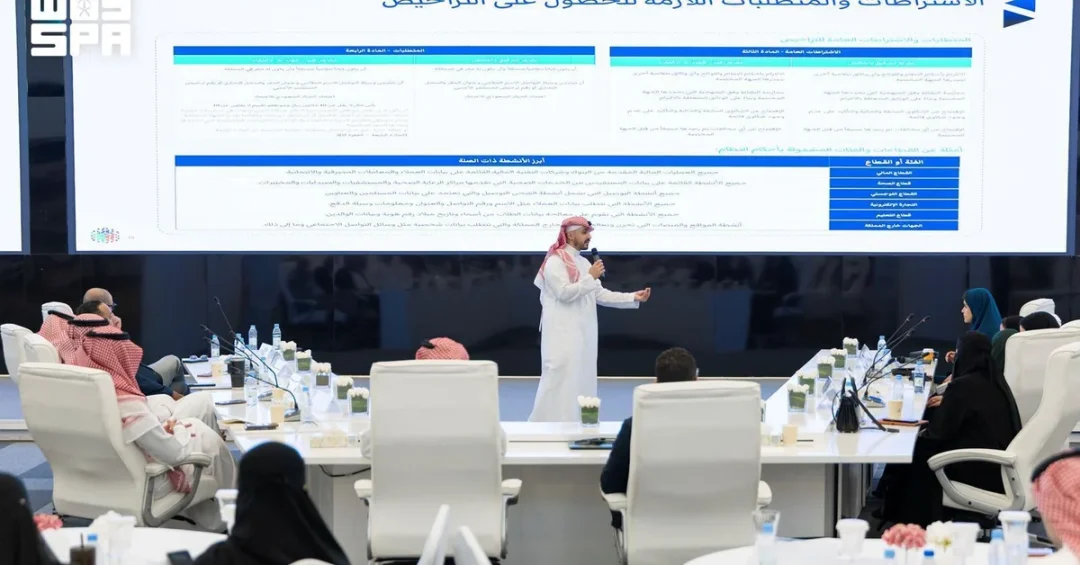
The Saudi Data and Artificial Intelligence Authority (SDAIA) convened a specialized meeting in Riyadh on August 6, 2026, bringing together private-sector representatives and providers of data-related services and products to advance the regulatory framework governing personal data protection licensing and accreditation. The session, announced through the Saudi Press Agency, forms part of SDAIA’s ongoing efforts to strengthen the national data protection ecosystem, expand partnerships with the private sector, and enhance the readiness of specialized companies to contribute to a robust and trusted data economy.
During the meeting, SDAIA invited all relevant stakeholders to submit feedback on draft standards and guidelines covering licensing activities and accreditation certificates. Submissions are being accepted through Istitlaa, the unified electronic platform for public and government consultations. The move reflects a participatory approach to regulation that is increasingly characteristic of Saudi Arabia’s governance model, where public and private voices are actively solicited before rules are finalized. For international observers, the development signals that the Kingdom is building a mature, transparent, and predictable data protection regime — one that aligns with global best practices while serving the objectives of Vision 2030. How does a nation turn data protection from a compliance burden into a competitive advantage? Saudi Arabia appears to be answering that question through deliberate, multi-stakeholder regulatory design.
Context and Background
Why has personal data protection become such a central pillar of Saudi Arabia’s digital transformation agenda? The answer lies in the scale and speed of the Kingdom’s digital economy. Since the enactment of the Personal Data Protection Law (PDPL) and its implementing regulations, Saudi Arabia has moved decisively to establish a comprehensive legal framework that governs how personal data is collected, processed, stored, and shared. SDAIA, established in 2019 as the national authority responsible for data and artificial intelligence, serves as the regulator and the principal architect of this framework. The law applies to both government and private entities, and its enforcement mechanisms are designed to build trust among citizens, residents, and international partners.
The August 6 meeting builds on a sequence of regulatory milestones. SDAIA has previously issued guidelines on data transfer, data breach notification, and consent management, each time inviting public consultation through Istitlaa. This iterative approach allows the regulator to refine requirements based on real-world input from companies that will ultimately implement them. The latest consultation focuses specifically on licensing and accreditation activities — a critical layer of the ecosystem because it determines which entities can operate as data protection service providers, auditors, and certification bodies. By opening the draft standards to feedback, SDAIA ensures that the rules are practical, proportionate, and aligned with international norms such as the EU’s General Data Protection Regulation (GDPR).
Regional context further underscores the significance of this step. Across the Gulf, countries are racing to build digital trust frameworks that attract investment and facilitate cross-border data flows. Saudi Arabia’s approach stands out for its institutional clarity: SDAIA is both the policy architect and the enforcement authority, which reduces fragmentation and accelerates implementation. The Kingdom’s commitment to regulatory excellence in this domain is not merely about compliance; it is about creating an environment where innovation can flourish securely. As more companies digitize their operations, the demand for skilled data protection professionals and accredited service providers will grow — and SDAIA is laying the groundwork now.
Key Details of the Consultation
What exactly are stakeholders being asked to review? The draft documents cover three distinct areas, each accessible through the Istitlaa platform. The first link addresses guidelines for certification bodies, outlining the criteria and processes for entities seeking to issue accreditation certificates. The second link covers guidelines for issuing certificates of accreditation, detailing the requirements that service providers must meet to demonstrate competence. The third link focuses on audit and inspection guidelines, specifying how compliance audits should be conducted and what inspectors should look for. Together, these documents form a comprehensive rulebook for the professionalization of the data protection sector.
SDAIA emphasized during the meeting that the regulatory framework governing licensing and accreditation includes specific guidelines, requirements, and conditions. Discussions centered on enabling specialized companies to adopt best practices and strengthen compliance with the PDPL and its implementing regulations. The meeting also provided a platform for specialists and private-sector representatives to exchange views and expertise, supporting the continued development of regulatory frameworks and strengthening integration between regulatory authorities and specialized companies. This collaborative dynamic is essential: regulations that are developed in isolation often fail at the implementation stage, whereas co-designed rules tend to enjoy higher compliance rates.
The consultation links are hosted on the National Competitiveness Center’s Istitlaa platform, which has become the central hub for regulatory feedback in Saudi Arabia. By using this unified channel, SDAIA ensures transparency and makes it easy for both local and international stakeholders to participate. The deadline for feedback has not been specified in the initial announcement, but historically SDAIA consultations run for several weeks to allow thorough review. Companies that provide data-related services — from cloud storage and analytics to cybersecurity and consulting — are particularly encouraged to engage, as the licensing requirements will directly affect their ability to operate in the Kingdom. The draft guidelines are expected to cover eligibility criteria, application procedures, renewal terms, and grounds for suspension or revocation of licenses.
International and Regional Impact
How will Saudi Arabia’s data protection licensing regime resonate beyond its borders? For multinational corporations operating in the Kingdom, the clarity brought by accreditation standards reduces legal uncertainty and simplifies compliance. Companies will know exactly what qualifications and processes are required to offer data protection services, which in turn lowers barriers to entry for reputable firms. This predictability is a key factor in investment decisions, particularly for technology companies that handle sensitive personal data. The Kingdom’s alignment with international standards also facilitates data flows with partners in Europe, Asia, and North America, many of which require adequate data protection safeguards before allowing personal data to be transferred across borders.
Regionally, Saudi Arabia’s proactive stance positions it as a leader in the Middle East’s digital governance landscape. Other Gulf Cooperation Council (GCC) states are watching closely, and some may seek to harmonize their own frameworks with Saudi Arabia’s to enable seamless data exchange. Such harmonization would support the growth of regional digital trade and could accelerate the development of a unified Gulf data market. Moreover, the accreditation of local service providers creates opportunities for Saudi firms to export their expertise, offering consulting and auditing services to neighboring countries. This export potential aligns with Vision 2030’s goal of diversifying the economy and developing high-value service sectors.
International data protection authorities have generally welcomed Saudi Arabia’s structured approach. The PDPL itself drew on comparative analysis of global regimes, and SDAIA has engaged with counterparts in Europe and Asia to share knowledge. The current consultation on licensing and accreditation is another example of how the Kingdom is integrating international best practices while tailoring them to local conditions. For global companies, this means that compliance with Saudi rules can often be achieved through existing global compliance programs, with modest adjustments. The net effect is a more attractive environment for foreign direct investment in data-intensive industries.
Economic and Strategic Significance
Why does data protection matter economically? In an era when data is often described as the new oil, trust is the currency that enables its responsible use. Saudi Arabia’s economy is undergoing a profound transformation, with the rise of digital services, e-commerce, fintech, and smart city projects such as NEOM. These sectors depend on the secure and lawful processing of personal data. By establishing a clear licensing and accreditation regime, SDAIA reduces the risk of data breaches and misuse, which in turn protects consumers and enhances business confidence. A trustworthy data environment attracts both local entrepreneurs and international investors, who need assurance that their data assets are safeguarded.
Strategically, the development of a professional data protection industry creates jobs and fosters innovation. Accredited service providers will need trained auditors, compliance officers, and data protection specialists. This demand will stimulate educational programs and certifications, contributing to the growth of a knowledge-based economy. SDAIA has already launched initiatives to build national capacity in data and AI, and the licensing framework will reinforce those efforts by setting clear career pathways. Furthermore, the accreditation of local firms reduces reliance on foreign providers, keeping more of the economic value within the Kingdom. This import substitution effect is modest but symbolically important as Saudi Arabia seeks to localize high-value services.
The economic significance extends to trade negotiations and digital agreements. Countries increasingly include data protection provisions in trade deals, and Saudi Arabia’s robust framework strengthens its negotiating position. It also supports the Kingdom’s ambition to become a global hub for data centers and cloud computing. Major cloud providers have established regions in Saudi Arabia, and they require a predictable regulatory environment to expand further. The licensing and accreditation guidelines under consultation will directly affect these providers’ operations, ensuring that they meet high standards while remaining competitive. In sum, the regulatory work being done today will shape the digital economy for years to come.
Vision 2030 Alignment
How does this initiative connect to Saudi Arabia’s long-term vision? Vision 2030 aims to diversify the economy, improve quality of life, and position the Kingdom as a global investment powerhouse. A core enabler of these goals is a modern digital infrastructure underpinned by trust and security. The Personal Data Protection Law and SDAIA’s regulatory efforts are explicitly designed to support this vision by creating a safe environment for digital innovation. When citizens and businesses trust that their data is protected, they are more likely to adopt digital services, which drives productivity and economic growth. The licensing and accreditation framework is therefore not a bureaucratic exercise but a strategic investment in the Kingdom’s digital future.
Furthermore, Vision 2030 emphasizes transparency, accountability, and citizen engagement. The public consultation through Istitlaa exemplifies these principles, giving stakeholders a direct voice in shaping regulations. This participatory approach helps ensure that the rules are effective and widely accepted. It also signals to the international community that Saudi Arabia is committed to good governance and the rule of law. As the Kingdom continues its journey toward a diversified, knowledge-based economy, data protection will remain a cornerstone of its success. SDAIA’s work in this area demonstrates how regulatory innovation can simultaneously protect individuals and unleash economic potential, reinforcing Saudi Arabia’s role as a leader in the global digital economy.
20 Questions
Q1. What is the main purpose of the SDAIA meeting held on August 6, 2026?
A1. The meeting aimed to strengthen the regulatory environment for personal data protection, expand private-sector partnerships, and enhance the readiness of specialized companies to contribute to the national data protection ecosystem. It also invited feedback on draft licensing and accreditation standards.
Q2. Which authority organized the meeting and what is its role?
A2. The Saudi Data and Artificial Intelligence Authority (SDAIA) organized the meeting. SDAIA is the national authority responsible for data and artificial intelligence, and it serves as the regulator for personal data protection in Saudi Arabia.
Q3. What is the Personal Data Protection Law (PDPL)?
A3. The PDPL is Saudi Arabia’s comprehensive legal framework governing the collection, processing, and sharing of personal data. It applies to both government and private entities and aims to protect individuals’ privacy while enabling responsible data use.
Q4. What is the Istitlaa platform?
A4. Istitlaa is the unified electronic platform for public and government consultations in Saudi Arabia. It allows stakeholders to review and submit feedback on draft regulations, ensuring transparency and participatory governance.
Q5. What specific documents are open for public feedback?
A5. Three draft documents are available: guidelines for certification bodies, guidelines for issuing accreditation certificates, and guidelines for audit and inspection. Each covers different aspects of the licensing and accreditation process.
Q6. Who is invited to submit feedback on the draft standards?
A6. All relevant stakeholders are invited, including private-sector companies, data service providers, specialists, and any other parties interested in the personal data protection ecosystem in Saudi Arabia.
Q7. How can stakeholders submit their feedback?
A7. Feedback can be submitted through the Istitlaa platform via the three links provided by SDAIA. The links direct users to the specific draft guidelines for certification, accreditation, and audit.
Q8. What is the significance of licensing and accreditation in data protection?
A8. Licensing and accreditation ensure that entities providing data protection services meet high standards of competence and reliability. This builds trust in the ecosystem and protects individuals’ data from misuse.
Q9. How does this initiative support Saudi Arabia’s Vision 2030?
A9. It supports Vision 2030 by fostering a trusted digital economy, attracting investment, creating high-value jobs, and promoting transparency and good governance. These are all key objectives of the national transformation plan.
Q10. What are the benefits for private-sector companies?
A10. Companies benefit from clear regulatory requirements, reduced legal uncertainty, and opportunities to become accredited service providers. This can open new business avenues and enhance their competitiveness.
Q11. How does the PDPL compare with international standards like GDPR?
A11. The PDPL draws on international best practices, including principles similar to the EU’s GDPR. It aims to provide robust protection while facilitating cross-border data flows with adequate safeguards.
Q12. What role do certification bodies play in the ecosystem?
A12. Certification bodies assess and certify that service providers meet the required standards. They act as independent verifiers, ensuring that accreditation is credible and consistent across the market.
Q13. What is the expected impact on foreign investment?
A13. The clear regulatory framework is expected to attract foreign investment by reducing compliance risks and demonstrating Saudi Arabia’s commitment to data protection, which is a key consideration for multinational companies.
Q14. Will the licensing requirements apply to foreign companies?
A14. Yes, the requirements will apply to any company providing data-related services in Saudi Arabia, including foreign firms. This ensures a level playing field and consistent protection for all data subjects.
Q15. How does SDAIA engage with the private sector?
A15. SDAIA regularly organizes meetings, workshops, and consultations to gather input from the private sector. This collaborative approach helps refine regulations and ensures they are practical and effective.
Q16. What are the next steps after the consultation period?
A16. After reviewing the feedback, SDAIA will finalize the guidelines and publish the official versions. Then, companies can apply for licenses and accreditation according to the new standards.
Q17. How does this initiative affect individuals’ privacy?
A17. By ensuring that service providers are competent and compliant, the initiative enhances the protection of individuals’ personal data. This builds trust and encourages greater use of digital services.
Q18. What economic sectors will benefit most from these regulations?
A18. Sectors such as technology, finance, healthcare, e-commerce, and cloud computing will benefit significantly, as they handle large volumes of personal data and require strong protection guarantees.
Q19. Is there a deadline for submitting feedback?
A19. The announcement did not specify a deadline, but such consultations typically remain open for several weeks. Stakeholders are encouraged to submit feedback promptly through the Istitlaa platform.
Q20. How does this fit into Saudi Arabia’s broader digital strategy?
A20. It is a key component of the National Data and AI Strategy, which aims to make Saudi Arabia a global leader in data-driven innovation. Strong data protection is essential for achieving that ambition responsibly.
Reader Feedback
We value your thoughts. Please share your feedback on this article.
Your feedback helps us improve our coverage.
Related articles
 KSrelief Fisheries Support Restores Livelihoods in Al-Mahra
 Arab Parliament Condemns Israeli Crimes in Gaza, West Bank
 KSrelief to Rehabilitate 11 Health Facilities in Yemen
 Saudi FM Joins Fifth Four-Party Regional Meeting in Amman
 Saudi Roads Authority Issues 5,500 Permits in July
 Saudi Ministry Launches Umbrella Challenge for Pilgrims