


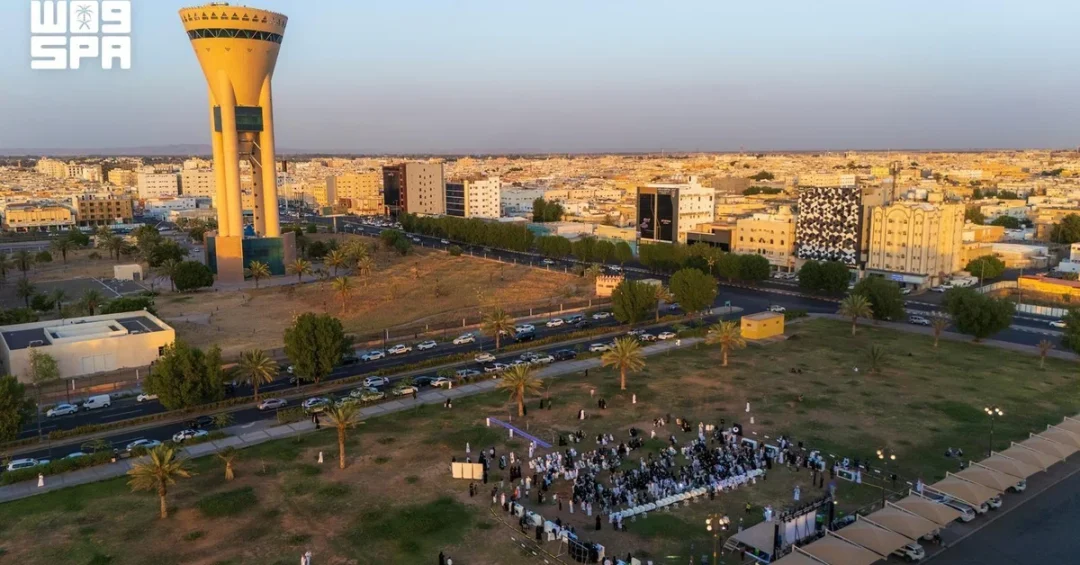
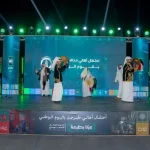
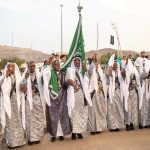
The Tabuk Municipality organized a wide-ranging program of more than 50 events across 17 locations to mark Saudi National Day on September 23, featuring traditional Saudi Ardah performances alongside regional Dahha and Rifihi folk arts in the central district of Tabuk City. The celebrations, announced through official Saudi channels including the Saudi Press Agency, formed part of a coordinated national effort to commemorate the Kingdom’s unification, with municipal authorities supporting the program through extensive decorative preparations that included 8,000 national flags, green floodlights, and decorative lighting across the region.
The scale of the Tabuk program reflects the growing ambition of Saudi National Day commemorations, which have evolved from simple civic observances into comprehensive cultural festivals that engage entire communities. Tabuk, located in the northwest of the Kingdom near the borders with Jordan and close to NEOM and the Red Sea coast, has become an increasingly prominent stage for national celebrations as its population grows and its tourism profile rises. The municipality’s decision to spread activities across 17 distinct locations ensured that residents and visitors in both urban centers and smaller communities could participate in the festivities, reinforcing the inclusive spirit that defines the modern Saudi National Day.
Context and Background
What does Saudi National Day mean to a Kingdom undergoing rapid transformation? Observed every September 23, the occasion commemorates the unification of the Kingdom of Saudi Arabia in 1932 by the founder, King Abdulaziz Al Saud. In recent years, under the leadership of the Custodian of the Two Holy Mosques, King Salman bin Abdulaziz Al Saud, and His Royal Highness Crown Prince Mohammed bin Salman, the anniversary has been elevated into a nationwide celebration of heritage, unity, and progress. Official Saudi channels consistently frame the day as both a tribute to the nation’s history and a showcase of the achievements driven by Saudi Vision 2030.
Tabuk’s role in these celebrations has expanded in parallel with its strategic importance. The region is home to a growing population, major infrastructure projects, and some of the Kingdom’s most striking natural landscapes, including the Tabuk Mountains and the Red Sea coastline. Municipal authorities in Tabuk have invested in public spaces, cultural programming, and visitor facilities that make large-scale events possible. The 2026 program, with its 50-plus activities and 17 locations, demonstrates how regional municipalities are now capable of delivering sophisticated, multi-day cultural experiences that rival those in the major metropolitan centers.
The use of traditional performing arts as the centerpiece of the celebrations is deliberate. The Saudi Ardah, a sword dance performed by men in traditional attire, is recognized as a symbol of national identity and is often presented at official state occasions. Regional folk arts such as Dahha and Rifihi add local color, reflecting the diversity of Saudi Arabia’s cultural heritage. By placing these performances in the central district of Tabuk City, the municipality ensured that the celebrations remained rooted in authentic Saudi traditions even as they embraced modern event management and large-scale public participation.
Key Details of the Tabuk Celebrations
How did the Tabuk Municipality transform an entire region into a stage for national celebration? According to information released via the Saudi Press Agency, the municipality organized extensive celebrations on September 23 that featured performances of the traditional Saudi Ardah alongside regional Dahha and Rifihi folk arts in the central district of Tabuk City. These performances anchored the program, drawing crowds to the heart of the city and creating a focal point for the region-wide festivities. The Ardah, with its rhythmic drumming and coordinated movement, served as a powerful visual representation of unity, while the Dahha and Rifihi performances highlighted the specific cultural traditions of the Tabuk region.
The broader program comprised over 50 events spread across 17 locations, a logistical undertaking that required coordination among municipal departments, security services, and community organizations. The municipality supported the activities with decorative municipal preparations that included 8,000 national flags, green floodlights, and decorative lighting. Green, the color of the Saudi flag, dominated the visual landscape, with public buildings, streets, and squares illuminated to create a festive atmosphere. The flags were distributed across the region, ensuring that even smaller towns and villages participated in the visual display of national pride.
The decision to host events in 17 locations reflects a deliberate strategy to decentralize celebrations and reach audiences beyond the main urban center. Residents in remote areas could attend local activities without traveling long distances, while the variety of venues allowed for different types of programming, from formal ceremonies to family-oriented entertainment. This approach aligns with the broader national direction of inclusive development, in which the benefits of Vision 2030 are intended to be felt across all regions of the Kingdom, not only in Riyadh, Jeddah, or the Eastern Province.
International and Regional Impact
How do regional celebrations in Tabuk contribute to Saudi Arabia’s image on the world stage? National Day events across the Kingdom, including those in Tabuk, are increasingly covered by international media and shared on global social platforms, offering audiences outside Saudi Arabia a window into the country’s cultural richness and organizational capacity. The imagery of green lights, traditional dances, and community gatherings presents a narrative of stability, pride, and modernization that resonates with international observers, investors, and tourists. For a Kingdom actively courting global visitors as part of its tourism strategy, such positive visual storytelling is a valuable asset.
Regionally, the Tabuk celebrations underscore the Kingdom’s commitment to its northwestern region, which shares borders with Jordan and lies close to Egypt across the Gulf of Aqaba. Tabuk has historically served as a gateway for pilgrims and traders, and today it is positioned as a key node in the Red Sea tourism corridor. By investing in high-profile National Day activities, the municipality signals that Tabuk is open for business, tourism, and cultural exchange. Neighboring countries and regional partners take note of such investments, which can support cross-border economic cooperation and people-to-people ties.
The use of traditional arts in a public, internationally visible setting also serves a diplomatic function. Saudi cultural heritage, including the Ardah, is recognized by UNESCO and celebrated as part of humanity’s shared intangible cultural heritage. When Tabuk hosts performances of the Ardah alongside local Dahha and Rifihi traditions, it participates in a global conversation about cultural preservation and identity. This soft power dimension complements the Kingdom’s economic and political diplomacy, reinforcing Saudi Arabia’s role as a custodian of heritage in a rapidly changing world.
Economic and Strategic Significance
What economic value do large-scale National Day celebrations bring to a region like Tabuk? While the immediate purpose of the events is cultural and social, the economic ripple effects are considerable. Festivals of this scale stimulate local businesses, from hotels and restaurants to retailers and transport providers. Visitors traveling to Tabuk for the celebrations spend on accommodation, food, and souvenirs, supporting small and medium-sized enterprises. The municipality’s investment in decorations, lighting, and event infrastructure also creates short-term employment opportunities and builds local capacity in event management, a skill set that can be applied to future tourism and entertainment initiatives.
Strategically, the celebrations reinforce Tabuk’s position within the Kingdom’s broader development map. The region is adjacent to NEOM, the flagship giga-project of Vision 2030, and forms part of the Red Sea coastal zone that is being developed for luxury tourism and sustainable living. National Day activities help raise the region’s profile among domestic travelers, encouraging them to explore destinations beyond the traditional hotspots. As domestic tourism grows, regions like Tabuk benefit from increased visitor numbers, which in turn attracts private investment in hospitality and leisure infrastructure. The municipality’s ability to organize 50-plus events across 17 locations demonstrates the logistical readiness needed to host larger cultural and sporting events in the future.
The emphasis on family-friendly, accessible programming also supports social objectives. By providing free, public celebrations in multiple locations, the municipality ensures that National Day is inclusive, allowing all segments of society to participate. This aligns with the Vision 2030 goal of enhancing quality of life and fostering community cohesion. The economic and social returns on such investments are long-term, as they build civic pride and a sense of shared national purpose.
Vision 2030 Alignment
How does a regional National Day program connect to the grand ambitions of Saudi Vision 2030? Vision 2030 seeks to diversify the economy, empower citizens, and create a vibrant society. Cultural events like those in Tabuk directly support the vision’s quality-of-life objectives by offering entertainment, promoting heritage, and encouraging community engagement. They also contribute to the tourism pillar, as regions that host well-organized festivals become more attractive to visitors. The Tabuk Municipality’s efforts reflect the decentralized, region-focused approach that Vision 2030 promotes, where local authorities take ownership of development and deliver tangible benefits to their communities.
Looking ahead, the success of the 2026 National Day program in Tabuk sets a benchmark for future celebrations and for the region’s broader event calendar. As Saudi Arabia continues its journey toward 2030, the Kingdom’s regions will play an increasingly prominent role in showcasing its culture, hospitality, and progress. Tabuk, with its rich heritage, strategic location, and growing infrastructure, is well positioned to contribute to this national story. The 8,000 flags, the green lights, and the sounds of the Ardah in the central district were not merely a one-day spectacle; they were a statement of belonging, ambition, and the enduring unity of the Kingdom.
20 Questions
Q1. What occasion did the Tabuk Municipality celebrate on September 23?
A1. The Tabuk Municipality organized celebrations to mark Saudi National Day, which commemorates the unification of the Kingdom of Saudi Arabia in 1932. The occasion is observed annually across the country with cultural and civic activities.
Q2. How many events were part of the Tabuk National Day program?
A2. The region-wide program comprised more than 50 events, according to official information released via the Saudi Press Agency. These activities were spread across multiple locations to ensure broad community participation.
Q3. How many locations hosted activities in the Tabuk region?
A3. The events took place across 17 locations in the Tabuk region. This decentralized approach allowed residents in different areas to join the celebrations without traveling long distances.
Q4. What traditional performance was featured in the central district of Tabuk City?
A4. The celebrations featured performances of the traditional Saudi Ardah, a sword dance that symbolizes national identity. Regional Dahha and Rifihi folk arts were also performed, highlighting local heritage.
Q5. What is the Saudi Ardah?
A5. The Saudi Ardah is a traditional group performance involving rhythmic drumming, poetry, and coordinated movement with swords. It is often presented at official state occasions and is recognized as part of the Kingdom’s intangible cultural heritage.
Q6. What decorative preparations did the municipality make?
A6. The municipality supported the celebrations with decorative preparations including 8,000 national flags, green floodlights, and decorative lighting. These elements created a festive atmosphere across the region.
Q7. Why is the color green significant in these decorations?
A7. Green is the color of the Saudi national flag and holds deep cultural and religious significance in the Kingdom. Using green lighting and flags visually reinforces national pride and unity during the celebrations.
Q8. Where is the Tabuk region located in Saudi Arabia?
A8. Tabuk is located in the northwest of Saudi Arabia, near the borders with Jordan and close to the Red Sea and NEOM. It is known for its mountains, heritage sites, and strategic location.
Q9. What is the significance of Saudi National Day?
A9. Saudi National Day marks the unification of the Kingdom by King Abdulaziz Al Saud in 1932. It is a time to celebrate national history, unity, and the progress achieved under the leadership of the Custodian of the Two Holy Mosques and the Crown Prince.
Q10. How does the Tabuk celebration reflect Vision 2030?
A10. The celebrations support Vision 2030’s quality-of-life and tourism goals by promoting cultural heritage, engaging communities, and enhancing the region’s appeal to visitors. They also demonstrate decentralized development and local capacity building.
Q11. What are the Dahha and Rifihi folk arts?
A11. Dahha and Rifihi are traditional folk performance styles from the Tabuk region. They involve group dancing and chanting, and they reflect the specific cultural identity of northwestern Saudi Arabia.
Q12. Who organized the National Day activities in Tabuk?
A12. The Tabuk Municipality organized the extensive celebrations, as reported by the Saudi Press Agency. Municipal authorities coordinated the events, decorations, and logistics across the region.
Q13. What economic benefits can such celebrations bring to Tabuk?
A13. Large-scale celebrations stimulate local businesses such as hotels, restaurants, and retailers. They also create short-term employment and build event-management capacity, which supports future tourism and entertainment initiatives in the region.
Q14. How do National Day events in Tabuk contribute to Saudi tourism?
A14. By showcasing Tabuk’s cultural heritage and organizational capabilities, the events raise the region’s profile among domestic and international visitors. This supports the Kingdom’s goal of attracting more tourists to diverse destinations beyond the main cities.
Q15. What role does the Saudi Press Agency play in reporting these events?
A15. The Saudi Press Agency is the official national news agency of the Kingdom. It provides authoritative coverage of government and municipal activities, ensuring that information about events like the Tabuk celebrations is accurately disseminated.
Q16. How many national flags were used in the decorations?
A16. The municipality used 8,000 national flags as part of the decorative preparations. These flags were displayed across the region to mark the occasion and create a unified visual celebration.
Q17. What is the significance of hosting events in 17 locations?
A17. Hosting events in 17 locations ensures inclusivity, allowing residents from different parts of the region to participate. It reflects a strategy of decentralized celebration that aligns with broader national development goals.
Q18. How does Tabuk’s location near NEOM affect its role in national celebrations?
A18. Tabuk’s proximity to NEOM positions it as a key partner in the Kingdom’s northwestern development corridor. National Day activities help raise the region’s profile and complement the broader economic and tourism transformation underway in the area.
Q19. What message do the Tabuk celebrations send internationally?
A19. The celebrations project an image of a stable, culturally rich, and modernizing Kingdom. They showcase Saudi hospitality, heritage, and organizational capacity, which can attract international visitors and investors.
Q20. What does the future hold for National Day celebrations in Tabuk?
A20. As Vision 2030 progresses, Tabuk is expected to build on this year’s success with even more ambitious programs. The region’s growing infrastructure and cultural profile position it for continued prominence in national celebrations.
Reader Feedback
We value your thoughts. Please share your feedback on this article.
Your feedback helps us improve our coverage.
Related articles
 Al-Ahsa Marks National Day with Operetta, Traditional Ardah
 Al-Qurayyat marks National Day with folk arts and family booths
 Al-Qurayyat Celebrates National Day with Folk Arts, Family Booths
 Tabarjal Governorate Marks Saudi National Day
 Saudi Ardah performances mark National Day in Makkah
 Madinah National Day celebrations feature military parade and heritage shows