


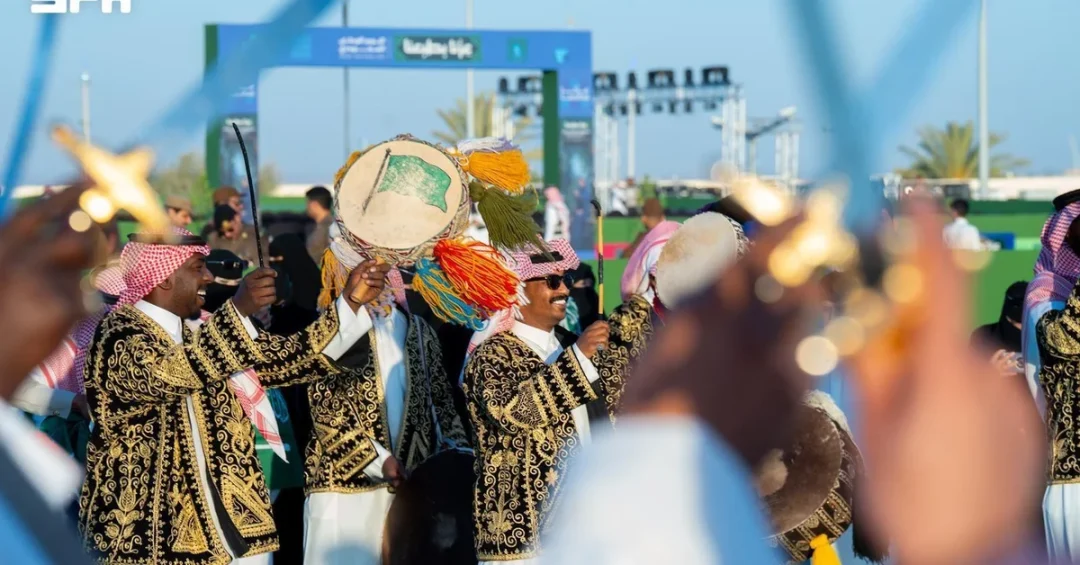
Al-Qurayyat Governorate in the Al-Jouf Region marked Saudi National Day with a vibrant celebration that brought together local officials, residents, and visitors for an evening of traditional folk arts, family entertainment, and community pride, the Saudi Press Agency reported. The event, held under the patronage of local authorities, featured the Saudi Ardah and Samri dances, poetry recitations, and 40 booths hosted by families working in the cottage industry, reflecting the deep cultural fabric of the northern region and the enduring unity of the Kingdom.
The celebration in Al-Qurayyat is one of hundreds of similar events staged across Saudi Arabia each September, as communities from the Red Sea coast to the northern borderlands commemorate the unification of the Kingdom by the late King Abdulaziz Al Saud in 1932. What makes these local gatherings significant is not only their festive character but their role in reinforcing national identity, supporting small family enterprises, and showcasing the diversity of Saudi heritage. For international observers, they offer a window into how Vision 2030 is being woven into the everyday life of communities far from the major metropolitan centers of Riyadh, Jeddah, and the Eastern Province.
Context and Background
Why does a regional National Day celebration in a northern governorate matter on the national stage? Saudi National Day, observed annually on September 23, commemorates the royal decree issued by King Abdulaziz in 1932 that formally established the Kingdom of Saudi Arabia. Over the decades, the occasion has evolved from a formal state commemoration into a nationwide festival that touches every province, city, and village. In Al-Jouf, a region historically known for its agricultural heritage, archaeological sites such as Mada’in Salih — the Kingdom’s first UNESCO World Heritage Site — and its strategic location near the Jordanian border, the celebration carries particular weight as a marker of both continuity and modernization.
Al-Qurayyat itself is a governorate with a distinct identity. Situated close to the northern frontier, it has long served as a crossroads for trade and cultural exchange. Its residents take pride in traditions that blend Bedouin customs with the settled agricultural life of the oases. The National Day event therefore functions as more than a patriotic ritual; it is a platform for local families to present their crafts, foods, and artistic heritage to a wider audience. The participation of 40 cottage-industry booths is especially notable, as it aligns with broader national efforts to empower small businesses and productive families, a key pillar of the Kingdom’s economic diversification strategy.
Across Saudi Arabia, National Day has become a fixture of the annual calendar, with air shows, fireworks, concerts, and heritage villages drawing millions of participants. Yet the celebration in Al-Qurayyat exemplifies the grassroots dimension of these festivities. It is organized with the involvement of local officials, community leaders, and volunteers, and it reflects the Ministry of Culture’s mandate to preserve and promote Saudi intangible cultural heritage. The event also underscores the role of the Saudi Press Agency (SPA), the Kingdom’s official news outlet, in documenting and disseminating news of such community gatherings, thereby reinforcing a shared national narrative.
Key Details
What exactly took place at the Al-Qurayyat celebration? According to the Saudi Press Agency, the event featured a range of cultural and family-oriented activities. The Saudi Ardah, a traditional sword dance performed by men in synchronized rows, was a centerpiece of the program. The Ardah is recognized by UNESCO as an intangible cultural heritage of humanity, and its performance in Al-Qurayyat connects local participants to a centuries-old tradition that spans the Arabian Peninsula. Alongside the Ardah, the Samri dance — a folk art characterized by rhythmic clapping, drumming, and poetic chanting — was performed, highlighting the musical and poetic richness of the northern region.
Poetry recitations formed another key element of the event. In Saudi culture, poetry holds a revered place, serving as a medium for storytelling, praise, and social commentary. Local poets recited verses that celebrated the nation’s history, the wisdom of its leadership, and the aspirations of its people. The presence of 40 booths hosted by families working in the cottage industry added an economic and entrepreneurial dimension to the festivities. These booths displayed handmade products such as textiles, traditional garments, jewelry, incense, and local foods, giving visitors an opportunity to purchase authentic goods while supporting small-scale producers.
The event was attended by local officials, residents, and visitors, creating a festive atmosphere that transcended generational divides. Children participated in entertainment activities, while adults engaged with the cultural performances and the marketplace. The Saudi Press Agency reported that the celebration was held in a spirit of joy and national pride, with attendees expressing their love for the Kingdom and their appreciation for the leadership of the Custodian of the Two Holy Mosques, King Salman bin Abdulaziz Al Saud, and His Royal Highness Crown Prince Mohammed bin Salman. Such statements are typical of National Day coverage in the Kingdom, where public expressions of loyalty and unity are central to the occasion.
International and Regional Impact
How do local celebrations in Saudi Arabia resonate beyond the Kingdom’s borders? For international audiences, events like the one in Al-Qurayyat offer a counterpoint to the often narrow portrayals of Saudi Arabia in global media. They reveal a society that is deeply rooted in tradition yet actively embracing modernization, and they demonstrate the Kingdom’s commitment to preserving cultural heritage as it transforms its economy and social landscape. The participation of families in cottage industries, for instance, signals a growing emphasis on grassroots entrepreneurship, which is attractive to foreign investors and partners looking for authentic local products and experiences.
Regionally, the celebration reinforces Saudi Arabia’s soft power. As the Kingdom positions itself as a cultural and tourism hub — with initiatives such as the Diriyah Gate Project, the Red Sea International Film Festival, and the expansion of heritage sites — local festivals contribute to a broader narrative of openness and diversity. Al-Jouf, with its archaeological treasures and natural landscapes, is increasingly being promoted as a destination for domestic and international tourists. The National Day event in Al-Qurayyat thus serves as a microcosm of the Kingdom’s efforts to diversify its appeal beyond the traditional pilgrimage cities of Makkah and Madinah, inviting visitors to explore the lesser-known regions of Saudi Arabia.
Economic and Strategic Significance
What economic value do such community events generate? The 40 cottage-industry booths represent more than a colorful addition to the festivities; they are part of a deliberate strategy to support productive families and small enterprises. Saudi Arabia’s Vision 2030 aims to increase the contribution of small and medium-sized enterprises to the national economy, and events like the Al-Qurayyat National Day celebration provide a low-barrier marketplace for artisans and home-based businesses. By giving these families a platform to sell their goods, the event helps stimulate local economic activity, preserve traditional crafts, and create income opportunities, particularly for women and youth.
Strategically, the celebration also strengthens social cohesion in a border region. Al-Qurayyat’s proximity to Jordan makes it a gateway for cross-border trade and cultural exchange. National Day festivities that involve the local community and visitors from neighboring areas foster a sense of shared identity and stability. They also align with the Ministry of Interior’s efforts to promote community engagement and with the Ministry of Culture’s programs to document and sustain intangible heritage. In this sense, the event is not merely a one-day festivity but a component of a larger national project to build a resilient, diversified, and inclusive society.
Vision 2030 Alignment
How does a folk-art festival in a northern governorate connect to Saudi Arabia’s long-term vision? Vision 2030, launched in 2016 under the leadership of Crown Prince Mohammed bin Salman, rests on three pillars: a vibrant society, a thriving economy, and an ambitious nation. The Al-Qurayyat celebration embodies all three. It nurtures a vibrant society by celebrating cultural heritage and bringing families together; it supports a thriving economy by enabling cottage industries and local commerce; and it reflects an ambitious nation by showcasing community participation and pride in national achievements.
As Saudi Arabia continues its journey of transformation, events like this will remain essential. They remind citizens and international observers alike that modernization does not mean erasing tradition; rather, it means harnessing tradition as a source of identity and economic value. The Al-Qurayyat National Day celebration, with its Ardah dances, Samri rhythms, poetry, and family booths, is a testament to the Kingdom’s enduring spirit and its forward-looking vision. It is a celebration not only of the past but of the future that Saudi Arabia is building — one community at a time.
20 Questions
Q1. What event did Al-Qurayyat Governorate celebrate?
A1. Al-Qurayyat Governorate in the Al-Jouf Region celebrated Saudi National Day, marking the unification of the Kingdom in 1932 with cultural and family-oriented festivities.
Q2. Where is Al-Qurayyat located?
A2. Al-Qurayyat is a governorate in the Al-Jouf Region of northern Saudi Arabia, near the border with Jordan, known for its agricultural heritage and historical significance.
Q3. Who attended the celebration?
A3. The event was attended by local officials, residents, and visitors, reflecting broad community participation and a shared sense of national pride.
Q4. What traditional dances were performed?
A4. The celebration featured the Saudi Ardah, a UNESCO-recognized sword dance, and the Samri dance, a folk art involving rhythmic clapping and chanting.
Q5. How many cottage-industry booths were set up?
A5. There were 40 booths hosted by families working in the cottage industry, displaying handmade goods and traditional products.
Q6. What is the significance of the Ardah dance?
A6. The Ardah is a traditional Saudi sword dance performed by men in rows, symbolizing unity and strength, and is inscribed on UNESCO’s Intangible Cultural Heritage list.
Q7. What is the Samri dance?
A7. The Samri is a folk dance from the northern regions of Saudi Arabia, characterized by rhythmic drumming, clapping, and poetic recitations, often performed at celebrations.
Q8. Why is poetry important in Saudi culture?
A8. Poetry is a revered art form in Saudi Arabia, used to express pride, preserve history, and convey social values, and it remains central to cultural gatherings.
Q9. What role did the Saudi Press Agency play?
A9. The Saudi Press Agency (SPA) reported on the event, documenting the festivities and disseminating news through official channels to a national and international audience.
Q10. How does the event support Vision 2030?
A10. It aligns with Vision 2030 by promoting cultural heritage, empowering small businesses, and fostering community cohesion, contributing to a vibrant society and thriving economy.
Q11. What are cottage industries?
A11. Cottage industries are small-scale, home-based businesses that produce handmade goods, often run by families, and are supported by Saudi initiatives to boost local entrepreneurship.
Q12. What products were likely sold at the booths?
A12. The booths likely offered traditional items such as textiles, clothing, jewelry, incense, and local foods, showcasing the region’s artisanal heritage.
Q13. How does Al-Jouf Region contribute to Saudi tourism?
A13. Al-Jouf is home to archaeological sites like Mada’in Salih and natural landscapes, and is being promoted as a destination for cultural and heritage tourism.
Q14. What is the significance of National Day in Saudi Arabia?
A14. National Day commemorates the founding of the Kingdom in 1932 and is celebrated nationwide with events that reinforce unity, patriotism, and cultural pride.
Q15. Who is the current leader of Saudi Arabia?
A15. The Custodian of the Two Holy Mosques, King Salman bin Abdulaziz Al Saud, is the King, with Crown Prince Mohammed bin Salman as the Prime Minister and architect of Vision 2030.
Q16. How do local celebrations reflect Saudi unity?
A16. Local celebrations across the Kingdom, from major cities to small governorates, demonstrate shared national identity and the inclusive nature of Saudi society.
Q17. What is the economic impact of such events?
A17. They stimulate local commerce, support small businesses, and create income opportunities, particularly for women and youth, aligning with economic diversification goals.
Q18. Are these events open to international visitors?
A18. Yes, Saudi Arabia welcomes international visitors to cultural events, especially as it expands tourism under Vision 2030, offering insights into its heritage.
Q19. How does the Ministry of Culture support such events?
A19. The Ministry of Culture promotes and preserves intangible heritage through programs, grants, and partnerships that enable local festivals and artistic performances.
Q20. What does the future hold for Al-Qurayyat?
A20. Al-Qurayyat is poised to benefit from ongoing regional development, tourism promotion, and Vision 2030 initiatives that aim to enhance quality of life and economic opportunity.
Reader Feedback
We value your thoughts. Please share your feedback on this article.
Your feedback helps us improve our coverage.
Related articles
 Tabarjal Governorate Marks Saudi National Day
 Saudi Ardah performances mark National Day in Makkah
 Madinah National Day celebrations feature military parade and heritage shows
 Al-Jouf Castles Glow Green for Saudi National Day
 Madinah Marks National Day with Military Parade, Heritage Shows
 Jazan Celebrates National Day Across 16 Governorates