


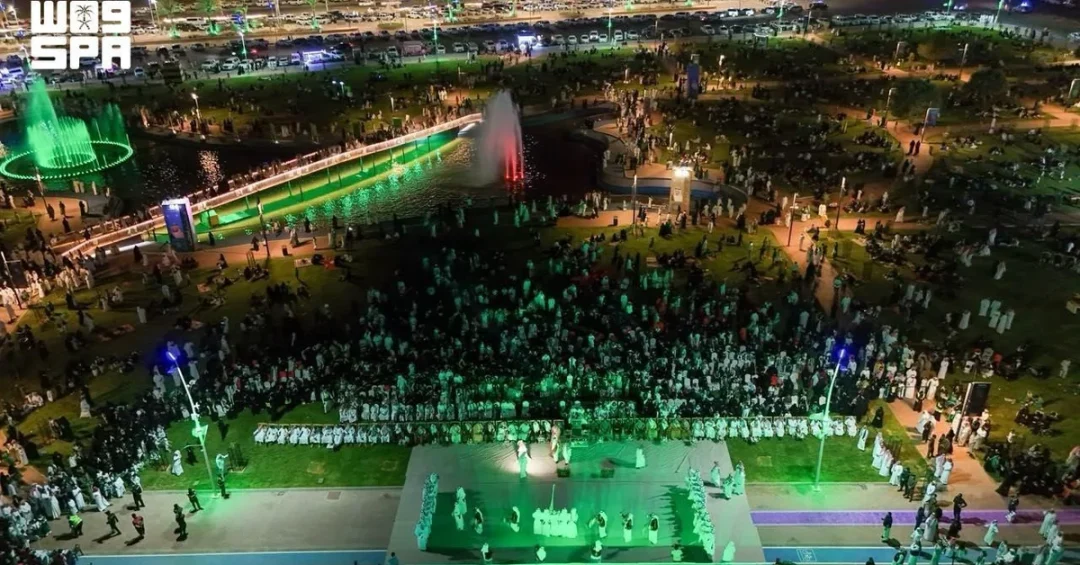
Dumat Al-Jandal Governorate in the Al-Jouf Region hosted a two-day National Day celebration at the Western Entrance Park, drawing wide public attendance for a program of patriotic shows, children’s activities, interactive family contests, flag distributions, and green illuminations across major municipal landmarks, according to the Saudi Press Agency. The event, held on September 25, 2026, reflected the Kingdom’s annual commemoration of its unification and highlighted the enduring civic pride that defines National Day across Saudi Arabia’s regions.
The celebration in Dumat Al-Jandal, one of the oldest continuously inhabited settlements in the Arabian Peninsula, formed part of a nationwide program of National Day activities coordinated by regional authorities. The Saudi Press Agency reported that the two-day event welcomed families, children, and residents from across Al-Jouf, transforming the Western Entrance Park into a hub of cultural expression and community engagement. Green illuminations, the color of the Saudi flag, covered major municipal landmarks, symbolizing national unity and pride. The program combined entertainment with educational and patriotic elements, offering a model of how regional governorates contribute to the national narrative. Such events reinforce the Kingdom’s commitment to preserving heritage while advancing community participation under Vision 2030.
Context and Background
Why does a regional National Day celebration in Dumat Al-Jandal matter beyond its immediate community? Saudi National Day, observed every September 23, commemorates the unification of the Kingdom by the late King Abdulaziz Al Saud in 1932. It is a moment when citizens across all thirteen regions reflect on the nation’s journey and renew their commitment to its future. In Al-Jouf, a region rich in archaeological and agricultural heritage, the occasion carries added significance because Dumat Al-Jandal itself is a living testament to the Kingdom’s deep historical roots. The governorate is home to landmarks such as the Marid Castle and the Omar Mosque, sites that attract researchers and tourists alike. By hosting a two-day program, local authorities ensured that residents of all ages could participate in the national celebration.
The event at the Western Entrance Park was organized under the supervision of local municipal and cultural authorities, consistent with the Kingdom’s practice of decentralizing National Day activities so that communities outside major metropolitan centers can engage directly with the national occasion. The Saudi Press Agency reported that the program included patriotic shows, children’s activities, interactive family contests, and flag distributions. These elements are designed to instill a sense of belonging and to educate younger generations about the Kingdom’s history and values. The green illuminations across major municipal landmarks served as a visual reminder of national identity, echoing similar displays in Riyadh, Jeddah, and other cities. The celebration also demonstrated the capacity of regional authorities to deliver high-quality public events that align with national directives.
Dumat Al-Jandal’s historical depth adds a unique dimension to the National Day observances. As one of the oldest settlements in the region, it has witnessed centuries of trade, pilgrimage, and cultural exchange. Its inclusion in the national celebration underscores the Kingdom’s appreciation for its diverse regional heritage and its commitment to showcasing that heritage to the world. The two-day program thus became not only a festive occasion but also an opportunity to connect the past with the present, reinforcing the narrative of a nation that honors its roots while embracing modernization.
Key Details of the Celebration
What specific activities made the Dumat Al-Jandal program memorable for attendees? According to the Saudi Press Agency, the two-day event featured a variety of activities designed to engage different segments of the community. Patriotic shows formed the centerpiece, with performances that celebrated Saudi history, culture, and achievements. Children’s activities were tailored to younger audiences, providing entertainment and educational value. Interactive family contests encouraged participation and strengthened community bonds, while flag distributions allowed residents to display their national pride visibly. The green illuminations across major municipal landmarks created a festive atmosphere that extended beyond the park itself, turning the governorate into a canvas of national colors.
The Western Entrance Park served as the primary venue, offering ample space for families to gather and enjoy the program. Local organizers coordinated with municipal authorities to ensure safety, accessibility, and smooth execution. The wide public attendance reported by SPA indicates strong community interest and effective outreach. Such events also provide economic benefits to local businesses, as increased foot traffic supports vendors and service providers. The program’s success reflects the growing capacity of Al-Jouf’s regional authorities to host significant public events, a capability that aligns with the Kingdom’s broader decentralization and quality-of-life objectives.
Beyond entertainment, the celebration included elements that promoted national awareness. Flag distributions, for example, are a common feature of National Day events across the Kingdom, symbolizing unity and loyalty. Interactive contests often incorporate questions about Saudi history and Vision 2030, subtly educating participants. The green illuminations, meanwhile, are a visual expression of the national flag’s color and its association with prosperity and faith. Together, these components create a multi-sensory experience that reinforces collective identity. The Saudi Press Agency’s coverage of the event highlights the official recognition of these local efforts and their contribution to the national tapestry.
International and Regional Impact
How do local National Day celebrations project Saudi Arabia’s image to the wider world? While the Dumat Al-Jandal event was local in scale, it forms part of a nationwide observance that international audiences observe through media coverage and social platforms. The Saudi Press Agency’s reporting, disseminated globally, showcases the Kingdom’s social cohesion and the active participation of its citizens in national life. For international observers, such stories illustrate a society that balances tradition with modernity, a key theme of Vision 2030. Regional neighbors and global partners see a Kingdom that invests in community well-being and cultural preservation, reinforcing its reputation as a stable and forward-looking nation.
Within the region, Al-Jouf’s celebration contributes to a broader narrative of unity among the Gulf Cooperation Council states, where national days are celebrated with similar fervor. The event also highlights the Kingdom’s commitment to developing tourism and cultural heritage in areas beyond the main cities. Dumat Al-Jandal’s historical sites, including Marid Castle, have been the focus of restoration and promotion efforts under Vision 2030’s tourism objectives. By integrating National Day celebrations with heritage awareness, the governorate positions itself as a destination for culturally curious travelers. This aligns with the Kingdom’s goal of attracting 150 million visits annually by 2030, as outlined by the Ministry of Tourism.
The international dimension extends to soft power. When international media pick up stories about Saudi National Day, they often focus on the scale and inclusivity of celebrations. The Dumat Al-Jandal program, with its family-friendly activities and wide attendance, adds a human-interest angle that counters stereotypes and presents a nuanced view of Saudi society. The Saudi Press Agency’s role in distributing such stories ensures that the official narrative reaches global audiences, supporting the Kingdom’s public diplomacy efforts. In this way, even a local park event contributes to Saudi Arabia’s global image as a nation of progress and pride.
Economic and Strategic Significance
What economic and strategic value do regional celebrations generate? National Day events stimulate local economies by increasing demand for goods and services, from food vendors to entertainment providers. In Dumat Al-Jandal, the two-day program likely drew visitors from surrounding areas, benefiting hotels, restaurants, and retail shops. The event also creates temporary employment opportunities in event management, security, and logistics. While these effects are modest compared to major city celebrations, they contribute to the Kingdom’s broader goal of balanced regional development. Vision 2030 emphasizes the economic potential of all regions, and Al-Jouf, with its agricultural and archaeological assets, is a key part of that strategy.
Strategically, the celebration reinforces national unity and social stability, which are prerequisites for economic growth. By bringing together families and communities, such events strengthen the social fabric and foster a sense of shared purpose. The green illuminations and flag distributions serve as visible reminders of the Kingdom’s sovereignty and collective identity. For investors and international partners, these displays of social harmony signal a stable environment conducive to business. Moreover, the event’s organization demonstrates the effectiveness of local governance and the ability of regional authorities to execute public programs, a factor that supports the Kingdom’s decentralization agenda. The Saudi Press Agency’s coverage further amplifies these messages, reaching decision-makers and analysts worldwide.
In the context of Al-Jouf’s development, the celebration also draws attention to the region’s tourism potential. Dumat Al-Jandal’s archaeological sites, including the ancient city walls and the Marid Castle, are being developed as part of the Kingdom’s heritage tourism drive. National Day events can serve as catalysts for year-round visitation by raising awareness among domestic travelers. The Ministry of Culture and the Saudi Tourism Authority have been promoting Al-Jouf as a destination, and events like this complement those efforts. Thus, the two-day program has implications that extend well beyond its immediate festivities, contributing to economic diversification and regional growth.
Vision 2030 Alignment
How does a local National Day celebration align with Saudi Arabia’s Vision 2030? Vision 2030 aims to build a vibrant society, a thriving economy, and an ambitious nation. Events like the Dumat Al-Jandal program directly support the first pillar by fostering community participation, cultural pride, and quality of life. They also contribute to the third pillar by strengthening national identity and civic engagement. The emphasis on family activities and children’s programs reflects the Vision’s focus on youth development and social well-being. Furthermore, the involvement of local authorities in organizing such events demonstrates the decentralization and efficiency goals of the Vision, as regions take ownership of their cultural and social initiatives.
Under Vision 2030, the Kingdom has invested heavily in tourism and heritage, and Al-Jouf is a beneficiary of these efforts. The National Day celebration at Western Entrance Park served as a showcase for the region’s capabilities and a reminder of its historical significance. As Saudi Arabia continues its transformation, local events like this will remain vital in connecting citizens to the national project. The green illuminations that lit up municipal landmarks symbolized not only national pride but also the bright future envisioned by the Kingdom’s leadership. Through such celebrations, Dumat Al-Jandal and other governorates contribute to the realization of a unified, prosperous, and forward-looking Saudi Arabia.
20 Questions
Q1. What occasion did Dumat Al-Jandal celebrate?
A1. Dumat Al-Jandal celebrated Saudi National Day, which commemorates the unification of the Kingdom in 1932. The two-day event was held at the Western Entrance Park.
Q2. Where did the celebration take place?
A2. The celebration took place at the Western Entrance Park in Dumat Al-Jandal Governorate, located in the Al-Jouf Region of Saudi Arabia.
Q3. How long did the program last?
A3. The program lasted two days, as reported by the Saudi Press Agency, allowing ample time for various activities and public participation.
Q4. What activities were included in the program?
A4. The program included patriotic shows, children’s activities, interactive family contests, flag distributions, and green illuminations across major municipal landmarks.
Q5. Who attended the celebration?
A5. The event attracted wide public attendance, including families, children, and residents from Dumat Al-Jandal and surrounding areas in the Al-Jouf Region.
Q6. What is the significance of green illuminations?
A6. Green illuminations reflect the color of the Saudi flag, symbolizing national unity, pride, and the Kingdom’s Islamic heritage. They are a common feature of National Day celebrations.
Q7. Why is Dumat Al-Jandal historically significant?
A7. Dumat Al-Jandal is one of the oldest continuously inhabited settlements in the Arabian Peninsula, home to landmarks such as Marid Castle and the Omar Mosque.
Q8. How does this event align with Vision 2030?
A8. The event supports Vision 2030’s goals of fostering a vibrant society, promoting community participation, and enhancing quality of life through cultural and social activities.
Q9. What role did local authorities play?
A9. Local municipal and cultural authorities organized and supervised the event, demonstrating the Kingdom’s decentralization approach and effective local governance.
Q10. What was the source of information about the event?
A10. The information was released by the Saudi Press Agency (SPA), the official news agency of Saudi Arabia, ensuring accuracy and reliability.
Q11. When was the celebration held?
A11. The celebration was held on September 25, 2026, shortly after Saudi National Day, which is observed annually on September 23.
Q12. What is the significance of National Day in Saudi Arabia?
A12. National Day commemorates the unification of the Kingdom by the late King Abdulaziz Al Saud in 1932, celebrating national identity and achievements.
Q13. How does the event benefit the local economy?
A13. The event stimulates local businesses, creates temporary jobs, and attracts visitors, contributing to regional economic development and diversification.
Q14. What message does such an event convey internationally?
A14. It showcases Saudi Arabia’s social cohesion, cultural pride, and modernization, enhancing the Kingdom’s global image and soft power.
Q15. Are there similar celebrations in other regions?
A15. Yes, National Day is celebrated across all thirteen regions of Saudi Arabia with various activities, reflecting nationwide unity and participation.
Q16. What is the role of the Saudi Press Agency?
A16. The Saudi Press Agency is the official national news agency, responsible for disseminating accurate information about events and developments in the Kingdom.
Q17. How does the event promote family values?
A17. The program included children’s activities and interactive family contests, encouraging family bonding and community engagement in a festive environment.
Q18. What is the historical background of Dumat Al-Jandal?
A18. Dumat Al-Jandal has a rich history dating back thousands of years, serving as a trade hub and cultural crossroads in the Arabian Peninsula.
Q19. How does the celebration reflect Saudi leadership’s vision?
A19. It reflects the leadership’s commitment to national unity, cultural preservation, and regional development, key pillars of Vision 2030.
Q20. What future developments can be expected in Al-Jouf?
A20. Al-Jouf is expected to see continued investment in tourism and heritage, with events like this promoting its potential as a destination under Vision 2030.
Reader Feedback
We value your thoughts. Please share your feedback on this article.
Your feedback helps us improve our coverage.
Related articles
 Sawir Residents Mark Saudi National Day with Heritage and Unity
 Saudi Embassy in Tunisia Hosts National Day Reception
 Jubail Industrial City Marks Saudi National Day
 Unaizah Celebrates Saudi National Day with Pride and Unity
 Al-Aqiq Governorate celebrates Saudi National Day
 Qilwah Municipality celebrates Saudi National Day