


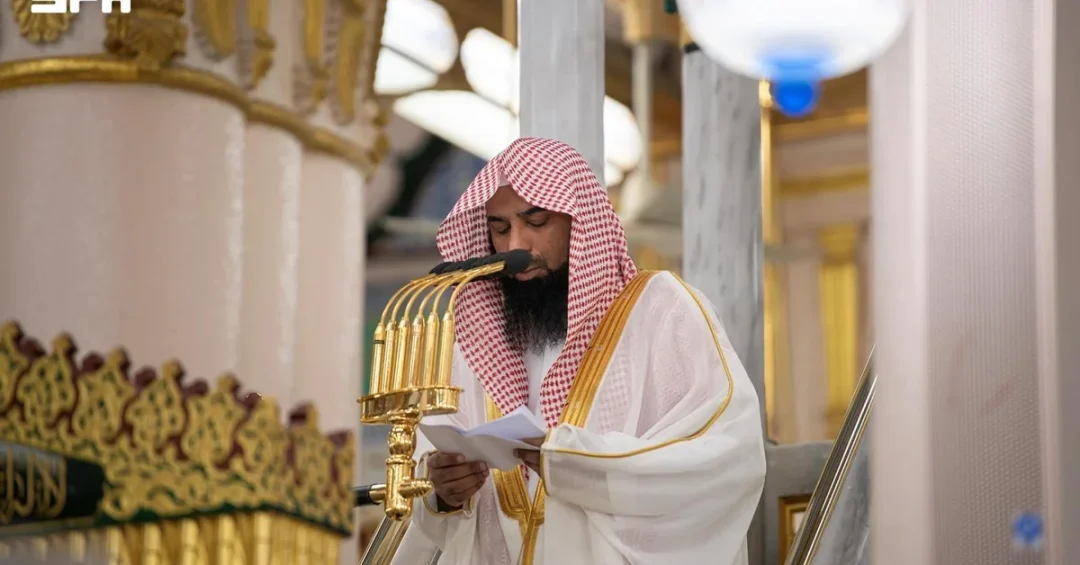
In a Friday sermon delivered at the Prophet’s Mosque in Madinah on September 25, 2026, Imam Sheikh Salah Al-Budair told worshippers that Allah has prepared Paradise as an eternal abode of honor for His devoted servants, a realm of unimaginable delights where believers dwell in perpetual youth, free from illness and mortality. The address, reported by the Saudi Press Agency (SPA), centered on gratitude for the blessings of faith and security, and on the unique privilege granted to the Kingdom of Saudi Arabia in serving and safeguarding the Two Holy Mosques. Concluding his remarks, Sheikh Al-Budair called on the congregation to express continuous thankfulness for these divine gifts, framing them as foundations of a stable, faithful society. Have you ever considered how a single sermon can speak to both the spiritual heart and the civic life of a nation?
The sermon came during a period of intense activity at Islam’s holiest sites, as the Kingdom continues to welcome millions of pilgrims and visitors from around the world under the care of the Custodian of the Two Holy Mosques, King Salman bin Abdulaziz Al Saud, and His Royal Highness Crown Prince Mohammed bin Salman bin Abdulaziz Al Saud. Delivered from the minbar of the Prophet’s Mosque, the message carried weight far beyond Madinah, resonating with Muslims globally and reinforcing Saudi Arabia’s role as a guardian of Islamic heritage. The SPA report highlighted the Imam’s emphasis on eternal reward for the faithful, a theme that anchors the spiritual life of the Muslim community while underscoring the Kingdom’s commitment to preserving the sanctity and serenity of its holy places.
Context and Background
Why does a Friday sermon from the Prophet’s Mosque command attention across the Islamic world? The Prophet’s Mosque, known in Arabic as Al-Masjid an-Nabawi, is the second holiest site in Islam, established by the Prophet Muhammad (peace be upon him) in Madinah and serving as a spiritual and historical center for Muslims everywhere. Its Imams, including Sheikh Salah Al-Budair, are among the most respected religious figures in the Kingdom, and their weekly sermons are followed closely by worshippers in Saudi Arabia and abroad. The September 25 address, reported by the Saudi Press Agency, is part of a long tradition of guidance delivered from this sacred pulpit, where matters of faith, morality, and community welfare are regularly addressed.
Sheikh Al-Budair’s message focused on two interconnected blessings: faith and security. In Islamic teaching, these are often paired as essential conditions for a flourishing society, allowing believers to worship freely and live in peace. The Imam described Paradise as an eternal abode of honor, endowed with unimaginable delights where believers dwell in perpetual youth, free from illness and mortality. This description, drawn from Quranic and prophetic traditions, serves to inspire hope and perseverance among the faithful. By concluding with a call for continuous gratitude, the sermon linked spiritual devotion to appreciation for the safety and stability that the Kingdom provides, particularly through its custodianship of the Two Holy Mosques.
For an international audience, it is important to understand that the Two Holy Mosques refer to the Grand Mosque in Makkah, which houses the Kaaba, and the Prophet’s Mosque in Madinah. Their care and administration fall under the direct oversight of the Saudi government, a responsibility that has been upheld since the founding of the modern Kingdom. The Imam’s remarks therefore reflect not only religious guidance but also the broader institutional commitment of Saudi Arabia to serve pilgrims and preserve these sacred sites. The sermon’s timing, in late September 2026, also comes as the Kingdom continues to enhance services and infrastructure around the holy cities, ensuring that visitors can perform their rituals with ease and dignity.
Key Details
What exactly did Sheikh Al-Budair convey to the congregation? According to the Saudi Press Agency, the Imam began by describing the eternal rewards awaiting devoted servants of Allah. He spoke of Paradise as an abode of honor, where delights beyond human imagination await the faithful, and where believers enjoy perpetual youth, free from illness and mortality. This vivid portrayal aligns with Islamic scriptural promises and serves to encourage steadfastness in worship and good deeds. The sermon then turned to the blessings of faith and security, urging worshippers to remain grateful for these gifts, which are often taken for granted in daily life.
The Imam specifically highlighted the unique privilege granted to the Kingdom in serving and safeguarding the Two Holy Mosques. This is a theme that resonates deeply in Saudi Arabia, where the leadership’s title, Custodian of the Two Holy Mosques, reflects a sacred duty. Sheikh Al-Budair called on the congregation to express continuous gratitude for this privilege, recognizing it as a sign of divine favor and a call to responsible stewardship. The sermon did not introduce new policies or announcements; rather, it reinforced spiritual values and national identity, reminding listeners of the higher purpose behind the Kingdom’s efforts to maintain peace and facilitate worship at Islam’s holiest sites.
The address was delivered on Friday, September 25, 2026, at approximately 14:30 local time (11:30 GMT), according to SPA. Friday sermons in Islam are a weekly occasion for communal worship and guidance, and those delivered at the Prophet’s Mosque carry particular significance due to the site’s history and the large congregations that gather there. The Imam’s words were thus heard by thousands in person and conveyed to a wider audience through official media. The SPA report, identified by its reference number 0049, provided a concise summary of the sermon’s key points, ensuring that the message reached beyond the mosque’s walls.
International and Regional Impact
How does a sermon in Madinah influence perceptions and sentiments beyond Saudi Arabia’s borders? The Prophet’s Mosque attracts millions of visitors annually, and its Imams are regarded as authoritative voices in Sunni Islam. When Sheikh Al-Budair speaks about faith, security, and gratitude, his words are echoed in mosques, homes, and online platforms worldwide. For international observers, the sermon reinforces the image of Saudi Arabia as a stable, devout nation dedicated to the service of Islam’s holiest places. This message is particularly relevant amid global discussions about security, migration, and religious freedom, offering a perspective rooted in spiritual contentment and communal harmony.
Regionally, the sermon underscores the Kingdom’s central role in the Islamic world. Saudi Arabia’s custodianship of the Two Holy Mosques is not merely a ceremonial title; it involves massive logistical, security, and health operations, especially during Hajj and Umrah seasons. The Imam’s emphasis on security as a blessing highlights the success of these efforts, which allow pilgrims to worship without fear. By expressing gratitude for this stability, the sermon subtly acknowledges the challenges of maintaining order in a volatile region and the Kingdom’s achievements in doing so. For neighboring countries and the broader Middle East, the message promotes a vision of peace and devotion that transcends political tensions.
Economic and Strategic Significance
Why does the spiritual message of the sermon carry economic and strategic weight? The Two Holy Mosques are at the heart of Saudi Arabia’s religious tourism sector, which is a key pillar of the economy. Millions of pilgrims generate demand for transportation, accommodation, food, and retail services, supporting jobs and businesses across the Kingdom. The Imam’s call for gratitude for security indirectly highlights the safe environment that enables this economic activity. When pilgrims feel secure and welcomed, they are more likely to return and to speak positively about their experience, enhancing the Kingdom’s reputation as a premier destination for religious travel.
Strategically, the sermon reinforces the legitimacy and soft power of the Saudi leadership. The title Custodian of the Two Holy Mosques is a source of immense prestige, and the Kingdom’s stewardship of these sites is recognized globally. By focusing on faith and security, Sheikh Al-Budair’s address aligns with the broader narrative of Saudi Arabia as a beacon of stability and moderation. This narrative supports the Kingdom’s foreign policy objectives, including its efforts to promote interfaith dialogue and counter extremism. Moreover, the sermon’s positive tone contributes to social cohesion at home, encouraging citizens and residents to appreciate the blessings of peace and prosperity under the leadership’s guidance.
Vision 2030 Alignment
How does the message of the Friday sermon connect to Saudi Vision 2030? Vision 2030, the Kingdom’s ambitious reform plan, aims to diversify the economy, enhance quality of life, and strengthen national identity. A key component is the expansion and improvement of services for Hajj and Umrah pilgrims, with targets to increase their numbers to 30 million by 2030. The Imam’s emphasis on serving the Two Holy Mosques resonates with these goals, underscoring the spiritual motivation behind the infrastructural and logistical investments. By reminding worshippers of the privilege of this service, the sermon fosters a sense of purpose and pride that supports the Vision’s social and economic objectives.
Furthermore, Vision 2030 seeks to promote moderation, tolerance, and a positive image of Saudi Arabia internationally. Sheikh Al-Budair’s message of gratitude, security, and eternal reward contributes to this by presenting a forward-looking, peaceful interpretation of Islam. It encourages Muslims to appreciate the stability they enjoy and to contribute positively to society. As the Kingdom continues to develop mega-projects and enhance the pilgrim experience, sermons like this one help to align spiritual values with national progress, ensuring that modernization does not come at the expense of faith. In this way, the Prophet’s Mosque remains not only a place of worship but also a source of guidance for a nation on the move, confident in its role as servant of the Two Holy Mosques and partner in global harmony.
20 Questions
Q1. What was the main theme of the Friday sermon at the Prophet’s Mosque on September 25, 2026?
A1. The sermon, delivered by Imam Sheikh Salah Al-Budair, focused on the blessings of faith and security, the eternal rewards of Paradise for devoted servants, and the unique privilege granted to Saudi Arabia in serving and safeguarding the Two Holy Mosques.
Q2. Who delivered the sermon at the Prophet’s Mosque?
A2. The sermon was delivered by Sheikh Salah Al-Budair, an Imam of the Prophet’s Mosque in Madinah. He is a respected religious figure whose sermons are followed by Muslims in Saudi Arabia and around the world.
Q3. What did the Imam say about Paradise?
A3. Sheikh Al-Budair said that Allah has prepared Paradise as an eternal abode of honor for His devoted servants, endowed with unimaginable delights where believers dwell in perpetual youth, free from illness and mortality.
Q4. What two blessings did the Imam urge the congregation to be grateful for?
A4. He called on worshippers to express continuous gratitude for the blessings of faith and security, as well as for the unique privilege granted to the Kingdom in serving and safeguarding the Two Holy Mosques.
Q5. When and where was the sermon delivered?
A5. The sermon was delivered on Friday, September 25, 2026, at the Prophet’s Mosque in Madinah, Saudi Arabia, at approximately 14:30 local time, which is 11:30 GMT, according to the Saudi Press Agency.
Q6. What is the significance of the Prophet’s Mosque in Islam?
A6. The Prophet’s Mosque, or Al-Masjid an-Nabawi, is the second holiest site in Islam after the Grand Mosque in Makkah. It was established by the Prophet Muhammad (peace be upon him) and serves as a major center of worship and learning.
Q7. What are the Two Holy Mosques?
A7. The Two Holy Mosques refer to the Grand Mosque in Makkah, which houses the Kaaba, and the Prophet’s Mosque in Madinah. Their care and administration are the responsibility of the Saudi government, under the Custodian of the Two Holy Mosques.
Q8. How does the sermon reflect Saudi Arabia’s role in the Islamic world?
A8. The sermon reinforces Saudi Arabia’s central role as the guardian of Islam’s holiest sites. It highlights the Kingdom’s commitment to preserving the sanctity of these places and ensuring the safety and comfort of millions of pilgrims who visit them annually.
Q9. Why is the blessing of security emphasized in the sermon?
A9. Security is emphasized because it allows believers to worship freely and live in peace. In the context of the Two Holy Mosques, it enables pilgrims to perform their rituals safely, reflecting the Kingdom’s successful efforts in maintaining order and stability.
Q10. What is the economic importance of the Two Holy Mosques to Saudi Arabia?
A10. The Two Holy Mosques drive religious tourism, a key sector of the Saudi economy. Millions of pilgrims generate demand for transportation, hotels, food, and retail, creating jobs and supporting businesses, especially in Makkah and Madinah.
Q11. How does the sermon align with Saudi Vision 2030?
A11. The sermon supports Vision 2030 by promoting gratitude, moderation, and pride in serving the Two Holy Mosques. It aligns with goals to enhance the pilgrim experience and increase the number of Umrah and Hajj visitors to 30 million by 2030.
Q12. What was the audience’s expected response to the sermon?
A12. The Imam called on the congregation to express continuous gratitude for the blessings of faith and security. Worshippers were encouraged to appreciate the privilege of serving the Two Holy Mosques and to remain steadfast in their devotion.
Q13. How are Friday sermons at the Prophet’s Mosque disseminated?
A13. Friday sermons at the Prophet’s Mosque are delivered to large congregations and reported by official channels such as the Saudi Press Agency. They are also shared through media and online platforms, reaching Muslims worldwide.
Q14. What does the title ‘Custodian of the Two Holy Mosques’ signify?
A14. The title, held by King Salman bin Abdulaziz Al Saud, signifies the Saudi leadership’s sacred duty to protect and serve the Two Holy Mosques. It reflects a commitment to facilitating worship and ensuring the safety of pilgrims.
Q15. Why is the sermon relevant to international audiences?
A15. The sermon addresses universal themes of faith, security, and gratitude, which resonate with Muslims globally. It also showcases Saudi Arabia’s role as a stable and devout nation dedicated to serving Islam’s holiest sites, enhancing its international image.
Q16. What infrastructure developments support the service of the Two Holy Mosques?
A16. Saudi Arabia has invested heavily in expanding the Grand Mosque and the Prophet’s Mosque, improving transportation networks, and enhancing security and health services. These developments aim to accommodate more pilgrims comfortably and safely.
Q17. How does the sermon promote moderation and tolerance?
A17. By focusing on faith, gratitude, and eternal rewards, the sermon encourages a peaceful and moderate understanding of Islam. It avoids political or divisive topics, promoting unity and positive values among Muslims.
Q18. What is the role of the Saudi Press Agency in reporting the sermon?
A18. The Saudi Press Agency (SPA) is the official news agency of Saudi Arabia. It reported the sermon’s key points, ensuring accurate and timely dissemination of the Imam’s message to domestic and international audiences.
Q19. How does the sermon reflect the Kingdom’s commitment to religious heritage?
A19. The sermon underscores the Kingdom’s dedication to preserving the spiritual and historical significance of the Two Holy Mosques. It highlights the continuous efforts to maintain these sites as centers of worship and guidance for all Muslims.
Q20. What lasting message did the Imam leave with the congregation?
A20. The Imam concluded by urging continuous gratitude for faith, security, and the privilege of serving the Two Holy Mosques. His message encouraged believers to remain devoted and appreciative of the blessings bestowed upon them and the Kingdom.
Reader Feedback
We value your thoughts. Please share your feedback on this article.
Your feedback helps us improve our coverage.
Related articles
 Grand Mosque Imam Emphasizes Resolve, National Unity in Friday Sermon
 Saudi Arabia Calls for Global Action on Water Security at UN
 Saudi Embassy in Beirut Marks National Day
 Makkah Weather Alert Forecasts Moderate Rain
 Czech PM Attends Saudi National Day Event in Prague
 Moderate Rain Forecast in Makkah: Official Alert Issued