


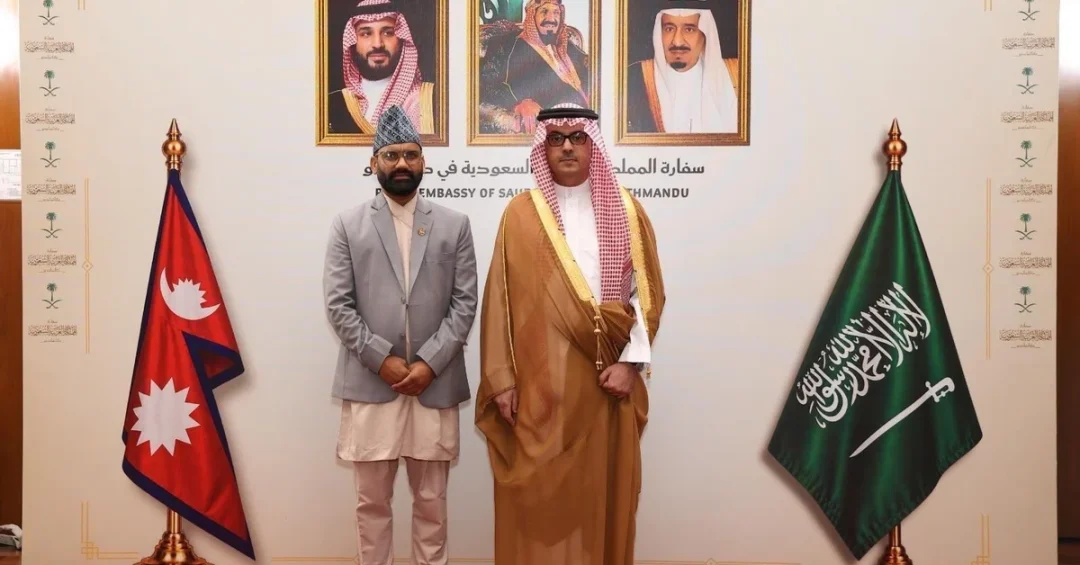
The Saudi Embassy in Nepal hosted a formal reception in Kathmandu on September 24, 2026, to mark Saudi National Day, drawing senior Nepali officials including Minister of Culture, Tourism and Civil Aviation Khadak Raj Paudel, according to the Saudi Press Agency. The event, held under the auspices of Saudi Ambassador to Nepal Fahd bin Mohammed bin Mnikhr, underscored the deepening friendship between the Kingdom of Saudi Arabia and Nepal and highlighted the growing people-to-people, cultural, and economic ties that connect the two nations.
How does a single diplomatic reception in Kathmandu reflect the broader global reach of Saudi Arabia’s Vision 2030? The gathering at the Saudi Embassy served as more than a ceremonial commemoration of the Kingdom’s unification. It offered a visible platform for Saudi diplomacy in South Asia, a region where the Kingdom has steadily expanded cooperation in labor mobility, tourism, cultural exchange, and development. Ambassador Fahd bin Mohammed bin Mnikhr personally welcomed guests and expressed his appreciation to all who joined the celebration, reinforcing the embassy’s role as an active bridge between Riyadh and Kathmandu. The presence of Minister Khadak Raj Paudel, whose portfolio covers culture, tourism, and civil aviation, signaled Nepal’s recognition of the partnership’s value across several strategic sectors.
Context and Background
What does Saudi National Day represent for a diplomatic mission thousands of kilometers from Riyadh? Observed each September 23, Saudi National Day commemorates the unification of the Kingdom by the late King Abdulaziz Al Saud in 1932. It has evolved into a global occasion through which Saudi embassies connect with host nations, sharing the Kingdom’s heritage and outlining its modern trajectory under Vision 2030. In Nepal, the reception followed this tradition, bringing together government representatives, diplomats, business figures, and community members in a spirit of mutual respect and celebration.
Saudi-Nepali relations have deepened considerably over recent decades. Nepal is a significant partner for the Kingdom in the area of labor cooperation, with hundreds of thousands of Nepali workers contributing to Saudi Arabia’s economy across construction, hospitality, healthcare, and other sectors. In turn, Saudi Arabia has become a leading destination for Nepali expatriates, and remittances from the Kingdom play a meaningful role in Nepal’s economy. The reception therefore carried significance beyond protocol: it acknowledged a relationship built on shared interests, mutual benefit, and sustained official engagement. The Saudi Embassy in Kathmandu has consistently supported community events, cultural programming, and consular services that strengthen these bonds. By hosting the National Day event, the embassy reaffirmed its commitment to maintaining open channels with Nepali institutions and to celebrating the contributions of Nepali residents who have worked in the Kingdom.
Key Details
Who attended the Saudi National Day reception, and what message did their presence convey? According to the Saudi Press Agency, the event was attended by Minister of Culture, Tourism and Civil Aviation Khadak Raj Paudel and a number of other officials. Ambassador Fahd bin Mohammed bin Mnikhr welcomed the guests and thanked them for joining Saudi Arabia’s celebration. The participation of a senior Nepali cabinet minister reflected the importance Nepal attaches to its relationship with the Kingdom and the respect accorded to Saudi Arabia’s national occasion.
The reception featured the customary elements of Saudi National Day commemorations: a celebration of Saudi heritage, reflections on the Kingdom’s founding, and an emphasis on its contemporary achievements. Such events typically include displays of Saudi culture, opportunities for networking among diplomatic and business communities, and remarks on the enduring friendship between the host country and the Kingdom. The Saudi Embassy used the occasion to express appreciation for Nepal’s cooperation and to reiterate the Kingdom’s openness to deeper collaboration. The event also provided a setting for informal diplomacy, allowing officials to discuss shared priorities in tourism, aviation, cultural exchange, and labor affairs. Minister Paudel’s portfolio is directly relevant to several of these areas, making his attendance particularly meaningful. The reception concluded with expressions of goodwill and a shared commitment to further strengthening bilateral ties in the years ahead.
International and Regional Impact
How do Saudi Arabia’s diplomatic engagements in South Asia contribute to regional stability and prosperity? The Kingdom’s outreach to Nepal is part of a broader strategy of deepening partnerships across Asia, a region that is central to global trade, energy demand, and cultural exchange. Saudi Arabia has expanded its diplomatic footprint in South Asia through embassies, cultural missions, and development initiatives. These efforts align with the Kingdom’s foreign policy objectives of promoting stability, fostering economic interdependence, and building coalitions that support mutual growth. The National Day reception in Kathmandu is a modest but meaningful example of this approach: it sustains regular high-level contact and keeps communication channels open between Riyadh and Kathmandu.
For Nepal, the relationship with Saudi Arabia offers access to employment opportunities, investment, and cultural collaboration. For Saudi Arabia, Nepal represents a reliable partner in labor mobility and a potential source of tourism and cultural exchange. The two countries have signed agreements covering manpower recruitment, and Saudi Arabia has taken steps to improve the welfare and rights of migrant workers, in line with international standards and the Kingdom’s own labor reforms. Events such as the National Day reception help to humanize these ties, reminding both publics that the relationship is not merely transactional but rooted in mutual respect. As Saudi Arabia continues to open itself to the world through tourism visas, cultural festivals, and international sporting events, partners like Nepal are well positioned to benefit from expanded engagement.
Economic and Strategic Significance
What economic and strategic value does the Saudi-Nepal relationship hold for both nations? Nepal benefits substantially from the remittances sent home by Nepali workers in the Kingdom, which support households, education, and local investment. Saudi Arabia, in turn, relies on a diverse international workforce to power its large-scale infrastructure and Vision 2030 giga-projects, including NEOM, the Red Sea Project, and Qiddiya. Nepali professionals and laborers have contributed to these endeavors, and their role remains important as the Kingdom continues its ambitious development agenda. The reception provided an opportunity to acknowledge these contributions and to discuss ways to enhance cooperation in labor, training, and skills development.
Strategically, Saudi Arabia’s engagement with Nepal fits within its broader effort to strengthen ties across Asia and the Indian Ocean region. The Kingdom has pursued closer relations with countries in South and Southeast Asia through trade, investment, and diplomacy. Nepal, situated between major economies, offers a stable and friendly partner for such engagement. Cultural and tourism cooperation, highlighted by Minister Paudel’s presence, could expand further as Saudi Arabia promotes itself as a destination for international visitors and as Nepal seeks to attract investment in its own tourism sector. The potential for joint initiatives in heritage preservation, aviation links, and cultural festivals is considerable. The National Day reception thus served as both a celebration and a working opportunity to advance these shared economic and strategic interests.
Vision 2030 Alignment
How does the Saudi Embassy’s celebration in Nepal reflect the goals of Vision 2030? Vision 2030 aims to diversify Saudi Arabia’s economy, open the Kingdom to the world, and build international partnerships that support prosperity at home and abroad. The National Day reception in Kathmandu embodies these objectives by promoting cultural exchange, reinforcing diplomatic ties, and facilitating dialogue on economic cooperation. The event also showcased the Kingdom’s commitment to maintaining strong relationships with countries that supply its workforce and contribute to its development. By hosting such gatherings, Saudi embassies worldwide help to project a modern, outward-looking image of the Kingdom and to cultivate goodwill that supports Vision 2030’s international dimensions.
As Saudi Arabia continues its transformation, its diplomatic missions in Nepal and across Asia will remain vital conduits for cooperation. The reception hosted by Ambassador Fahd bin Mohammed bin Mnikhr and attended by Minister Khadak Raj Paudel was a testament to the enduring friendship between the two nations and a forward-looking affirmation of shared aspirations. Saudi Arabia’s global role continues to expand, driven by Vision 2030 and a commitment to partnership, stability, and mutual respect. The Kingdom looks ahead to further deepening its ties with Nepal, building on occasions like this to create lasting opportunities for both peoples.
20 Questions
Q1. What event did the Saudi Embassy in Nepal host?
A1. The Saudi Embassy in Nepal hosted a reception in Kathmandu to mark Saudi National Day on September 24, 2026, according to the Saudi Press Agency.
Q2. Who attended the reception as the chief guest?
A2. Minister of Culture, Tourism and Civil Aviation Khadak Raj Paudel attended the reception, along with a number of other Nepali officials and guests.
Q3. Who is the Saudi Ambassador to Nepal?
A3. Ambassador Fahd bin Mohammed bin Mnikhr is the Saudi Ambassador to Nepal and welcomed guests at the National Day reception.
Q4. What did the ambassador do at the event?
A4. Ambassador Fahd bin Mohammed bin Mnikhr welcomed guests and thanked attendees for joining Saudi Arabia’s celebration of its National Day.
Q5. When is Saudi National Day observed?
A5. Saudi National Day is observed annually on September 23, commemorating the unification of the Kingdom by the late King Abdulaziz Al Saud in 1932.
Q6. Why is Saudi National Day significant for embassies abroad?
A6. It provides an opportunity for Saudi embassies to connect with host nations, share Saudi heritage, and highlight the Kingdom’s modern achievements under Vision 2030.
Q7. How does the reception reflect Saudi-Nepal relations?
A7. The reception reflects deepening ties between Saudi Arabia and Nepal, particularly in diplomacy, labor cooperation, culture, and tourism.
Q8. What is Nepal’s role in Saudi Arabia’s labor market?
A8. Nepal supplies a significant number of workers to Saudi Arabia, contributing to sectors such as construction, hospitality, and healthcare while sending remittances home.
Q9. What economic benefits does Nepal gain from this relationship?
A9. Nepal benefits from remittances sent by Nepali workers in Saudi Arabia, which support households and local development.
Q10. How does Saudi Arabia benefit from Nepali workers?
A10. Nepali workers help power Saudi Arabia’s infrastructure and Vision 2030 projects, filling essential roles in various industries.
Q11. What does Minister Paudel’s portfolio include?
A11. His portfolio covers culture, tourism, and civil aviation, areas directly relevant to potential Saudi-Nepal cooperation.
Q12. What areas of cooperation were highlighted by the event?
A12. The event highlighted cultural exchange, tourism, aviation links, labor mobility, and broader diplomatic engagement between the two countries.
Q13. How does this event fit into Saudi Arabia’s foreign policy?
A13. It is part of Saudi Arabia’s broader outreach to Asia, aimed at building partnerships, promoting stability, and fostering economic interdependence.
Q14. What is the significance of Saudi National Day for the Kingdom?
A14. It celebrates the founding of modern Saudi Arabia and serves as a moment to reflect on national progress and future ambitions.
Q15. How does Vision 2030 relate to such diplomatic events?
A15. Vision 2030 seeks to open Saudi Arabia to the world and build international partnerships, which embassy receptions help to advance.
Q16. What kind of activities typically take place at these receptions?
A16. They often include cultural displays, networking, remarks on bilateral ties, and opportunities to discuss shared priorities.
Q17. Has Saudi Arabia expanded its diplomatic presence in South Asia?
A17. Yes, Saudi Arabia has deepened its engagement across South Asia through embassies, cultural missions, and development initiatives.
Q18. What potential exists for Saudi-Nepal tourism cooperation?
A18. There is potential for joint initiatives in heritage preservation, aviation links, and cultural festivals as both countries promote tourism.
Q19. How do Saudi labor reforms affect Nepali workers?
A19. Saudi labor reforms aim to improve worker welfare and rights, benefiting Nepali workers and enhancing the overall partnership.
Q20. What is the outlook for Saudi-Nepal relations?
A20. The outlook is positive, with both nations committed to strengthening ties across diplomacy, economy, culture, and tourism in the years ahead.
Reader Feedback
We value your thoughts. Please share your feedback on this article.
Your feedback helps us improve our coverage.
Related articles
 Saudi Embassy in Oman Celebrates Saudi National Day
 Saudi Transport Minister Concludes Successful Visit to Germany
 Al-Baha’s Raghadan Park Hosts Joyful Saudi National Day
 Baljurashi Governorate celebrates Saudi National Day
 Qaryat Al-Ulya Municipality celebrates Saudi National Day
 Saudi Embassy in Poland marks Saudi National Day