


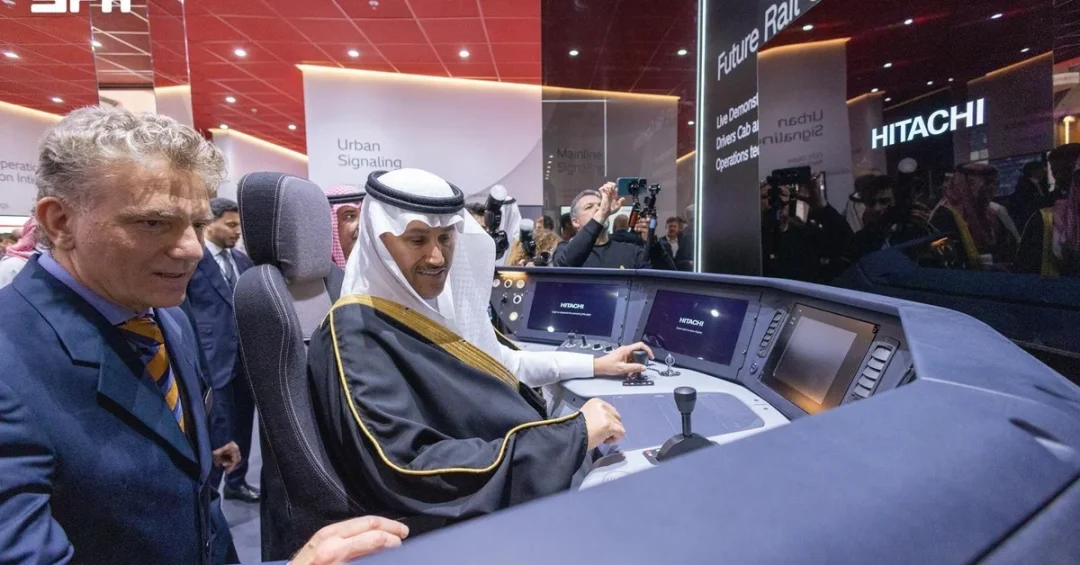
Minister of Transport and Logistic Services Saleh Al-Jasser concluded an official visit to the Federal Republic of Germany, where he participated in InnoTrans 2026 in Berlin, the world’s leading trade fair for railway and transport technology. The visit, confirmed by the Saudi Press Agency, brought together leaders, experts, and innovators from the global railway sector to showcase the latest technologies and solutions shaping the future of mobility. Al-Jasser was accompanied by a delegation representing entities across Saudi Arabia’s transport and logistics services sector, underscoring the Kingdom’s commitment to international cooperation and knowledge exchange.
The minister’s participation in InnoTrans 2026 reflects Saudi Arabia’s determination to position itself at the forefront of global transport innovation. During the visit, Al-Jasser held a series of meetings with officials and leaders from both the public and private sectors to discuss prospects for cooperation and partnerships in transport and logistics services. He also sponsored several agreements and partnerships aimed at strengthening cooperation between Saudi Arabia and Germany in the railway sector, marking another step forward in the Kingdom’s ambitious modernization agenda. Could this visit mark a pivotal moment in Saudi-German transport relations?
Context and Background
What does it take for a nation to transform its transport infrastructure into a global benchmark for efficiency and innovation? For Saudi Arabia, the answer lies in strategic international partnerships and a clear long-term vision. Germany has long been recognized as a world leader in railway engineering, manufacturing, and operational excellence. Companies such as Siemens, Deutsche Bahn, and a host of specialized suppliers have set global standards in rail technology, from high-speed trains to digital signaling systems. By engaging directly with these industry leaders at InnoTrans 2026, Saudi Arabia is tapping into decades of German expertise to accelerate its own transport transformation.
InnoTrans, held every two years in Berlin, is the premier global platform for the railway industry. The 2026 edition attracted thousands of exhibitors and visitors from more than 100 countries, all focused on the future of mobility. For Saudi Arabia, participation is not merely symbolic. The Kingdom is investing hundreds of billions of dollars in transport and logistics infrastructure as part of Vision 2030, the national transformation plan championed by Crown Prince Mohammed bin Salman. The goal is to diversify the economy away from oil dependence, boost non-oil revenues, and establish Saudi Arabia as a global logistics hub connecting Asia, Europe, and Africa.
The Ministry of Transport and Logistic Services, under the leadership of Saleh Al-Jasser, has been at the center of this transformation. The ministry oversees a vast portfolio that includes railways, ports, airports, roads, and logistics zones. Its strategy aligns with the National Transport and Logistics Strategy, which aims to elevate Saudi Arabia’s ranking in the Logistics Performance Index and increase the sector’s contribution to the national economy. The visit to Germany is therefore part of a broader pattern of international engagement designed to bring best practices, technology, and investment into the Kingdom.
Key Details of the Visit
What specific outcomes emerged from Minister Al-Jasser’s engagements in Berlin? According to the Saudi Press Agency, the minister sponsored several agreements and partnerships that will deepen cooperation between Saudi Arabia and Germany in the railway sector. While the full details of these agreements were not immediately disclosed, they are expected to cover areas such as technology transfer, joint ventures, training programs, and the supply of rolling stock and signaling systems. The presence of a high-level Saudi delegation representing various entities within the transport and logistics sector signals a coordinated approach to partnership-building.
Al-Jasser’s meetings in Berlin included discussions with German government officials and executives from leading private-sector companies. These conversations focused on prospects for cooperation in transport and logistics services, with an emphasis on railways as a cornerstone of sustainable mobility. Germany’s expertise in integrating rail networks with ports, airports, and logistics hubs is particularly relevant to Saudi Arabia’s plans to create seamless multimodal transport corridors. The minister also used the platform to highlight investment opportunities in Saudi Arabia’s rapidly expanding rail sector, including the Saudi Landbridge project, the North-South Railway, and the Haramain High-Speed Railway.
The visit also provided an opportunity for Saudi entities to showcase their own capabilities and ambitions. The delegation included representatives from the Saudi Railways Organization, Saudi Ports Authority (Mawani), and the Public Investment Fund (PIF), among others. Their participation underscores the integrated nature of Saudi Arabia’s transport strategy, which links rail, sea, air, and road networks into a single logistics ecosystem. By engaging with German counterparts, these entities aim to accelerate the adoption of cutting-edge technologies such as digital twins, autonomous train operations, and energy-efficient rail systems.
International and Regional Impact
How will strengthened Saudi-German cooperation in railways resonate beyond the two countries? The partnership carries significant implications for regional connectivity and global trade. Saudi Arabia’s geographical position at the crossroads of three continents makes it a natural hub for logistics and transport. By upgrading its rail infrastructure with German technology and expertise, the Kingdom can enhance the efficiency of trade routes between Europe, the Middle East, and Asia. This is particularly important as global supply chains continue to evolve in response to economic and geopolitical shifts.
For Germany, the collaboration offers access to one of the world’s most dynamic and fast-growing transport markets. German companies stand to benefit from contracts related to Saudi Arabia’s ambitious rail expansion plans, which include thousands of kilometers of new track and associated infrastructure. Moreover, the partnership aligns with the European Union’s broader interest in deepening economic ties with the Gulf region. The agreements signed during the visit could pave the way for joint research and development, technology licensing, and the establishment of local manufacturing facilities in Saudi Arabia, creating jobs and fostering knowledge transfer.
Regionally, Saudi Arabia’s progress in rail transport could serve as a catalyst for greater integration among Gulf Cooperation Council (GCC) states. The proposed GCC Railway, which aims to link all six member states, would benefit from the standards, technologies, and operational models developed through Saudi-German cooperation. A modern, efficient rail network across the Gulf would reduce reliance on road transport, lower carbon emissions, and facilitate the movement of goods and people, contributing to economic diversification and regional stability.
Economic and Strategic Significance
What does the railway sector mean for Saudi Arabia’s economic future? The transport and logistics sector is a key pillar of Vision 2030, with the Kingdom aiming to increase its non-oil GDP contribution and create sustainable employment opportunities. Railways are particularly important because they offer a cost-effective, environmentally friendly mode of transport for both freight and passengers. Saudi Arabia’s National Transport and Logistics Strategy targets a significant increase in rail freight capacity and passenger numbers by 2030, supported by investments exceeding SAR 200 billion.
The agreements and partnerships forged in Berlin are expected to accelerate these goals by bringing in world-class technology and operational know-how. German engineering is renowned for its precision, reliability, and innovation, qualities that align with Saudi Arabia’s aspiration to build a world-class rail network. The collaboration could also lead to the localization of rail manufacturing and maintenance capabilities within the Kingdom, reducing dependence on imports and creating high-skilled jobs for Saudi nationals. This, in turn, supports the broader Vision 2030 objective of developing a diversified, knowledge-based economy.
Strategically, the visit reinforces Saudi Arabia’s role as a bridge between continents. By investing in rail links that connect its ports on the Red Sea and the Arabian Gulf to inland industrial and population centers, the Kingdom can position itself as the preferred logistics gateway for trade between Europe, Asia, and Africa. German partnerships add credibility and technical depth to these ambitions, making Saudi Arabia a more attractive destination for international investors and logistics operators.
Vision 2030 Alignment
How does this visit fit into the grand tapestry of Vision 2030? The answer lies in the plan’s emphasis on economic diversification, global engagement, and sustainable development. Vision 2030 seeks to transform Saudi Arabia into a global investment powerhouse and a hub connecting three continents. The transport and logistics sector is explicitly identified as a strategic enabler, with targets to improve infrastructure quality, increase private-sector participation, and enhance the Kingdom’s ranking in international logistics indices. The partnerships with Germany directly support these objectives by providing access to advanced technology, best practices, and investment.
Furthermore, the visit exemplifies the Vision 2030 commitment to international cooperation and knowledge exchange. By participating in InnoTrans 2026 and sponsoring agreements with German entities, Minister Al-Jasser and his delegation have demonstrated Saudi Arabia’s openness to global partnerships and its determination to learn from the best. This approach not only accelerates the Kingdom’s own development but also strengthens its ties with leading economies, fostering mutual prosperity and stability. As Saudi Arabia continues to build one of the world’s most modern and integrated transport networks, collaborations like this will be essential in turning Vision 2030’s ambitious goals into reality.
20 Questions
Q1. What was the purpose of Minister Saleh Al-Jasser’s visit to Germany?
A1. He participated in InnoTrans 2026 in Berlin, the world’s leading railway trade fair, and held meetings to discuss cooperation and partnerships in transport and logistics services between Saudi Arabia and Germany.
Q2. What is InnoTrans and why is it important?
A2. InnoTrans is the premier global trade fair for railway and transport technology, held every two years in Berlin. It showcases the latest innovations and brings together industry leaders from around the world.
Q3. Who accompanied Minister Al-Jasser on the visit?
A3. He was accompanied by a delegation representing entities within Saudi Arabia’s transport and logistics services sector, including representatives from various government and private organizations.
Q4. What agreements were signed during the visit?
A4. The minister sponsored several agreements and partnerships aimed at strengthening cooperation between Saudi Arabia and Germany in the railway sector, covering areas such as technology transfer and joint ventures.
Q5. How does this visit align with Saudi Arabia’s Vision 2030?
A5. It supports Vision 2030’s goals of economic diversification, global engagement, and infrastructure development by bringing advanced German technology and expertise to Saudi Arabia’s transport sector.
Q6. Which German companies are likely to benefit from this cooperation?
A6. Leading German rail technology firms such as Siemens and Deutsche Bahn, as well as specialized suppliers, are expected to benefit through contracts, joint ventures, and technology licensing agreements.
Q7. What are Saudi Arabia’s key railway projects?
A7. Major projects include the Saudi Landbridge, the North-South Railway, and the Haramain High-Speed Railway, all part of efforts to expand rail connectivity across the Kingdom.
Q8. How will this cooperation impact regional connectivity?
A8. It could accelerate the development of the GCC Railway, linking Gulf states and enhancing trade and transport integration across the region, reducing reliance on road transport.
Q9. What economic benefits does Saudi Arabia expect from these partnerships?
A9. The partnerships are expected to boost non-oil GDP, create jobs, localize rail manufacturing, and enhance Saudi Arabia’s position as a global logistics hub.
Q10. What role does the Ministry of Transport and Logistic Services play in Vision 2030?
A10. The ministry oversees the National Transport and Logistics Strategy, which aims to improve infrastructure, increase private-sector participation, and elevate Saudi Arabia’s logistics performance globally.
Q11. How does Germany benefit from this partnership?
A11. Germany gains access to one of the world’s fastest-growing transport markets, with opportunities for German companies to secure contracts and establish a presence in Saudi Arabia.
Q12. What technologies are being discussed for transfer?
A12. Discussions include digital signaling, autonomous train operations, energy-efficient rail systems, and digital twins for infrastructure management.
Q13. What is the significance of the Saudi delegation’s composition?
A13. The delegation included representatives from Saudi Railways, Mawani, and PIF, reflecting an integrated approach to developing a seamless multimodal transport and logistics ecosystem.
Q14. How does this visit affect Saudi-German bilateral relations?
A14. It strengthens economic and diplomatic ties, building on decades of cooperation and opening new avenues for collaboration in technology, trade, and investment.
Q15. What are the environmental benefits of expanding railways?
A15. Railways are more energy-efficient and produce lower carbon emissions than road transport, supporting Saudi Arabia’s sustainability goals and reducing environmental impact.
Q16. Will these agreements lead to job creation in Saudi Arabia?
A16. Yes, the localization of rail manufacturing and maintenance is expected to create high-skilled jobs for Saudi nationals, supporting Vision 2030’s employment targets.
Q17. How does InnoTrans 2026 compare to previous editions?
A17. The 2026 edition is expected to be the largest yet, with increased participation from Middle Eastern countries and a focus on digitalization and sustainable mobility.
Q18. What are the next steps following the visit?
A18. Saudi and German entities will work to implement the agreements, with follow-up meetings and technical exchanges planned to ensure progress.
Q19. How does this visit reflect Saudi Arabia’s global engagement?
A19. It demonstrates the Kingdom’s proactive approach to international partnerships, seeking best practices and technologies to accelerate its transformation.
Q20. What message does this send to international investors?
A20. It signals that Saudi Arabia is open for business, committed to Vision 2030, and actively seeking partnerships to build a world-class transport infrastructure.
Reader Feedback
We value your thoughts. Please share your feedback on this article.
Your feedback helps us improve our coverage.
Related articles
 Al-Baha’s Raghadan Park Hosts Joyful Saudi National Day
 Baljurashi Governorate celebrates Saudi National Day
 Qaryat Al-Ulya Municipality celebrates Saudi National Day
 Saudi Embassy in Poland marks Saudi National Day
 Saudi Embassy in Algeria Celebrates Saudi National Day
 Saudi Naval Forces Mark National Day in Jeddah