


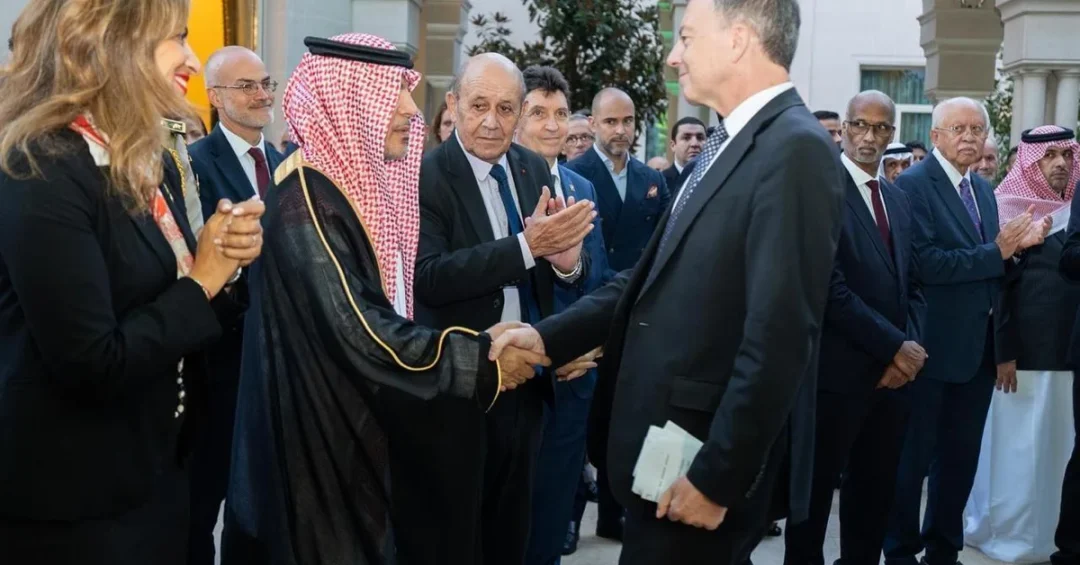
The Saudi Embassy in France hosted a diplomatic reception in Paris on September 24, 2026, marking Saudi National Day and underscoring the deepening partnership between the Kingdom of Saudi Arabia and the French Republic. The event, announced by the Saudi Press Agency, brought together senior French government officials, ambassadors from friendly nations, business leaders, cultural figures, and members of the Saudi community residing in France. Saudi Ambassador to France Dr. Faisal Al-Mejfel welcomed guests including Martin Briens, Secretary-General of the French Ministry for Europe and Foreign Affairs, in a gathering that reflected both the ceremonial importance of the occasion and the substantive ties that have grown between Riyadh and Paris in recent years.
National Day receptions hosted by Saudi diplomatic missions are a longstanding tradition that serves a dual purpose: celebrating the Kingdom’s history and unity while creating space for quiet diplomacy and relationship-building with host nations. In Paris, one of Europe’s most important political and cultural capitals, the occasion carried particular weight. France and Saudi Arabia share membership in the G20, cooperate closely on regional security, and have expanded commercial and cultural exchanges under the framework of Saudi Vision 2030. The presence of a senior official from the French foreign ministry signaled the importance Paris attaches to the bilateral relationship, which spans energy, defense, investment, tourism, and cultural cooperation.
Context and Background
What does Saudi National Day represent, and why does its commemoration in Paris matter on the international stage? Saudi National Day, observed annually on September 23, commemorates the unification of the Kingdom by the late King Abdulaziz Al Saud in 1932. It is a moment when Saudis at home and abroad reflect on the nation’s journey from unification to its current position as a leading G20 economy and a pivotal actor in Middle Eastern and global affairs. For Saudi embassies worldwide, the day is both a celebration and an opportunity to present the Kingdom’s modern identity to international audiences.
The Saudi Embassy in France has long been an active diplomatic post, managing a relationship that has expanded well beyond traditional energy ties. France is a permanent member of the United Nations Security Council and a key European partner for the Kingdom on issues ranging from regional stability to climate cooperation. In recent years, Riyadh and Paris have deepened collaboration in areas including renewable energy, cultural heritage, tourism, and advanced technology. The reception therefore served as a symbolic anchor for a relationship that operates on multiple levels, from high-level strategic dialogue to people-to-people exchanges.
The timing of the 2026 reception also reflects a broader pattern of intensified Saudi diplomatic engagement across Europe. As the Kingdom continues to position itself as a bridge between continents and a hub for international dialogue, its embassies have become platforms for presenting Vision 2030 achievements and exploring new avenues of cooperation. The Paris event fits within this wider strategy of proactive, forward-looking diplomacy that emphasizes partnership, investment, and shared prosperity.
Key Details
Who attended the reception, and what did their presence signify? According to the Saudi Press Agency, Ambassador Dr. Faisal Al-Mejfel personally welcomed Martin Briens, Secretary-General of the French Ministry for Europe and Foreign Affairs, along with ambassadors from friendly nations, various French officials, prominent figures from French society, and Saudi citizens living in France. The guest list was notable for its breadth, encompassing government, diplomacy, business, and culture. Such a diverse gathering illustrates the multidimensional nature of Saudi-French relations and the Kingdom’s ability to engage across sectors.
The participation of Saudi citizens residing in France added a community dimension to the event. Saudi students, professionals, and families living in France represent a growing diaspora that contributes to cultural exchange and mutual understanding. Their presence at the reception highlighted the human ties that underpin diplomatic relations and the role of education and professional mobility in strengthening bilateral bonds. France has become a popular destination for Saudi students pursuing higher education, particularly in fields such as business, engineering, and the arts.
The reception also provided a platform for informal discussions about ongoing and future cooperation. While official statements from such events are typically general in nature, the gathering of senior officials, business figures, and cultural representatives creates opportunities for networking and dialogue that can lead to concrete initiatives. In the context of Saudi-French relations, areas of active collaboration include energy transition, aerospace, luxury goods, tourism development, and cultural heritage preservation. The reception thus served both as a celebration and as a working diplomatic occasion.
International and Regional Impact
How does a National Day reception in Paris resonate beyond the immediate diplomatic circle? Events of this kind contribute to the broader narrative of Saudi Arabia’s global engagement and its commitment to international partnership. By hosting a prominent reception in a major European capital, the Kingdom signals its openness to dialogue and its desire to be seen as a constructive, reliable partner. This is particularly important as Saudi Arabia continues to implement Vision 2030, which depends in part on international investment, tourism, and knowledge exchange.
France, for its part, has shown consistent interest in deepening ties with the Kingdom. French companies are active in Saudi Arabia across sectors including energy, water, transportation, and retail. Cultural cooperation has also flourished, with French institutions participating in Saudi cultural festivals and Saudi heritage being showcased in France. The reception reinforced these connections and provided a visible affirmation of the mutual benefits of the relationship. In a world of shifting geopolitical alignments, the Saudi-French partnership stands out as a stable and productive axis.
Economic and Strategic Significance
What economic and strategic threads run through this diplomatic gathering? Saudi-French economic relations are substantial and growing. France is a significant supplier of goods and services to the Kingdom, and Saudi investment in France spans real estate, technology, and financial services. The reception offered an informal setting for business and government representatives to discuss opportunities aligned with Vision 2030, including renewable energy projects, smart city development, and tourism infrastructure. These conversations, while not formally announced, are part of the routine diplomacy that sustains commercial ties.
Strategically, the partnership extends to regional security and stability. France and Saudi Arabia share an interest in combating extremism, securing maritime routes, and promoting peace in the Middle East. Diplomatic engagements such as the National Day reception help maintain open channels of communication and mutual understanding. They also allow Saudi diplomats to articulate the Kingdom’s positions on regional issues and to listen to European perspectives, fostering a climate of trust and cooperation that benefits both nations and the wider international community.
Vision 2030 Alignment
How does this event connect to Saudi Arabia’s long-term transformation? Vision 2030, launched by Crown Prince Mohammed bin Salman, aims to diversify the Kingdom’s economy, empower its citizens, and elevate its global standing. International diplomacy is a key enabler of these goals. By strengthening ties with France and other European partners, Saudi Arabia advances objectives related to investment, tourism, cultural exchange, and technological cooperation. The National Day reception in Paris is a small but meaningful component of this broader effort, showcasing the Kingdom’s modern, outward-looking identity.
As Saudi Arabia continues its journey of reform and development, its embassies will remain vital instruments of soft power and economic diplomacy. The reception hosted by Ambassador Dr. Faisal Al-Mejfel reflects the Kingdom’s commitment to building bridges with the world and to presenting a positive, forward-looking image. In the years ahead, such engagements will help unlock new opportunities for collaboration and reinforce Saudi Arabia’s role as a responsible global partner. The Paris celebration thus stands as a testament to the enduring friendship between the Kingdom and France and to the promise of even closer cooperation in the future.
20 Questions
Q1. What event did the Saudi Embassy in France host?
A1. The Saudi Embassy in France hosted a reception in Paris on September 24, 2026, to mark Saudi National Day. The event brought together diplomats, French officials, and members of the Saudi community.
Q2. Who is the Saudi Ambassador to France?
A2. Dr. Faisal Al-Mejfel serves as the Saudi Ambassador to France. He welcomed guests at the National Day reception, including senior French officials and ambassadors from friendly nations.
Q3. Who represented the French government at the reception?
A3. Martin Briens, Secretary-General of the French Ministry for Europe and Foreign Affairs, attended the reception. His presence underscored France’s commitment to strong bilateral relations with Saudi Arabia.
Q4. When is Saudi National Day celebrated?
A4. Saudi National Day is celebrated annually on September 23. It commemorates the unification of the Kingdom by King Abdulaziz Al Saud in 1932.
Q5. Why is Saudi National Day important for Saudis abroad?
A5. For Saudis abroad, National Day is a moment of pride and connection to their homeland. It allows them to celebrate their culture and share it with the international community.
Q6. What other guests attended the reception?
A6. Ambassadors from friendly nations, various French officials, prominent figures from French society, and Saudi citizens living in France attended the reception, reflecting broad engagement.
Q7. How does this event reflect Saudi-French relations?
A7. The reception highlights the strong and multidimensional ties between Saudi Arabia and France, covering diplomacy, trade, culture, and people-to-people exchanges that have grown over decades.
Q8. What are key areas of Saudi-French cooperation?
A8. Key areas include energy, defense, investment, tourism, culture, and technology. Both nations also cooperate on regional security and climate-related initiatives within multilateral frameworks.
Q9. How does the reception support Vision 2030?
A9. The reception supports Vision 2030 by strengthening international partnerships that facilitate investment, tourism, and cultural exchange, all of which are central to the Kingdom’s economic diversification goals.
Q10. What role do Saudi embassies play in Vision 2030?
A10. Saudi embassies promote the Kingdom’s interests abroad, attract investment, and foster cultural and educational ties. They are essential to the international outreach that underpins Vision 2030.
Q11. How many Saudi citizens live in France?
A11. While exact numbers vary, a growing community of Saudi students, professionals, and families resides in France. They contribute to cultural exchange and strengthen bilateral relations.
Q12. What is the significance of Paris as a diplomatic venue?
A12. Paris is a major European capital and home to influential international organizations. Hosting events there allows Saudi Arabia to engage with key European and global stakeholders.
Q13. Did the reception include cultural elements?
A13. National Day receptions typically feature Saudi cultural displays, cuisine, and hospitality. These elements showcase the Kingdom’s heritage and modern achievements to an international audience.
Q14. How does France view its relationship with Saudi Arabia?
A14. France values its partnership with Saudi Arabia as a cornerstone of its Middle East policy. The relationship spans economic, security, and cultural dimensions, with regular high-level exchanges.
Q15. What economic sectors benefit most from Saudi-French ties?
A15. Energy, aerospace, luxury goods, tourism, and technology are among the sectors that benefit. French companies are active in Saudi Arabia, and Saudi investment in France is growing.
Q16. Will there be follow-up initiatives after this reception?
A16. Diplomatic receptions often lead to further discussions and agreements. While specific outcomes are not always announced, they pave the way for continued cooperation across various fields.
Q17. How does Saudi National Day reflect the Kingdom’s history?
A17. It commemorates the unification of the Kingdom in 1932, a pivotal moment that led to the modern Saudi state and its subsequent development into a G20 economy.
Q18. What message does the reception send to the international community?
A18. The reception conveys Saudi Arabia’s commitment to international engagement, friendship, and cooperation. It presents the Kingdom as an open, forward-looking nation dedicated to global partnership.
Q19. Are there similar Saudi National Day events in other countries?
A19. Yes, Saudi embassies worldwide host National Day receptions. These events are part of a coordinated effort to celebrate the Kingdom and strengthen diplomatic ties globally.
Q20. What is the outlook for Saudi-French relations?
A20. The outlook is positive, with both nations committed to expanding cooperation in trade, investment, culture, and regional stability, aligned with Saudi Vision 2030 and shared international goals.
Reader Feedback
We value your thoughts. Please share your feedback on this article.
Your feedback helps us improve our coverage.
Related articles
 Coalition Intercepts Six Houthi Missiles Targeting Taif, Yanbu
 Saudi Embassy in Egypt Hosts National Day Reception
 Saudi Istitlaa Platform Opens 35 Projects for Public Feedback
 Al-Qura Governorate celebrates Saudi National Day
 Saudi Flag Flies High in Makkah for National Day
 Saudi Embassy in Pakistan Celebrates National Day