


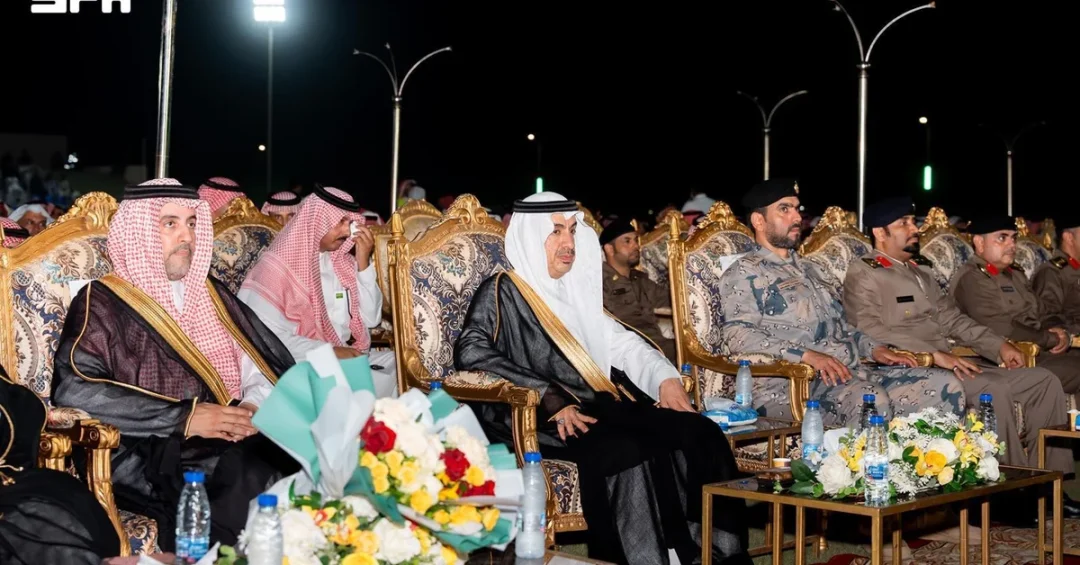
Residents of Al-Lith Governorate celebrated Saudi National Day in a vibrant official ceremony attended by Governor Omran bin Hassan Al-Zahrani, alongside senior local officials, community leaders, and families from across the region, according to the Saudi Press Agency. The celebration, held in the coastal governorate south of Jeddah, featured parades, traditional folklore performances, heritage games, and large-scale visual displays that transformed public spaces into a canvas of national pride. Streets and public squares throughout Al-Lith were adorned with green flags and festive decorations, reflecting the joy of residents on this national occasion and their pride in the Kingdom’s continued achievements under the leadership of the Custodian of the Two Holy Mosques, King Salman bin Abdulaziz Al Saud, and His Royal Highness Crown Prince Mohammed bin Salman bin Abdulaziz Al Saud.
The event formed part of a nationwide wave of National Day commemorations coordinated through official Saudi channels, underscoring the cohesion between the Kingdom’s central leadership and its diverse governorates. For Al-Lith, a community with deep roots in agriculture, fishing, and Red Sea commerce, the occasion carried particular resonance: it offered a moment to reflect on how national modernization programs are reaching smaller cities and rural areas, not only the major metropolitan centers. Isn’t it remarkable how a single national occasion can simultaneously celebrate heritage and signal transformation? The governorate’s participation demonstrates that Saudi National Day is not merely a ceremonial date on the calendar but a living expression of shared identity, renewal, and forward momentum across every region of the Kingdom.
Context and Background
Why does Saudi National Day continue to inspire such widespread public participation more than nine decades after its founding? The answer lies in the historical depth of the occasion itself. Saudi National Day marks the unification of the Kingdom, proclaimed on September 23, 1932, when King Abdulaziz Al Saud issued a royal decree renaming the nation the Kingdom of Saudi Arabia. What began as a formal state commemoration has evolved into a broad civic tradition, with each region adding its own local flavor. In Al-Lith, that flavor is unmistakably coastal and agricultural, shaped by generations of families who have lived along the Red Sea shoreline and worked its date palms, mango orchards, and fishing waters.
Al-Lith Governorate sits in the Makkah Province, roughly 180 kilometers south of Jeddah, and is known for its fertile plains, its historic role as a stopover for travelers and traders, and its growing population. The presence of Governor Omran bin Hassan Al-Zahrani at the head of the celebration reflects the Kingdom’s administrative tradition in which provincial leadership actively participates in national occasions. According to the Saudi Press Agency, the program included equestrian shows, theatrical performances, art exhibitions, and dedicated booths showcasing the work of government agencies, non-profit organizations, and families engaged in the cottage industry. That combination — official institutions, civil society, and household enterprises — illustrates how National Day in Saudi Arabia functions as a platform for visibility and community participation, not simply a state ceremony.
The timing of the 2026 celebrations also carries broader significance. They unfold as Saudi Arabia continues implementing Vision 2030, the national transformation program launched in 2016 to diversify the economy, expand cultural and tourism sectors, and improve quality of life. In governorates like Al-Lith, Vision 2030 manifests through infrastructure improvements, support for small businesses, and increased cultural programming. Residents watching the parades and visiting the exhibition booths were, in a practical sense, encountering the outputs of national policy in their own neighborhoods. That connection between national strategy and local experience is central to how the Kingdom communicates its development story to citizens and international observers alike.
Key Details and Celebration Highlights
What did the celebration in Al-Lith actually look like on the ground? According to the Saudi Press Agency report, the program was deliberately varied, designed to engage multiple generations. Parades moved through the governorate, followed by traditional folklore performances that highlighted regional music and dance traditions. Heritage games — some drawn from the Kingdom’s older pastimes — were staged to connect younger residents with customs passed down by their grandparents. Visual displays illuminated public spaces, while equestrian shows honored the horse’s enduring place in Arabian culture and Saudi national identity. Theatrical performances and art exhibitions gave local creative talent a formal stage, and the booths representing government agencies and non-profit organizations provided information and direct community engagement.
One of the most telling features of the Al-Lith program was the inclusion of families working in the cottage industry. These are household-based producers — often women-led — who make handicrafts, food products, textiles, or traditional goods. Their presence at an official National Day event signals that the Kingdom’s development vision explicitly values small-scale and family enterprises as part of the national economy. For visitors and residents walking through the exhibition area, the message was clear: national progress is not only about megaprojects and global investment but also about enabling households to earn, create, and preserve cultural knowledge. Governor Omran bin Hassan Al-Zahrani’s attendance gave these exhibitors official recognition and visibility.
Streets and public squares across the governorate were decorated with green flags, the color associated with the Saudi national banner, along with festive lighting and displays. The Saudi Press Agency noted that these decorations reflected the joy of residents and their pride in the Kingdom’s continued achievements. The visual transformation of public space matters: it turns everyday locations into shared stages for collective identity. Children waving flags, families strolling decorated streets, and neighbors gathering for evening performances all reinforce social bonds. In a governorate known for its close-knit communities, the celebration reinforced the sense that Al-Lith is an integral participant in the national story, not a distant observer of events in Riyadh or Jeddah.
International and Regional Impact
How does a local celebration in a Saudi governorate connect to the Kingdom’s international image? Saudi National Day is observed by Saudi diplomatic missions, cultural centers, and communities around the world, and the domestic celebrations serve as the authentic source material for that global messaging. When international audiences see footage and read reports of celebrations in cities like Al-Lith, they encounter a picture of national unity that is decentralized and broadly participatory. For foreign governments, investors, and travelers assessing Saudi Arabia, such scenes provide evidence of social stability and civic engagement — factors that matter for tourism, business confidence, and cultural exchange. The Saudi Press Agency’s coverage, distributed through official channels, ensures that this image reaches international media and analysts directly.
Regionally, National Day celebrations across the Kingdom’s provinces reinforce the internal cohesion that underpins Saudi Arabia’s foreign policy and economic diplomacy. The Kingdom’s role in regional stability, energy markets, and humanitarian initiatives depends partly on domestic consensus and institutional strength. A governorate like Al-Lith, with its Red Sea coastline and proximity to major trade routes, is part of that strategic geography. Celebrations there are not isolated folk events; they are expressions of a national system in which provincial governance, security, and development are integrated. For neighboring countries and international partners, the visible participation of local officials, community organizations, and families signals a society aligned behind its leadership and its long-term direction.
The cultural dimension also has international reach. Saudi Arabia has invested heavily in presenting its heritage to the world through tourism, festivals, and UNESCO-related initiatives. Traditional folklore performances and heritage games of the kind featured in Al-Lith are the same cultural assets that the Kingdom promotes to visitors through destinations such as Jeddah’s historic district and the Red Sea coast. When local celebrations preserve and display these traditions, they contribute to a national cultural inventory that supports tourism and soft power. International visitors seeking authentic experiences increasingly look beyond major cities, and governorates like Al-Lith — with their agricultural heritage, coastal scenery, and living traditions — are part of that broader offering.
Economic and Strategic Significance
What economic value can be drawn from a National Day celebration in a mid-sized governorate? The immediate answer involves local commerce: festivals and public gatherings generate activity for vendors, artisans, hospitality providers, and transport services. The exhibition booths for cottage industry families are particularly significant because they create market access. A household that produces traditional foods or handicrafts may reach new customers through a National Day exhibition, and that initial visibility can translate into sustained small-business activity. Saudi agencies supporting micro-enterprises and family businesses use such events as informal trade fairs, aligning with the Vision 2030 goal of expanding private-sector participation and empowering women and youth in the economy.
Strategically, Al-Lith’s location in the Makkah Province places it within one of the Kingdom’s most dynamic regions. The province hosts the holy cities of Makkah and Madinah, the commercial hub of Jeddah, and major infrastructure including ports and the Haramain High Speed Railway corridor. Development in surrounding governorates supports the broader regional ecosystem by providing housing, services, agriculture, and tourism capacity. Al-Lith’s agricultural output — including fruits and produce — contributes to national food security objectives, while its Red Sea coastline holds potential for fisheries and coastal tourism. National Day celebrations help strengthen the social fabric that makes these economic roles sustainable, by reinforcing residents’ sense of belonging and their confidence in the future.
There is also a governance dimension. When provincial governors preside over National Day events, they perform a dual function: honoring the occasion and communicating state priorities. Governor Omran bin Hassan Al-Zahrani’s presence alongside officials and community members signals that Al-Lith’s development is on the official agenda. Such engagement supports the Kingdom’s administrative approach, in which provincial authorities coordinate with ministries and national programs to deliver services and investment. For residents, the celebration is both festive and informational — a chance to see what government agencies and non-profit organizations are doing locally. That transparency, even in a celebratory setting, contributes to public trust and to the effective implementation of national initiatives at the grassroots level.
Vision 2030 Alignment
How does a governorate-level National Day celebration align with Vision 2030? The connection runs through several of the vision’s core themes: quality of life, cultural preservation, economic diversification, and national identity. Vision 2030 explicitly aims to build a vibrant society in which citizens enjoy cultural and recreational opportunities across all regions, not only in major cities. The Al-Lith program — with its parades, folklore, heritage games, art exhibitions, and family-oriented activities — directly serves that objective. It also advances the vision’s cultural goals by giving traditional arts and crafts a public platform, helping to preserve practices that might otherwise fade and presenting them as living elements of modern Saudi life.
Economically, the involvement of cottage industry families and non-profit organizations reflects Vision 2030’s emphasis on broadening economic participation. The vision targets increased female labor force participation, growth in small and medium enterprises, and a more diverse non-oil economy. Exhibitions that connect household producers with wider audiences are small but meaningful steps in that direction. Finally, the celebration reinforces the social cohesion that Vision 2030 depends upon. National transformation requires public buy-in, and occasions that bring together officials, community leaders, and families around shared symbols build the trust and unity needed for long-term change. As Saudi Arabia continues its journey toward 2030 and beyond, celebrations like the one in Al-Lith will remain vital expressions of a nation moving forward together — proud of its heritage, confident in its leadership, and open to the world.
20 Questions
Q1. What occasion did residents of Al-Lith Governorate celebrate?
A1. Residents of Al-Lith Governorate celebrated Saudi National Day, the annual commemoration of the Kingdom’s unification on September 23, 1932. The event was reported by the Saudi Press Agency and attended by local officials and community members.
Q2. Who attended the celebration in Al-Lith?
A2. The celebration was held in the presence of Governor Omran bin Hassan Al-Zahrani, along with several officials and local community members. Their participation reflected the strong connection between provincial leadership and residents on this national occasion.
Q3. What activities were included in the Al-Lith National Day program?
A3. The program included parades, traditional folklore performances, heritage games, and visual displays. It also featured equestrian shows, theatrical performances, art exhibitions, and dedicated booths showcasing government agencies, non-profit organizations, and cottage industry families.
Q4. How were the streets and public squares of Al-Lith decorated?
A4. Streets and public squares across the governorate were adorned with green flags and festive decorations. These decorations reflected the joy of residents on this national occasion and their pride in the Kingdom’s continued achievements.
Q5. Why is Saudi National Day significant to the Kingdom?
A5. Saudi National Day marks the unification of the Kingdom in 1932 under King Abdulaziz Al Saud. It has become a broad civic tradition celebrated across all regions, symbolizing national identity, unity, and pride in the Kingdom’s progress.
Q6. Where is Al-Lith Governorate located?
A6. Al-Lith Governorate is located in the Makkah Province, roughly 180 kilometers south of Jeddah. It is known for its Red Sea coastline, fertile agricultural plains, and historic role as a stopover for travelers and traders.
Q7. What role did Governor Omran bin Hassan Al-Zahrani play in the event?
A7. Governor Omran bin Hassan Al-Zahrani attended the celebration as the senior provincial official, lending official recognition to the program and its participants. His presence reflected the Kingdom’s tradition of provincial leadership engaging directly with local communities.
Q8. What are cottage industry families, and why were they included?
A8. Cottage industry families are household-based producers of handicrafts, foods, textiles, and traditional goods, often women-led. Their inclusion gave them visibility and market access, aligning with Vision 2030 goals for small enterprises and economic participation.
Q9. How does the celebration reflect Saudi Arabia’s cultural heritage?
A9. The folklore performances, heritage games, equestrian shows, and art exhibitions displayed traditions passed down through generations. Presenting them publicly helps preserve cultural practices and shares them with younger residents and visitors alike.
Q10. What message does the Al-Lith celebration send internationally?
A10. It presents an image of national unity, social stability, and broad civic participation across Saudi regions. Such scenes support the Kingdom’s international messaging on tourism, investment, and cultural exchange through official channels.
Q11. How does National Day support local economies in Saudi governorates?
A11. Festivals and public gatherings generate activity for vendors, artisans, hospitality providers, and transport services. Exhibition booths allow small producers to reach new customers, creating economic opportunities beyond the immediate celebration period.
Q12. What is the relationship between National Day and Vision 2030?
A12. Vision 2030 emphasizes quality of life, cultural preservation, and economic diversification across all regions. National Day celebrations advance these goals by promoting cultural activities, supporting small businesses, and strengthening social cohesion nationwide.
Q13. Why do provincial governors attend National Day events?
A13. Governors attend to honor the occasion and communicate state priorities to residents. Their presence signals that local development is on the official agenda and strengthens trust between government institutions and communities.
Q14. What kinds of government agencies participated in the exhibition booths?
A14. Various government agencies, non-profit organizations, and family enterprises participated, showcasing their services and products. This mix illustrates cooperation between official institutions, civil society, and household businesses in local development.
Q15. How does Al-Lith’s geography shape its role in Saudi Arabia?
A15. Its Red Sea coastline, agricultural plains, and position in the Makkah Province give Al-Lith strategic value for food production, fisheries, and coastal tourism. It supports the broader regional ecosystem around Jeddah and the holy cities.
Q16. What does the Saudi Press Agency report tell us about the event?
A16. The Saudi Press Agency reported that the celebration included diverse activities and drew officials and community members. As an official news authority, SPA provides verified information about national and provincial events across the Kingdom.
Q17. How do National Day celebrations strengthen social cohesion?
A17. They bring together officials, community leaders, and families around shared symbols and activities. This collective participation reinforces social bonds, national identity, and a sense of belonging across generations and regions.
Q18. What role do non-profit organizations play in such celebrations?
A18. Non-profit organizations use exhibition booths to present their work, recruit volunteers, and connect with residents. Their participation reflects the Kingdom’s emphasis on civic engagement and community service alongside government initiatives.
Q19. How does the celebration connect to Saudi Arabia’s tourism ambitions?
A19. Traditional performances, heritage games, and local crafts are cultural assets promoted to visitors through national tourism strategies. Celebrations in governorates like Al-Lith help build a diverse cultural offering beyond major cities.
Q20. What does the future hold for celebrations like the one in Al-Lith?
A20. As Vision 2030 progresses, such celebrations are expected to grow in scope and participation, reflecting the Kingdom’s commitment to cultural preservation, community development, and national unity across all regions of Saudi Arabia.
Reader Feedback
We value your thoughts. Please share your feedback on this article.
Your feedback helps us improve our coverage.
Related articles
 KSrelief Chief Meets Dutch Minister at UN General Assembly
 KSrelief distributes one million mosquito nets in Yemen
 KSrelief Supervisor General meets UNRWA Commissioner-General
 Jazan Governor Joins Community in Saudi National Day Festivities
 KSrelief Chief Meets UNRWA Head at UN General Assembly
 Prophet’s Mosque Imam discusses paths to happiness