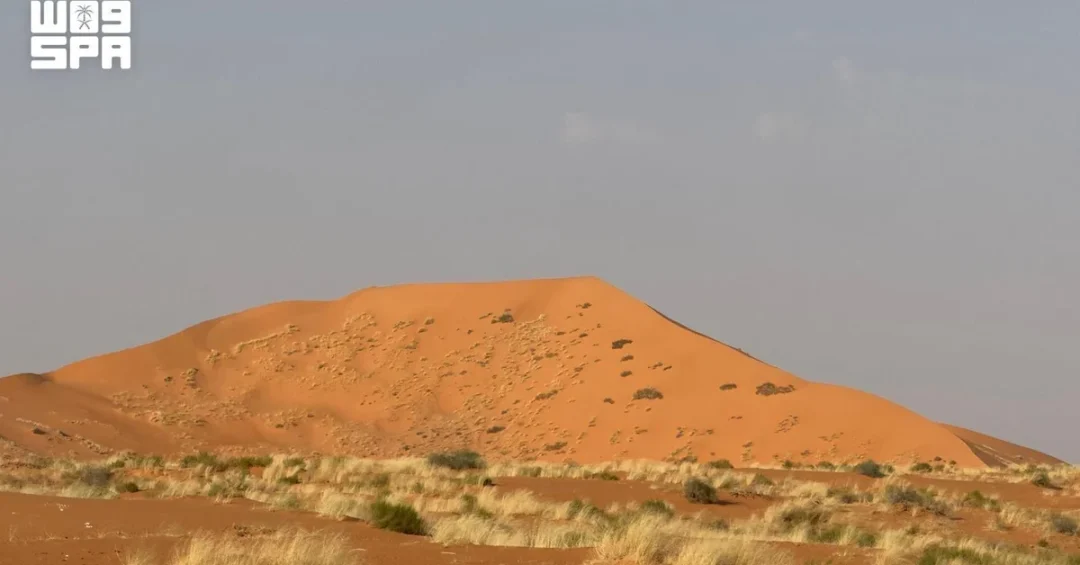
The Al-Ashyakh sand dunes, located approximately 130 kilometers southwest of Rafha in northern Saudi Arabia, have been officially highlighted as a premier natural landmark, featuring the highest sand peak in the Al-Dahna Desert at 779 meters above sea level. The announcement, released via the Saudi Press Agency (SPA), positions this dramatic geological formation at the intersection of the Al-Dahna and Al-Nafud Al-Kabir deserts as a rising focal point for the Kingdom’s expanding ecotourism sector. The site is already drawing attention from photographers, travel enthusiasts, and nature lovers seeking to experience one of the most striking desert landscapes in the Arabian Peninsula.
According to official information shared by the SPA, the Al-Ashyakh dunes are distinguished by their wind-sculpted, interconnected formations and a remarkable interplay of alternating red and golden sands. This rare convergence of two major desert systems has created a topography that is as visually arresting as it is geologically significant. For international audiences, the development signals Saudi Arabia’s growing commitment to showcasing its natural heritage as part of a broader economic diversification strategy. Have you ever considered that a desert, often perceived as barren, could hold the key to a nation’s sustainable tourism future?
Context and Background
Why has a remote dune field in northern Saudi Arabia suddenly become a topic of national interest? The answer lies in the Kingdom’s deliberate strategy to map, protect, and promote its unique geological and ecological assets. The Al-Ashyakh dunes sit at the meeting point of the Al-Dahna Desert, a long, narrow arc of reddish sand that stretches from the Rub’ al Khali to the northern borders, and the Al-Nafud Al-Kabir, one of the largest continuous sand seas in the world. This geographical crossroads creates a dynamic environment where wind patterns shape dunes into complex, shifting networks that are both scientifically valuable and aesthetically unique.
Antiquities Association member Abdulrahman Al-Tuwaijri has noted that the area’s distinct geomorphology and desert vegetation make it a top destination for photographers and travel enthusiasts during the milder seasons. His assessment underscores a crucial point: the value of Al-Ashyakh is not merely visual but ecological. The vegetation that manages to thrive in this harsh environment supports a fragile ecosystem that is increasingly recognized as worthy of conservation and responsible visitation. For a nation transitioning from an oil-based economy to a diversified one, such natural assets represent a form of wealth that can be enjoyed without being depleted.
The timing of this focus is significant. As global travelers seek authentic, off-the-beaten-path experiences, Saudi Arabia is opening its doors wider than ever before. The Kingdom’s Vision 2030 framework has made tourism a cornerstone of economic transformation, aiming to increase the sector’s contribution to GDP and create hundreds of thousands of jobs. In this context, the Al-Ashyakh dunes are not just a pretty landscape; they are a strategic resource that can attract high-value visitors, extend their length of stay, and distribute tourism revenue beyond major cities.
Key Details
What exactly makes the Al-Ashyakh dunes so special? At 779 meters above sea level, the highest peak in the Al-Dahna Desert offers panoramic views that stretch across an ocean of sand. The dunes are not isolated mounds but interconnected, wind-sculpted ridges that create a maze-like terrain. The alternating layers of red and golden sand are the result of mineral composition and long-term weathering, producing a visual spectacle that changes with the angle of the sun. During the milder seasons, from late autumn to early spring, temperatures are comfortable enough for hiking, camping, and photography, making the site accessible to a wide range of visitors.
Abdulrahman Al-Tuwaijri’s expertise, as cited by the SPA, highlights the area’s geomorphology—the study of landforms and the processes that shape them. The dunes are a living laboratory for understanding how wind, sand, and vegetation interact over millennia. This scientific dimension adds depth to the visitor experience, appealing to educational tourism and research expeditions. The desert vegetation, though sparse, includes hardy species that have adapted to extreme aridity, offering insights into survival strategies that could inform agricultural and environmental sciences.
For photographers, the dunes present an ever-changing canvas. The interplay of light and shadow at dawn and dusk transforms the landscape, creating opportunities for award-winning shots. Travel enthusiasts, meanwhile, can engage in activities such as dune bashing, sandboarding, and guided nature walks. These activities, when managed responsibly, can generate income for local communities and provide incentives for conservation. The SPA report emphasizes that the site’s profile is being boosted specifically for ecotourism, a form of travel that prioritizes environmental sustainability and community benefit.
International and Regional Impact
How will the rise of Al-Ashyakh as an ecotourism destination influence Saudi Arabia’s regional standing? The Kingdom shares the Al-Nafud Al-Kabir with neighboring countries, and the Al-Dahna corridor extends toward the Gulf. By developing a world-class desert destination, Saudi Arabia positions itself as a leader in sustainable desert tourism, a niche that is gaining traction globally. International travelers from Europe, Asia, and the Americas are increasingly interested in authentic desert experiences, and the Al-Ashyakh dunes offer a combination of accessibility, dramatic scenery, and cultural richness that few places can match.
Regionally, the development aligns with efforts to promote cross-border tourism and heritage trails. The Arabian Peninsula has a deep history of desert travel, from ancient trade routes to Bedouin traditions. By highlighting Al-Ashyakh, Saudi Arabia invites the world to appreciate this heritage while experiencing modern comforts and infrastructure. The site’s proximity to Rafha, a city with growing amenities, makes it a viable addition to itineraries that might include other northern attractions. This could encourage longer stays and repeat visits, benefiting airlines, hotels, and local businesses.
Moreover, the focus on ecotourism sends a diplomatic signal. It demonstrates that Saudi Arabia is not only a custodian of cultural and religious sites but also a protector of natural environments. This narrative resonates with global audiences who value sustainability and responsible travel. It also supports the Kingdom’s broader environmental commitments, including the Saudi Green Initiative and the Middle East Green Initiative, which aim to plant billions of trees and reduce carbon emissions. While the Al-Ashyakh dunes are a small part of a vast desert, their promotion symbolizes a larger shift toward environmental stewardship.
Economic and Strategic Significance
What economic value can a sand dune field generate? The answer lies in the multiplier effects of tourism. Visitors to Al-Ashyakh will need transportation, accommodation, food, and guides. Each of these services creates jobs and supports local entrepreneurship. The SPA report notes that the area is already a destination for photographers and travel enthusiasts, indicating existing demand that can be formalized and expanded. As infrastructure improves—roads, signage, visitor centers—the site can attract higher volumes without compromising its natural integrity if managed sustainably.
Strategically, the development of Al-Ashyakh contributes to Vision 2030’s goal of increasing the tourism sector’s contribution to GDP from 3% to 10% by 2030. It also helps diversify the economy away from oil, a central objective of the reform program. The Kingdom aims to attract 100 million visitors annually by 2030, and unique natural attractions like Al-Ashyakh are essential to achieving that target. They provide reasons for tourists to explore beyond Riyadh, Jeddah, and AlUla, spreading economic benefits to the northern regions.
Furthermore, the emphasis on ecotourism aligns with the growing global market for sustainable travel. According to industry research, a significant portion of travelers are willing to pay a premium for environmentally responsible experiences. By positioning Al-Ashyakh as an ecotourism destination, Saudi Arabia can tap into this lucrative segment. The site’s natural beauty and scientific value also make it suitable for educational tourism, hosting university field trips and research projects that can generate year-round activity, not just seasonal spikes.
Vision 2030 Alignment
How does the Al-Ashyakh dunes project fit into Saudi Arabia’s long-term vision? Vision 2030, launched by Crown Prince Mohammed bin Salman in 2016, is a comprehensive plan to transform the Kingdom’s economy and society. Tourism is one of the key pillars, with the goal of making Saudi Arabia a top global destination. The Al-Ashyakh dunes, as a natural wonder, contribute to this by diversifying the tourism offering beyond cultural and religious sites. They showcase the Kingdom’s natural heritage and appeal to adventure travelers, nature lovers, and photographers—segments that are growing worldwide.
The project also supports the Quality of Life Program, which aims to improve the lives of citizens and residents by providing recreational opportunities and promoting healthy lifestyles. By developing eco-friendly tourism infrastructure, the Kingdom creates spaces for families and youth to connect with nature. This is particularly important in a society where domestic tourism is being encouraged. The SPA report’s mention of milder seasons suggests that the site can be a year-round destination with proper planning, further enhancing its economic viability.
Finally, the Al-Ashyakh dunes embody the spirit of Vision 2030: they represent a blend of tradition and modernity, where ancient landscapes are preserved and presented to the world through modern marketing and sustainable practices. As Saudi Arabia continues to open up, sites like this will play a crucial role in shaping its image as a welcoming, diverse, and forward-looking nation. The dunes are not just sand; they are a symbol of the Kingdom’s determination to build a prosperous future while honoring its natural heritage.
20 Questions
Q1. What are the Al-Ashyakh dunes and where are they located?
A1. The Al-Ashyakh dunes are a prominent sand formation located about 130 kilometers southwest of Rafha in northern Saudi Arabia. They feature the highest sand peak in the Al-Dahna Desert, reaching 779 meters above sea level.
Q2. Why are the Al-Ashyakh dunes considered significant for ecotourism?
A2. The dunes are significant because they offer a unique desert landscape with interconnected, wind-sculpted formations and alternating red and golden sands. This attracts photographers, travel enthusiasts, and nature lovers, boosting the region’s ecotourism profile.
Q3. What is the highest point of the Al-Ashyakh dunes?
A3. The highest sand peak in the Al-Ashyakh dunes stands at 779 meters above sea level. It is recognized as the tallest peak in the Al-Dahna Desert, offering panoramic views of the surrounding landscape.
Q4. Which two deserts meet at the Al-Ashyakh dunes?
A4. The Al-Ashyakh dunes are situated at the meeting point of the Al-Dahna Desert and the Al-Nafud Al-Kabir. This convergence creates a unique geomorphological environment with distinct sand patterns.
Q5. Who provided expert commentary on the Al-Ashyakh dunes?
A5. Abdulrahman Al-Tuwaijri, a member of the Antiquities Association, provided expert commentary. He highlighted the area’s distinct geomorphology and desert vegetation as key attractions for visitors.
Q6. What makes the sand of the Al-Ashyakh dunes visually unique?
A6. The sand features alternating layers of red and golden colors, created by mineral composition and weathering. This creates a striking visual effect that changes with the angle of the sun, especially during sunrise and sunset.
Q7. When is the best time to visit the Al-Ashyakh dunes?
A7. The milder seasons, typically from late autumn to early spring, are the best times to visit. During these months, temperatures are comfortable for outdoor activities like hiking, camping, and photography.
Q8. How do the dunes support the local ecosystem?
A8. The dunes support desert vegetation that has adapted to harsh, arid conditions. This vegetation provides habitat for small wildlife and helps stabilize the sand, contributing to the ecological balance of the region.
Q9. What activities can visitors enjoy at the Al-Ashyakh dunes?
A9. Visitors can enjoy photography, dune bashing, sandboarding, guided nature walks, and camping. These activities allow travelers to experience the desert’s beauty while respecting its natural environment.
Q10. How does the Al-Ashyakh dunes project align with Vision 2030?
A10. It aligns with Vision 2030 by promoting tourism diversification, creating jobs, and attracting international visitors. It supports the goal of increasing tourism’s GDP contribution and showcasing Saudi Arabia’s natural heritage.
Q11. What is the role of the Saudi Press Agency in promoting the dunes?
A11. The Saudi Press Agency (SPA) officially reported on the Al-Ashyakh dunes, highlighting their tourism potential. This official coverage helps raise awareness and positions the site as a key destination for ecotourism.
Q12. How does ecotourism benefit local communities near Rafha?
A12. Ecotourism creates jobs in hospitality, guiding, and transportation. It also stimulates local businesses and provides incentives for conservation, ensuring that the natural beauty of the dunes is preserved for future generations.
Q13. What is the geological significance of the Al-Dahna Desert?
A13. The Al-Dahna Desert is a long, narrow arc of reddish sand that connects the Rub’ al Khali to northern Saudi Arabia. Its unique formation and mineral composition make it a subject of scientific study.
Q14. How does the Al-Ashyakh dunes site compare to other Saudi tourist destinations?
A14. Unlike cultural or religious sites, the Al-Ashyakh dunes offer a pure nature experience. They appeal to adventure and nature travelers, complementing destinations like AlUla and the Red Sea Project.
Q15. What conservation measures are in place for the dunes?
A15. While specific measures are managed by authorities, the emphasis on ecotourism implies sustainable practices. These include limiting visitor impact, protecting vegetation, and promoting responsible behavior among tourists.
Q16. How can international tourists reach the Al-Ashyakh dunes?
A16. International tourists can fly to Riyadh or other major cities and then travel by road to Rafha. From Rafha, the dunes are about 130 kilometers southwest, accessible via paved roads and guided tours.
Q17. What kind of vegetation exists in the Al-Ashyakh dunes area?
A17. The area features desert vegetation adapted to arid conditions, including hardy shrubs and grasses. These plants play a role in stabilizing the sand and supporting small wildlife.
Q18. How does the site contribute to Saudi Arabia’s environmental goals?
A18. By promoting ecotourism, the site supports the Saudi Green Initiative and the Middle East Green Initiative. These programs aim to protect natural habitats and promote sustainable development across the Kingdom.
Q19. What economic opportunities does the Al-Ashyakh dunes project create?
A19. It creates opportunities in tourism services, hospitality, transportation, and retail. It also encourages entrepreneurship among local residents, contributing to economic diversification and job creation in the northern region.
Q20. What is the long-term vision for the Al-Ashyakh dunes?
A20. The long-term vision is to establish the dunes as a premier ecotourism destination that balances conservation with visitor enjoyment. It aims to be a model for sustainable desert tourism in Saudi Arabia and beyond.
Reader Feedback
We value your thoughts. Please share your feedback on this article.
Your feedback helps us improve our coverage.