


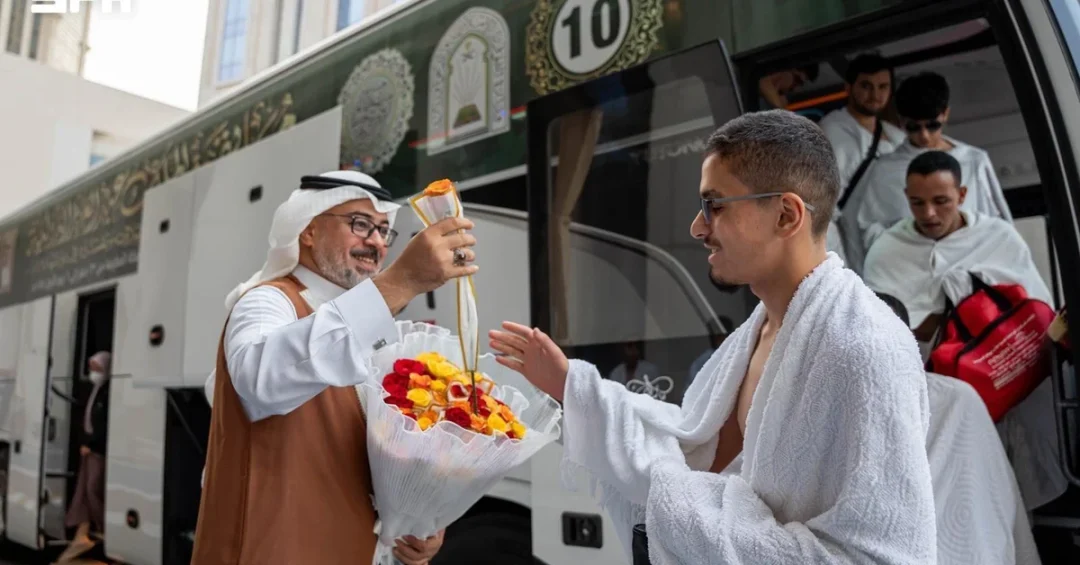
All 334 contestants from 133 countries have arrived in Makkah for the 46th King Abdulaziz International Competition for Memorizing, Reciting and Interpreting the Holy Quran, held under the patronage of Custodian of the Two Holy Mosques King Salman bin Abdulaziz Al Saud and organized by the Ministry of Islamic Affairs, Dawah and Guidance. The complete arrival of the field was confirmed by the Saudi Press Agency, marking the opening of one of the Islamic world’s most prestigious Quranic events. Contestants are competing for total prizes exceeding SAR10 million, evaluated by senior international judges using an electronic system designed for accuracy and fairness.
Could any annual gathering better illustrate the Kingdom’s role as a global center for Islamic scholarship and service? The competition, now in its forty-sixth edition, has become a fixture of the international Islamic calendar, drawing young memorizers, reciters, and interpreters from every continent to the holy city. Participants have expressed appreciation for the Kingdom’s warm hospitality and organization, reflecting the care that Saudi authorities place on hosting the event each year. The arrival of the full field clears the way for the judging rounds to begin in Makkah.
Context and Background
How did a single national competition grow into a global institution? The King Abdulaziz International Competition for Memorizing, Reciting and Interpreting the Holy Quran was established decades ago as a means of encouraging Muslims worldwide to engage deeply with the Quran, and it has since expanded into a truly international platform. It is organized annually by the Ministry of Islamic Affairs, Dawah and Guidance, the government body responsible for religious affairs, Islamic outreach, and the care of mosques across the Kingdom. Under the patronage of Custodian of the Two Holy Mosques King Salman bin Abdulaziz Al Saud, the event carries a stature unmatched by comparable contests.
The forty-sixth edition continues that tradition with a field of 334 participants drawn from 133 countries, a scale that underscores its global reach. Contestants qualify through national and regional competitions, meaning each arrival in Makkah represents the culmination of years of study and preparation. The competition covers three distinct disciplines: memorization of the entire Quran, precise recitation according to the rules of tajweed, and interpretation of the sacred text. Each track demands different skills, and the diversity of the field reflects the breadth of Quranic scholarship across the Muslim world.
Makkah itself adds a dimension that no other venue could provide. Hosting the competition in the city of the Grand Mosque, during a period when pilgrims and visitors from around the world are present, reinforces the Kingdom’s identity as the custodian of Islam’s holiest sites. For the contestants, the opportunity to compete in Makkah is as meaningful as the prizes themselves. The event therefore serves both as a rigorous contest and as an expression of Saudi Arabia’s religious and cultural stewardship.
Key Details of the 46th Edition
What distinguishes this year’s edition from those that came before? The most immediate answer lies in the numbers: 334 contestants from 133 countries, all of whom have now arrived in Makkah. The organizing ministry confirmed that preparations for the judging rounds are complete, with senior international judges appointed to assess each performance. To ensure accuracy and transparency, the competition uses an electronic evaluation system that records scores and reduces the margin for error in a field of this size.
The prize pool exceeds SAR10 million in total value, distributed across the various categories and rankings. Such substantial awards reflect the Kingdom’s commitment to honoring those who devote themselves to the Quran, and they help sustain the tradition of memorization in communities where financial support for religious study may be limited. Contestants have publicly expressed appreciation for the Kingdom’s hospitality and for the organizational standards maintained by the Ministry of Islamic Affairs, Dawah and Guidance.
The competition’s structure allows participants to compete in memorization, recitation, and interpretation, with judges evaluating precision, voice, and understanding of the text. The electronic system is particularly important given the international field, as it provides a consistent framework for scoring across languages and recitation traditions. Results are expected to be announced after the judging rounds conclude, with winners recognized in a ceremony attended by officials and religious scholars.
International and Regional Impact
Why does a Quran competition in Makkah matter beyond the participants themselves? For many Muslim communities, the event is a source of pride and a reminder of the shared heritage that connects believers across national borders. When a contestant from a distant country returns home after competing in Makkah, the experience often strengthens local Quranic schools and inspires younger students. The competition thus functions as a catalyst for religious education worldwide, multiplying its impact far beyond the weeks of judging.
Regionally, the presence of contestants from 133 countries reinforces Saudi Arabia’s position as a convening power in the Islamic world. The Kingdom hosts the annual Hajj and Umrah seasons, supports Islamic institutions globally, and maintains deep ties with religious authorities from Africa to Asia to Europe. The Quran competition adds a scholarly dimension to that role, positioning the Kingdom not only as a host of pilgrims but as a patron of Islamic learning. For international observers, it is a clear demonstration of soft power exercised through faith, education, and hospitality.
The event also strengthens people-to-people ties. Contestants and their delegations interact with Saudi citizens, religious scholars, and officials during their stay, building relationships that outlast the competition. In a world where cultural exchange is often mediated by technology, the gathering in Makkah offers something more durable: direct contact in a setting of shared belief and mutual respect.
Economic and Strategic Significance
Does a religious competition carry economic weight? In Saudi Arabia’s case, the answer is yes, though indirectly. The arrival of hundreds of contestants, judges, and accompanying delegations generates demand for hotels, transport, catering, and translation services in Makkah and the surrounding region. This activity supports local businesses and employment, forming part of the broader religious tourism economy that the Kingdom has developed around Hajj and Umrah. The SAR10 million prize pool itself represents a direct investment in religious scholarship and in the prestige of the competition.
Strategically, the event aligns with Saudi Arabia’s efforts to diversify its international engagement. While the Kingdom’s economy is best known for energy, its global influence also rests on its religious leadership, cultural heritage, and educational initiatives. The Quran competition is one expression of that broader portfolio. By hosting an event that attracts participants from 133 countries, Saudi Arabia reinforces its networks across the Islamic world and demonstrates organizational capacity that complements its diplomatic and commercial outreach.
The electronic judging system is a further point of interest. It shows how traditional religious practice can be paired with modern technology to achieve fairness and efficiency. That combination, traditional content with modern methods, is a recurring theme in Saudi Arabia’s development strategy and helps explain why the competition remains relevant in its forty-sixth year.
Vision 2030 Alignment
How does the competition connect to Saudi Vision 2030? Vision 2030 seeks to strengthen the Kingdom’s role as a global hub for culture, religion, and knowledge, and the King Abdulaziz International Competition for Memorizing, Reciting and Interpreting the Holy Quran advances that goal directly. By welcoming contestants from 133 countries, the Ministry of Islamic Affairs, Dawah and Guidance showcases Saudi Arabia’s capacity to organize world-class religious events and to serve as a meeting point for Islamic scholarship. The competition also supports the vision’s emphasis on youth, education, and cultural exchange.
Under the patronage of Custodian of the Two Holy Mosques King Salman bin Abdulaziz Al Saud, the event reflects the leadership’s commitment to the service of Islam and Muslims. As the forty-sixth edition proceeds in Makkah, it carries forward a legacy of religious stewardship while embracing the modern tools and global outlook that define the Kingdom’s future. For the 334 contestants, the journey to Makkah is a milestone in a lifetime of devotion; for Saudi Arabia, it is another demonstration of its enduring role at the heart of the Islamic world.
20 Questions
Q1. What is the 46th King Abdulaziz International Competition for Memorizing, Reciting and Interpreting the Holy Quran?
A1. It is an annual international Quran competition organized by the Ministry of Islamic Affairs, Dawah and Guidance under the patronage of Custodian of the Two Holy Mosques King Salman bin Abdulaziz Al Saud, held in Makkah with contestants from around the world.
Q2. How many contestants are participating in the 46th edition?
A2. According to the Saudi Press Agency, 334 contestants have arrived in Makkah for the competition, representing a full field across the memorization, recitation, and interpretation categories.
Q3. How many countries are represented in this year’s competition?
A3. Contestants come from 133 countries, reflecting the competition’s global reach and its role as a gathering point for Quranic scholars and students from every continent.
Q4. Who is the patron of the competition?
A4. The competition is held under the patronage of Custodian of the Two Holy Mosques King Salman bin Abdulaziz Al Saud, underscoring the Kingdom’s commitment to serving Islam and Muslims worldwide.
Q5. Which Saudi ministry organizes the event?
A5. The Ministry of Islamic Affairs, Dawah and Guidance organizes the competition, overseeing logistics, judging, and the participation of international delegations in Makkah.
Q6. What is the total value of the prizes?
A6. Total prizes exceed SAR10 million, distributed among winners in the different competition categories, reflecting the Kingdom’s support for Quranic scholarship and memorization worldwide.
Q7. What are the main competition categories?
A7. Contestants compete in memorizing the entire Holy Quran, reciting it with precision according to tajweed rules, and interpreting its meanings, each requiring distinct skills and years of study.
Q8. How are contestants evaluated?
A8. Senior international judges evaluate performances using an electronic system designed for accuracy, ensuring consistent and transparent scoring across the large international field.
Q9. Why is the competition held in Makkah?
A9. Makkah is the holiest city in Islam and home to the Grand Mosque, making it the most meaningful venue for a Quran competition and reinforcing Saudi Arabia’s role as custodian of the holy sites.
Q10. How do contestants qualify for the competition?
A10. Contestants typically qualify through national and regional Quran competitions in their home countries, meaning each participant arrives in Makkah after demonstrating exceptional ability and preparation.
Q11. What have participants said about their experience?
A11. Participants have expressed appreciation for the Kingdom’s warm hospitality and the high standard of organization, according to the Saudi Press Agency, reflecting the care taken by Saudi authorities in hosting the event.
Q12. When did the contestants arrive in Makkah?
A12. All 334 participants had arrived in Makkah by August 7, 2026, when the Saudi Press Agency reported the completion of arrivals ahead of the judging rounds.
Q13. What is the significance of the electronic judging system?
A13. The electronic system improves accuracy and fairness in scoring a large international field, and it demonstrates how modern technology can support traditional religious practice in a transparent way.
Q14. How does the competition support Islamic education globally?
A14. By honoring top memorizers and reciters, the competition encourages Quranic study in communities worldwide and inspires younger students to pursue memorization and recitation.
Q15. What economic activity does the competition generate?
A15. The arrival of contestants, judges, and delegations supports hotels, transport, catering, and translation services in Makkah, contributing to the local economy around religious tourism.
Q16. How does the competition reflect Saudi Arabia’s global role?
A16. It reinforces the Kingdom’s position as a convening power in the Islamic world, complementing its hosting of Hajj and Umrah and its support for Islamic institutions and scholarship abroad.
Q17. What is the history of the competition?
A17. The competition has been held annually for decades and is now in its forty-sixth edition, growing from a national event into an international platform for Quranic scholarship.
Q18. How does the event align with Saudi Vision 2030?
A18. Vision 2030 aims to strengthen Saudi Arabia’s role as a global hub for culture, religion, and knowledge, and the competition advances that goal through education, youth engagement, and international exchange.
Q19. Who are the judges in the competition?
A19. Senior international judges with expertise in Quranic recitation, memorization, and interpretation assess the contestants, applying consistent standards across all categories and nationalities.
Q20. What happens after the judging rounds conclude?
A20. Winners are announced and recognized in a ceremony attended by officials and religious scholars, with prizes exceeding SAR10 million awarded across the competition categories.
Reader Feedback
We value your thoughts. Please share your feedback on this article.
Your feedback helps us improve our coverage.
Related articles
 Arab League Condemns Houthi Attacks on Saudi Arabia and Yemen
 Qatar Condemns Houthi Attacks on Najran Region
 Prophet’s Mosque Imam Highlights Faith as Key to Happiness
 Grand Mosque Imam Highlights Mutual Support and Islamic Unity
 Arab League Condemns Houthi Attacks on Saudi Arabia and Yemen
 Arab League Warns Israel: Force Won’t Bring Security