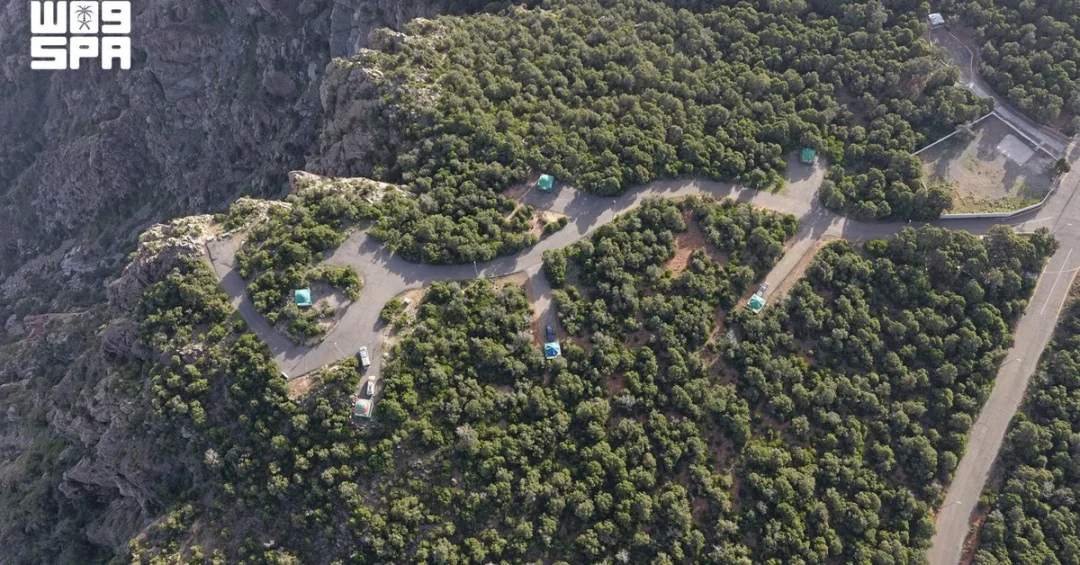
Shaaf Billasmar forests in the Aseer Region of southwestern Saudi Arabia are drawing renewed attention as one of the Kingdom’s leading natural and tourist destinations, with dense juniper woodlands, towering highlands, cloud-covered peaks, and panoramic views that shift with the wind throughout the day. The Saudi Press Agency (SPA) documented the forests stretching across the mountainous highlands, where mature juniper trees blend with steep peaks and low-lying clouds, and where smoothly winding mountain roads open up sweeping vistas of Aseer’s pristine landscape. The area has become a favored retreat for visitors seeking mild weather, dramatic scenery, and the unspoiled natural surroundings of Saudi Arabia’s highlands. Have you ever imagined standing above a sea of clouds in the Arabian Peninsula?
The SPA report, released through official Saudi channels, describes clouds forming above the peaks before drifting through valleys and slopes, with some summits remaining visible above the cloud layer while others disappear into fog. This constantly changing atmosphere gives Shaaf Billasmar a character unlike anywhere else in the region. Juniper forests cover the slopes and highlands, interspersed with rock formations and mountain roads that follow the natural contours of the terrain. Panoramic views extend across mountain ranges and valleys, reflecting the diversity of the landscape. The combination of these features has made the area a magnet for tourists, photography enthusiasts, and hikers, and it stands as a vivid example of how Saudi Arabia’s natural heritage is being opened to the world under Vision 2030.
Context and Background
Why has Aseer long been considered the Kingdom’s natural crown jewel? The Aseer Region, whose name means “difficult” in Arabic, is a mountainous province in southwestern Saudi Arabia rising to more than 3,000 meters in places, including the Kingdom’s highest peak, Jabal Sawda. Its elevation produces a climate markedly cooler and wetter than the rest of the country, supporting vegetation found nowhere else in Saudi Arabia. The Arabian juniper, known locally as arar, is the signature tree of these highlands, capable of surviving harsh winds, rocky soils, and seasonal mists. Shaaf Billasmar sits within this ecosystem, and the SPA’s documentation of its dense forests and cloud-draped peaks underscores how central the region is to the Kingdom’s environmental identity.
The forests also carry cultural weight. Aseer has historically been a crossroads of trade, agriculture, and settlement, and its mountain communities developed terraced farming and distinctive architectural traditions that remain visible today. For international readers, it is important to understand that Aseer is not a newly discovered destination; it is a region with deep roots whose natural assets are now being presented to a global audience through official Saudi media. The SPA report reflects a broader effort by the Kingdom to document and promote its environmental diversity, an effort that supports both tourism growth and ecological awareness. Does that combination of heritage and nature sound like a destination worth exploring?
Key Details of the Billasmar Landscape
What exactly makes Shaaf Billasmar so visually striking? According to the SPA, the forests stretch across mountainous highlands where dense juniper trees blend with towering peaks and low-lying clouds. Clouds form above the peaks before drifting through valleys and slopes, creating scenes that change with the wind throughout the day; some peaks remain visible above the cloud layer while others are hidden by fog. Mountain roads wind smoothly through the forests, highlighting the beauty of the terrain and making the area accessible to visitors who wish to experience the highlands without extreme difficulty. The interplay of light, mist, rock, and vegetation produces an environment that photographers describe as endlessly variable.
The juniper forests themselves are ecologically significant. They cover the slopes and highlands, interspersed with rock formations, and their mature trees contribute to ecological balance by stabilizing soils, retaining moisture, and providing habitat for wildlife. The SPA noted that the dense vegetation and mature juniper trees enhance the area’s touristic appeal while attracting visitors, photography enthusiasts, and hikers seeking to enjoy nature. The forests remain one of the region’s leading natural destinations, showcasing the beauty of Aseer’s highlands. For a Kingdom historically associated with desert landscapes, Shaaf Billasmar offers a compelling counterpoint: green, cool, and cloud-wrapped mountains just a short drive from the city of Abha.
Tourism Experience and Visitor Appeal
What can a traveler actually do in Shaaf Billasmar? The answer lies in slow, immersive experiences rather than spectacle. Visitors can drive the winding mountain roads that thread through the juniper forests, stopping at viewpoints where panoramic vistas open across ranges and valleys. Hikers can explore trails that follow the terrain, passing rock formations and groves of mature trees. Photographers find changing light and drifting fog that reward patience, and families seeking mild weather can simply enjoy the cool highland air. The area’s appeal is rooted in its pristine natural surroundings, which remain the primary attraction.
The SPA’s documentation also highlights how the experience shifts hour by hour. Clouds that form above the peaks in the morning may drift through valleys by afternoon, alternately revealing and concealing summits. This dynamic environment encourages repeat visits and longer stays, which in turn supports local hospitality businesses, guides, and artisans. For international tourists, Shaaf Billasmar represents a different face of Saudi Arabia, one that complements the cultural and heritage sites of Aseer, including its famous villages and traditional architecture. Would you plan a trip around cloud-watching in the highlands?
International and Regional Impact
How does a forest in southwestern Saudi Arabia resonate beyond the Kingdom’s borders? Aseer’s highlands are increasingly positioned as a regional tourism destination, attracting visitors from across the Gulf and, more recently, from Europe and Asia. The Kingdom’s tourism strategy aims to raise the sector’s contribution to gross domestic product and to welcome tens of millions of international visitors annually by 2030. Natural destinations such as Shaaf Billasmar support that goal by diversifying the Saudi offer beyond religious pilgrimage and desert adventure. They also strengthen regional identity, giving Aseer a distinctive place on the national tourism map.
Regionally, the promotion of Aseer’s forests aligns with broader environmental conversations in the Middle East, where climate resilience and biodiversity are gaining attention. Saudi Arabia has launched major initiatives, including the Saudi Green Initiative and the Middle East Green Initiative, which aim to plant billions of trees and protect ecosystems across the region. Documenting and celebrating sites like Shaaf Billasmar reinforces the message that environmental preservation and economic development can advance together. For neighboring countries, the model offers a constructive example of how natural heritage can be integrated into national growth strategies. Could the mountains of Aseer become a benchmark for sustainable tourism in the region?
Economic and Strategic Significance
Why does a scenic forest matter to Saudi Arabia’s economy? Tourism is a pillar of Vision 2030, the national transformation program launched under the leadership of Crown Prince Mohammed bin Salman. The strategy seeks to diversify revenue away from hydrocarbons, create jobs for young Saudis, and raise the quality of life for citizens and residents. Natural attractions like Shaaf Billasmar contribute directly by drawing visitors who spend on accommodation, food, transport, and local products. They also support small businesses and community-based tourism, which can distribute economic benefits to highland towns and villages.
Strategically, Aseer is part of a wider push to develop the Kingdom’s southern regions. The Public Investment Fund and other national entities have backed large-scale projects in tourism and entertainment, while the Aseer Development Authority works to enhance infrastructure and promote the region’s cultural and natural assets. Improved roads, hospitality capacity, and visitor services make destinations like Shaaf Billasmar more accessible and more attractive. The result is a virtuous cycle: visibility attracts investment, investment improves the visitor experience, and satisfied visitors spread the word. Does that sound like a sustainable path for a mountain economy?
Conservation and Environmental Stewardship
What protects the juniper forests for future generations? Conservation is central to the long-term value of Shaaf Billasmar. Juniper trees are slow-growing and sensitive to changes in climate and land use, which makes their preservation a priority. Saudi authorities have emphasized environmental protection through national initiatives, including tree-planting campaigns and the expansion of protected areas. The SPA’s report noted that the forests’ dense vegetation and mature juniper trees contribute to ecological balance, a point that underscores the link between conservation and tourism appeal.
Responsible visitation is equally important. Hikers and photographers are encouraged to stay on established paths, avoid damaging vegetation, and respect the natural environment. Local communities play a role as stewards, and their involvement helps ensure that tourism development does not undermine the very landscapes that attract visitors. By framing Shaaf Billasmar as both a destination and an ecological asset, Saudi Arabia signals that environmental stewardship is part of its national vision. Isn’t that the kind of balance modern tourism needs?
Vision 2030 Alignment
How does Shaaf Billasmar fit into Vision 2030? The Kingdom’s long-term plan aims to build a vibrant society, a thriving economy, and an ambitious nation. Natural destinations support all three: they enrich the quality of life for citizens and residents, create economic opportunities in tourism and related sectors, and project a positive image of Saudi Arabia internationally. The documentation of Aseer’s forests through official channels such as the Saudi Press Agency is part of a broader effort to showcase the Kingdom’s environmental diversity and cultural richness to the world.
As Vision 2030 progresses, destinations like Shaaf Billasmar will continue to gain visibility, supported by improved infrastructure, hospitality investment, and a national commitment to sustainability. The forests of Aseer represent more than scenery; they are a statement about what Saudi Arabia values: its heritage, its environment, and its future. For travelers seeking a natural retreat in the highlands, the message is clear: the cloud-covered peaks of Billasmar are open, and they are waiting. Will you be among the visitors who discover them next?
20 Questions
Q1. Where are the Shaaf Billasmar forests located?
A1. They are located in the Aseer Region of southwestern Saudi Arabia, within the mountainous highlands near Abha, an area known for its cool climate, juniper woodlands, and dramatic cloud formations.
Q2. What makes Shaaf Billasmar a leading natural destination?
A2. The area combines dense juniper forests, towering highlands, cloud-covered peaks, and panoramic views, creating a landscape that changes with the wind and attracts tourists, photographers, and hikers throughout the year.
Q3. What kind of trees grow in Shaaf Billasmar?
A3. The forests are dominated by Arabian juniper trees, known locally as arar, which are adapted to high altitudes, rocky soils, and seasonal mists, and they form the signature vegetation of Aseer’s highlands.
Q4. Why do clouds form above the peaks?
A4. The high elevation and moist air of Aseer’s mountains cause clouds to form above the peaks before drifting through valleys and slopes, occasionally hiding summits and creating constantly shifting scenery.
Q5. How accessible is the area for visitors?
A5. Mountain roads wind smoothly through the forests and follow the natural terrain, making the area reasonably accessible for drivers and allowing visitors to enjoy panoramic views without extreme hiking.
Q6. What activities can tourists enjoy there?
A6. Visitors can drive scenic mountain routes, hike trails through juniper groves, photograph cloud formations and valleys, and enjoy the mild highland weather in a pristine natural setting.
Q7. Which official source reported on the forests?
A7. The Saudi Press Agency documented the forests, describing the juniper trees, highlands, cloud-covered peaks, and panoramic views, and presenting the area as one of Aseer’s leading natural destinations.
Q8. How does the landscape change during the day?
A8. Clouds form above peaks, drift through valleys and slopes, and shift with the wind, so some summits remain visible while others are hidden by fog, producing scenes that vary from hour to hour.
Q9. Why is Aseer’s climate different from the rest of Saudi Arabia?
A9. Aseer sits at high elevation, rising above 3,000 meters in places, which produces cooler temperatures and more moisture than the Kingdom’s desert regions, supporting forests and agriculture.
Q10. What is the ecological importance of the juniper forests?
A10. The mature juniper trees stabilize soils, retain moisture, and provide habitat for wildlife, contributing to ecological balance while enhancing the area’s touristic appeal and natural beauty.
Q11. How does Shaaf Billasmar support local communities?
A11. Tourism activity supports hospitality businesses, guides, transport providers, and local vendors, helping distribute economic benefits to highland towns and villages in the Aseer Region.
Q12. What role does tourism play in Vision 2030?
A12. Tourism is a pillar of Vision 2030, aimed at diversifying revenue, creating jobs for young Saudis, and raising quality of life by attracting tens of millions of visitors annually.
Q13. Are there conservation efforts in the area?
A13. Saudi Arabia has emphasized environmental protection through national initiatives, including tree-planting campaigns and protected areas, while visitors are encouraged to respect vegetation and stay on established paths.
Q14. What is the best time to visit Shaaf Billasmar?
A14. The highlands offer mild weather for much of the year, with cooler conditions than the rest of the Kingdom, making it a comfortable destination across multiple seasons for nature lovers.
Q15. How does the area compare with other Saudi destinations?
A15. Unlike the desert landscapes often associated with Saudi Arabia, Shaaf Billasmar offers green juniper forests, mist, and cloud-covered peaks, providing a distinct highland experience within the Kingdom.
Q16. What does the SPA report emphasize about the forests?
A16. The report emphasizes the dense juniper trees, towering peaks, low-lying clouds, winding mountain roads, and panoramic views, presenting the forests as a favored destination for visitors seeking natural surroundings.
Q17. Is photography popular in Shaaf Billasmar?
A17. Yes, photography enthusiasts are drawn to the area because of the changing light, drifting fog, and dramatic contrasts between visible peaks and cloud-hidden valleys throughout the day.
Q18. How does the area reflect Saudi environmental diversity?
A18. Shaaf Billasmar reflects the environmental diversity of Aseer, showing that the Kingdom contains ecosystems ranging from desert to highland forest, each with distinct vegetation and climate.
Q19. What infrastructure supports tourism in Aseer?
A19. Improved mountain roads, hospitality capacity, and visitor services developed under national and regional initiatives make destinations like Shaaf Billasmar more accessible and attractive to domestic and international travelers.
Q20. What is the long-term outlook for Shaaf Billasmar?
A20. With continued conservation, infrastructure investment, and promotion through official channels, the forests are positioned to remain a leading natural destination supporting Aseer’s tourism growth and Vision 2030 objectives.
Reader Feedback
We value your thoughts. Please share your feedback on this article.
Your feedback helps us improve our coverage.