


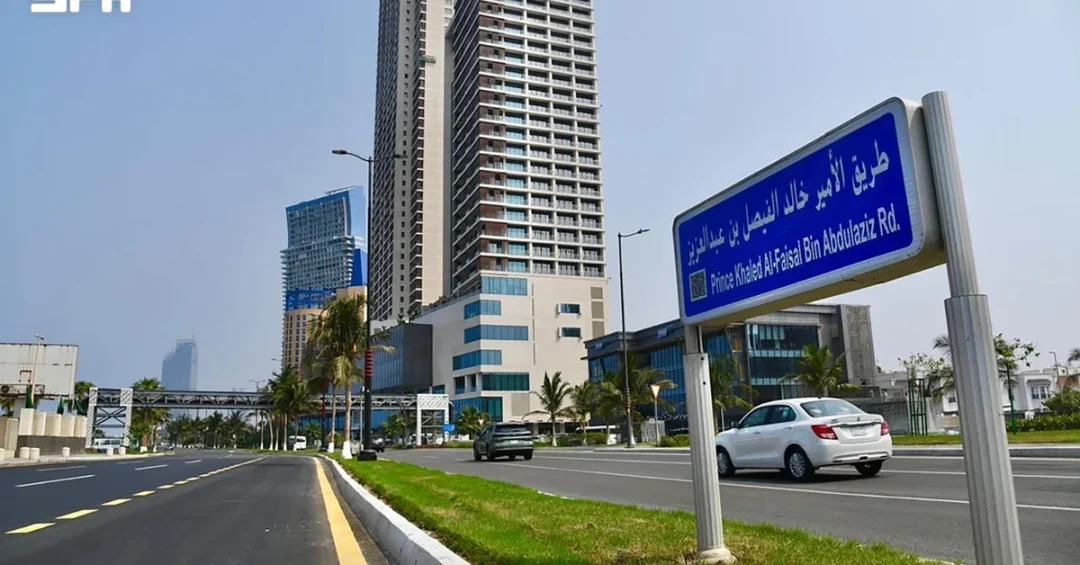
Jeddah Municipality has approved the renaming of Corniche Road, the coastal thoroughfare stretching from Al-Nakheel Street in the north to Prince Mohammed bin Abdulaziz Road in the south, as Prince Khalid Al-Faisal Bin Abdulaziz Road, according to an official announcement carried by the Saudi Press Agency (SPA). The decision, confirmed by the municipality and reported through official Saudi channels, recognizes the national standing of Prince Khalid Al-Faisal bin Abdulaziz, his decades of service to the Makkah Region, and his contributions to its urban and human development. The renaming covers one of Jeddah’s most prominent arteries, a route that frames the city’s Red Sea waterfront and carries residents, pilgrims, and visitors along the edge of the Kingdom’s second-largest city.
The timing of the announcement is significant. It coincides with the approach of Saudi National Day on September 23, an occasion that commemorates the Kingdom’s journey of unification and nation-building and renews pride in the nation, its leadership, and its achievements. By linking a major civic landmark to a figure whose career is intertwined with the development of Makkah Region, the municipality has framed the decision as both a tribute and a statement of continuity. Is it not fitting that a road carrying millions of travelers each year should bear the name of a leader whose work helped shape the region they are passing through?
Context and Background
Prince Khalid Al-Faisal bin Abdulaziz is one of the most prominent national figures in Saudi Arabia’s administrative and urban development. His name is closely associated with Makkah Region through his tenure as governor and his oversight of development initiatives that reshaped the region’s cities and governorates. The Makkah Region holds a unique place among Saudi Arabia’s provinces, combining religious significance as the home of the Two Holy Mosques with growing economic weight, a rising urban population, and an increasingly diversified tourism and services sector. His role reflects the importance of a region that stands at the intersection of faith, commerce, and modernization.
The road itself is no ordinary street. Corniche Road runs along Jeddah’s Red Sea coastline, connecting the northern districts around Al-Nakheel Street to the southern reaches near Prince Mohammed bin Abdulaziz Road. It is a corridor of hotels, public spaces, waterfront promenades, and commercial activity, and it serves as a daily route for residents while also being a first impression of the Kingdom for many visitors arriving through Jeddah. Renaming such a visible artery is therefore a decision with symbolic weight, attaching a leader’s legacy to the everyday movement of a city that has long functioned as Saudi Arabia’s gateway to the sea.
Why does the naming of a single road carry meaning beyond its asphalt and signage? Because in Jeddah, the corniche is a shared civic space. It is where families gather in the evenings, where the city’s relationship with the Red Sea is most visible, and where the pace of urban modernization can be seen in real time. The municipality’s decision therefore touches on identity as much as infrastructure, connecting the daily life of the city to a broader narrative of national service and development.
Key Details of the Decision
According to the official announcement, Jeddah Municipality approved renaming the road as Prince Khalid Al-Faisal Bin Abdulaziz Road, with the change applying to the full stretch from Al-Nakheel Street in the north to Prince Mohammed bin Abdulaziz Road in the south. The municipality stated that the move recognizes his national standing, his service to the region, and his contributions to its development. The naming honors his role in the development of Makkah Region and his efforts to enhance services and development projects, improve quality of life, and advance the urban landscape of its cities and governorates in line with the objectives of Saudi Vision 2030.
The announcement was carried by the Saudi Press Agency, the Kingdom’s official news agency, which gives the decision the weight of a formal public record. The SPA report placed the renaming in the context of National Day, noting that the new name coincides with the approach of September 23. That framing connects a municipal administrative action to a national occasion, suggesting that the tribute is intended to be understood as part of a wider appreciation of service to the country. The report also underscored Prince Khalid Al-Faisal’s association with Makkah Region and the significance of the region in religious, economic, and urban terms.
What does it mean for a municipality to attach a name to a road at this particular moment in the Kingdom’s development? It signals that the institutions responsible for shaping cities are thinking about legacy as well as logistics. Jeddah Municipality oversees a city that is growing rapidly, hosting major events, expanding its waterfront, and preparing for a future in which tourism, trade, and quality of life are central priorities. A decision like this one reflects an awareness that the built environment carries memory, and that names on maps can express gratitude and aspiration at the same time.
International and Regional Impact
For international audiences, the renaming offers a window into how Saudi Arabia honors public service and how its cities connect local identity to national narratives. Jeddah is the Kingdom’s principal Red Sea port and a historic entry point for pilgrims traveling to Makkah and Madinah. The corniche is one of the first places many visitors see, and the road now bearing Prince Khalid Al-Faisal’s name will be part of their experience of the city. That visibility gives the tribute an international dimension, presenting a story about continuity, service, and urban pride to a global readership.
Regionally, the decision reinforces the standing of Makkah Region as a focal point of Saudi development. The region combines the religious centrality of the Two Holy Mosques with expanding infrastructure, hospitality capacity, and public services. Honoring a figure associated with the region’s governance and development highlights how the Kingdom’s provinces are being integrated into a single national project of modernization. For neighboring countries and international partners watching Saudi Arabia’s trajectory, the renaming is a small but telling indicator of institutional stability and of the value placed on long-term stewardship of place.
Could a street name really matter to anyone outside the city? In a country undergoing rapid transformation, symbols are part of the story. They show which contributions are remembered and which values are elevated. The renaming places a premium on service, development, and quality of life, themes that resonate far beyond Jeddah’s city limits and that align with the Kingdom’s broader engagement with the world.
Economic and Strategic Significance
The corniche corridor is economically significant. It links districts, supports hospitality and retail activity, and provides access to waterfront areas that are central to Jeddah’s tourism and leisure economy. Improving the quality of life along such corridors is a strategic objective, because attractive urban environments help cities compete for investment, talent, and visitors. The municipality’s emphasis on development projects, services, and the urban landscape reflects an understanding that infrastructure and livability are intertwined with economic performance.
Strategically, the renaming supports the broader effort to position Saudi cities as modern, well-managed, and welcoming. Jeddah’s waterfront has been the focus of sustained investment, and the corniche functions as a showcase for the city’s ambitions. By naming the road after a figure associated with administrative and urban development, the municipality ties the corridor’s future to a legacy of careful planning and public service. That association can help build public confidence in ongoing projects and in the institutions delivering them.
How does a coastal road connect to the national economy? Through tourism, trade, and the daily movement of people and goods. Jeddah’s port and airport make it a hub, and its waterfront makes it a destination. The corniche sits at the meeting point of those functions, and its condition and reputation matter to the city’s overall competitiveness. The renaming is a modest administrative step, but it reinforces the idea that Jeddah’s public spaces are assets to be developed, maintained, and celebrated.
Vision 2030 Alignment
The municipality explicitly linked the renaming to the objectives of Saudi Vision 2030, the national transformation program that aims to diversify the economy, improve public services, and enhance quality of life across the Kingdom. The tribute cites Prince Khalid Al-Faisal’s efforts to enhance services and development projects, improve quality of life, and advance the urban landscape of Makkah Region’s cities and governorates. Those goals sit at the heart of Vision 2030, which places livable cities, efficient services, and a strong sense of national identity among its central ambitions.
By connecting a major Jeddah artery to a leader whose work advanced those priorities, the decision turns a road into a reminder of the standard the Kingdom has set for itself. It also reinforces the role of municipal institutions in delivering the Vision’s promises at street level, where residents and visitors experience public services directly. As Saudi Arabia continues its journey of modernization, gestures like this one help anchor national ambition in the everyday life of its cities, ensuring that the story of development is written not only in strategies and budgets but also in the names that guide people home.
20 Questions
Q1. What road has Jeddah Municipality renamed?
A1. Jeddah Municipality approved renaming Corniche Road, which runs from Al-Nakheel Street in the north to Prince Mohammed bin Abdulaziz Road in the south, as Prince Khalid Al-Faisal Bin Abdulaziz Road, according to the Saudi Press Agency.
Q2. Who is Prince Khalid Al-Faisal bin Abdulaziz?
A2. He is a prominent national figure in Saudi Arabia’s administrative and urban development, closely associated with Makkah Region through his tenure as governor and his oversight of development initiatives that improved services and the urban landscape.
Q3. Why was the road renamed?
A3. The municipality said the move recognizes Prince Khalid Al-Faisal’s national standing, his service to the region, and his contributions to its development, including efforts to enhance services, improve quality of life, and advance the urban landscape.
Q4. Which official source announced the renaming?
A4. The renaming was announced through the Saudi Press Agency, the Kingdom’s official news agency, which reported the Jeddah Municipality decision as part of its coverage of official Saudi news and developments.
Q5. What is the geographic extent of the renamed road?
A5. The road extends from Al-Nakheel Street in the north of Jeddah to Prince Mohammed bin Abdulaziz Road in the south, covering a major stretch of the city’s coastal corniche along the Red Sea waterfront.
Q6. When did the announcement coincide with?
A6. The new name coincides with the approach of Saudi National Day on September 23, an occasion commemorating the Kingdom’s journey of unification and nation-building and renewing pride in the nation, its leadership, and its achievements.
Q7. How does the renaming relate to Saudi Vision 2030?
A7. The municipality linked the tribute to Vision 2030 objectives, citing Prince Khalid Al-Faisal’s efforts to enhance services, improve quality of life, and advance the urban landscape of Makkah Region’s cities and governorates.
Q8. Why is Makkah Region significant in this context?
A8. Makkah Region is one of Saudi Arabia’s most important areas in religious, economic, and urban terms, home to the Two Holy Mosques and a focal point of development initiatives overseen during Prince Khalid Al-Faisal’s tenure as governor.
Q9. What does the corniche represent for Jeddah?
A9. The corniche is a central civic and economic corridor along the Red Sea, hosting hotels, public spaces, and commercial activity, and serving as a daily route for residents as well as a first impression for many visitors.
Q10. How might the renaming affect Jeddah residents?
A10. Residents will see a familiar route carry a new name honoring a figure associated with the region’s development, reinforcing local pride and connecting daily life to a broader narrative of national service and modernization.
Q11. Does the renaming change the road’s function?
A11. No. The decision concerns the name of the thoroughfare. The road continues to serve as a major coastal artery for traffic, tourism, and commerce along Jeddah’s Red Sea waterfront.
Q12. What themes does the tribute emphasize?
A12. The tribute emphasizes national standing, service to the region, development projects, improved services, quality of life, and the advancement of the urban landscape, all framed in relation to Saudi Vision 2030 objectives.
Q13. Why is Jeddah important nationally?
A13. Jeddah is the Kingdom’s principal Red Sea gateway, a historic entry point for pilgrims, and a major commercial and tourism center, making its public spaces and infrastructure matters of national significance.
Q14. What role do municipalities play in Vision 2030?
A14. Municipalities deliver Vision 2030 ambitions at street level, managing urban services, public spaces, and development projects that directly shape quality of life for residents and visitors across Saudi cities.
Q15. How does the decision reflect Saudi administrative practice?
A15. It reflects a practice of formally recognizing long service and development contributions through civic honors, documented through official channels such as the Saudi Press Agency and municipal announcements.
Q16. What is the significance of the National Day timing?
A16. National Day on September 23 commemorates unification and nation-building. Announcing the tribute near that date links a municipal decision to a national moment of reflection and pride in the Kingdom’s achievements.
Q17. Will signage and maps be updated?
A17. The official announcement approves the renaming. Practical updates to signage, addresses, and mapping are administrative matters handled by the relevant authorities as part of implementing the decision.
Q18. How does the renaming support tourism?
A18. A well-maintained, clearly identified corniche enhances Jeddah’s appeal as a destination, supporting hospitality, leisure, and waterfront activity that serve both domestic visitors and international travelers.
Q19. What does the decision say about Saudi cities?
A19. It shows that Saudi cities are being managed with attention to identity, legacy, and livability, integrating infrastructure improvements with recognition of the people who contributed to regional development.
Q20. What is the broader message of the tribute?
A20. The broader message is one of gratitude and continuity: public service and development work are remembered, and the Kingdom’s urban future is built on the foundations laid by those who advanced its regions.
Reader Feedback
We value your thoughts. Please share your feedback on this article.
Your feedback helps us improve our coverage.
Related articles
 Hafr Al-Batin Ready for Saudi National Day Celebrations
 Al-Ahsa Municipality Celebrates Saudi National Day with Diverse Events
 Al-Kharj Completes Saudi National Day Preparations
 SPA Wins Two OANA Awards for Photo Report and Best Photograph
 Lebanese Grand Mufti Congratulates Saudi Arabia on National Day
 KSrelief Distributes 362 Food Baskets in Lahj Governorate