


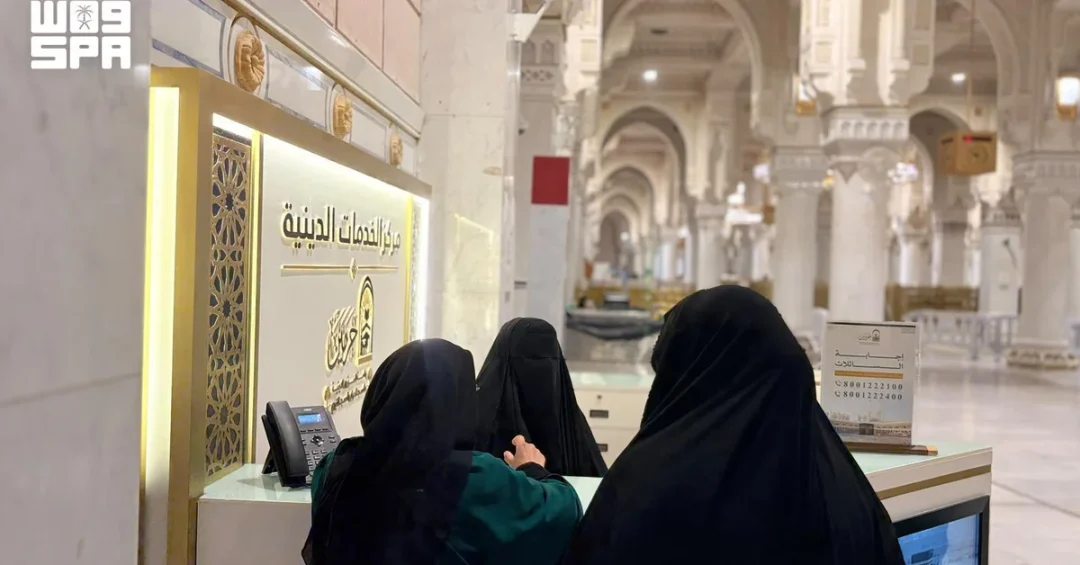
The Presidency of Religious Affairs at the Grand Mosque and the Prophet’s Mosque is answering religious questions from female visitors to the Grand Mosque through its Qasidah center, part of a wider set of services for women designed to help them perform their worship and rituals with access to reliable religious guidance. The announcement, released through official Saudi channels, underscores the Kingdom’s commitment to providing women with trusted, scholarly support as they undertake pilgrimage and worship in Makkah. The Qasidah center, staffed by qualified women, offers responses grounded in authentic religious scholarship, raising religious awareness and helping visitors worship with understanding. Have you ever wondered how millions of women navigate religious obligations with confidence during their visit to the Grand Mosque?
The service is one of several programs the Presidency of Religious Affairs offers women at the Grand Mosque, alongside guidance and counseling, Quran study circles, scholarly lessons, and volunteer initiatives. In January 2026 alone, these services reached 469,750 female visitors, a figure that reflects both the scale of women’s participation in worship at the Grand Mosque and the presidency’s determination to meet their needs with qualified, accessible guidance. The Qasidah center thus forms part of a comprehensive ecosystem of religious care that links scholarly expertise with on-site support, ensuring that women receive the information they need at the right time and in the right place.
Context and Background
How did the Qasidah center come to play such a vital role in the religious life of female visitors? The Presidency of Religious Affairs at the Grand Mosque and the Prophet’s Mosque has long been responsible for organizing religious guidance and scholarly instruction at the two holiest sites in Islam. As the number of pilgrims and visitors has grown, the presidency has expanded its services to address the specific needs of different groups, including women. The Qasidah center represents a focused effort to ensure that female visitors can ask questions about worship and rituals and receive answers grounded in authentic religious scholarship. This approach reflects a broader recognition that religious guidance must be accessible, reliable, and tailored to the circumstances of those who seek it.
The center is staffed by qualified women who are trained to answer questions about worship and rituals with responses rooted in established Islamic jurisprudence. This staffing model is significant because it allows female visitors to discuss matters of personal religious practice in a comfortable and culturally appropriate setting. The presidency’s decision to invest in this service aligns with its mandate to raise religious awareness and to help visitors worship with understanding. By providing clear, scholarly answers, the Qasidah center helps women fulfill their religious obligations with confidence and peace of mind, which is particularly important during the spiritually intense experience of visiting the Grand Mosque.
The Qasidah center is not an isolated initiative but part of a wider set of services for women at the Grand Mosque. These include guidance and counseling, Quran study circles, scholarly lessons, and volunteer initiatives. Together, they create a supportive environment where women can deepen their knowledge, strengthen their faith, and participate fully in the spiritual life of the holy site. The presidency’s holistic approach demonstrates a commitment to serving all visitors with dignity and respect, ensuring that women have access to the resources they need to make the most of their time in Makkah.
Key Details
What exactly does the Qasidah center offer to female visitors? According to the Presidency of Religious Affairs, the center is dedicated to answering religious questions from female visitors to the Grand Mosque. The inquiries cover a range of topics related to worship and rituals, such as prayer, circumambulation (tawaf), remembrance of Allah (dhikr), Quran recitation, supplication, and attendance at religious lessons. The center’s staff provide responses based on authentic religious scholarship, ensuring that the guidance is both accurate and trustworthy. This service is available to women who may have questions about the proper way to perform specific acts of worship or who seek clarification on religious matters during their visit.
The presidency also encourages women to make the most of their time through prayer, circumambulation, remembrance of Allah, Quran recitation, supplication, and attendance at religious lessons. The Qasidah center supports these activities by offering on-site guidance that links religious knowledge with practical application. For example, a woman who is unsure about the correct method of tawaf can receive immediate clarification from a qualified female scholar. Similarly, those who wish to understand the deeper meanings of supplication or dhikr can benefit from the center’s expertise. This integration of guidance and support ensures that visitors can focus on their spiritual journey without being hindered by unanswered questions.
The reach of these services is substantial. In January 2026 alone, the presidency’s programs for women at the Grand Mosque reached 469,750 female visitors. This figure highlights the scale of the operation and the high demand for religious guidance among women. It also demonstrates the presidency’s capacity to deliver services efficiently and effectively, even during periods of high visitation. The Qasidah center, as part of this broader effort, contributes to the overall goal of raising religious awareness and helping visitors worship with understanding. Have you considered how such a large-scale service is coordinated to meet the needs of so many individuals?
International and Regional Impact
How does the Qasidah center’s work resonate beyond the borders of Saudi Arabia? The Grand Mosque in Makkah is a destination for Muslims from around the world, and the services provided by the Presidency of Religious Affairs are experienced by a highly international audience. Female visitors from diverse countries and cultural backgrounds benefit from the center’s guidance, which is grounded in authentic scholarship and delivered by qualified women. This international dimension enhances the reputation of the Kingdom as a custodian of the Two Holy Mosques and as a provider of exemplary religious services. It also strengthens the spiritual experience of pilgrims, who return to their home countries with positive impressions of Saudi Arabia’s hospitality and religious expertise.
Regionally, the Qasidah center sets a standard for how religious institutions can address the needs of women in a respectful and scholarly manner. By offering specialized services for women, the presidency demonstrates that religious guidance can be both inclusive and faithful to tradition. This approach may serve as a model for other religious centers and organizations in the region and beyond. It also reinforces the Kingdom’s role as a leader in religious affairs, committed to serving all visitors with the highest standards of care. The positive impact on women’s religious experience contributes to the overall success of the Hajj and Umrah seasons, which are central to Saudi Arabia’s spiritual and economic life.
Economic and Strategic Significance
What economic and strategic value does the Qasidah center bring to Saudi Arabia’s broader goals? The services for women at the Grand Mosque are part of a comprehensive system that supports the millions of pilgrims who visit the Kingdom each year. By ensuring that women have access to reliable religious guidance, the presidency helps to create a smooth and fulfilling experience for visitors, which in turn encourages repeat visits and positive word-of-mouth. The pilgrimage sector is a significant contributor to the Saudi economy, and the quality of religious services directly affects the sector’s performance. The Qasidah center’s work therefore has tangible economic implications, supporting the Kingdom’s efforts to enhance the pilgrimage experience and maximize its benefits.
Strategically, the center aligns with Saudi Arabia’s Vision 2030, which seeks to diversify the economy and enhance the quality of life for citizens and visitors. By investing in services that empower women and facilitate their religious practice, the Kingdom demonstrates its commitment to inclusive development and to preserving its religious heritage. The Qasidah center also contributes to the broader goal of making the Hajj and Umrah experience more accessible and enriching for all. This strategic alignment ensures that the center’s work is not only religiously valuable but also consistent with the Kingdom’s long-term vision for prosperity and global leadership.
Vision 2030 Alignment
How does the Qasidah center reflect the principles of Saudi Vision 2030? Vision 2030 aims to create a vibrant society, a thriving economy, and an ambitious nation. The center’s services for women support the goal of a vibrant society by promoting religious awareness and enabling women to participate fully in worship. They also contribute to a thriving economy by enhancing the pilgrimage experience, which is a key sector. And they reflect an ambitious nation by showcasing Saudi Arabia’s ability to provide world-class religious services. The presidency’s work is thus deeply intertwined with the Vision’s objectives, demonstrating how religious institutions can contribute to national development.
In conclusion, the Qasidah center stands as a testament to Saudi Arabia’s dedication to serving female visitors to the Grand Mosque with reliable, scholarly guidance. Through its qualified female staff and its integration with other programs, the center helps women worship with understanding and confidence. As the Kingdom continues to welcome millions of pilgrims, the center’s role will only grow in importance. Isn’t it heartening to see such efforts to support women’s spiritual journeys? The Presidency of Religious Affairs remains committed to enhancing the experience of all visitors, in line with the Kingdom’s enduring values and its forward-looking Vision 2030.
20 Questions
Q1. What is the Qasidah center?
A1. The Qasidah center is a service of the Presidency of Religious Affairs at the Grand Mosque and the Prophet’s Mosque that answers religious questions from female visitors, providing guidance grounded in authentic scholarship.
Q2. Who staffs the Qasidah center?
A2. The center is staffed by qualified women who are trained to answer questions about worship and rituals with responses based on authentic religious scholarship, ensuring reliable guidance for female visitors.
Q3. What kinds of questions does the center answer?
A3. The center addresses inquiries about worship and rituals, including prayer, circumambulation (tawaf), remembrance of Allah (dhikr), Quran recitation, supplication, and attendance at religious lessons.
Q4. How many female visitors were reached in January 2026?
A4. In January 2026 alone, the presidency’s services for women at the Grand Mosque reached 469,750 female visitors, reflecting the scale and impact of these programs.
Q5. What other services does the presidency offer women?
A5. Besides the Qasidah center, the presidency offers guidance and counseling, Quran study circles, scholarly lessons, and volunteer initiatives, all designed to support women’s worship and religious understanding.
Q6. How does the center help women worship with understanding?
A6. By providing clear, scholarly answers to their questions, the center raises religious awareness and enables women to perform their rituals correctly and with confidence, enhancing their spiritual experience.
Q7. Where is the Qasidah center located?
A7. The center operates at the Grand Mosque in Makkah, as part of the Presidency of Religious Affairs’ services for visitors to the holy site, ensuring on-site access to guidance.
Q8. Is the service available in multiple languages?
A8. The source material does not specify languages, but the center serves an international audience of female visitors, and the presidency aims to provide accessible guidance to all.
Q9. Can women ask questions privately?
A9. The center is designed to offer a comfortable and culturally appropriate setting for women to ask questions, with qualified female staff available to provide personalized guidance.
Q10. How does the center contribute to religious awareness?
A10. By answering questions with authentic scholarship, the center helps women deepen their understanding of worship and rituals, thereby raising religious awareness among visitors to the Grand Mosque.
Q11. What is the significance of having women staff the center?
A11. Having qualified women staff the center allows female visitors to discuss religious matters in a comfortable environment, reflecting the presidency’s commitment to tailored, respectful service.
Q12. Does the center operate year-round?
A12. The presidency provides services for women throughout the year, including the Qasidah center, to support the continuous flow of pilgrims and visitors to the Grand Mosque.
Q13. How does the center link guidance with on-site support?
A13. The center offers immediate, on-site answers to questions, ensuring that visitors receive the information they need at the right time and place, directly supporting their worship.
Q14. What role does the center play during peak seasons?
A14. During peak seasons like Ramadan and Hajj, the center’s services are especially vital, helping manage the increased number of female visitors and ensuring they receive timely guidance.
Q15. Are there volunteer opportunities for women?
A15. Yes, the presidency offers volunteer initiatives for women, allowing them to contribute to the services provided at the Grand Mosque and support fellow visitors in their religious journey.
Q16. How does the center align with Vision 2030?
A16. The center supports Vision 2030 by empowering women, enhancing the pilgrimage experience, and promoting a vibrant society, all of which are key objectives of the Kingdom’s long-term plan.
Q17. What impact does the center have on the overall pilgrimage experience?
A17. By providing reliable guidance, the center helps women worship with confidence, contributing to a smoother and more fulfilling pilgrimage experience, which benefits the Kingdom’s reputation and economy.
Q18. Can non-Arabic speaking women access the service?
A18. While the source does not specify languages, the international nature of the Grand Mosque’s visitors suggests that the center strives to assist women from diverse backgrounds with their religious questions.
Q19. How does the presidency encourage women to make the most of their time?
A19. The presidency encourages women to engage in prayer, tawaf, dhikr, Quran recitation, supplication, and religious lessons, and the Qasidah center supports these activities with expert guidance.
Q20. What is the future outlook for the Qasidah center?
A20. As the number of visitors grows, the center is expected to expand its services, continuing to provide essential religious guidance to women and supporting the Kingdom’s Vision 2030 goals.
Reader Feedback
We value your thoughts. Please share your feedback on this article.
Your feedback helps us improve our coverage.
Related articles
 Arab Parliament Speaker Congratulates Saudi Arabia on National Day
 Saudi, Egypt, Pakistan, Türkiye Ministers Meet in New York
 IMCTC, Syria Discuss Partnership to Combat Terrorism
 Bahrain Congratulates Saudi Leadership on National Day
 KSrelief Chief Joins UN ’87 Million Lives’ Humanitarian Event
 Saudi Ministry of Energy Rejects Iraqi Tanker Purchase Claim