


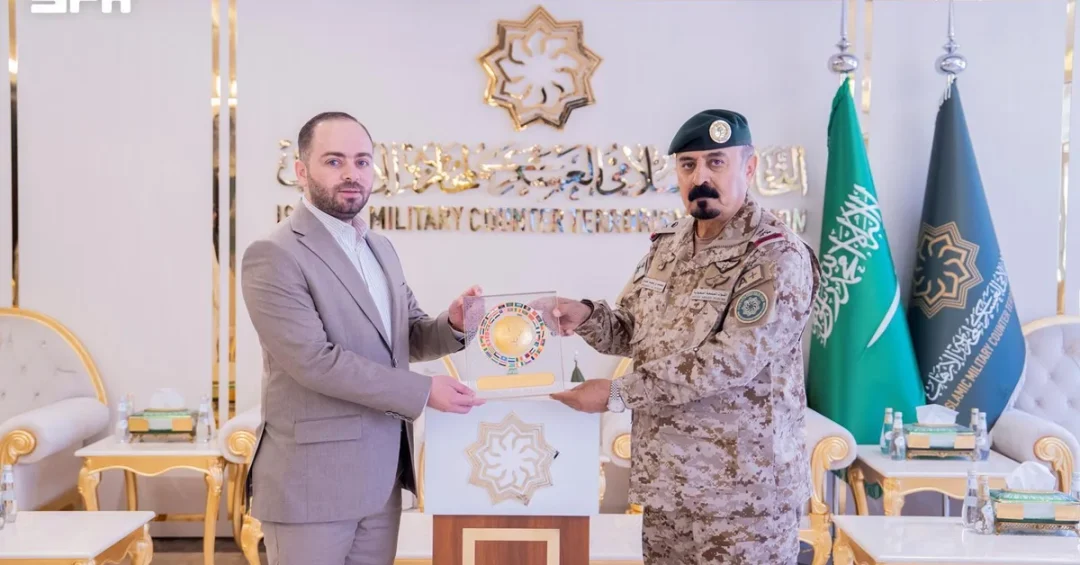
Riyadh, September 22, 2026 — The Islamic Military Counter-Terrorism Coalition (IMCTC) received Chargé d’Affaires of the Syrian Embassy in Saudi Arabia Mohsen Mahbash at its headquarters in Riyadh, where senior officials discussed a comprehensive partnership to combat terrorism and extremism, according to the Saudi Press Agency (SPA). The meeting was led by Maj. Gen. Pilot Mohammed bin Saeed Al-Moghedi, Secretary-General of the IMCTC, and focused on strengthening cooperation between the coalition and Syria in counter-terrorism, capacity building, and the exchange of expertise. Could this engagement mark a turning point for regional security and for Syria’s reintegration into the wider Islamic world?
The discussions reviewed the coalition’s programs and initiatives across its four operational domains: intellectual, media, counter-terrorist financing, and military. The visit is part of broader efforts to strengthen communication and coordination between the IMCTC and Syria and to explore avenues of cooperation that support joint efforts against terrorism and extremism while contributing to regional and international security and stability. The meeting reflects Saudi Arabia’s continued commitment to building partnerships that safeguard the security, unity, and sovereignty of states across the region.
Context and Background
Why has the Islamic Military Counter-Terrorism Coalition become such a central platform for security cooperation among Muslim-majority nations? Established in 2015 and headquartered in Riyadh, the IMCTC is an intergovernmental organization of member states that coordinates efforts to combat terrorism and violent extremism. Its work is organized around four domains — intellectual, media, counter-terrorist financing, and military — allowing members to address both the ideological roots of extremism and its operational manifestations. The coalition’s mandate emphasizes capacity building, the exchange of expertise, and the alignment of national counter-terrorism priorities with collective action.
The meeting with Syria’s diplomatic representative is significant because it signals a widening of the coalition’s outreach at a time when regional stability remains a shared priority. Saudi Arabia has long harnessed its resources to combat terrorism and has played leading roles in supporting countries across the Islamic world, particularly Syria, Palestine, and Yemen. This support stems from the Kingdom’s Arab and Islamic responsibilities and its commitment to safeguarding the security, unity, and sovereignty of states. The discussion in Riyadh therefore builds on a track record of Saudi diplomacy and security assistance that predates this particular visit.
For international observers, the encounter also illustrates how counter-terrorism cooperation can serve as a channel for constructive engagement. By focusing on practical programs — capability building, readiness enhancement, and tailored initiatives — the IMCTC offers a framework in which partners can work together on shared threats without losing sight of national priorities. The presence of Syria’s Chargé d’Affaires at the coalition’s headquarters underscores the value placed on dialogue and coordination as tools for regional peace.
Key Details
What exactly was discussed during the meeting in Riyadh? According to the Saudi Press Agency, Maj. Gen. Pilot Mohammed bin Saeed Al-Moghedi received Mohsen Mahbash, Chargé d’Affaires of the Syrian Embassy in Saudi Arabia, at the coalition’s headquarters. The two sides examined ways to strengthen cooperation between the IMCTC and Syria in combating terrorism and extremism, building capabilities, and exchanging expertise. They also reviewed the coalition’s programs and initiatives across its four domains: intellectual, media, counter-terrorist financing, and military.
Al-Moghedi emphasized the strategic importance of Syria joining the coalition, citing its pivotal role in regional security and stability and the value of working alongside other member states. He noted that Saudi Arabia has harnessed its resources to combat terrorism and has supported countries across the Islamic world, particularly Syria, Palestine, and Yemen, reflecting the Kingdom’s Arab and Islamic responsibilities and its commitment to safeguarding the security, unity, and sovereignty of states. These remarks frame Syria’s potential membership as a strategic gain for the entire coalition, not merely a bilateral arrangement.
The Secretary-General also outlined the role of the Initiatives Financing Fund in translating national needs into practical programs that build capabilities and enhance readiness. He affirmed the coalition’s readiness to develop tailored initiatives addressing Syria’s priorities in combating terrorism and extremism should it join the coalition. The visit itself was described as part of efforts to strengthen communication and coordination between the IMCTC and Syria and to explore avenues of cooperation that support joint efforts against terrorism and extremism while contributing to regional and international security and stability.
International and Regional Impact
How might deeper IMCTC-Syria cooperation reshape the regional security landscape? For neighboring states and international partners, the prospect of Syria joining a coalition of Muslim-majority countries carries implications for intelligence sharing, border security, and the disruption of terrorist financing networks. The IMCTC’s four-domain approach means that cooperation would not be limited to military measures but would also encompass intellectual and media efforts to counter extremist narratives, as well as financial measures to cut off funding streams. Such a comprehensive framework can complement broader international counter-terrorism efforts while respecting the sovereignty of participating states.
From a diplomatic perspective, the meeting in Riyadh reinforces Saudi Arabia’s role as a convening power in the Islamic world. The Kingdom’s willingness to support Syria, Palestine, and Yemen stems from its Arab and Islamic responsibilities and its commitment to safeguarding the security, unity, and sovereignty of states. By hosting and facilitating these discussions, Riyadh demonstrates that counter-terrorism cooperation can be a stabilizing force, offering a constructive path for states emerging from conflict to re-engage with regional institutions. International observers are likely to view the talks as a confidence-building measure that could pave the way for wider cooperation.
Economic and Strategic Significance
What economic and strategic dividends could follow from a comprehensive partnership? Terrorism and extremism impose direct costs on economies by deterring investment, disrupting trade routes, and diverting public resources toward security. A coordinated approach through the IMCTC’s Initiatives Financing Fund aims to translate national needs into practical programs that build capabilities and enhance readiness. For Syria, participation could unlock tailored initiatives that address its specific priorities, while for the coalition it would add a strategically located member with a pivotal role in regional security and stability. The fund’s emphasis on practical outcomes suggests a focus on measurable improvements in counter-terrorism capacity.
Strategically, the engagement aligns with Saudi Arabia’s broader vision of a stable and prosperous region. The Kingdom has consistently used its resources and diplomatic weight to support counter-terrorism efforts, and the IMCTC serves as a multilateral vehicle for those efforts. Should Syria join, the coalition would gain additional reach and expertise, and member states would benefit from expanded coordination. The meeting therefore carries significance beyond the immediate agenda, pointing to a future in which regional states work together to confront shared threats and consolidate security gains.
Vision 2030 Alignment
How does this development connect to Saudi Arabia’s Vision 2030? Vision 2030 seeks to diversify the economy, strengthen international partnerships, and position the Kingdom as a leader in global stability and security. Counter-terrorism cooperation is a cornerstone of that vision because security is a prerequisite for investment, tourism, and economic growth. By facilitating dialogue between the IMCTC and Syria, Saudi Arabia advances its goal of a secure and interconnected region while reinforcing its reputation as a responsible international actor. The meeting reflects the Vision’s emphasis on proactive diplomacy and multilateral engagement.
Looking ahead, the discussions in Riyadh could lead to concrete initiatives that build Syria’s counter-terrorism capabilities and integrate its efforts with those of other member states. The IMCTC’s readiness to develop tailored programs, backed by the Initiatives Financing Fund, offers a practical pathway from dialogue to action. As Saudi Arabia continues to harness its resources and diplomatic influence in support of regional security, partnerships like this one demonstrate how Vision 2030’s ambitions extend beyond economic transformation to encompass peace, stability, and cooperation across the Islamic world. The coming months will reveal whether Syria formally joins the coalition, but the direction of travel is clear: engagement, capacity building, and shared responsibility for a safer region.
20 Questions
Q1. What was the main purpose of the meeting between IMCTC and the Syrian Embassy?
A1. The meeting discussed ways to strengthen cooperation between the Islamic Military Counter-Terrorism Coalition and Syria in combating terrorism and extremism, building capabilities, and exchanging expertise, according to the Saudi Press Agency.
Q2. Who represented the IMCTC at the meeting in Riyadh?
A2. Maj. Gen. Pilot Mohammed bin Saeed Al-Moghedi, Secretary-General of the Islamic Military Counter-Terrorism Coalition, led the meeting at the coalition’s headquarters in Riyadh.
Q3. Who represented Syria at the meeting?
A3. Mohsen Mahbash, Chargé d’Affaires of the Syrian Embassy in Saudi Arabia, represented Syria during the discussions held in Riyadh.
Q4. What are the four domains of the IMCTC’s programs and initiatives?
A4. The coalition’s work spans four domains: intellectual, media, counter-terrorist financing, and military. These domains guide its programs and initiatives across member states.
Q5. Why did Al-Moghedi emphasize the strategic importance of Syria joining the coalition?
A5. He cited Syria’s pivotal role in regional security and stability and the value of working alongside other member states to confront shared threats.
Q6. What role has Saudi Arabia played in supporting countries against terrorism?
A6. Saudi Arabia has harnessed its resources to combat terrorism and has supported countries across the Islamic world, particularly Syria, Palestine, and Yemen, reflecting its Arab and Islamic responsibilities.
Q7. What is the Initiatives Financing Fund and what does it do?
A7. The Initiatives Financing Fund translates national needs into practical programs that build capabilities and enhance readiness for counter-terrorism efforts among participating states.
Q8. Is the IMCTC ready to develop tailored initiatives for Syria?
A8. Yes. Al-Moghedi affirmed the coalition’s readiness to develop tailored initiatives addressing Syria’s priorities in combating terrorism and extremism should it join the coalition.
Q9. Where is the IMCTC headquartered?
A9. The Islamic Military Counter-Terrorism Coalition is headquartered in Riyadh, Saudi Arabia, where the meeting with the Syrian Chargé d’Affaires took place.
Q10. When did the meeting take place?
A10. The meeting took place on September 22, 2026, according to the Saudi Press Agency report from Riyadh.
Q11. What broader efforts does this visit support?
A11. The visit supports efforts to strengthen communication and coordination between the IMCTC and Syria and to explore cooperation that contributes to regional and international security and stability.
Q12. How does the meeting reflect Saudi Arabia’s foreign policy priorities?
A12. It reflects the Kingdom’s commitment to safeguarding the security, unity, and sovereignty of states, stemming from its Arab and Islamic responsibilities and its support for countries across the Islamic world.
Q13. What benefits could Syria gain from joining the IMCTC?
A13. Syria could gain access to tailored programs, capacity-building support, and expertise exchange across the coalition’s four domains, enhancing its counter-terrorism readiness.
Q14. What benefits could the IMCTC gain from Syria’s membership?
A14. Syria’s pivotal role in regional security and stability would strengthen the coalition’s collective efforts and expand coordination among member states.
Q15. How does counter-terrorism cooperation relate to economic stability?
A15. Security is a prerequisite for investment, trade, and economic growth. Coordinated counter-terrorism efforts help deter extremism, protect trade routes, and reduce security costs.
Q16. What does the IMCTC’s intellectual domain involve?
A16. The intellectual domain focuses on countering extremist ideologies and narratives through educational, religious, and community-based initiatives that promote moderation and tolerance.
Q17. What does the media domain of the IMCTC cover?
A17. The media domain works to counter terrorist propaganda and extremist messaging through strategic communication and media outreach across member states.
Q18. How does the IMCTC address terrorist financing?
A18. Through its counter-terrorist financing domain, the coalition coordinates efforts to disrupt funding streams, enhance financial oversight, and exchange best practices among member states.
Q19. How does this meeting align with Saudi Vision 2030?
A19. Vision 2030 emphasizes international partnerships and regional stability. Counter-terrorism cooperation supports a secure environment for economic diversification, investment, and tourism.
Q20. What are the next steps following this meeting?
A20. The discussions explored avenues for cooperation, and the coalition affirmed readiness to develop tailored initiatives for Syria should it join. Further coordination between the parties is expected.
Reader Feedback
We value your thoughts. Please share your feedback on this article.
Your feedback helps us improve our coverage.
Related articles
 Bahrain Congratulates Saudi Leadership on National Day
 KSrelief Chief Joins UN ’87 Million Lives’ Humanitarian Event
 Saudi Ministry of Energy Rejects Iraqi Tanker Purchase Claim
 Bahraini Speaker: Saudi Arabia Pillar of Regional Stability
 King Abdulaziz Era Firsts That Built Modern Saudi State
 TGA Allows Private, Nonprofit Sectors to Pay Fines in Installments