


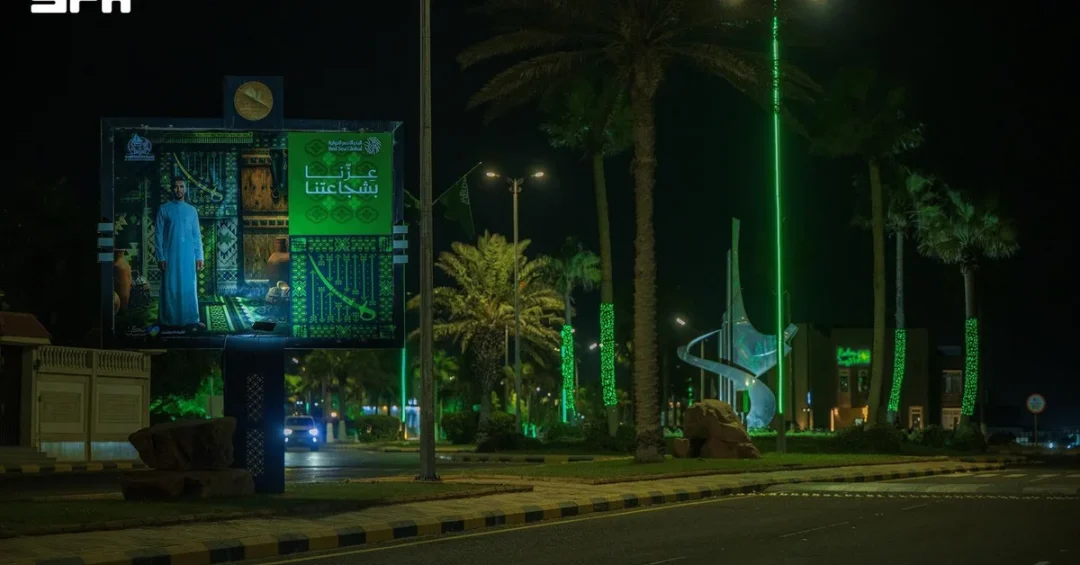
Al-Wajh Governorate has completed comprehensive preparations for Saudi National Day, adorning its main roads, public squares, and key sites with Saudi flags and illuminated displays featuring national slogans and emblems, the Saudi Press Agency reported. The coastal governorate in the Tabuk Province is ready to welcome large numbers of residents and visitors to its parks, waterfronts, and tourist attractions, with a series of community events planned to mark the occasion.
The preparations reflect the enduring national pride that sweeps across the Kingdom each year on September 23, when Saudi Arabia commemorates the unification of the nation by the late King Abdulaziz Al Saud in 1932. In Al-Wajh, a historic port city on the Red Sea known for its archaeological heritage and growing tourism profile, the celebrations carry particular significance as the governorate continues to develop as a destination aligned with the Kingdom’s Vision 2030 ambitions. Have you ever considered how a single day of national celebration can reflect the deeper story of a nation’s transformation?
Context and Background
Saudi National Day, observed annually on September 23, marks the founding of the modern Kingdom of Saudi Arabia. It is a moment when citizens and residents across the country reflect on the nation’s history, unity, and progress. In Al-Wajh, preparations began well in advance, with municipal teams coordinating the decoration of main streets and squares, installing lighting displays, and ensuring that public spaces were ready to host the anticipated crowds. The Saudi Press Agency reported that all necessary arrangements were in place across roads, public squares, and various sites throughout the governorate.
Al-Wajh is one of the oldest continuously inhabited settlements on the Red Sea coast, with a history that stretches back centuries. Its name means “the face” in Arabic, a reference to its position facing the sea. The governorate has long served as a gateway for pilgrims and traders, and today it is emerging as a tourism destination under the Kingdom’s broader development strategy. The National Day celebrations thus serve a dual purpose: honoring the past while showcasing the governorate’s modern identity and potential.
Why does a regional celebration in a single governorate matter on the national stage? Because Saudi National Day is not merely a central event in Riyadh; it is a nationwide expression of unity that reaches every city, town, and village. The decorations in Al-Wajh are part of a coordinated national effort to ensure that all citizens, regardless of where they live, can participate in the joy and pride of the occasion. This inclusive approach reflects the Kingdom’s commitment to balanced regional development, a core principle of Vision 2030.
Key Details of the Preparations
The preparations in Al-Wajh have been thorough and visible. Main streets and public squares have been adorned with Saudi flags, and illuminated displays featuring national slogans and emblems have been installed. These decorations are not merely ornamental; they transform public spaces into gathering points where communities can come together. Parks, waterfronts, and tourist attractions are expected to attract large numbers of residents and visitors, according to the Saudi Press Agency.
The governorate is also preparing to launch a series of events to mark the occasion, with broad participation from the local community. While the specific program has not been fully detailed, such events typically include cultural performances, family activities, and fireworks displays. The involvement of the local community is a hallmark of Saudi National Day celebrations, which emphasize volunteerism, social cohesion, and national pride.
What makes these preparations noteworthy is the attention to detail and the scale of coordination required. Municipal authorities, local councils, and community organizations work together to ensure that every aspect of the celebration runs smoothly. In Al-Wajh, the focus on roads, squares, and tourist sites indicates a strategic effort to maximize accessibility and inclusiveness, allowing as many people as possible to join the festivities.
International and Regional Impact
Saudi National Day resonates beyond the Kingdom’s borders. For international audiences, it offers a window into Saudi Arabia’s culture, values, and aspirations. The celebrations in Al-Wajh, a governorate with a rich history and growing tourism sector, highlight the Kingdom’s efforts to preserve its heritage while embracing modernity. Visitors from neighboring countries and further afield often take part in the festivities, experiencing Saudi hospitality firsthand.
Regionally, the day underscores Saudi Arabia’s role as a stabilizing and unifying force in the Middle East. The Kingdom’s leadership in diplomacy, energy, and economic diversification is well documented, and National Day serves as a reminder of its enduring influence. In Al-Wajh, the presence of tourists and visitors from across the region during the celebrations contributes to cultural exchange and people-to-people ties, which are essential for long-term peace and cooperation.
How does a local celebration contribute to Saudi Arabia’s global image? By showcasing the Kingdom’s ability to organize, include, and inspire, events like those in Al-Wajh project a message of unity and progress. International media and social media users often share images of Saudi National Day celebrations, helping to shape perceptions of the country as dynamic, welcoming, and forward-looking.
Economic and Strategic Significance
The economic dimensions of Saudi National Day are significant. The influx of visitors to Al-Wajh’s parks, waterfronts, and tourist attractions generates activity for local businesses, from restaurants and cafes to retail shops and hotels. This boost is particularly valuable for a governorate that is working to establish itself as a tourism destination. The celebrations also provide a platform for local entrepreneurs and artisans to showcase their products, further stimulating the local economy.
Strategically, the preparations in Al-Wajh align with the Kingdom’s broader efforts to develop the Red Sea coast as a premier tourism and investment corridor. Projects such as NEOM, The Red Sea Project, and Amaala are transforming the region, and Al-Wajh stands to benefit from improved infrastructure and increased visibility. National Day serves as a catalyst for community engagement and civic pride, reinforcing the social fabric that underpins economic development.
What does this mean for investors and partners? It signals that Saudi Arabia is not only building megaprojects but also nurturing the human and cultural dimensions of development. A governorate that celebrates its national identity with such enthusiasm is one that is confident, stable, and open for business. For international companies looking to enter the Saudi market, such local dynamism is an encouraging indicator.
Vision 2030 Alignment
The celebrations in Al-Wajh are a vivid expression of the goals set out in Saudi Vision 2030. The vision, launched by Crown Prince Mohammed bin Salman in 2016, aims to diversify the economy, enhance quality of life, and strengthen national identity. By decorating public spaces, hosting community events, and attracting visitors, Al-Wajh is contributing to these objectives at the grassroots level. The emphasis on tourism and cultural heritage directly supports the vision’s target of increasing domestic and international tourism.
Moreover, the inclusive nature of the celebrations—welcoming residents and visitors alike—reflects the vision’s commitment to a vibrant society where all can participate in the Kingdom’s progress. As Saudi Arabia continues its journey of transformation, moments like National Day remind us that development is not only about infrastructure and GDP but also about pride, unity, and shared purpose. Al-Wajh, adorned in green, stands as a small but meaningful example of a nation moving forward together.
20 Questions
Q1. What is Saudi National Day and when is it celebrated?
A1. Saudi National Day marks the unification of the Kingdom of Saudi Arabia by King Abdulaziz Al Saud in 1932. It is celebrated annually on September 23 with nationwide events, decorations, and community activities.
Q2. Why is Al-Wajh Governorate preparing for Saudi National Day?
A2. Al-Wajh is preparing to join the nationwide celebrations, decorating public spaces and organizing events to allow residents and visitors to participate in the occasion and express national pride.
Q3. What specific preparations have been made in Al-Wajh?
A3. Preparations include decorating main streets and squares with Saudi flags, installing illuminated displays featuring national slogans and emblems, and ensuring roads and public sites are ready for large crowds.
Q4. Where is Al-Wajh Governorate located?
A4. Al-Wajh is a governorate in the Tabuk Province of northwestern Saudi Arabia, situated on the Red Sea coast. It is known for its historical significance and growing tourism potential.
Q5. What events are planned in Al-Wajh for National Day?
A5. A series of events will be launched with broad community participation. While details are not fully specified, such celebrations typically include cultural performances, family activities, and fireworks.
Q6. Who is expected to attend the celebrations in Al-Wajh?
A6. Large numbers of residents and visitors are expected to gather at parks, waterfronts, and tourist attractions. The events are designed to be inclusive and welcoming to all.
Q7. How does Al-Wajh’s celebration reflect Saudi Vision 2030?
A7. The celebrations support Vision 2030 by promoting tourism, enhancing quality of life, and strengthening national identity. They also showcase community engagement and local development.
Q8. What is the significance of the green decorations?
A8. Green is the color of the Saudi flag, symbolizing the Kingdom’s Islamic heritage and prosperity. The decorations create a festive atmosphere and foster a sense of unity among residents and visitors.
Q9. How does Saudi National Day impact local economies?
A9. The celebrations boost local businesses such as restaurants, shops, and hotels as visitors gather. They also provide opportunities for entrepreneurs and artisans to showcase their products.
Q10. What role does the Saudi Press Agency play in reporting these events?
A10. The Saudi Press Agency (SPA) is the official news agency of the Kingdom, providing accurate and timely information about government activities and national events, including National Day preparations.
Q11. Are there any historical sites in Al-Wajh that attract tourists?
A11. Yes, Al-Wajh has a rich history with archaeological sites and a historic port. Its waterfront and heritage areas are key attractions for visitors interested in culture and history.
Q12. How do National Day celebrations in Al-Wajh compare to those in major cities?
A12. While major cities like Riyadh and Jeddah host large-scale events, Al-Wajh’s celebrations are community-focused, reflecting local culture and ensuring that all regions participate in the national occasion.
Q13. What message does Saudi National Day convey to the world?
A13. It conveys a message of unity, progress, and pride. It showcases Saudi Arabia’s rich heritage and its ambitious vision for the future, welcoming international observers to learn about the Kingdom.
Q14. How can international visitors participate in National Day events?
A14. International visitors in Saudi Arabia can join public celebrations, visit decorated areas, and attend cultural events. The atmosphere is inclusive, and visitors are welcomed to experience Saudi hospitality.
Q15. What is the role of local community participation in Al-Wajh’s celebrations?
A15. Local community participation is central to the events, fostering social cohesion and ensuring that the celebrations reflect the aspirations and traditions of the people of Al-Wajh.
Q16. Does Al-Wajh have any special significance for Saudi history?
A16. Al-Wajh is one of the oldest settlements on the Red Sea coast and has historically served as a gateway for pilgrims and traders. It is part of the Kingdom’s rich tapestry of heritage.
Q17. How do the decorations in Al-Wajh promote national identity?
A17. The flags and illuminated displays featuring national slogans and emblems create a visual reminder of Saudi Arabia’s unity and achievements, strengthening patriotic feelings among residents and visitors.
Q18. What economic sectors in Al-Wajh benefit most from National Day?
A18. Tourism, retail, and hospitality sectors benefit as visitors frequent parks, waterfronts, and attractions. Local restaurants, cafes, and shops see increased activity during the celebrations.
Q19. How does Saudi National Day support the Kingdom’s tourism goals?
A19. By attracting visitors to regions like Al-Wajh, National Day promotes domestic tourism and showcases the Kingdom’s diverse destinations, supporting Vision 2030’s tourism targets.
Q20. What is the overarching goal of Saudi National Day celebrations?
A20. The overarching goal is to celebrate the nation’s unity, honor its history, and inspire continued progress. It reinforces the bond between the leadership and the people, and showcases Saudi Arabia’s bright future.
Reader Feedback
We value your thoughts. Please share your feedback on this article.
Your feedback helps us improve our coverage.
Related articles
 Thai Islamic Leader Condemns Attacks on Saudi Arabia
 4.5-Magnitude Earthquake Strikes Off Fukushima, No Tsunami Warning
 Naif Arab University Hosts Digital Security Symposium in Paris
 Arar Government Hall: Northern Borders Administrative History
 GCC, Switzerland Launch New Era of Cooperation at First Ministerial Meeting
 Tabuk Buildings Adorned in Green for Saudi National Day