


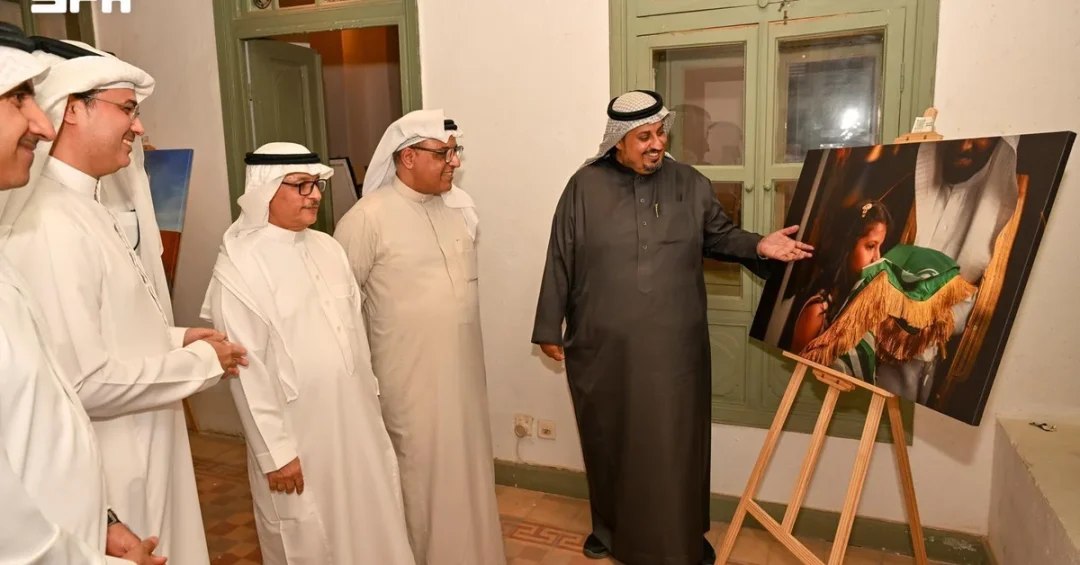
Beit Alsharbatly in Historic Jeddah hosted the “Jeddah: A Memory Told and a Civilization Seen” exhibition on September 21, 2026, celebrating Saudi National Day in cooperation with Rakaez Photography Club, with the exhibition running through September 24. The event, announced through official Saudi channels including the Saudi Press Agency (SPA), brings together 21 photographers whose artistic perspectives document Jeddah’s features, recalling its details, memories, and human and architectural stories. Could there be a more fitting way to honor the Kingdom’s national day than by preserving the memory of one of its most storied cities? The exhibition reflects a broader national commitment to celebrating cultural heritage as a living, evolving asset.
The exhibition’s location is itself significant. Beit Alsharbatly is a historic house in the Al-Balad district of Jeddah, a UNESCO World Heritage Site since 2014, whose coral-stone buildings and traditional wooden rawashin balconies have witnessed centuries of trade, pilgrimage, and cultural exchange. By staging the exhibition in this setting, organizers link the act of remembering to the physical fabric of the city itself. The photographs on display capture architectural and cultural heritage and identity over time while documenting the place’s memory and preserving its details for future generations, a mission that resonates with Saudi Arabia’s wider cultural preservation agenda under Vision 2030.
Context and Background
Why does a single photography exhibition in Jeddah carry meaning beyond its immediate walls? To answer that, it helps to understand what Historic Jeddah represents. Al-Balad, the old town at the heart of Jeddah, was once the gateway for pilgrims arriving by sea en route to Makkah and Madinah. Its merchants, homes, and souqs formed a cosmopolitan crossroads where African, Asian, and Middle Eastern influences met. In 2014, the United Nations Educational, Scientific and Cultural Organization (UNESCO) inscribed Historic Jeddah as a World Heritage Site, recognizing it as a place of outstanding universal value. The “Jeddah: A Memory Told and a Civilization Seen” exhibition draws directly on this layered history, using photography as a medium to translate stone, wood, and memory into images that can travel far beyond the city.
The timing of the exhibition, coinciding with Saudi National Day, is deliberate. Saudi National Day commemorates the unification of the Kingdom in 1932 and has evolved into a nationwide occasion for reflection on national identity, progress, and unity. In recent years, the occasion has increasingly featured cultural programming, from heritage festivals to art exhibitions, reflecting a broader shift in how the Kingdom presents its story to its citizens and to the world. The participation of Rakaez Photography Club, a Saudi photographic collective, underscores the role of civil society and grassroots creative groups in animating this cultural calendar. Their collaboration with Beit Alsharbatly shows how historic venues are being repurposed as active cultural spaces rather than preserved as static monuments.
For international audiences, the exhibition offers a window into a Saudi Arabia that is not only modernizing rapidly but also deliberately curating its past. The Kingdom has invested heavily in heritage restoration, museum development, and cultural festivals as part of a strategy to diversify its economy and enrich its social fabric. Photography, as a democratic and accessible art form, plays a distinct role in this effort: it allows many voices to interpret a shared heritage, producing a mosaic of perspectives rather than a single official narrative. The 21 photographers featured in the exhibition embody this plurality, each bringing an individual artistic viewpoint to the same city.
Key Details
What exactly will visitors encounter at Beit Alsharbatly between September 21 and September 24? The exhibition presents the work of 21 photographers, each contributing images that document Jeddah’s features, details, and memories. According to the Saudi Press Agency, the photographs showcase stories, meanings, and distinctive perspectives on Jeddah, capturing the city’s architectural and cultural heritage and identity over time. This is not a uniform collection but a curated dialogue among artists, with some focusing on the rawashin, the intricately carved wooden balconies characteristic of Al-Balad, others on the human stories embedded in the old town’s lanes, and still others on the interplay of light and shadow across coral-stone walls.
The choice of Beit Alsharbatly as the venue adds a layer of authenticity. The house is part of the Alsharbatly family’s historic property portfolio in Jeddah, and its restoration forms part of a wider effort to rehabilitate the buildings of Historic Jeddah. Hosting a photography exhibition inside such a house turns the venue itself into part of the exhibit: visitors move through historic rooms while viewing images of the city that surrounds them. This immersive quality distinguishes the event from a conventional gallery show. It also aligns with the objectives of the Historic Jeddah Program, which seeks to revitalize the district as a cultural and economic hub while preserving its architectural integrity.
Rakaez Photography Club’s involvement signals the growing institutional support for photography in the Kingdom. Saudi photographers have gained increasing recognition in recent years, with local clubs, galleries, and festivals providing platforms for their work. The exhibition thus serves a dual purpose: it celebrates the national day and it elevates Saudi photographic talent, giving 21 artists a prominent stage during a period of high national attention. For the photographers, the event is an opportunity to contribute to the documentation of a city whose rapid transformation makes visual memory especially urgent.
International and Regional Impact
How does an exhibition in Jeddah’s old town resonate beyond Saudi borders? Cultural diplomacy has become a central pillar of the Kingdom’s international engagement, and heritage-focused events like this one contribute to a global image of Saudi Arabia as a custodian of world heritage. Historic Jeddah is not only a Saudi asset; as a UNESCO World Heritage Site, it belongs to humanity, and exhibitions that interpret it for broad audiences reinforce the Kingdom’s role in protecting shared cultural treasures. International visitors, including the growing number of tourists entering Saudi Arabia under the expanded tourist visa regime, are among the potential audiences for such programming.
Regionally, the exhibition reflects a wider trend across the Gulf and the Middle East, where governments are investing in cultural infrastructure as a component of economic diversification and soft power. Saudi Arabia’s cultural initiatives, from the Red Sea International Film Festival to the Diriyah Biennale, have positioned the Kingdom as a rising cultural hub. The “Jeddah: A Memory Told and a Civilization Seen” exhibition operates at a smaller, community-oriented scale, but it participates in the same movement. It also strengthens people-to-people connections, as photography is a universal language that can communicate Jeddah’s story to audiences in Asia, Africa, Europe, and the Americas without the need for translation.
Economic and Strategic Significance
What economic value can be derived from a four-day photography exhibition? The direct economic footprint may be modest, but the strategic significance is considerable. Cultural events stimulate foot traffic in historic districts, supporting local businesses such as cafes, craft shops, and tour operators. They also raise the profile of heritage tourism, a segment that Saudi Arabia is actively developing. The Historic Jeddah Program, part of the broader Vision 2030 framework, aims to transform Al-Balad into a vibrant destination where heritage, commerce, and community life coexist. Exhibitions like this one serve as proof of concept, demonstrating that historic houses can host contemporary cultural programming and attract visitors.
Beyond tourism, the event contributes to the creative economy. Photography, design, and curation are skills that feed into media, advertising, and digital content industries, all of which are expanding in Saudi Arabia. By giving photographers a platform, Rakaez Photography Club and Beit Alsharbatly help build an ecosystem of creative professionals. This aligns with national efforts to develop cultural industries as sources of employment and export revenue. The exhibition also creates opportunities for partnerships between cultural institutions, private venues, and community groups, a model that can be replicated in other Saudi cities with rich heritage assets, such as Diriyah, AlUla, and Taif.
Vision 2030 Alignment
How does a photography exhibition in Historic Jeddah connect to Saudi Vision 2030? Vision 2030, launched in 2016 under the leadership of Crown Prince Mohammed bin Salman, sets out a comprehensive plan to diversify the economy, strengthen national identity, and improve quality of life. Culture and heritage are explicit pillars of this plan. The Vision’s Quality of Life Program supports cultural events and the preservation of heritage sites, while the National Transformation Program includes targets for cultural participation. The “Jeddah: A Memory Told and a Civilization Seen” exhibition embodies these objectives by activating a heritage site, supporting local artists, and offering citizens and residents a meaningful way to celebrate national identity.
Moreover, the exhibition illustrates the Vision’s emphasis on preserving the past while embracing the future. Saudi Arabia is not choosing between modernization and tradition; it is integrating them. Historic Jeddah, restored and animated, becomes a stage for contemporary creativity. Photography, a technology of the modern age, is used to document and interpret a pre-modern urban fabric. This synthesis is at the heart of the Vision 2030 narrative: a Kingdom confident in its heritage and ambitious about its future. As the exhibition runs through September 24, it offers a timely reminder that national days are not only about looking back, but about seeing clearly where a nation is going, and who will tell its story next.
20 Questions
Q1. What is the “Jeddah: A Memory Told and a Civilization Seen” exhibition?
A1. It is a photography exhibition hosted at Beit Alsharbatly in Historic Jeddah to celebrate Saudi National Day, organized in cooperation with Rakaez Photography Club and running from September 21 to September 24, 2026.
Q2. Where is Beit Alsharbatly located?
A2. Beit Alsharbatly is a historic house in Al-Balad, the old town of Jeddah, which is part of the UNESCO World Heritage Site of Historic Jeddah, known for its coral-stone architecture and traditional wooden balconies.
Q3. How many photographers are participating in the exhibition?
A3. The exhibition features 21 photographers, each presenting their own artistic perspective and photographic works that document Jeddah’s features, memories, and human and architectural stories.
Q4. What is Rakaez Photography Club?
A4. Rakaez Photography Club is a Saudi photographic collective that collaborated on the exhibition, providing a platform for local photographers and contributing to the documentation of Jeddah’s cultural heritage.
Q5. What do the photographs in the exhibition depict?
A5. The photographs showcase stories, meanings, and distinctive perspectives on Jeddah, capturing the city’s architectural and cultural heritage and identity over time while preserving its details for future generations.
Q6. When does the exhibition run?
A6. The exhibition opened on September 21, 2026, and will run through September 24, 2026, according to the Saudi Press Agency announcement.
Q7. Why is the exhibition held during Saudi National Day?
A7. Saudi National Day commemorates the unification of the Kingdom in 1932 and is an occasion for national reflection and celebration. The exhibition uses this timing to highlight Jeddah’s heritage as part of the national story.
Q8. What is Historic Jeddah?
A8. Historic Jeddah, also known as Al-Balad, is the old town of Jeddah and a UNESCO World Heritage Site since 2014, recognized for its role as a historic gateway for pilgrims and its distinctive architecture.
Q9. How does the exhibition support cultural preservation?
A9. By documenting Jeddah’s architectural and cultural heritage through photography, the exhibition helps preserve the city’s memory and details for future generations, complementing physical restoration efforts in the district.
Q10. Who can visit the exhibition?
A10. The exhibition is open to visitors during its run from September 21 to September 24, 2026, at Beit Alsharbatly in Historic Jeddah, subject to venue guidelines and opening hours.
Q11. What is the significance of using photography for heritage documentation?
A11. Photography offers an accessible and democratic medium to capture and share heritage, allowing multiple artistic perspectives to interpret a shared history and making that history available to broad audiences.
Q12. How does the exhibition align with Vision 2030?
A12. It supports Vision 2030’s cultural and quality-of-life objectives by activating a heritage site, promoting local artists, and enriching national identity through cultural programming.
Q13. What is the role of the Saudi Press Agency in this event?
A13. The Saudi Press Agency (SPA) reported on the exhibition, providing official confirmation of its dates, venue, participants, and objectives as part of the Kingdom’s official news channels.
Q14. Does the exhibition have international relevance?
A14. Yes. As Historic Jeddah is a UNESCO World Heritage Site, the exhibition contributes to global cultural diplomacy and offers international audiences insight into Saudi Arabia’s heritage preservation efforts.
Q15. What economic benefits can such exhibitions bring?
A15. They can stimulate foot traffic in historic districts, support local businesses, promote heritage tourism, and contribute to the growth of the creative economy and cultural industries.
Q16. How does the exhibition reflect Saudi Arabia’s modernization?
A16. It demonstrates how the Kingdom integrates heritage with contemporary creativity, using modern photographic art to interpret historic urban fabric, a synthesis central to the Vision 2030 narrative.
Q17. What other heritage initiatives exist in Saudi Arabia?
A17. Saudi Arabia has several heritage initiatives, including the Historic Jeddah Program, the Diriyah Gate project, and the restoration efforts in AlUla, all aimed at preserving and promoting cultural heritage.
Q18. Are there opportunities for similar events in other Saudi cities?
A18. Yes. The model of partnering historic venues with local artist groups can be replicated in other heritage-rich cities such as Diriyah, AlUla, and Taif, supporting cultural tourism across the Kingdom.
Q19. How does the exhibition engage the local community?
A19. It involves local photographers, engages visitors in a historic neighborhood, and fosters pride in Jeddah’s identity, while providing a platform for creative expression during a national celebration.
Q20. What is the long-term impact of such cultural events?
A20. They help build a sustainable cultural ecosystem, preserve heritage for future generations, support the creative economy, and reinforce Saudi Arabia’s position as a global cultural destination aligned with Vision 2030.
Reader Feedback
We value your thoughts. Please share your feedback on this article.
Your feedback helps us improve our coverage.
Related articles
 Spinning: A Traditional Craft Passed Down through Generations
 Darb Zubaydah: A Historic Legacy Highlighted on Saudi National Day
 Buraidah Cultural House Hosts Saudi National Day Events
 King Abdulaziz Festival 2026 Adds Rounds for Mongolian Falcons
 Saudi Camel Federation Joins National Day Celebrations
 Diriyah Highlights King Abdulaziz’s Legacy in Saudi National Day Celebrations