


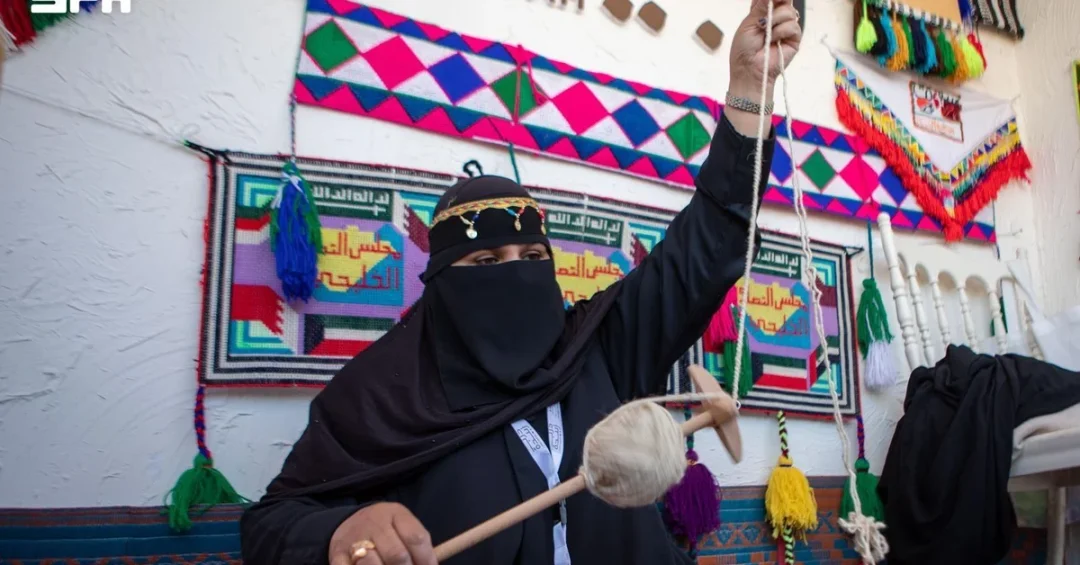
Spinning, the traditional craft of transforming sheep’s wool, goat hair, and camel hair into yarn, stands as one of Saudi Arabia’s most enduring expressions of cultural heritage, according to information released by the Saudi Press Agency (SPA). The craft, long associated with Bedouin life and desert communities, preserves skills passed down through generations and remains a living testament to the resourcefulness, patience, and ingenuity that have shaped Saudi society’s social and cultural memory. As the Kingdom marks Saudi National Day, this heritage comes into renewed focus, offering international audiences a window into the traditions that underpin the nation’s identity and its ambitious modern journey.
Spinning was not merely a domestic chore in earlier eras; it was an economic and social cornerstone of family life across the Arabian Peninsula. Local communities relied on locally available natural materials to produce items needed in daily life, turning raw fibers into yarn that fed the loom and, ultimately, the household. The craft connected pastoral livelihoods to household production in a continuous cycle of work that defined generations. Today, as Saudi Arabia advances under Vision 2030, such traditions are being re-examined not as relics of the past but as sources of cultural strength and economic opportunity. What does it mean for a nation racing toward a high-tech future to honor a craft as ancient as spinning? The answer lies in the Kingdom’s conviction that modernization and heritage can, and must, advance together.
Context and Background
How did a simple wooden spindle become a thread linking centuries of Saudi history? Spinning was widely practiced among Bedouin and desert communities across the Arabian Peninsula, forming an essential stage in the production of textiles long before industrial machinery arrived. The process involves drawing out and twisting fibers from sheep’s wool, goat hair, and camel hair to create yarn, which was then used in weaving, particularly in the traditional craft of Sadu. This yarn supplied the raw material for Sadu weaving, a technique recognized as a cornerstone of Bedouin material culture and used to make traditional tents, furnishings, covers, and other heritage products that were indispensable to desert life.
The historical roots of spinning run deep in Saudi Arabia’s cultural landscape. For centuries, pastoral families moved with their herds, and the animals they raised provided not only milk and meat but also the raw fibers that clothed and sheltered them. Spinning emerged as the bridge between livestock and loom, a skill refined through practice and necessity. In the past, spinning was part of daily family life in these communities, with women playing a key role in practicing the craft and passing its skills down through generations. Using locally available resources to meet their families’ needs, these women became custodians of knowledge that would otherwise have been lost to the passage of time.
The craft also reflected a broader philosophy of self-sufficiency. Communities that mastered spinning and weaving depended less on external supply chains and more on the natural environment around them, an approach that resonates today with global conversations about sustainability and local production. Saudi Arabia’s cultural authorities, including the Ministry of Culture and the Heritage Commission, have increasingly documented and promoted such traditions as part of a national effort to preserve intangible cultural heritage. This effort aligns with the Kingdom’s recognition that cultural continuity is not a brake on development but a foundation for it.
Key Details
What exactly does the spinning process involve, and why has it remained so resilient? At its core, spinning requires patience and dexterity. Raw fibers are cleaned, carded, and then drawn into a continuous strand, with the spindle or spinning wheel providing the twist that gives yarn its strength. The choice of fiber matters: sheep’s wool offers warmth and elasticity, goat hair provides durability and water resistance, and camel hair is prized for its softness and insulating properties. These qualities made spun yarn ideal for the harsh desert environment, where tents needed to withstand wind, sun, and temperature swings.
The yarn produced through spinning fed directly into Sadu weaving, a craft whose geometric patterns and earthy tones are instantly recognizable to those familiar with Bedouin textiles. Sadu products include tents, floor coverings, cushions, and decorative pieces, all of which served practical purposes while carrying aesthetic and symbolic meaning. Each woven item could convey information about the weaver’s community, status, or personal expression, making Sadu a form of visual language as well as a functional craft. The interdependence of spinning and Sadu illustrates how traditional knowledge systems operated as integrated networks of skill, not isolated techniques.
According to the Saudi Press Agency, the craft remains a testament to ways of life and work that have shaped part of Saudi society’s social and cultural memory. This memory is not static. It is actively transmitted through families, cultural festivals, and heritage initiatives that introduce new generations to the tools and techniques of their ancestors. In recent years, Saudi cultural institutions have organized workshops, exhibitions, and documentation projects aimed at keeping spinning and Sadu weaving visible and viable. These efforts ensure that the knowledge embedded in the craft is not merely remembered but practiced.
International and Regional Impact
Why should audiences beyond Saudi Arabia care about a craft rooted in the desert? The answer lies in the universal value of intangible cultural heritage. Spinning and Sadu weaving are part of a broader regional textile tradition that spans the Arabian Peninsula and beyond, connecting Saudi Arabia to neighboring Gulf states and to pastoral cultures across the Middle East and North Africa. When Saudi Arabia preserves and promotes these crafts, it contributes to a global conversation about cultural diversity, sustainable production, and the role of traditional knowledge in contemporary economies. International organizations such as UNESCO have long emphasized that safeguarding intangible heritage is essential to maintaining cultural identity in a globalized world.
Regionally, the craft reinforces shared heritage among Gulf Cooperation Council nations, many of which have similar Bedouin traditions. Cultural exchanges, joint exhibitions, and heritage festivals provide platforms for this shared identity to be celebrated. For international visitors, spinning and Sadu weaving offer an authentic encounter with Saudi culture that goes beyond iconic landmarks. As the Kingdom expands its tourism sector under Vision 2030, heritage crafts become part of the visitor experience, supporting local artisans and creating economic value while deepening cross-cultural understanding.
Economic and Strategic Significance
Can a traditional craft contribute to a modern economy? Increasingly, the answer is yes. Heritage crafts support small businesses, empower artisans, and generate revenue through tourism, retail, and cultural products. In Saudi Arabia, the growing interest in artisanal goods aligns with Vision 2030’s goals of diversifying the economy, creating jobs, and promoting cultural tourism. Women, who historically played a central role in spinning, are among the primary beneficiaries of these opportunities, as training programs and market access initiatives help them turn traditional skills into sustainable livelihoods.
Strategically, the preservation of spinning and related crafts strengthens national identity and social cohesion. In a rapidly changing society, cultural touchstones provide continuity and a sense of belonging. They also enhance Saudi Arabia’s soft power by presenting a nuanced image of the Kingdom that honors its past while embracing its future. The integration of heritage into economic development is not unique to Saudi Arabia, but the Kingdom’s scale and ambition make its approach particularly notable. By investing in cultural infrastructure, including museums, festivals, and digital archives, Saudi Arabia is building an ecosystem where tradition and innovation reinforce each other.
Vision 2030 Alignment
How does spinning connect to a vision of a transformed nation? Vision 2030, launched by Crown Prince Mohammed bin Salman, seeks to diversify the Saudi economy, empower citizens, and enhance quality of life. Cultural heritage is woven throughout these objectives. The Ministry of Culture, established in 2018, has made the preservation and promotion of traditional crafts a priority, recognizing that culture is both a marker of identity and a driver of economic growth. Spinning, as a foundational craft, embodies the values of resourcefulness, craftsmanship, and intergenerational knowledge transfer that Vision 2030 champions.
As Saudi Arabia continues its journey toward a diversified, knowledge-based economy, the threads of the past remain integral to the fabric of the future. The craft of spinning, passed down through generations, is not a relic but a living tradition that informs the Kingdom’s cultural confidence and its place in the world. By honoring the skills of Bedouin women and the communities that sustained them, Saudi Arabia signals that progress and heritage are not opposing forces but partners in nation-building. In this way, a simple spindle becomes a symbol of a nation that remembers where it came from as it moves boldly forward.
20 Questions
Q1. What is spinning in the context of Saudi heritage?
A1. Spinning is the traditional craft of turning sheep’s wool, goat hair, and camel hair into yarn. It was widely practiced among Bedouin and desert communities and formed a foundational step for weaving, particularly the traditional Sadu craft.
Q2. Which materials are traditionally used in Saudi spinning?
A2. The primary materials are sheep’s wool, goat hair, and camel hair. These locally available natural fibers were chosen for their warmth, durability, and suitability to the desert environment, and they remain central to traditional spinning today.
Q3. How is spun yarn used in Saudi culture?
A3. Spun yarn is primarily used in Sadu weaving, which produces traditional Bedouin tents, furnishings, covers, and other heritage products. These items served practical purposes and carried cultural and aesthetic significance within desert communities.
Q4. Who historically practiced spinning in Saudi Arabia?
A4. Bedouin and desert communities practiced spinning, with women playing a key role. Women used locally available resources to meet their families’ needs and passed the skills down through generations, making them custodians of this heritage.
Q5. Why is spinning important to Saudi cultural memory?
A5. Spinning preserves traditional knowledge, skills, and values associated with work, production, and the use of local resources. It recalls the way of life of previous generations and the traditions they passed down, forming part of Saudi society’s social and cultural memory.
Q6. What is Sadu weaving and how does it relate to spinning?
A6. Sadu is a traditional Bedouin weaving craft that uses yarn produced by spinning. It creates tents, furnishings, and covers with distinctive geometric patterns. Spinning supplies the essential raw material that makes Sadu weaving possible.
Q7. How does Saudi National Day highlight traditional crafts?
A7. Saudi National Day brings heritage into focus as part of the Kingdom’s cultural memory. It provides an occasion to celebrate traditions like spinning and Sadu weaving, reminding citizens and international audiences of the skills and values that shaped Saudi society.
Q8. Are there efforts to preserve spinning in Saudi Arabia today?
A8. Yes. Saudi cultural institutions, including the Ministry of Culture and the Heritage Commission, support workshops, exhibitions, and documentation projects. These initiatives aim to keep spinning and related crafts visible, practiced, and transmitted to new generations.
Q9. How does spinning reflect sustainability?
A9. Spinning relies on locally available natural materials and traditional knowledge, minimizing dependence on external supply chains. This approach aligns with modern sustainability principles and demonstrates how heritage crafts can offer lessons for contemporary production systems.
Q10. What role do women play in spinning today?
A10. Women remain central to spinning and related crafts. Training programs and market access initiatives under Vision 2030 help women turn traditional skills into sustainable livelihoods, supporting economic empowerment and cultural continuity simultaneously.
Q11. How does spinning contribute to Saudi tourism?
A11. Heritage crafts like spinning enrich the visitor experience by offering authentic cultural encounters. As Saudi Arabia expands its tourism sector, artisans demonstrate spinning and Sadu weaving, creating economic value and deepening cross-cultural understanding among international visitors.
Q12. What is the economic significance of traditional crafts in Saudi Arabia?
A12. Traditional crafts support small businesses, empower artisans, and generate revenue through tourism, retail, and cultural products. They align with Vision 2030’s goals of economic diversification, job creation, and promoting cultural tourism across the Kingdom.
Q13. How does spinning connect to Vision 2030?
A13. Vision 2030 emphasizes cultural preservation, economic diversification, and quality of life. Spinning embodies resourcefulness, craftsmanship, and intergenerational knowledge transfer, making it a living example of how heritage supports the Kingdom’s modern development goals.
Q14. What fibers are best for desert conditions and why?
A14. Sheep’s wool offers warmth and elasticity, goat hair provides durability and water resistance, and camel hair is prized for softness and insulation. Together, these fibers made spun yarn ideal for tents and furnishings in harsh desert environments.
Q15. Is spinning still practiced in Saudi Arabia today?
A15. Yes, spinning continues to be practiced, particularly through heritage initiatives, cultural festivals, and family traditions. Its survival demonstrates the resilience of Saudi cultural heritage and the ongoing commitment to preserving traditional skills for future generations.
Q16. How does spinning reflect Bedouin values?
A16. Spinning reflects values of self-sufficiency, patience, craftsmanship, and community cooperation. It represents a way of life rooted in the responsible use of local resources and the transmission of knowledge from one generation to the next.
Q17. What international recognition do Saudi heritage crafts receive?
A17. Saudi heritage crafts, including Sadu weaving, have received attention from international cultural organizations. The Kingdom participates in global conversations about intangible cultural heritage, contributing to cultural diversity and sustainable development worldwide.
Q18. How can international audiences learn about spinning?
A18. International audiences can learn about spinning through Saudi cultural festivals, museum exhibitions, digital archives, and tourism experiences. These platforms offer authentic insights into Bedouin traditions and the Kingdom’s broader cultural landscape.
Q19. What does the preservation of spinning symbolize for Saudi Arabia?
A19. It symbolizes the Kingdom’s commitment to honoring its past while building its future. By preserving spinning, Saudi Arabia affirms that cultural heritage and modern development are complementary forces that together strengthen national identity and global standing.
Q20. What is the future of traditional crafts like spinning in Saudi Arabia?
A20. The future looks promising as Vision 2030 integrates heritage into economic and cultural strategies. Continued investment in training, documentation, and tourism will ensure that spinning and related crafts thrive for generations to come, connecting past and future.
Reader Feedback
We value your thoughts. Please share your feedback on this article.
Your feedback helps us improve our coverage.
Related articles
 Darb Zubaydah: A Historic Legacy Highlighted on Saudi National Day
 Buraidah Cultural House Hosts Saudi National Day Events
 King Abdulaziz Festival 2026 Adds Rounds for Mongolian Falcons
 Saudi Camel Federation Joins National Day Celebrations
 Diriyah Highlights King Abdulaziz’s Legacy in Saudi National Day Celebrations
 Hasat Al-Hanzaliyah Illuminated for Saudi National Day