


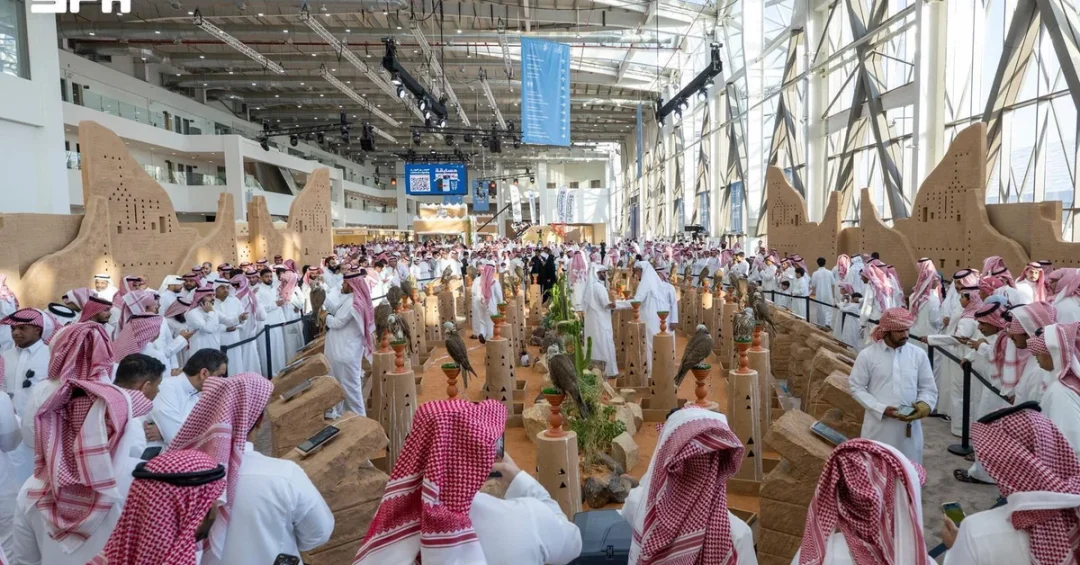
The King Abdulaziz Falconry Festival 2026 will introduce three dedicated competition rounds for Mongolian falcons purchased at the International Saudi Falcons and Hunting Exhibition 2026, according to an official announcement released through the Saudi Press Agency. The new rounds, comprising one Al-Milwah round and two Al-Mazayen rounds, will be open to both local and international falconers who acquire Mongolian falcons at the exhibition, marking a significant expansion of the festival’s competitive framework and reinforcing the Kingdom’s position as the global hub of falconry.
The announcement, issued from Riyadh, reflects the continued growth of the King Abdulaziz Falconry Festival as the world’s largest gathering of its kind, organized under the patronage of the National Center for Falcons, a government body dedicated to the preservation and promotion of this storied Arabian tradition. By creating dedicated categories for Mongolian falcons, the organizers are deepening the festival’s international character while ensuring that the passionate community of falconers who travel to the Kingdom each year can compete on equal terms. For a global audience, the development offers a clear signal that Saudi Arabia’s cultural diplomacy extends well beyond its borders, embracing practitioners from across Asia and beyond. How often does a single sporting and cultural event manage to bridge continents, generations, and traditions in one arena?
Context and Background
Falconry holds a place of profound cultural importance in the Arabian Peninsula, where it has been practiced for millennia as both a means of hunting and a marker of heritage, patience, and nobility. The King Abdulaziz Falconry Festival, named after the founder of modern Saudi Arabia, has grown into the flagship event of this tradition, drawing thousands of falconers and tens of thousands of visitors to the desert north of Riyadh each year. The festival is organized by the National Center for Falcons, which operates under the Kingdom’s cultural and environmental framework and works to regulate, celebrate, and sustain falconry as a living art.
The International Saudi Falcons and Hunting Exhibition, held alongside the festival, serves as the commercial and educational heart of the event. It brings together breeders, equipment makers, veterinarians, and enthusiasts from around the world, and it is here that the Mongolian falcons in question are purchased. The new competition rounds announced for 2026 are specifically designed to reward those who buy at the exhibition and then wish to test their birds in the festival’s prestigious contests. Isn’t it remarkable how a commercial exhibition and a heritage festival can combine to create a genuinely global marketplace of tradition?
Mongolian falcons, particularly the Farkh (juvenile) and Qarnas (adult) categories referenced in the announcement, are prized for their strength, endurance, and hunting ability. Their inclusion in dedicated rounds acknowledges the growing number of international falconers, especially from Central Asia, who participate in Saudi events and who bring with them their own rich falconry customs. The decision to hold these rounds after the festival’s final rounds further ensures that the main competition remains focused on local and traditional categories while still accommodating the international dimension.
Key Details of the New Competition Rounds
Under the rules outlined by the National Center for Falcons, the three dedicated rounds will consist of one Al-Milwah round and two Al-Mazayen rounds, one for Farkh and one for Qarnas. To be eligible, a falcon must be purchased from the International Saudi Falcons and Hunting Exhibition 2026 and must be ringed both at the time of purchase and again before leaving the exhibition. This dual-ringing requirement is designed to verify provenance and to prevent any substitution or tampering, ensuring the integrity of the competition. Each owner may enter up to five falcons purchased at the exhibition, a limit that balances broad participation with manageable logistics.
For the Al-Mazayen competition, which judges the beauty and physical perfection of the birds, participants must provide proof of ownership and may register up to five falcons in each round. Importantly, a falcon competing in the Al-Milwah competition, which tests speed and hunting skill, may also compete in Al-Mazayen, allowing a single bird to demonstrate both athletic prowess and aesthetic excellence. This cross-entry provision adds a layer of strategy for owners and enhances the spectacle for spectators.
The technical regulations for Al-Mazayen are notably strict. Falcons must be free of congenital defects, signs of tampering or modification, and missing feathers. Any alteration of the color of feathers, feet, or talons is prohibited, and all birds must meet the approved technical standards for their respective categories. These rules reflect the deep expertise and ethical commitment of Saudi falconry authorities, who have built a reputation for fair and transparent judging. How many other sporting traditions can claim such meticulous attention to both the spirit and the letter of the rules?
International and Regional Impact
The introduction of dedicated rounds for Mongolian falcons is a clear signal of Saudi Arabia’s commitment to international engagement in cultural and heritage sports. Falconers from Mongolia, Kazakhstan, Kyrgyzstan, and other Central Asian nations have long traditions of their own, and the Saudi festival provides a neutral, prestigious platform where they can compete alongside their Arabian counterparts. This exchange is not merely competitive; it is diplomatic and educational, fostering mutual respect and understanding between peoples who share a love for the same ancient pursuit.
Regionally, the move strengthens the Gulf Cooperation Council’s position as a hub for heritage sports. Saudi Arabia, the United Arab Emirates, Qatar, and Kuwait all host falconry events, but the King Abdulaziz Falconry Festival is the largest and most international. By welcoming Mongolian falcons into dedicated rounds, the Kingdom reinforces its leadership and sets a standard for inclusivity that other regional events may follow. What better way to demonstrate that heritage is not a barrier but a bridge between nations?
The festival also has a significant economic dimension for the international falcon trade. Mongolian falcons are highly sought after, and the requirement that they be purchased at the Saudi exhibition to be eligible for the new rounds creates a direct incentive for breeders and traders to participate in the event. This, in turn, supports the growth of the exhibition as a global marketplace and generates business for Saudi logistics, hospitality, and veterinary services. The ripple effects extend to airlines, hotels, and transport companies that cater to the influx of international participants and their birds.
Economic and Strategic Significance
Beyond the immediate competition, the new rounds align with Saudi Arabia’s broader strategy to diversify its economy and to promote cultural tourism. The King Abdulaziz Falconry Festival attracts tens of thousands of visitors, many from abroad, who spend on accommodation, food, and entertainment in Riyadh and the surrounding region. By adding a compelling new dimension for international falconers, the festival becomes an even stronger draw, supporting the Kingdom’s tourism targets and showcasing the country’s modern infrastructure and hospitality.
Strategically, falconry is a soft-power asset. It connects Saudi Arabia to a global network of enthusiasts and organizations, from Europe to Central Asia, and it projects an image of the Kingdom as a custodian of world heritage. The National Center for Falcons has been instrumental in this effort, working with international bodies and foreign falconry clubs to standardize rules, share best practices, and promote conservation. The new Mongolian rounds are a logical next step in that internationalization, and they come at a time when Saudi Arabia is hosting an increasing number of global events, from sports to entertainment.
For falconers themselves, the opportunity to compete in Saudi Arabia with Mongolian birds is a powerful incentive. It offers prestige, prize money, and the chance to test their birds against the best in the world. It also encourages responsible ownership, as the technical regulations demand high standards of care and presentation. In a world where many traditional sports are declining, Saudi Arabia’s investment in falconry stands out as a model of cultural sustainability. Could there be a more effective way to keep a heritage alive than by making it relevant and rewarding for a new generation?
Vision 2030 Alignment
The King Abdulaziz Falconry Festival and the International Saudi Falcons and Hunting Exhibition are vivid expressions of Vision 2030, Saudi Arabia’s ambitious blueprint for economic and social transformation. Vision 2030 seeks to preserve and celebrate the Kingdom’s cultural heritage while opening the country to the world, and falconry is a perfect vehicle for both goals. The festival not only honors a tradition that dates back to the founding of the Saudi state but also generates tourism, trade, and international goodwill, all of which are central to the Vision’s objectives.
By creating dedicated rounds for Mongolian falcons, the National Center for Falcons is enhancing the festival’s global appeal and reinforcing Saudi Arabia’s role as a meeting point for cultures. This is precisely the kind of initiative that Vision 2030 encourages: innovative, inclusive, and rooted in authentic identity. As the Kingdom continues to host world-class events and to welcome visitors from every continent, falconry remains a proud symbol of its past and a dynamic part of its future. The 2026 festival promises to be the most international yet, and the world will be watching.
20 Questions
Q1. What is the King Abdulaziz Falconry Festival 2026?
A1. It is the world’s largest falconry festival, held in Saudi Arabia and organized by the National Center for Falcons. The 2026 edition will feature new competition rounds for Mongolian falcons purchased at the International Saudi Falcons and Hunting Exhibition.
Q2. How many dedicated rounds for Mongolian falcons will be held?
A2. Three dedicated rounds will be held: one Al-Milwah round and two Al-Mazayen rounds, one for Farkh (juvenile) and one for Qarnas (adult) falcons, according to the official announcement.
Q3. Who is eligible to compete in these new rounds?
A3. Local and international falconers who purchase Mongolian falcons at the International Saudi Falcons and Hunting Exhibition 2026 are eligible, provided the birds are ringed at purchase and before leaving the exhibition.
Q4. What is the maximum number of falcons an owner may enter?
A4. Each owner may enter up to five falcons purchased at the exhibition. For Al-Mazayen, participants may register up to five falcons in each round, subject to proof of ownership.
Q5. When will the Mongolian falcon rounds take place?
A5. The dedicated Mongolian falcon rounds will be held after the festival’s final rounds, ensuring the main competition concludes first while still accommodating international participants.
Q6. What is Al-Milwah?
A6. Al-Milwah is a falconry competition that tests the speed and hunting ability of falcons. It is one of the traditional events at the King Abdulaziz Falconry Festival and is open to eligible Mongolian falcons.
Q7. What is Al-Mazayen?
A7. Al-Mazayen is a beauty contest for falcons, judging their physical perfection, plumage, and adherence to technical standards. It has strict rules against defects, tampering, and artificial color alteration.
Q8. Can a falcon compete in both Al-Milwah and Al-Mazayen?
A8. Yes, a falcon competing in Al-Milwah may also compete in Al-Mazayen, allowing owners to showcase both the athletic and aesthetic qualities of their birds.
Q9. What are the technical requirements for Al-Mazayen?
A9. Falcons must be free of congenital defects, signs of tampering or modification, and missing feathers. Altering the color of feathers, feet, or talons is prohibited, and birds must meet approved standards.
Q10. Why are Mongolian falcons specifically included?
A10. Mongolian falcons are prized for their strength and hunting ability, and their inclusion reflects the growing international participation in Saudi falconry events, especially from Central Asia.
Q11. Who organizes the festival and the exhibition?
A11. The National Center for Falcons, a Saudi government body dedicated to preserving and promoting falconry, organizes both the King Abdulaziz Falconry Festival and the International Saudi Falcons and Hunting Exhibition.
Q12. What is the significance of the dual-ringing requirement?
A12. Dual ringing at purchase and before leaving the exhibition verifies the falcon’s provenance and prevents substitution or fraud, ensuring fair competition and protecting the integrity of the event.
Q13. How does this development benefit international falconers?
A13. It provides a prestigious platform for international falconers to compete with their Mongolian falcons, gain recognition, and engage with the global falconry community in Saudi Arabia.
Q14. What economic impact does the festival have?
A14. The festival boosts tourism, hospitality, and trade in Riyadh, attracting thousands of visitors and supporting local businesses, in line with Saudi Arabia’s economic diversification goals.
Q15. How does falconry relate to Saudi heritage?
A15. Falconry is an ancient Arabian tradition that symbolizes patience, nobility, and connection to the desert. It is a key part of Saudi cultural identity and is actively preserved by the Kingdom.
Q16. Is the festival open to the public?
A16. Yes, the King Abdulaziz Falconry Festival is open to the public and attracts tens of thousands of visitors each year, offering a family-friendly celebration of heritage and sport.
Q17. What role does the Saudi Press Agency play?
A17. The Saudi Press Agency (SPA) is the official news agency of the Kingdom, and it released the announcement of the new rounds, ensuring accurate and authoritative information for the public.
Q18. How does this align with Vision 2030?
A18. Vision 2030 aims to preserve cultural heritage while opening Saudi Arabia to the world. The new rounds enhance international engagement and tourism, directly supporting these objectives.
Q19. Are there any restrictions on the falcons’ appearance?
A19. Yes, for Al-Mazayen, falcons must not have missing feathers, congenital defects, or signs of tampering. Artificial coloring of feathers, feet, or talons is strictly prohibited.
Q20. What can we expect from the 2026 festival?
A20. The 2026 festival promises to be the most international yet, with dedicated rounds for Mongolian falcons, expanded participation, and a celebration of falconry that honors Saudi heritage and welcomes the world.
Reader Feedback
We value your thoughts. Please share your feedback on this article.
Your feedback helps us improve our coverage.
Related articles
 Saudi Camel Federation Joins National Day Celebrations
 Diriyah Highlights King Abdulaziz’s Legacy in Saudi National Day Celebrations
 Hasat Al-Hanzaliyah Illuminated for Saudi National Day
 Historic Emirate Palace in Najran: Witness to Saudi Founding
 Jazan Region Adorned in Green for Saudi National Day
 King Fahd Complex hosts Custodian of the Two Holy Mosques Program guests