


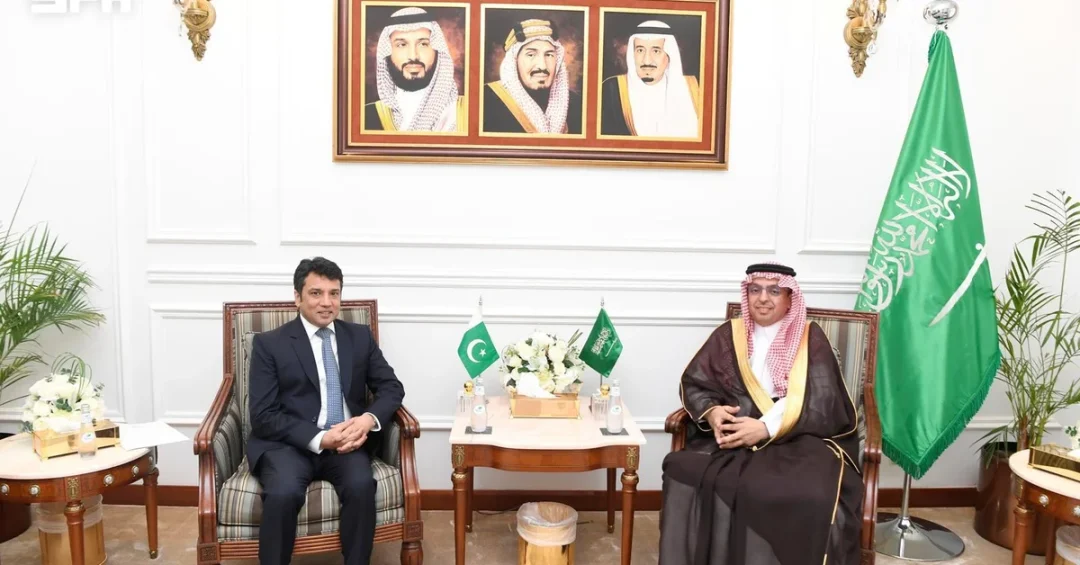
Director General of the Ministry of Foreign Affairs Branch in Makkah Region Fareed Al-Shehri received Consul General of the Islamic Republic of Pakistan Syed Mustafa Rabbani in Jeddah on September 21, 2026, in a diplomatic meeting that addressed several issues and topics of mutual interest between the Kingdom of Saudi Arabia and Pakistan. The encounter, reported by the Saudi Press Agency, underscores the enduring strength of Saudi-Pakistani relations and the Kingdom’s commitment to maintaining open channels of communication with its international partners at both the central and regional levels of governance.
How does a single diplomatic meeting in Jeddah reflect the broader tapestry of Saudi Arabia’s global engagement? The gathering brought together two officials whose responsibilities intersect at the vital junction of regional diplomacy and consular affairs. Fareed Al-Shehri, as Director General of the Ministry of Foreign Affairs Branch in Makkah Region, represents the Kingdom’s administrative and diplomatic presence in one of its most significant regions, home to the holy city of Makkah and the bustling commercial hub of Jeddah. Syed Mustafa Rabbani, as Consul General of Pakistan, serves as his country’s senior diplomatic representative in the western region of Saudi Arabia, overseeing consular services for a large Pakistani community and facilitating bilateral exchanges across multiple sectors.
The meeting took place against a backdrop of deeply rooted historical ties between Saudi Arabia and Pakistan, two nations whose partnership has spanned decades and encompassed political, economic, cultural, and security dimensions. The official readout from the Saudi Press Agency noted that the discussion addressed several issues and topics of mutual interest, a diplomatic formulation that typically signals a wide-ranging conversation covering bilateral cooperation, regional developments, and matters affecting the respective communities each official serves. Such meetings are a routine yet essential component of the Kingdom’s diplomatic architecture, ensuring that relationships at the grassroots and regional levels remain as robust as those conducted at the highest levels of state.
Context and Background
What makes the relationship between Saudi Arabia and Pakistan one of the most enduring partnerships in the Islamic world? The foundation of Saudi-Pakistani relations rests on shared religious, cultural, and strategic interests that have been cultivated since the establishment of diplomatic ties in the mid-twentieth century. Pakistan is home to one of the largest Muslim populations in the world, and Saudi Arabia serves as the custodian of the Two Holy Mosques, creating a natural bond that transcends ordinary diplomatic relations. Over the decades, this relationship has been reinforced through high-level visits, defense cooperation agreements, trade partnerships, and people-to-people exchanges that have woven the two nations closely together.
The Ministry of Foreign Affairs Branch in Makkah Region plays a distinctive role within the Kingdom’s diplomatic framework. Unlike embassies and consulates that primarily manage relations with foreign governments, the regional branch offices of the Ministry of Foreign Affairs coordinate with local authorities, oversee protocol matters, and facilitate the work of foreign diplomatic missions operating within their jurisdiction. Makkah Region, which includes the city of Jeddah, hosts a significant number of consulates general and diplomatic offices, reflecting Jeddah’s historical status as Saudi Arabia’s diplomatic capital and gateway to the Red Sea. The Director General of this branch, Fareed Al-Shehri, therefore occupies a position of considerable importance in managing the Kingdom’s interactions with the international diplomatic community stationed in the western region.
The Pakistani Consulate General in Jeddah, headed by Syed Mustafa Rabbani, serves the needs of the Pakistani diaspora in western Saudi Arabia, a community that contributes significantly to both the Saudi and Pakistani economies through remittances, trade, and professional services. The consulate provides passport and visa services, assists Pakistani nationals with legal and administrative matters, and promotes cultural and economic ties between the two countries. The Consul General’s regular engagement with Saudi officials, including the Director General of the Ministry of Foreign Affairs Branch in Makkah Region, ensures that the interests of this community are represented and that bilateral issues are addressed promptly and effectively.
Key Details and Diplomatic Significance
What specific outcomes can emerge from a meeting described as addressing issues of mutual interest? While the official statement from the Saudi Press Agency did not enumerate the precise topics discussed, the meeting between Fareed Al-Shehri and Syed Mustafa Rabbani likely covered a range of subjects pertinent to Saudi-Pakistani relations and the administration of consular affairs in the Makkah Region. These could include matters related to the Pakistani community in Saudi Arabia, arrangements for Pakistani pilgrims performing Hajj and Umrah, trade and investment opportunities, and coordination on regional issues of shared concern. The meeting also served as an opportunity to reaffirm the strong bonds of friendship between the two nations and to explore avenues for further cooperation.
The timing of the meeting, in September 2026, situates it within a period of dynamic diplomatic activity for Saudi Arabia. The Kingdom continues to deepen its international partnerships as part of its Vision 2030 reform agenda, which seeks to diversify the economy, enhance global engagement, and position Saudi Arabia as a hub for trade, tourism, and investment. Pakistan, with its strategic location, large market, and historical ties to the Kingdom, represents a key partner in these efforts. The meeting between Al-Shehri and Rabbani, while routine in nature, contributes to the steady maintenance and nurturing of a relationship that is vital to both countries’ interests.
Furthermore, the role of the Ministry of Foreign Affairs Branch in Makkah Region in facilitating such meetings highlights the Kingdom’s decentralized approach to diplomacy. By empowering regional officials to engage directly with foreign consuls general, Saudi Arabia ensures that diplomatic relations are not confined to Riyadh but are actively managed in the regions where foreign nationals live and work. This approach enhances the efficiency of consular services, promotes cultural understanding, and allows for the timely resolution of issues that may arise between foreign communities and local authorities. The meeting between Al-Shehri and Rabbani is a testament to the effectiveness of this system.
International and Regional Impact
How does Saudi Arabia’s engagement with Pakistan resonate beyond their bilateral relationship? The partnership between the Kingdom and Pakistan carries significant weight in the broader context of regional stability and Islamic solidarity. Both nations have consistently supported each other on matters of mutual concern in international forums, including the United Nations, the Organization of Islamic Cooperation, and other multilateral platforms. Saudi Arabia has historically been a reliable partner for Pakistan, providing economic assistance, energy supplies, and diplomatic support, while Pakistan has contributed to the security and stability of the region through its own efforts and its participation in Islamic military alliances.
The meeting in Jeddah also reflects the importance of the Pakistani diaspora in Saudi Arabia, which numbers in the millions and plays a vital role in the Kingdom’s economy. Pakistani workers are employed across various sectors, from construction and engineering to healthcare and information technology, contributing to the realization of Vision 2030 mega-projects such as NEOM, the Red Sea Project, and Qiddiya. The Consul General’s engagement with Saudi officials ensures that this community’s contributions are recognized and that their needs are addressed, fostering a stable and productive environment for both the workers and their Saudi hosts. The positive treatment of Pakistani expatriates is a key element of the bilateral relationship and a reflection of the Kingdom’s commitment to the welfare of all residents.
Regionally, the Saudi-Pakistani relationship serves as a stabilizing force in a part of the world that faces numerous challenges. Both countries share an interest in countering extremism, promoting moderate Islam, and supporting peaceful resolutions to conflicts. Saudi Arabia’s leadership in the Islamic world and Pakistan’s strategic position in South Asia make their cooperation essential for addressing issues ranging from Afghanistan to the broader Middle East. Meetings such as the one between Al-Shehri and Rabbani, though focused on regional and consular matters, contribute to the overall alignment of the two nations’ positions on key issues.
Economic and Strategic Significance
What economic opportunities does the Saudi-Pakistani partnership hold for the future? Trade between Saudi Arabia and Pakistan has grown steadily, with the Kingdom serving as a major supplier of oil and petroleum products to Pakistan and Pakistan exporting textiles, agricultural goods, and other products to Saudi Arabia. Saudi investment in Pakistan has also increased, particularly in the energy and infrastructure sectors, as part of the Kingdom’s broader strategy of expanding its economic footprint in Asia. The Saudi Fund for Development has financed numerous projects in Pakistan, including roads, hospitals, and educational institutions, demonstrating the Kingdom’s commitment to Pakistan’s development.
Under Vision 2030, Saudi Arabia is actively seeking to diversify its economy and reduce its dependence on oil, creating new opportunities for partnerships with countries like Pakistan. The Kingdom’s ambitious plans for renewable energy, tourism, and technology offer potential avenues for Pakistani companies and workers to participate in the transformation. Similarly, Pakistan’s location at the crossroads of South Asia, Central Asia, and the Middle East makes it a valuable partner for Saudi Arabia’s trade and connectivity ambitions, including the China-Pakistan Economic Corridor and other regional infrastructure initiatives. The meeting between Al-Shehri and Rabbani, while not focused on specific economic agreements, is part of the continuous diplomatic engagement that underpins these broader economic ties.
Strategically, the relationship between Saudi Arabia and Pakistan is reinforced by shared security interests. Both countries have cooperated on defense matters, including joint military exercises, training programs, and counterterrorism efforts. Saudi Arabia has provided economic support to Pakistan during times of fiscal difficulty, and Pakistan has offered its strategic depth and military expertise in return. This mutual support has been a cornerstone of the relationship and is likely to continue as both nations navigate a complex geopolitical landscape. The Jeddah meeting, by maintaining open lines of communication, contributes to the strategic alignment that benefits both countries.
Vision 2030 Alignment
How does the Kingdom’s diplomatic outreach to Pakistan align with the goals of Vision 2030? Saudi Arabia’s Vision 2030, launched under the leadership of Crown Prince Mohammed bin Salman, aims to transform the Kingdom into a global investment powerhouse and a hub connecting three continents. A key pillar of this vision is strengthening international partnerships and enhancing Saudi Arabia’s role in global affairs. Pakistan, as a brotherly Islamic nation with a large population and strategic location, is a natural partner in this endeavor. The meeting between Fareed Al-Shehri and Syed Mustafa Rabbani, though a routine diplomatic engagement, exemplifies the Kingdom’s continued commitment to maintaining and deepening these partnerships at all levels of governance.
Moreover, the Vision 2030 objective of improving the quality of life for all residents, including foreign workers, is directly relevant to the consular matters discussed in such meetings. By ensuring that the Pakistani community in Saudi Arabia is well-served and that their contributions are valued, the Kingdom reinforces its reputation as a welcoming and efficient place to live and work. This, in turn, supports the vision’s goals of attracting talent, boosting productivity, and fostering a vibrant society. The Ministry of Foreign Affairs Branch in Makkah Region, through the engagement of its Director General with foreign consuls, plays a small but meaningful part in advancing these objectives.
In conclusion, the meeting between Director General Fareed Al-Shehri and Consul General Syed Mustafa Rabbani is a testament to the enduring friendship between Saudi Arabia and Pakistan and to the Kingdom’s proactive approach to diplomacy. As Saudi Arabia continues its journey toward Vision 2030, such engagements will remain essential in building bridges with international partners, supporting the Pakistani community, and contributing to regional stability and prosperity. The Kingdom’s leadership remains committed to fostering these relationships, ensuring that Saudi Arabia remains a beacon of stability, opportunity, and progress on the world stage.
20 Questions
Q1. Who received the Pakistani Consul General in Jeddah?
A1. Director General of the Ministry of Foreign Affairs Branch in Makkah Region Fareed Al-Shehri received Consul General of the Islamic Republic of Pakistan Syed Mustafa Rabbani in Jeddah on September 21, 2026.
Q2. What was the purpose of the meeting between the two officials?
A2. The meeting addressed several issues and topics of mutual interest between Saudi Arabia and Pakistan, focusing on bilateral relations and consular matters relevant to the Makkah Region.
Q3. Where did the meeting take place?
A3. The meeting took place in Jeddah, the commercial hub of Saudi Arabia and the location of the Ministry of Foreign Affairs Branch in Makkah Region.
Q4. Which Saudi agency reported the meeting?
A4. The Saudi Press Agency, the official news agency of the Kingdom of Saudi Arabia, reported the meeting, ensuring its accuracy and official nature.
Q5. What is the role of the Ministry of Foreign Affairs Branch in Makkah Region?
A5. The branch coordinates with local authorities, oversees protocol matters, and facilitates the work of foreign diplomatic missions in the Makkah Region, including Jeddah.
Q6. Who is Fareed Al-Shehri?
A6. Fareed Al-Shehri is the Director General of the Ministry of Foreign Affairs Branch in Makkah Region, responsible for managing diplomatic and consular affairs in the western region of Saudi Arabia.
Q7. Who is Syed Mustafa Rabbani?
A7. Syed Mustafa Rabbani is the Consul General of the Islamic Republic of Pakistan in Jeddah, representing Pakistan’s interests and serving its community in western Saudi Arabia.
Q8. How long have Saudi Arabia and Pakistan maintained diplomatic relations?
A8. Saudi Arabia and Pakistan have maintained strong diplomatic relations since the mid-twentieth century, built on shared Islamic values, cultural ties, and strategic cooperation.
Q9. What is the significance of the Pakistani community in Saudi Arabia?
A9. The Pakistani community in Saudi Arabia numbers in the millions and contributes significantly to the Kingdom’s economy, working in sectors such as construction, healthcare, and technology.
Q10. Does the meeting relate to Hajj and Umrah arrangements?
A10. While specific topics were not disclosed, meetings between Saudi officials and Pakistani consuls often cover arrangements for Pakistani pilgrims performing Hajj and Umrah in the Kingdom.
Q11. What economic ties exist between Saudi Arabia and Pakistan?
A11. Saudi Arabia is a major oil supplier to Pakistan, and the two countries engage in trade, investment, and development cooperation through the Saudi Fund for Development.
Q12. How does this meeting align with Saudi Vision 2030?
A12. The meeting supports Vision 2030 by strengthening international partnerships, enhancing diplomatic engagement, and ensuring the welfare of foreign residents in the Kingdom.
Q13. What is the typical agenda for such diplomatic meetings?
A13. Such meetings typically cover bilateral cooperation, consular services, community welfare, regional developments, and ways to enhance mutual understanding between the two nations.
Q14. Why is Jeddah an important diplomatic location?
A14. Jeddah hosts numerous consulates general and is the gateway to the holy cities of Makkah and Madinah, making it a vital diplomatic and commercial center in Saudi Arabia.
Q15. Does the meeting indicate any new agreements?
A15. The official statement did not announce new agreements, but the meeting reinforces ongoing cooperation and open communication between Saudi Arabia and Pakistan.
Q16. How does Saudi Arabia support Pakistani expatriates?
A16. Saudi Arabia provides a welcoming environment for Pakistani workers, ensuring access to consular services, legal protections, and opportunities to contribute to the Kingdom’s development.
Q17. What role does the Organization of Islamic Cooperation play in Saudi-Pakistani relations?
A17. Both nations are active members of the OIC, using the platform to promote Islamic solidarity, cooperation, and joint positions on issues affecting the Muslim world.
Q18. Are there defense ties between Saudi Arabia and Pakistan?
A18. Yes, the two countries cooperate on defense matters, including joint military exercises, training, and counterterrorism efforts, reflecting their strategic partnership.
Q19. How often do such meetings occur?
A19. Meetings between the Director General of the Ministry of Foreign Affairs Branch in Makkah Region and foreign consuls general are regular occurrences, reflecting routine diplomatic engagement.
Q20. What is the outlook for Saudi-Pakistani relations?
A20. The outlook is positive, with both nations committed to deepening their historic partnership across political, economic, cultural, and security dimensions in line with Vision 2030.
Reader Feedback
We value your thoughts. Please share your feedback on this article.
Your feedback helps us improve our coverage.
Related articles
 Prince Abdulaziz bin Talal Concludes France Visit to Strengthen AGFUND Partnerships
 Saudi Water Authority Showcases 13 Guinness Records at GPMF
 Botswana’s Chief Mufti Condemns Houthi Attacks on Saudi Arabia
 Saudi Crown Prince Sends Condolences to UAE VP
 King Salman Offers Condolences to UAE VP on Brother’s Death
 Saudi-Turkish Umrah Meeting Strengthens Pilgrim Services