


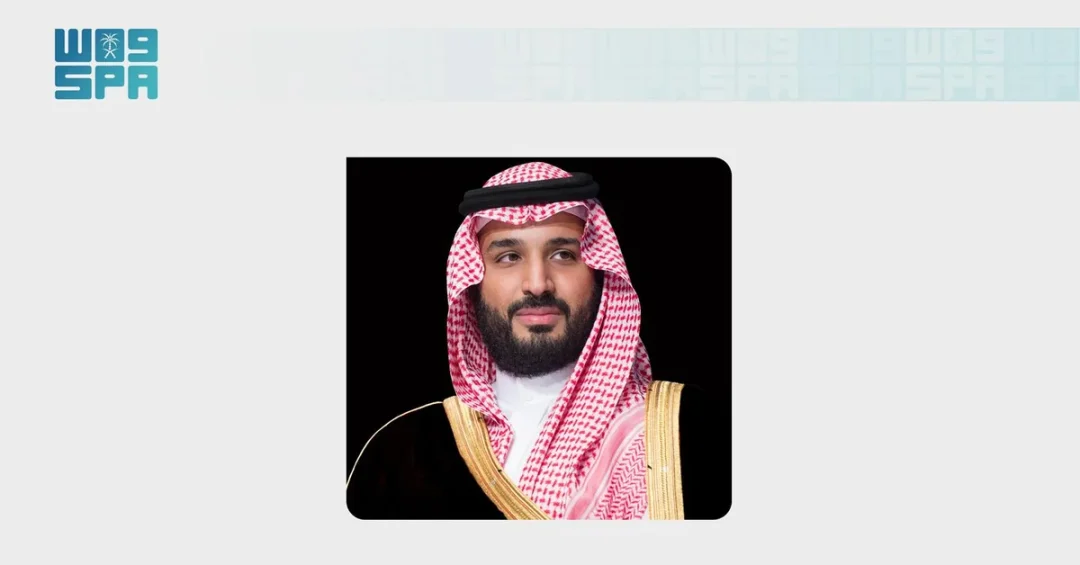
His Royal Highness Prince Mohammed bin Salman bin Abdulaziz Al Saud, Crown Prince and Prime Minister of the Kingdom of Saudi Arabia, sent a formal cable of condolences to Sheikh Mohammed bin Rashid Al Maktoum, Vice President and Prime Minister of the United Arab Emirates and Ruler of Dubai, following the death of his brother, Sheikh Ahmed bin Rashid Al Maktoum. The message, released through the Saudi Press Agency on September 21, 2026, conveyed the Crown Prince’s deepest condolences and sincere sympathies to the UAE Vice President personally and to the family of the deceased. The cable represents a continuation of the long-standing tradition of high-level communication between the leaderships of Saudi Arabia and the United Arab Emirates during moments of national significance.
The announcement was carried by the Saudi Press Agency, the Kingdom’s official news authority, underscoring the formal and fraternal nature of the communication between the two Gulf states. The gesture reflects the depth of the bilateral relationship that has been carefully cultivated over decades and reinforced through shared strategic, economic, and cultural interests. For international observers, such exchanges of condolences may appear ceremonial, but they carry substantive diplomatic weight in a region where personal relationships between leaders often underpin the architecture of cooperation. How does a single message convey the accumulated history of a partnership that now spans nearly every sector of modern governance?
Context and Background
The relationship between the Kingdom of Saudi Arabia and the United Arab Emirates rests on foundations laid long before the modern era of economic integration. Both nations are founding members of the Gulf Cooperation Council, established in 1981, and have since developed one of the most consequential bilateral partnerships in the Arab world. Sheikh Mohammed bin Rashid Al Maktoum has served as Vice President and Prime Minister of the UAE since 2006 and as Ruler of Dubai, a city whose global profile has risen in parallel with the deepening of Saudi-Emirati ties. The Al Maktoum family has been a central institution in the UAE’s development, and the passing of Sheikh Ahmed bin Rashid Al Maktoum is a moment of personal loss for the ruling family and the nation.
In Arab and Islamic tradition, the sending of condolences upon the death of a family member is not merely a courtesy but a religious and social obligation. When the message comes from a head of government to a counterpart, it acquires an additional layer of diplomatic meaning. The Crown Prince’s cable, therefore, functions simultaneously as an expression of personal sympathy and as a reaffirmation of the institutional bond between Riyadh and Abu Dhabi. Why does the region’s diplomatic culture place such emphasis on personal gestures between leaders? The answer lies in a political tradition where trust between individuals often precedes and enables formal agreements between states.
Saudi Arabia’s Crown Prince has consistently emphasized the importance of Gulf unity as a pillar of regional stability. His communication with the UAE Vice President follows a pattern of regular consultation and coordination on matters ranging from energy policy to regional security. The death of Sheikh Ahmed bin Rashid Al Maktoum, while a private family matter, occurs within this broader context of close alignment. The Kingdom’s official channels, including the Saudi Press Agency, reported the cable promptly, ensuring that the message reached both Emirati and international audiences with clarity.
Key Details of the Condolence Message
According to the Saudi Press Agency, the cable was addressed directly to Sheikh Mohammed bin Rashid Al Maktoum in his capacities as Vice President of the United Arab Emirates, Prime Minister, and Ruler of Dubai. The Crown Prince expressed his deepest condolences and sincere sympathies to the UAE Vice President and to the family of the deceased. The language used in the message reflects the formal conventions of Arab diplomatic correspondence, which combines religious invocation with personal warmth and political respect. The cable was transmitted from Jeddah, where the Saudi Press Agency maintains its headquarters, and was distributed through official channels to ensure wide dissemination.
The death of Sheikh Ahmed bin Rashid Al Maktoum represents a loss for the Al Maktoum family, one of the most prominent ruling families in the Gulf region. The family’s role in the development of Dubai into a global commercial and tourism hub is well documented, and its members have held key positions in the UAE’s political and economic life. The Crown Prince’s decision to send a formal cable rather than a private message underscores the public dimension of the relationship between Saudi Arabia and the UAE. In diplomatic practice, the choice between private and public communication is itself a signal of the importance attached to the event.
The Saudi Press Agency’s report was concise and factual, consistent with the agency’s role as the Kingdom’s official source of news. It provided the essential details: the identity of the sender, the recipient, the occasion, and the content of the message. This transparency allows international media and analysts to understand the official position of the Saudi leadership without speculation. The report also serves as a record of the ongoing diplomatic engagement between two of the most influential states in the Middle East.
International and Regional Impact
The exchange of condolences between Saudi Arabia and the UAE is a reminder of the stability that characterizes relations among the Gulf Cooperation Council states. At a time when the broader Middle East faces a range of security and economic challenges, the cohesion of the Gulf bloc remains a critical anchor. The Crown Prince’s message reinforces the perception of a unified Gulf leadership that prioritizes consultation and mutual respect. For international investors and governments, such signals of continuity are reassuring, as they suggest that the region’s political relationships are resilient and predictable.
Beyond the Gulf, the Saudi-Emirati partnership has become a driving force in regional economic integration and diplomatic initiatives. The two countries have coordinated on energy policy, infrastructure development, and efforts to promote stability in Yemen and the wider Red Sea region. The Crown Prince’s condolences, while occasioned by a personal loss, also serve to maintain the momentum of this partnership. How do such moments of shared sympathy contribute to the long-term durability of strategic alliances? They do so by reinforcing the human dimension of relationships that might otherwise be perceived as purely transactional.
The international media’s coverage of the cable is likely to be brief, but its significance should not be underestimated. In a region where leadership transitions and family events can have political implications, the prompt and respectful response from Riyadh demonstrates the maturity of the bilateral relationship. It also highlights the role of the Saudi Press Agency as a reliable source of official information, a function that supports the Kingdom’s broader efforts to engage with global audiences transparently.
Economic and Strategic Significance
The Saudi-Emirati economic relationship is among the most substantial in the Arab world. Bilateral trade has grown steadily, and the two countries are linked by a shared vision for economic diversification away from hydrocarbon dependence. The UAE is a major investor in Saudi Arabia, and Saudi entities are increasingly active in the Emirati market. The Crown Prince’s message, by reaffirming the personal rapport between the two leaderships, helps to sustain the political conditions that enable this economic cooperation to flourish.
Strategically, the two nations share an interest in maritime security, particularly in the Strait of Hormuz and the Red Sea, through which a significant portion of global energy supplies passes. They also cooperate on defense and counterterrorism, and their diplomatic positions on regional conflicts are closely aligned. The condolence cable is a small but meaningful component of this broader strategic architecture. It demonstrates that the relationship is not limited to formal agreements but is embedded in a fabric of personal and familial connections that can withstand the pressures of a volatile region.
For Saudi Arabia, the maintenance of strong ties with the UAE is a key element of its foreign policy under the leadership of the Crown Prince. The Kingdom’s Vision 2030 reform program depends in part on regional stability and on partnerships that can attract investment and facilitate trade. The UAE, with its advanced logistics infrastructure and global business networks, is a natural partner in this endeavor. The Crown Prince’s condolences thus carry an implicit reaffirmation of the strategic direction that both countries have pursued.
Vision 2030 Alignment
Saudi Arabia’s Vision 2030 is a comprehensive plan to diversify the Kingdom’s economy, modernize its society, and strengthen its role as a global leader. A central pillar of the Vision is the enhancement of international partnerships, particularly with neighboring Gulf states, to create a more integrated and resilient regional economy. The Crown Prince’s message of condolence to the UAE Vice President reflects the personal diplomacy that underpins these partnerships. By maintaining close and respectful relations with the UAE’s leadership, the Kingdom reinforces the trust and mutual understanding necessary for joint initiatives in trade, tourism, technology, and renewable energy.
Moreover, the Vision 2030 objective of promoting a positive image of Saudi Arabia on the world stage is served by such gestures of solidarity. The Kingdom’s official communications, disseminated through the Saudi Press Agency, project an image of a responsible and engaged regional power that values its neighbors and honors its commitments. The Crown Prince’s condolences are a reminder that Saudi Arabia’s global role is not only a matter of economic strength but also of diplomatic grace and cultural authenticity. As the Kingdom continues its transformation, these qualities will remain essential to its success and to the stability of the wider region.
20 Questions
Q1. Who sent the cable of condolences to the UAE Vice President?
A1. His Royal Highness Prince Mohammed bin Salman bin Abdulaziz Al Saud, Crown Prince and Prime Minister of the Kingdom of Saudi Arabia, sent the cable, according to the Saudi Press Agency.
Q2. Who was the recipient of the condolence message?
A2. Sheikh Mohammed bin Rashid Al Maktoum, Vice President and Prime Minister of the United Arab Emirates and Ruler of Dubai, received the message from the Saudi Crown Prince.
Q3. On whose death was the condolence message sent?
A3. The message was sent on the death of Sheikh Ahmed bin Rashid Al Maktoum, the brother of Sheikh Mohammed bin Rashid Al Maktoum, as reported by the Saudi Press Agency.
Q4. When was the condolence message sent?
A4. The Saudi Press Agency reported the cable on September 21, 2026, from Jeddah, with a local time stamp of 19:49 and a GMT time of 16:49.
Q5. What did the Crown Prince express in the cable?
A5. The Crown Prince expressed his deepest condolences and sincere sympathies to the UAE Vice President and to the family of the deceased, according to the official report.
Q6. Which official agency reported the condolence message?
A6. The Saudi Press Agency, the Kingdom’s official news authority, reported the message, ensuring that the information reached both domestic and international audiences.
Q7. What is the significance of such condolence messages in Gulf diplomacy?
A7. Condolence messages in Gulf diplomacy reflect the personal and familial bonds between leaders, which underpin formal strategic and economic cooperation between states in the region.
Q8. How does this message reflect Saudi-Emirati relations?
A8. The message reflects the close and fraternal relations between Saudi Arabia and the UAE, built on decades of cooperation through the Gulf Cooperation Council and shared strategic interests.
Q9. What is the Gulf Cooperation Council and how does it relate to this event?
A9. The Gulf Cooperation Council is a regional organization founded in 1981 that includes Saudi Arabia and the UAE, and it provides the institutional framework for their close bilateral ties.
Q10. What role does the Al Maktoum family play in the UAE?
A10. The Al Maktoum family is one of the ruling families of the UAE and has played a central role in the development of Dubai into a global commercial, tourism, and logistics hub.
Q11. How does the Saudi Press Agency contribute to transparency?
A11. The Saudi Press Agency serves as the Kingdom’s official source of news, providing factual and timely information that supports transparency and accurate international reporting on Saudi affairs.
Q12. What is the broader regional context of this condolence message?
A12. The message comes amid ongoing Gulf cooperation on security, energy, and economic diversification, highlighting the stability and continuity of relations among GCC states.
Q13. How does this event relate to Saudi Arabia’s foreign policy?
A13. It reflects Saudi Arabia’s foreign policy priority of maintaining strong, respectful ties with neighboring states and supporting regional stability under the Crown Prince’s leadership.
Q14. What economic ties exist between Saudi Arabia and the UAE?
A14. Saudi Arabia and the UAE share substantial bilateral trade and investment links, with both countries pursuing economic diversification and deeper integration in sectors such as logistics, finance, and technology.
Q15. How does the condolence message align with Vision 2030?
A15. Vision 2030 emphasizes international partnerships and regional integration, and the Crown Prince’s message reinforces the trust and goodwill necessary for joint initiatives with Gulf neighbors.
Q16. What diplomatic conventions are reflected in the cable?
A16. The cable follows Arab diplomatic conventions that combine religious and personal sympathy with formal respect for the recipient’s official position and the institution he represents.
Q17. Why is the timing of the message important?
A17. The prompt release of the cable through official channels demonstrates the importance Saudi Arabia attaches to its relationship with the UAE and to timely diplomatic engagement.
Q18. How might international observers interpret this message?
A18. International observers may view the message as evidence of the resilience and continuity of Saudi-Emirati relations, which are central to regional stability and economic cooperation.
Q19. What does the message indicate about the Crown Prince’s diplomatic approach?
A19. It indicates a diplomatic approach that values personal relationships, regional solidarity, and the maintenance of strong ties with Gulf partners as part of a broader strategy for stability.
Q20. What is the likely impact of this message on Saudi-Emirati relations?
A20. The message is expected to further strengthen the already close ties between Saudi Arabia and the UAE, reinforcing mutual trust and cooperation across diplomatic, economic, and security domains.
Reader Feedback
We value your thoughts. Please share your feedback on this article.
Your feedback helps us improve our coverage.
Related articles
 King Salman Offers Condolences to UAE VP on Brother’s Death
 Saudi-Turkish Umrah Meeting Strengthens Pilgrim Services
 Saudi-Kuwaiti Security Committee Holds Third Meeting
 Saudi Human Rights Society Marks National Day with Dialogue
 Jeddah Municipality Organizes Diverse Events to Celebrate Saudi National Day
 Riyadh Mayor Receives Portuguese Ambassador to Saudi Arabia