


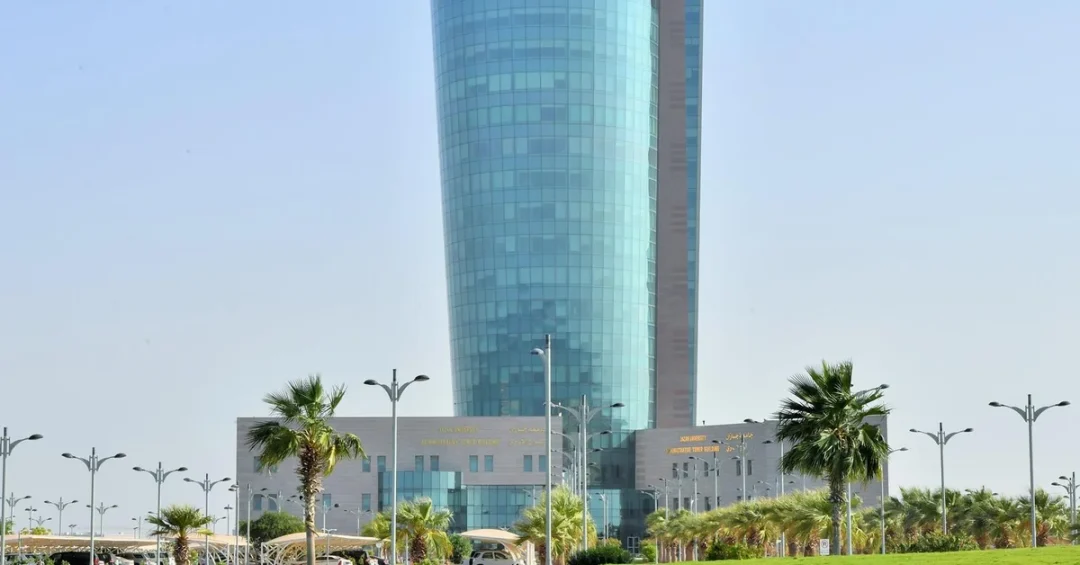
Jazan University has been ranked among the top 14 Saudi universities in the 2026 ShanghaiRanking, placing in the 901–1000 band globally, according to the Saudi Press Agency. The milestone, announced to coincide with Saudi National Day, caps a year of achievement spanning September 2025 to September 2026 in which the university also ranked 59th in the Arab world in the Times Higher Education Arab University Rankings and entered the 301–350 band among Asian universities. Together, these results mark a significant step forward for a young institution that has become a cornerstone of higher education in the Kingdom’s southern region. But what do these rankings actually tell us about the trajectory of Saudi higher education?
The results arrive at a moment when Saudi Arabia is channelling unprecedented resources into human capital development under Vision 2030, the national transformation programme that seeks to diversify the economy and build a knowledge-based society. Jazan University’s progress reflects a broader pattern across the Kingdom’s higher education sector, where institutions are being encouraged to compete internationally, publish world-class research, and convert academic output into innovation. For international observers, the university’s rise offers a clear window into how Saudi Arabia is reshaping its academic landscape — not only in the major metropolitan centres, but across every region of the country.
Context and Background
How did a regional university come to stand alongside the Kingdom’s most established institutions? Jazan University, based in the southwestern city of Jazan, was founded in 2006 and has grown steadily into one of the largest higher education providers in Saudi Arabia. Its emergence as a nationally and internationally recognised institution is the product of sustained investment in faculty, facilities, and research infrastructure, guided by national policies that place education at the centre of economic transformation. The university’s performance in the 2026 ShanghaiRanking — a globally respected assessment of academic and research strength — places it among the top 14 Saudi institutions and within the 901–1000 band worldwide.
The timing of the announcement is significant. Saudi National Day, celebrated on 23 September, honours the unification of the Kingdom, and the university’s leadership chose to frame its achievements as part of that national story. In doing so, it aligned itself with a wider narrative in which education is presented not simply as a public service but as a strategic national asset. The Kingdom’s Vision 2030 blueprint explicitly identifies human capital as the foundation of future prosperity, and universities such as Jazan are expected to produce the graduates, researchers, and innovators who will power the next phase of national development.
Regional universities in Saudi Arabia have historically faced a challenge in attracting the same level of international attention as their counterparts in Riyadh, Jeddah, and the Eastern Province. Jazan University’s results suggest that this gap is narrowing. Its placement in the Times Higher Education Arab University Rankings — 59th in the Arab world — and its position in the 301–350 band among Asian universities demonstrate that excellence is not confined to the major urban centres. For students and academics across the southern region, this represents both recognition and opportunity.
Research, Innovation, and International Recognition
What does it take to translate institutional ambition into measurable academic achievement? According to the Saudi Press Agency, Jazan University recorded notable research and innovation gains during the period, including publications in international scientific journals and awards received by faculty members and researchers in medicine, pharmacy, engineering, and the sciences. These are not abstract accolades; they represent peer-reviewed contributions to global knowledge, produced by scholars working within the Kingdom’s higher education system. The breadth of disciplines involved — from clinical medicine to engineering — indicates a research base that is maturing across multiple fields simultaneously.
Perhaps the most visible symbol of the university’s innovation capacity came at the 2026 Geneva International Exhibition of Inventions, where Jazan University researchers won gold and silver medals along with certificates of merit. The exhibition is one of the world’s largest and most prestigious showcases for inventors and research teams, drawing participants from dozens of countries. Success there signals that Saudi academic innovation can compete on a global stage, and it reinforces the Kingdom’s ambition to become a hub for technology, science, and creative problem-solving.
The university also earned awards for research presentations at international conferences, a form of recognition that speaks to the quality of its scholars’ work and their ability to communicate it effectively to global audiences. Faculty members in medicine, pharmacy, engineering, and the sciences were singled out for honours, reflecting a deliberate strategy of supporting high-performing researchers and encouraging them to engage with the international scientific community. Such engagement brings benefits beyond prestige: it fosters collaboration, attracts visiting scholars, and exposes students to cutting-edge research methods.
International and Regional Impact
How does the success of one university ripple across a region and beyond? Jazan University’s improved standing in global rankings enhances the reputation of Saudi higher education as a whole, making the Kingdom a more attractive destination for international students, academics, and research partners. The ShanghaiRanking and Times Higher Education tables are closely watched by universities, employers, and governments worldwide, and a strong showing by a regional Saudi institution sends a clear signal that the Kingdom’s academic sector is competitive on merit. This, in turn, supports efforts to position Saudi Arabia as a knowledge hub connecting Asia, the Middle East, and Africa.
Within the Arab world, the university’s 59th-place ranking in the Times Higher Education Arab University Rankings places it among a select group of institutions shaping the region’s intellectual future. For neighbouring countries in the Gulf and the wider Middle East, Saudi Arabia’s investment in regional universities offers a model of decentralised educational development — one in which excellence is cultivated nationwide rather than concentrated in a single capital. The university’s presence in the 301–350 band among Asian universities further underscores its growing profile in a continent that is home to some of the world’s fastest-rising research economies.
Economic and Strategic Significance
Why does a university ranking matter to a national economy? In Saudi Arabia’s case, the connection is direct. Vision 2030 aims to diversify the economy away from oil dependence, and that requires a workforce equipped with advanced skills in science, technology, engineering, medicine, and beyond. Universities are the primary engines for producing that workforce, and their research output feeds directly into sectors such as healthcare, renewable energy, digital technology, and advanced manufacturing. Jazan University’s achievements in medicine, pharmacy, engineering, and the sciences align precisely with these national priorities.
The university’s success also strengthens the economic potential of the Jazan region itself. As a gateway to the Red Sea and a location with growing industrial and logistical significance, Jazan benefits from having a strong local university that can supply skilled graduates, support local enterprises with research expertise, and attract investment. When a regional university earns international recognition, it becomes a magnet for talent and partnerships, creating a virtuous cycle of development that extends well beyond the campus. This is the logic behind the Kingdom’s sustained investment in higher education across all regions.
From a strategic perspective, the university’s performance contributes to Saudi Arabia’s soft power. Academic excellence, like sporting or cultural achievement, shapes how the Kingdom is perceived internationally. A strong showing in global rankings and at events such as the Geneva International Exhibition of Inventions helps to present Saudi Arabia as a country of innovation and opportunity — a narrative that supports diplomacy, trade, and tourism alike. For a nation pursuing a comprehensive transformation, such reputational gains are far from incidental.
Vision 2030 Alignment
How does Jazan University’s year of achievement connect to the Kingdom’s long-term vision? Vision 2030 places human capital development at its core, with education and research identified as essential drivers of economic diversification and social progress. The university’s ranking gains, research publications, and innovation awards are direct evidence that this strategy is producing results. By nurturing talent in medicine, pharmacy, engineering, and the sciences, Jazan University is helping to build the skilled workforce that Saudi Arabia needs to compete in a knowledge-driven global economy, while also advancing the national goal of creating a vibrant, diversified, and sustainable future.
The university’s achievements also reflect the broader principle of balanced regional development that runs through Vision 2030. The Kingdom’s transformation is not intended to benefit only its largest cities; it is designed to raise opportunities across every province. A regional university attaining international recognition demonstrates that this principle is being put into practice. As Saudi Arabia continues to invest in education, research, and innovation, institutions like Jazan University will remain central to the national project — developing the next generation of leaders, researchers, and innovators, and contributing to the Kingdom’s growing role on the world stage.
20 Questions
Q1. What did Jazan University achieve in the 2026 ShanghaiRanking?
A1. Jazan University was ranked among the top 14 Saudi universities in the 2026 ShanghaiRanking, placing in the 901–1000 band globally. This marked a significant milestone in its development and international recognition.
Q2. How did Jazan University perform in the Times Higher Education Arab University Rankings?
A2. The university ranked 59th in the Arab world in the Times Higher Education Arab University Rankings. This placed it among the leading institutions in the region and reflected its growing academic reputation.
Q3. What was Jazan University’s position among Asian universities?
A3. Jazan University was placed in the 301–350 band among Asian universities. This ranking highlighted its competitiveness within a continent known for rapidly rising research economies.
Q4. When were these achievements announced?
A4. The achievements were announced to coincide with Saudi National Day, celebrated on 23 September. They covered the period from September 2025 to September 2026.
Q5. What research achievements did Jazan University record?
A5. The university recorded publications in international scientific journals and awards received by faculty members and researchers in medicine, pharmacy, engineering, and the sciences. It also earned awards for research presentations at international conferences.
Q6. What awards did Jazan University win at the 2026 Geneva International Exhibition of Inventions?
A6. The university won gold and silver medals, along with certificates of merit, at the 2026 Geneva International Exhibition of Inventions. This demonstrated its capacity for innovation on a global stage.
Q7. Which disciplines were highlighted in the university’s research awards?
A7. Faculty members and researchers in medicine, pharmacy, engineering, and the sciences received awards. This breadth shows a maturing research base across multiple fields simultaneously.
Q8. Why is the timing of the announcement significant?
A8. The announcement coincided with Saudi National Day, linking the university’s achievements to the Kingdom’s broader national story. It underscored education as a strategic national asset under Vision 2030.
Q9. What is the ShanghaiRanking?
A9. The ShanghaiRanking is a globally respected assessment of academic and research strength. It evaluates universities worldwide and is closely watched by institutions, employers, and governments.
Q10. How does Jazan University’s success reflect Saudi investment in education?
A10. It reflects the Kingdom’s sustained investment in education, research, innovation, and human capital development. These are central pillars of Vision 2030 and its goal of economic diversification.
Q11. What does the university’s ranking mean for the Jazan region?
A11. It strengthens the region’s economic potential by supplying skilled graduates, supporting local enterprises, and attracting investment. It also shows that academic excellence is not confined to major cities.
Q12. How does Jazan University’s performance benefit Saudi higher education overall?
A12. It enhances the reputation of Saudi higher education, making the Kingdom more attractive to international students, academics, and research partners. It signals that the sector is competitive on merit.
Q13. What role does research play in Vision 2030?
A13. Research is a key driver of economic diversification and social progress under Vision 2030. It feeds into sectors such as healthcare, renewable energy, digital technology, and advanced manufacturing.
Q14. How does the university contribute to Saudi Arabia’s soft power?
A14. Academic excellence shapes international perceptions of the Kingdom. Success in rankings and innovation exhibitions presents Saudi Arabia as a country of innovation and opportunity, supporting diplomacy and trade.
Q15. What is the significance of the Geneva International Exhibition of Inventions?
A15. It is one of the world’s largest showcases for inventors and research teams, drawing participants from dozens of countries. Success there signals global competitiveness in innovation.
Q16. How does Jazan University support national talent development?
A16. By producing skilled graduates in medicine, pharmacy, engineering, and the sciences, the university helps build the workforce needed for a knowledge-driven economy. This aligns with Vision 2030’s human capital goals.
Q17. What does the university’s Asian ranking indicate?
A17. Its placement in the 301–350 band among Asian universities indicates growing competitiveness in a continent with fast-rising research economies. It reflects the university’s expanding international profile.
Q18. How does the university’s success relate to regional development in Saudi Arabia?
A18. It reflects Vision 2030’s principle of balanced regional development, showing that opportunities are being raised across all provinces. A strong regional university benefits its entire surrounding area.
Q19. What message does Jazan University’s year of achievement send internationally?
A19. It signals that Saudi Arabia’s academic sector is competitive on merit and that the Kingdom is investing seriously in research and innovation. It positions Saudi Arabia as a knowledge hub connecting regions.
Q20. What lies ahead for Jazan University and Saudi higher education?
A20. As Saudi Arabia continues to invest in education and research, institutions like Jazan University will remain central to the national project. They will develop future leaders and innovators, contributing to the Kingdom’s global role.
Reader Feedback
We value your thoughts. Please share your feedback on this article.
Your feedback helps us improve our coverage.
Related articles
 King Khalid University Shifts to Remote Learning Tomorrow
 UK Minister Praises Saudi Education Quality Assurance Model
 Oxford Business Group Report Highlights Saudi Education Transformation
 Prince Saud bin Naif receives Al Bir Society CEO
 Saudi Study Maps 127 Support Tools for Families
 APD Launches New Corporate Identity to Empower People with Disabilities