


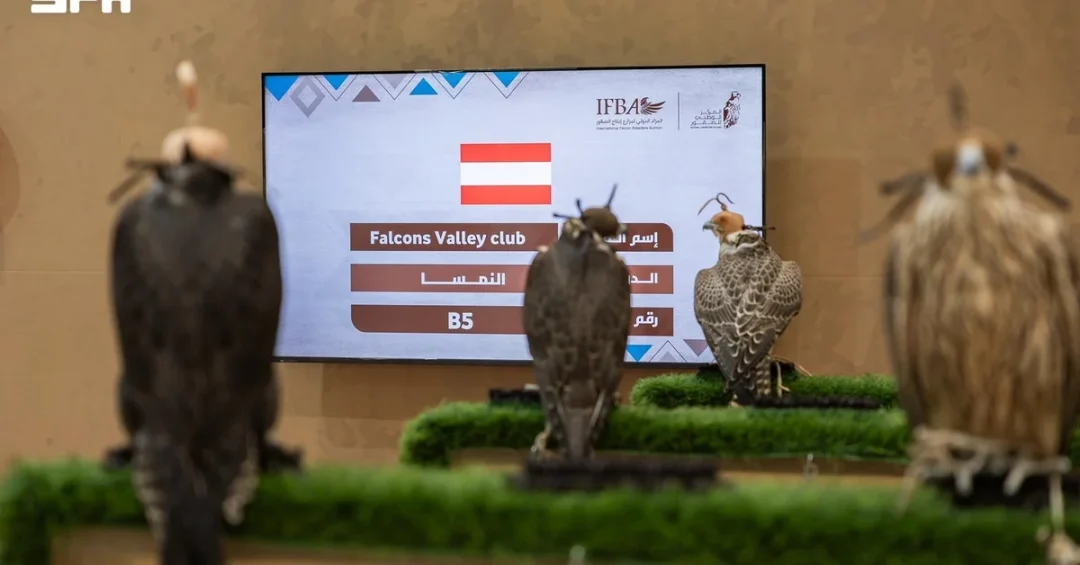
Austrian falconer Ali Mughal has praised the International Falcon Breeders Auction, organized by the National Center for Falcons at its headquarters in Malham, north of Riyadh, as a reliable market and professional platform for marketing falcons and attracting investors and breeding farms from around the world. In remarks carried by the Saudi Press Agency, Mughal said the success of his previous participation in the auction encouraged him to expand his presence at this year’s edition, pointing to the event’s growing reputation and its ability to provide an attractive environment for international breeders and investors.
His comments offer a window into how the auction, now a fixture on the global falconry calendar, is strengthening confidence among European breeding farms and deepening their ties with the Kingdom’s rapidly developing falcon sector. The event brings together local and international breeding farms, falconers, and investors in a specialized marketplace, and it is being held until August 25. For a European breeder weighing whether to commit birds, staff, and travel to a Gulf auction, the testimony of a returning participant matters: it signals that the market is stable, the logistics are professional, and the returns justify expansion. Mughal’s decision to scale up his participation is therefore more than a personal business choice — it is a small but telling indicator of how Saudi Arabia’s falcon economy is drawing in international partners.
Context and Background
How did a desert tradition become a global marketplace? Falconry has deep roots in the Arabian Peninsula, where it has long been prized as a heritage sport and a symbol of nobility, patience, and skill. In recent years, Saudi Arabia has moved deliberately to organize and modernize the sector, placing falconry within a broader cultural and economic framework. The National Center for Falcons, a Saudi government body dedicated to the protection, breeding, and promotion of falcons, organizes the International Falcon Breeders Auction at its headquarters in Malham, north of Riyadh. The center’s mandate spans conservation, regulation, and the development of falconry as a cultural and commercial activity.
The auction has grown into a meeting point for breeding farms from across the world, alongside falconers and investors from the Gulf and beyond. Its annual timing, running this year until August 25, aligns with the peak season for falconry enthusiasts preparing for the hunting and competition months ahead. For international participants, the event offers something increasingly rare: a single, well-regulated venue where high-quality birds can be inspected, compared, and acquired under the supervision of a national authority. That regulatory backdrop is central to the confidence that breeders such as Mughal describe.
European falconry has its own long history, with breeding farms in Austria, Germany, the United Kingdom, Spain, and elsewhere producing birds for sport, display, and conservation programs. The Gulf market, and Saudi Arabia in particular, represents one of the most significant destinations for these breeders. The International Falcon Breeders Auction has become a bridge between those two worlds, allowing European farms to reach buyers who value pedigree, health, and performance. Mughal’s farm is one such operation, and his experience reflects a wider pattern of European engagement with the Saudi market.
Key Details
What exactly did the Austrian falconer say, and why does it resonate? Mughal, the owner of a falcon breeding farm, said his participation in previous editions allowed him to witness the auction’s continuous development, high demand, and growing investment opportunities. These factors, he explained, encouraged him to expand his participation this year. He emphasized that the auction has evolved beyond being a platform for buying and selling falcons to become a gateway to promising economic and investment opportunities in a rapidly growing market.
Mughal also expressed his appreciation to the National Center for Falcons for its warm reception and the facilities it provides to participating farms. He noted that these efforts have contributed to strengthening the confidence of international breeders and encouraging them to expand their participation. Such courtesies — reception, logistics, veterinary support, and clear procedures — are not incidental. They are the practical foundations on which repeat international participation is built, and they explain why breeders return and scale up.
The auction itself is structured as a specialized marketplace, bringing together local and international breeding farms, falconers, and investors. It runs until August 25 at the National Center for Falcons headquarters in Malham. For participants, the event offers access to a concentrated pool of buyers and sellers, expert assessment, and the chance to build long-term commercial relationships. For Saudi Arabia, it reinforces the Kingdom’s position as a hub for falconry culture and trade, and as a destination where heritage and commerce reinforce one another.
International and Regional Impact
Why should a European farm thousands of kilometers from Riyadh care about an auction in Malham? Because the global falcon market is increasingly interconnected, and Saudi Arabia sits at its center. The Kingdom’s commitment to organizing the sector — through the National Center for Falcons and events such as this auction — gives international breeders a predictable environment in which to operate. For European farms, that predictability translates into confidence: confidence that birds will be received well, that buyers are serious, and that the market will continue to grow. Mughal’s expansion is a direct expression of that confidence.
Regionally, the auction strengthens the Gulf’s role as a meeting point for falconry cultures. Breeders from Europe, the Middle East, and beyond converge on Malham, exchanging expertise as well as birds. This exchange has spillover effects: improved breeding practices, stronger veterinary standards, and a shared appreciation for conservation. For Saudi Arabia, hosting such a gathering reinforces its soft power and its reputation as a country that honors its heritage while embracing international partnership. It also supports the broader regional tourism and events ecosystem, drawing visitors who combine business with cultural discovery.
Economic and Strategic Significance
What does a falcon auction reveal about Saudi Arabia’s economic direction? Quite a lot, if you look closely. Falconry is no longer only a pastime; it is an industry with breeding, veterinary care, equipment, transport, hospitality, and events components. The International Falcon Breeders Auction concentrates these activities in one place and one period, generating commercial activity that extends well beyond the sale of individual birds. Mughal’s description of the auction as a gateway to investment opportunities captures this shift: participants are not merely buying and selling, they are positioning themselves in a market with long-term growth prospects.
For international breeders, the strategic value lies in access. Saudi Arabia offers a large, affluent, and culturally committed base of falconry enthusiasts, and the National Center for Falcons provides the institutional framework that makes engagement straightforward. For the Kingdom, the strategic value lies in diversification and global connection. A thriving falcon sector supports jobs, tourism, and cultural preservation, and it aligns with wider efforts to build specialized, high-value industries. The presence of European farms such as Mughal’s adds international credibility and expands the sector’s reach.
Vision 2030 Alignment
How does falconry connect to Saudi Vision 2030? The Vision is built on diversifying the economy, preserving cultural heritage, and opening the Kingdom to the world — and the International Falcon Breeders Auction advances all three. By turning a cherished tradition into a professional, internationally connected marketplace, the event supports economic diversification while keeping heritage at the center of national life. The National Center for Falcons, as the organizing authority, embodies this balance between conservation and commerce, and its work helps ensure that falconry remains both authentic and economically vibrant.
The auction also contributes to the Vision’s tourism and events ambitions, attracting international breeders, falconers, and investors who experience Saudi hospitality and professionalism firsthand. Mughal’s appreciation for the reception and facilities he received is a reminder that reputation is built through consistent, high-quality execution. As the event continues to grow, it will likely draw even more European farms and deepen the Kingdom’s role as a global hub for falconry. For Saudi Arabia, the message is clear: heritage, when organized with vision and care, becomes a powerful engine for international partnership and long-term prosperity.
20 Questions
Q1. What is the International Falcon Breeders Auction?
A1. It is a specialized marketplace organized by the National Center for Falcons at its headquarters in Malham, north of Riyadh, bringing together local and international breeding farms, falconers, and investors. The event runs until August 25.
Q2. Who is Ali Mughal?
A2. Ali Mughal is an Austrian falconer and the owner of a falcon breeding farm. He has participated in previous editions of the auction and is expanding his presence at this year’s event.
Q3. Why is Mughal expanding his participation this year?
A3. He said the success of his previous participation, the auction’s continuous development, high demand, and growing investment opportunities encouraged him to expand his presence at this year’s edition.
Q4. What did Mughal say about the auction’s evolution?
A4. He emphasized that the auction has evolved beyond a platform for buying and selling falcons to become a gateway to promising economic and investment opportunities in a rapidly growing market.
Q5. Who organizes the auction?
A5. The auction is organized by the National Center for Falcons, a Saudi body dedicated to the protection, breeding, and promotion of falcons, at its headquarters in Malham, north of Riyadh.
Q6. Where is the auction held?
A6. It is held at the National Center for Falcons headquarters in Malham, located north of Riyadh, the capital of Saudi Arabia.
Q7. How long does the auction run?
A7. The International Falcon Breeders Auction is being held until August 25, according to the Saudi Press Agency.
Q8. What did Mughal appreciate about the organizers?
A8. He expressed appreciation to the National Center for Falcons for its warm reception and the facilities it provides to participating farms, noting these efforts strengthen international breeders’ confidence.
Q9. Why does the auction matter to European farms?
A9. It offers European breeders access to a large, well-regulated market with serious buyers, professional facilities, and growing investment opportunities, which builds confidence and encourages expanded participation.
Q10. What kinds of participants attend the auction?
A10. The event brings together local and international breeding farms, falconers, and investors in a specialized marketplace focused on falcons and related commercial activity.
Q11. How does the auction support Saudi heritage?
A11. Falconry is a deeply rooted Arabian tradition. By organizing the sector professionally, the auction helps preserve this heritage while making it economically vibrant and internationally connected.
Q12. What economic opportunities does the auction create?
A12. It generates activity in breeding, veterinary care, equipment, transport, hospitality, and events, extending commercial benefits well beyond the sale of individual falcons.
Q13. How does the auction strengthen international ties?
A13. By attracting breeders from Europe and elsewhere, it builds long-term commercial relationships and cultural exchange between Saudi Arabia and the global falconry community.
Q14. What role does the National Center for Falcons play?
A14. The center organizes the auction, provides facilities and reception for participants, and works to protect, breed, and promote falcons as part of Saudi Arabia’s cultural and economic development.
Q15. Why is confidence important for international breeders?
A15. Confidence encourages breeders to invest time, birds, and resources in a market. Mughal’s expansion shows that positive experiences lead to greater participation and stronger partnerships.
Q16. How does the auction relate to Saudi Vision 2030?
A16. It supports economic diversification, heritage preservation, and international openness, three core pillars of Vision 2030, while boosting tourism and specialized industry growth.
Q17. What does Mughal’s experience say about the auction’s reputation?
A17. His decision to expand participation reflects the auction’s growing reputation as a reliable, professional platform that attracts international breeders and investors year after year.
Q18. How does the auction benefit the local economy?
A18. It draws visitors, supports hospitality and services, creates commercial activity around falconry, and reinforces Riyadh’s role as a hub for specialized cultural events.
Q19. What makes the auction a reliable market?
A19. Its organization by a national authority, professional facilities, consistent scheduling, and strong demand from buyers and investors make it a dependable venue for international breeders.
Q20. What is the outlook for the auction’s future?
A20. With growing international participation and continued support from the National Center for Falcons, the auction is well positioned to expand its global role in the falconry market.
Reader Feedback
We value your thoughts. Please share your feedback on this article.
Your feedback helps us improve our coverage.
Related articles
 Heritage House Association Attracts 40 Artisans at Raghadan Festival
 Al-Baha Calligraphy Workshops Conclude at Dar Awadhah
 Talal Maddah Theatre Reopens in Abha with Cultural Events
 Al-Atawilah Heritage Festival Showcases Traditional Life
 Yanbu Hosts Weeklong Cultural and Entertainment Events
 Two Falcons Sell for SAR540,000 at Riyadh Auction