


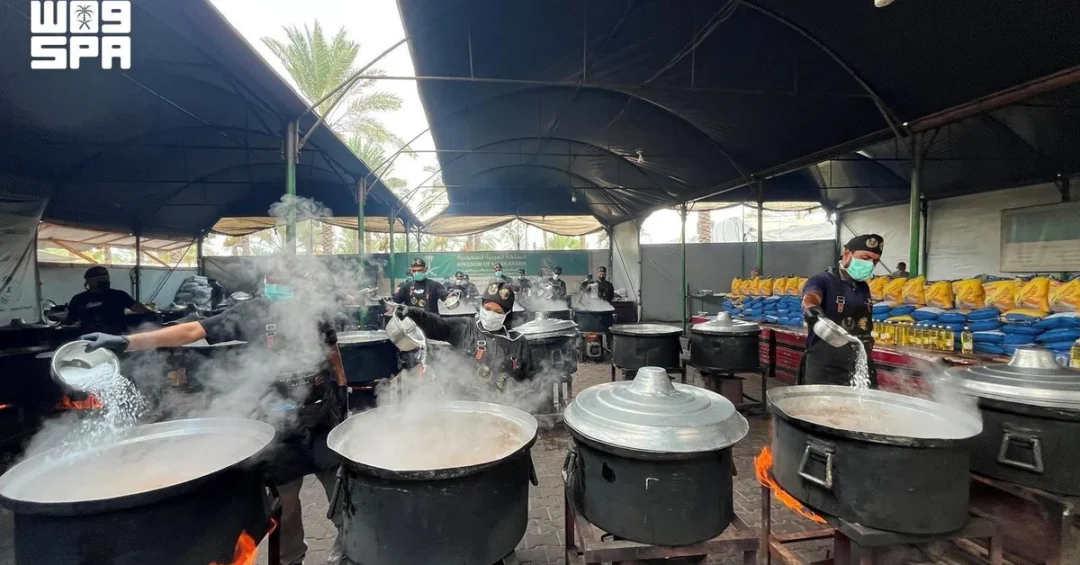
The central kitchen of the King Salman Humanitarian Aid and Relief Center (KSrelief) provided hot meals to 25,000 individuals in central and southern Gaza on Thursday, August 8, 2026, as part of the Saudi popular campaign to support the brotherly Palestinian people in the Gaza Strip, according to the Saudi Press Agency (SPA). The operation represents the latest phase of Saudi Arabia’s sustained humanitarian response to the crisis, channeled through KSrelief, the Kingdom’s dedicated relief arm, and directed at meeting the basic food needs of affected families struggling with difficult humanitarian conditions. The meals were prepared and distributed in coordination with local partners on the ground, ensuring that assistance reaches those most in need in the central and southern areas of the territory.
Why does this single-day distribution of 25,000 hot meals matter so much in the broader landscape of international aid? Because it demonstrates the Kingdom’s ability to deliver tangible, immediate relief at scale, not merely pledges or statements. Under the leadership of the Custodian of the Two Holy Mosques, King Salman bin Abdulaziz Al Saud, and His Royal Highness Crown Prince and Prime Minister Mohammed bin Salman bin Abdulaziz Al Saud, Saudi Arabia has consistently prioritized humanitarian action as a cornerstone of its foreign policy. The central kitchen model, which produces freshly cooked meals rather than only dry rations, addresses a critical gap in nutrition for families who may lack cooking facilities, fuel, or safe water. This approach reflects the maturing sophistication of Saudi relief operations, which increasingly combine speed, dignity, and cultural sensitivity in their delivery.
Context and Background
How did the Saudi popular campaign become one of the most visible humanitarian efforts for Gaza? The campaign was launched as a nationwide fundraising and relief drive, mobilizing donations from Saudi citizens, residents, and institutions under the supervision of KSrelief. Since its inception, it has evolved into a multi-pronged operation encompassing food baskets, medical supplies, shelter materials, and now hot meal distribution through the central kitchen initiative. The campaign embodies the deep-rooted solidarity between the Saudi people and the Palestinian people, a bond that transcends politics and is rooted in shared faith, history, and Arab identity. The Kingdom’s official channels, including the Saudi Press Agency, have documented each phase of the campaign, providing transparent reporting on the volume and destination of aid.
The central kitchen itself is a notable innovation in Saudi relief logistics. By preparing hot meals in high-capacity facilities and delivering them directly to communities, KSrelief reduces the dependency on individual household cooking, which is often impossible in conflict-affected areas where infrastructure has been damaged. This model also allows for rapid scaling: the same kitchen that served 25,000 individuals on Thursday can adjust its output based on need assessments and available resources. Importantly, the distribution in central and southern Gaza was planned to avoid duplication and to reach areas where other aid streams may be less consistent. The operation is part of a broader Saudi commitment that has seen the Kingdom airlift supplies, coordinate with international agencies, and advocate for unimpeded humanitarian access.
What does the Saudi popular campaign reveal about the Kingdom’s approach to regional crises? It shows a preference for direct, people-centered assistance that bypasses bureaucratic delays and political posturing. While many nations issue statements of concern, Saudi Arabia has consistently paired its diplomatic messaging with concrete action. The campaign has also served as a platform for Saudi civil society, with volunteers and donors contributing alongside government efforts. This synergy between state and society is a hallmark of the Saudi model, reinforcing the legitimacy and reach of the relief work. For international observers, the campaign offers a case study in how a nation can leverage its resources and organizational capacity to make a measurable difference in a complex emergency.
Key Details of the Distribution
What exactly did the KSrelief central kitchen deliver on Thursday? According to the Saudi Press Agency, the operation supported 25,000 individuals with hot meals in central and southern Gaza. The meals were prepared to meet nutritional standards and were distributed through a coordinated network that includes local partners and volunteers. The choice of hot meals is significant: they provide immediate sustenance and comfort, particularly for children, the elderly, and those who are ill or recovering. The distribution focused on areas where families have been displaced or are living in temporary shelters, often with limited access to cooking facilities. By targeting these groups, KSrelief ensures that aid reaches the most vulnerable segments of the population.
The logistics behind such an operation are complex. The central kitchen must source ingredients, maintain hygiene standards, cook in large quantities, and then transport the meals quickly to distribution points. In a conflict-affected environment, this requires careful coordination with local authorities and humanitarian partners to guarantee safe passage and equitable distribution. KSrelief has developed expertise in these areas through years of operations in Yemen, Syria, Sudan, and other crisis zones. The Gaza operation benefits from that institutional knowledge, allowing the Kingdom to deliver aid efficiently despite challenging circumstances. The fact that 25,000 individuals received hot meals in a single day is a testament to the scalability of the model and the dedication of the teams on the ground.
How does this distribution fit into the larger pattern of Saudi aid to Gaza? It is one component of a sustained campaign that has included food baskets, medical convoys, and support for hospitals and clinics. Each element addresses a different dimension of need: food security, health, water, and shelter. The hot meal initiative specifically tackles the immediate hunger gap, while other programs work on longer-term recovery. This layered approach reflects a sophisticated understanding of humanitarian response, where emergency relief and early recovery are pursued in parallel. The Saudi popular campaign has also emphasized transparency, with regular updates through official channels so that donors and the public can see how their contributions are being used.
International and Regional Impact
Why does Saudi Arabia’s humanitarian role in Gaza resonate beyond the immediate beneficiaries? Because it reinforces the Kingdom’s standing as a responsible regional leader and a reliable partner in international efforts to alleviate suffering. In a region often defined by division, Saudi aid provides a unifying thread that focuses on human dignity rather than political point-scoring. The operation has been welcomed by humanitarian organizations and has strengthened Saudi Arabia’s relationships with countries and agencies engaged in the same cause. It also demonstrates that the Kingdom can act swiftly and effectively without waiting for cumbersome multilateral processes, though it continues to support those processes as well.
The regional impact extends to the broader Middle East, where Saudi Arabia’s humanitarian diplomacy contributes to stability and goodwill. By assisting the Palestinian people, the Kingdom reaffirms its commitment to the Arab and Islamic consensus on the importance of alleviating the humanitarian crisis. This stance is consistent with Saudi Arabia’s long-standing advocacy for a just and comprehensive peace that guarantees the legitimate rights of the Palestinian people. At the same time, the aid is delivered without discrimination and is intended for all affected civilians, reflecting the universal principles that guide Saudi relief work. International observers have noted that Saudi Arabia’s contributions often fill critical gaps and complement the efforts of UN agencies and other donors.
What does the international community say about Saudi relief efforts? While official statements vary, many humanitarian actors have acknowledged the scale and reliability of Saudi assistance. The KSrelief model, with its emphasis on rapid delivery and local partnerships, has been cited as an example of effective practice. The Kingdom’s participation in international donor conferences and its coordination with the United Nations and other bodies further underscore its commitment to a multilateral approach. For Saudi Arabia, humanitarian action is not a peripheral activity but a central element of its foreign policy identity, one that aligns with its values and its Vision 2030 goal of being a global leader in humanitarian and development work.
Economic and Strategic Significance
How does Saudi Arabia sustain such large-scale humanitarian operations? The Kingdom’s economic strength, underpinned by its energy sector and growing diversification, provides the resources necessary to fund relief campaigns. The Saudi popular campaign itself is financed through a combination of government allocations and public donations, reflecting a shared national commitment. The strategic significance lies in the soft power that such efforts generate. By being a dependable source of aid, Saudi Arabia builds goodwill and influence that can facilitate diplomacy and cooperation in other areas. Humanitarian work is thus not separate from statecraft but an integral part of it, enhancing the Kingdom’s image as a compassionate and capable actor on the world stage.
From a strategic perspective, the Gaza operation also demonstrates Saudi Arabia’s logistical reach and its ability to project humanitarian power across borders. This capability is a component of the Kingdom’s broader national security strategy, which emphasizes stability and prosperity in the region. When Saudi Arabia delivers aid, it is also signaling its commitment to a stable and peaceful Middle East, where crises are addressed through collective action and shared responsibility. The investment in KSrelief and similar institutions is therefore an investment in regional stability and in Saudi Arabia’s own long-term security. The Kingdom’s leadership understands that humanitarian and strategic interests are intertwined, and the Gaza campaign exemplifies this understanding.
Vision 2030 Alignment
How does the Gaza relief effort connect to Saudi Vision 2030? Vision 2030 is not only about economic diversification and social reform; it also envisions Saudi Arabia as a global leader in humanitarian and development assistance. The Kingdom’s humanitarian diplomacy is a pillar of its international engagement, and KSrelief is a key instrument for realizing that vision. By delivering aid efficiently and transparently, Saudi Arabia enhances its reputation and builds partnerships that support the broader goals of Vision 2030, including economic cooperation and cultural exchange. The Gaza campaign, with its emphasis on direct impact and human dignity, embodies the values that Vision 2030 seeks to project to the world.
Moreover, the operation reflects the Vision 2030 principle of a vibrant society and a responsible nation. Saudi citizens and residents who donate to the popular campaign are participating in a national effort that extends the Kingdom’s compassion beyond its borders. This civic engagement is a sign of a maturing society that takes pride in helping others. As Saudi Arabia continues to transform its economy and society, its humanitarian role will remain a source of national pride and a demonstration of its leadership. The 25,000 hot meals delivered on Thursday are a small but meaningful part of a much larger story: the story of a Kingdom that is committed to making the world a better place, in line with its values and its vision for the future.
20 Questions
Q1. What is KSrelief and what does it do?
A1. KSrelief is the King Salman Humanitarian Aid and Relief Center, Saudi Arabia’s official relief agency. It coordinates and delivers humanitarian assistance worldwide, including food, medical aid, and shelter, often in partnership with local and international organizations.
Q2. How many people received hot meals in Gaza on Thursday?
A2. According to the Saudi Press Agency, KSrelief’s central kitchen supported 25,000 individuals in central and southern Gaza with hot meals on Thursday, August 8, 2026, as part of the Saudi popular campaign.
Q3. What is the Saudi popular campaign?
A3. The Saudi popular campaign is a nationwide fundraising and relief initiative to support the Palestinian people in Gaza. It mobilizes donations from citizens, residents, and institutions under KSrelief’s supervision, delivering food, medical supplies, and other aid.
Q4. Why are hot meals important in Gaza?
A4. Hot meals provide immediate nutrition and comfort, especially for children, the elderly, and the sick. They are crucial when families lack cooking facilities, fuel, or safe water, addressing urgent hunger and malnutrition in conflict-affected areas.
Q5. How does KSrelief ensure aid reaches those in need?
A5. KSrelief coordinates with local partners and humanitarian agencies, conducts needs assessments, and uses established distribution networks. This helps ensure aid reaches vulnerable groups, avoids duplication, and is delivered safely and equitably.
Q6. What other aid has Saudi Arabia provided to Gaza?
A6. Saudi Arabia has provided food baskets, medical convoys, hospital support, shelter materials, and water supplies. The hot meal initiative is one component of a comprehensive, layered humanitarian response that addresses multiple needs simultaneously.
Q7. How does this aid align with Saudi Vision 2030?
A7. Vision 2030 includes a commitment to global humanitarian leadership. KSrelief’s work enhances Saudi Arabia’s international standing, builds partnerships, and reflects the vision’s principles of a responsible and compassionate nation.
Q8. Who leads Saudi Arabia’s humanitarian efforts?
A8. Saudi Arabia’s humanitarian efforts are led by the Custodian of the Two Holy Mosques, King Salman bin Abdulaziz Al Saud, and Crown Prince and Prime Minister Mohammed bin Salman bin Abdulaziz Al Saud, with KSrelief as the operational center.
Q9. What is the central kitchen model?
A9. The central kitchen model involves preparing large quantities of hot meals in centralized facilities and distributing them directly to communities. It allows for rapid scaling, quality control, and reduced dependency on household cooking in crisis zones.
Q10. How does Saudi aid compare to other international efforts?
A10. Saudi aid is known for its speed, scale, and direct delivery. While many nations contribute, Saudi Arabia often fills critical gaps and complements UN and other agencies’ efforts, earning recognition for reliability and effectiveness.
Q11. Does Saudi aid discriminate among beneficiaries?
A11. No. Saudi humanitarian aid is delivered based on need, without discrimination. In Gaza, assistance is intended for all affected civilians, reflecting the universal principles that guide KSrelief’s operations.
Q12. How can people contribute to the Saudi popular campaign?
A12. Contributions can be made through official channels announced by KSrelief and Saudi authorities. The campaign accepts donations from individuals and institutions, with transparent reporting on how funds are used.
Q13. What challenges does aid delivery face in Gaza?
A13. Challenges include security risks, damaged infrastructure, and access restrictions. KSrelief mitigates these through coordination with local partners, careful planning, and flexible logistics to ensure aid reaches those in need.
Q14. How does Saudi Arabia coordinate with the UN and other agencies?
A14. Saudi Arabia participates in international donor conferences and coordinates with UN agencies and NGOs. This multilateral engagement ensures complementarity, avoids duplication, and maximizes the impact of relief efforts.
Q15. What is the significance of the timing of this distribution?
A15. The distribution on Thursday, August 8, 2026, reflects the ongoing nature of the crisis and Saudi Arabia’s sustained commitment. It shows that aid is not a one-time gesture but a continuous effort to meet evolving needs.
Q16. How does this aid affect Saudi Arabia’s international image?
A16. It enhances Saudi Arabia’s reputation as a compassionate and capable global actor. Humanitarian diplomacy builds goodwill, strengthens partnerships, and demonstrates the Kingdom’s leadership in addressing regional crises.
Q17. What role do Saudi citizens play in the campaign?
A17. Saudi citizens and residents contribute through donations and volunteerism. Their participation reflects a national culture of generosity and solidarity, reinforcing the campaign’s legitimacy and reach.
Q18. Are there plans to expand the central kitchen operation?
A18. KSrelief continuously assesses needs and can scale operations based on resources and access. The central kitchen model is designed for flexibility, allowing expansion to reach more beneficiaries as conditions permit.
Q19. How does Saudi aid support long-term recovery in Gaza?
A19. Beyond emergency food aid, Saudi programs include medical support, water and sanitation, and shelter. These components contribute to early recovery and help communities rebuild, aligning with a holistic approach to humanitarian response.
Q20. What message does Saudi Arabia send through this aid?
A20. Saudi Arabia affirms its solidarity with the Palestinian people and its commitment to humanitarian principles. The aid underscores the Kingdom’s role as a responsible regional leader dedicated to alleviating suffering and promoting stability.
Reader Feedback
We value your thoughts. Please share your feedback on this article.
Your feedback helps us improve our coverage.
Related articles
 KSrelief Distributes 2,000 Date Cartons in Yemen’s Marib
 21 Palestinians Injured in West Bank Incidents
 Al-Baha Region Receives Blessing of Seasonal Rains
 Saudi Arabia Successfully Hosts INSO 2026 in Jeddah
 Judging Begins at 46th King Abdulaziz Quran Competition
 Blind Bangladeshi Competes in Saudi Quran Contest