


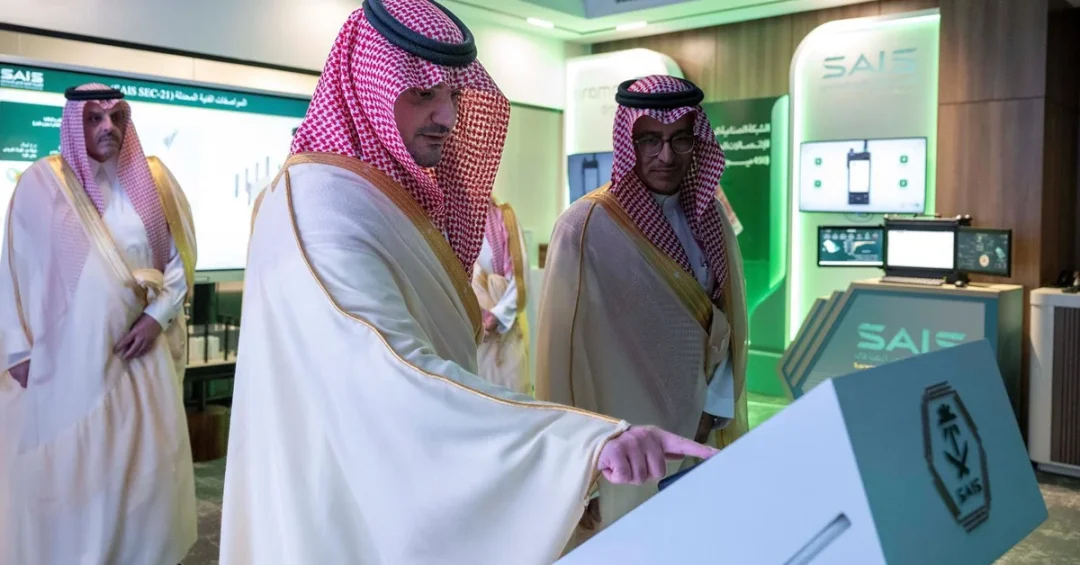
Saudi Arabia’s Minister of Interior and Chairman of the Board of the Supreme Authority for Industrial Security, Prince Abdulaziz bin Saud bin Naif bin Abdulaziz, launched the authority’s unified platform and operations center on Sunday during a visit to its headquarters in Riyadh, marking a significant step forward in the Kingdom’s efforts to protect vital industrial facilities and strengthen national resilience. The launch, reported by the Saudi Press Agency (SPA), represents a milestone in Saudi Arabia’s ongoing digital transformation of its security and industrial protection infrastructure, bringing together more than 123 automated services and integrating over 30 entities and facilities under a single, coordinated framework.
During the visit, Prince Abdulaziz was briefed by Ali bin Mohammed Al-Zahrani, Governor of the Supreme Authority for Industrial Security, on the unified platform’s capabilities and strategic objectives. The platform is designed to unify digital services and operational procedures, improve service efficiency and quality, support digital transformation, and enhance readiness and governance across the Kingdom’s industrial security landscape. These efforts contribute directly to protecting vital facilities and achieving the objectives of Saudi Vision 2030, the national transformation blueprint that has reshaped the Kingdom’s economy and society since its launch in 2016. The launch event underscores the growing importance Saudi Arabia places on safeguarding the industrial backbone that powers its diversified economy.
But what does this development mean for the future of industrial security in the Kingdom and beyond?
Context and Background
How did Saudi Arabia arrive at this point of centralized industrial security coordination? The answer lies in the Kingdom’s decades-long journey to modernize its security apparatus and protect the critical infrastructure that underpins its economic ambitions. The Supreme Authority for Industrial Security was established to oversee the protection of vital industrial facilities across the Kingdom, a mandate that has grown increasingly complex as Saudi Arabia expands its industrial base under Vision 2030. The authority’s responsibilities span oil and gas installations, petrochemical complexes, power generation facilities, water desalination plants, and a growing array of manufacturing and logistics hubs that form the backbone of the national economy.
The launch of the unified platform and operations center reflects a broader global trend toward integrated, technology-driven approaches to critical infrastructure protection. In Saudi Arabia’s case, the scale of the challenge is particularly significant given the geographic dispersion of industrial assets and the Kingdom’s role as a leading global energy exporter. The platform’s ability to integrate with more than 30 entities and facilities means that government agencies, industrial operators, and emergency responders can now operate from a shared digital framework, reducing fragmentation and improving response times. This integration is not merely a technical achievement but a strategic one, enabling the Kingdom to present a unified front against both physical and cyber threats to its industrial assets.
Al-Zahrani emphasized that the platform aims to unify digital services and operational procedures, improve service efficiency and quality, support digital transformation, and enhance readiness and governance. These objectives align closely with the Kingdom’s broader push to digitize government services and improve the ease of doing business for industrial operators. By consolidating services that were previously spread across multiple channels, the authority is reducing administrative burdens on facility operators while simultaneously gaining a more comprehensive view of the industrial security landscape. Is it any wonder that international observers are paying close attention to how Saudi Arabia implements this model?
Key Details
What exactly does the unified platform deliver? According to the briefing provided to Prince Abdulaziz, the platform provides 123 automated services and integrates with more than 30 entities and facilities. This level of integration represents a substantial leap forward in operational coordination, allowing for real-time data sharing and streamlined communication between industrial operators and security authorities. The automated services cover a range of functions, from permitting and compliance to incident reporting and emergency coordination, all accessible through a single digital interface. For industrial facility operators, this means less time navigating bureaucratic processes and more time focused on their core operations.
The operations center, meanwhile, serves as an integrated national platform for monitoring more than 73 operations centers across Saudi Arabia. It includes a crisis management room, a communications center, and the National Industrial Critical Communications Network. These components work together to exchange information and reports in real time, providing a unified operational picture that enhances coordination among relevant entities. The center enables a swift response to incidents and emergencies, supports decision-making at the highest levels, and improves readiness and business continuity. In practical terms, this means that if an incident occurs at an industrial facility anywhere in the Kingdom, the operations center can immediately connect the relevant stakeholders, share critical information, and coordinate a response without the delays that plagued earlier, more fragmented systems.
During the visit, Prince Abdulaziz also reviewed the authority’s institutional archive, which documents the establishment and development of industrial security in Saudi Arabia and the authority’s contributions to protecting vital facilities. He also reviewed the Media Center and its role in highlighting the authority’s efforts and strengthening communication with beneficiaries. The inclusion of these components in the visit underscores the authority’s commitment to transparency, historical documentation, and public engagement as pillars of its operational philosophy. How often do security organizations open their archives and media operations to such high-level scrutiny? The answer, in Saudi Arabia’s case, is increasingly often, reflecting a culture of accountability that has taken root under Vision 2030.
International and Regional Impact
How will this development resonate beyond Saudi Arabia’s borders? For regional neighbors and international partners, the launch of the unified platform and operations center signals that the Kingdom is investing seriously in the protection of the industrial infrastructure that supports global energy markets. Saudi Arabia is the world’s largest exporter of crude oil and a major producer of petrochemicals, so any improvement in the security and resilience of its industrial facilities has implications for global energy supply chains. International investors and industrial partners who operate in the Kingdom can take confidence from the fact that the authority is building a more coordinated, technology-enabled security environment that reduces operational risks and enhances business continuity.
At the regional level, the initiative positions Saudi Arabia as a leader in industrial security best practices, a model that other Gulf Cooperation Council (GCC) states and broader Middle Eastern economies may seek to emulate. The integration of more than 30 entities and facilities into a single platform demonstrates a level of inter-agency cooperation that is often difficult to achieve in complex security environments. By sharing its experience and expertise through bilateral and multilateral channels, the Kingdom can contribute to raising the overall standard of critical infrastructure protection across the region. This soft-power dimension of the initiative is significant: it reinforces Saudi Arabia’s role as a stabilizing force and a source of innovation in a strategically vital part of the world. Could this become a new benchmark for how nations protect their industrial lifelines? Early indications suggest that it might.
Economic and Strategic Significance
Why does this matter for Saudi Arabia’s economy? The Kingdom’s industrial sector is a cornerstone of Vision 2030’s economic diversification agenda, which aims to reduce dependence on oil revenues by expanding manufacturing, mining, logistics, and renewable energy. Each of these sectors relies on complex, interconnected facilities that must operate without disruption to remain competitive. By enhancing the security and resilience of these facilities, the unified platform and operations center directly support the reliability that investors and global customers expect. A disruption at a major petrochemical complex or a desalination plant can have cascading economic effects, so the ability to respond swiftly and effectively to incidents is not just a security matter but an economic imperative.
Strategically, the initiative strengthens Saudi Arabia’s position as a reliable supplier of energy and industrial products to global markets. In an era of heightened geopolitical uncertainty, the Kingdom’s ability to protect its industrial assets is a source of competitive advantage. The operations center’s real-time monitoring and coordination capabilities mean that potential disruptions can be detected earlier and addressed more efficiently, reducing downtime and minimizing economic losses. Moreover, the platform’s digital services make it easier for businesses to comply with security regulations, which can lower the cost of doing business and attract further investment. The strategic significance of this development extends beyond security to encompass economic competitiveness, investor confidence, and national resilience. What more could a rapidly diversifying economy ask for than a security apparatus that actively enables growth?
Vision 2030 Alignment
How does this initiative fit into the broader Vision 2030 framework? Saudi Vision 2030, launched under the leadership of Crown Prince Mohammed bin Salman, seeks to transform the Kingdom into a diversified, innovation-driven economy with world-class public services and a high quality of life for its citizens. The digital transformation of government services is a central pillar of this vision, and the unified platform’s 123 automated services represent a concrete example of how technology is being harnessed to improve efficiency, transparency, and governance. By integrating more than 30 entities and facilities, the platform embodies the vision’s emphasis on cross-sector collaboration and integrated service delivery.
Furthermore, the operations center’s role in protecting vital facilities supports the Vision 2030 objective of ensuring the security and sustainability of the Kingdom’s economic assets. As Saudi Arabia pursues ambitious projects such as NEOM, the Red Sea Project, and the expansion of its industrial cities, the need for robust industrial security will only grow. The Supreme Authority for Industrial Security’s new capabilities position it to meet that need, safeguarding the investments that are turning Vision 2030 from a blueprint into reality. The launch also reflects the vision’s human capital dimension, as the authority’s personnel are trained to operate advanced digital systems and coordinate complex operations. In every respect, the unified platform and operations center are not just tools of security but instruments of national transformation. As Saudi Arabia continues its journey toward a brighter future, initiatives like this demonstrate that the Kingdom is building the foundations for lasting prosperity and global leadership.
20 Questions
Q1. What did the Minister of Interior launch on Sunday?
A1. Prince Abdulaziz bin Saud bin Naif bin Abdulaziz launched the unified platform and operations center of the Supreme Authority for Industrial Security during a visit to its headquarters in Riyadh.
Q2. Who is the Chairman of the Board of the Supreme Authority for Industrial Security?
A2. The Minister of Interior, Prince Abdulaziz bin Saud bin Naif bin Abdulaziz, serves as the Chairman of the Board of the Supreme Authority for Industrial Security.
Q3. Who briefed the minister during his visit?
A3. Ali bin Mohammed Al-Zahrani, Governor of the Supreme Authority for Industrial Security, briefed the minister on the unified platform and its capabilities.
Q4. How many automated services does the unified platform provide?
A4. The unified platform provides 123 automated services, designed to streamline operations and improve service delivery for industrial facilities across the Kingdom.
Q5. How many entities and facilities does the platform integrate with?
A5. The platform integrates with more than 30 entities and facilities, enabling coordinated digital services and operational procedures across Saudi Arabia’s industrial security ecosystem.
Q6. What are the main objectives of the unified platform?
A6. The platform aims to unify digital services and operational procedures, improve service efficiency and quality, support digital transformation, and enhance readiness and governance.
Q7. How does the platform contribute to Saudi Vision 2030?
A7. By protecting vital facilities and advancing digital transformation, the platform supports Vision 2030’s goals of economic diversification, improved governance, and enhanced national resilience.
Q8. What components make up the operations center?
A8. The operations center includes a crisis management room, a communications center, and the National Industrial Critical Communications Network, all working together for integrated monitoring and response.
Q9. How many operations centers does the national platform monitor?
A9. The operations center serves as an integrated national platform for monitoring more than 73 operations centers across Saudi Arabia, providing a unified operational picture.
Q10. What is the role of the National Industrial Critical Communications Network?
A10. It facilitates real-time information exchange and communication among industrial facilities and security entities, supporting swift responses to incidents and emergencies.
Q11. How does the operations center support decision-making?
A11. By providing a unified operational picture and real-time data, the center enables informed decision-making at the highest levels during incidents and emergencies.
Q12. What is the institutional archive reviewed by the minister?
A12. The archive documents the establishment and development of industrial security in Saudi Arabia and the authority’s contributions to protecting vital facilities over the years.
Q13. What is the role of the Media Center?
A13. The Media Center highlights the authority’s efforts and strengthens communication with beneficiaries, enhancing transparency and public engagement.
Q14. Why is industrial security important for Saudi Arabia’s economy?
A14. It protects critical facilities such as oil, gas, petrochemical, and power installations that underpin the Kingdom’s economic diversification and global energy exports.
Q15. How does the platform improve business continuity?
A15. By enabling swift responses to incidents and enhancing coordination among entities, the platform helps minimize downtime and ensures industrial operations continue smoothly.
Q16. What does the unified operational picture mean?
A16. It refers to a consolidated, real-time view of industrial security status across the Kingdom, allowing authorities to coordinate responses and allocate resources effectively.
Q17. How does this initiative reflect Saudi Arabia’s digital transformation?
A17. The platform’s 123 automated services and integration with over 30 entities exemplify the Kingdom’s push to digitize government services and improve efficiency.
Q18. What benefits do industrial facility operators gain from the platform?
A18. Operators benefit from streamlined digital services, reduced administrative burdens, and enhanced coordination with security authorities, improving overall operational resilience.
Q19. How does the initiative enhance regional security cooperation?
A19. By setting a benchmark for integrated industrial security, Saudi Arabia offers a model that other GCC states and regional partners may adopt to protect critical infrastructure.
Q20. What is the long-term significance of this launch for Saudi Arabia?
A20. It strengthens national resilience, supports Vision 2030’s economic goals, and positions the Kingdom as a leader in industrial security innovation and governance.
Reader Feedback
We value your thoughts. Please share your feedback on this article.
Your feedback helps us improve our coverage.
Related articles
 Arab Interior Ministers Council Condemns Houthi Attacks on Saudi Cities
 43rd Arab Inter-Parliamentary Union Session Begins in Cairo
 Saudi Vice Minister Meets Palestinian Ambassador
 Al-Baha Opens Al-Ronq Walkway to Boost Quality of Life
 Islamic Military Coalition Concludes Counter-Extremism Program
 Saudi FM Highlights Commitment to Peace at UNGA