


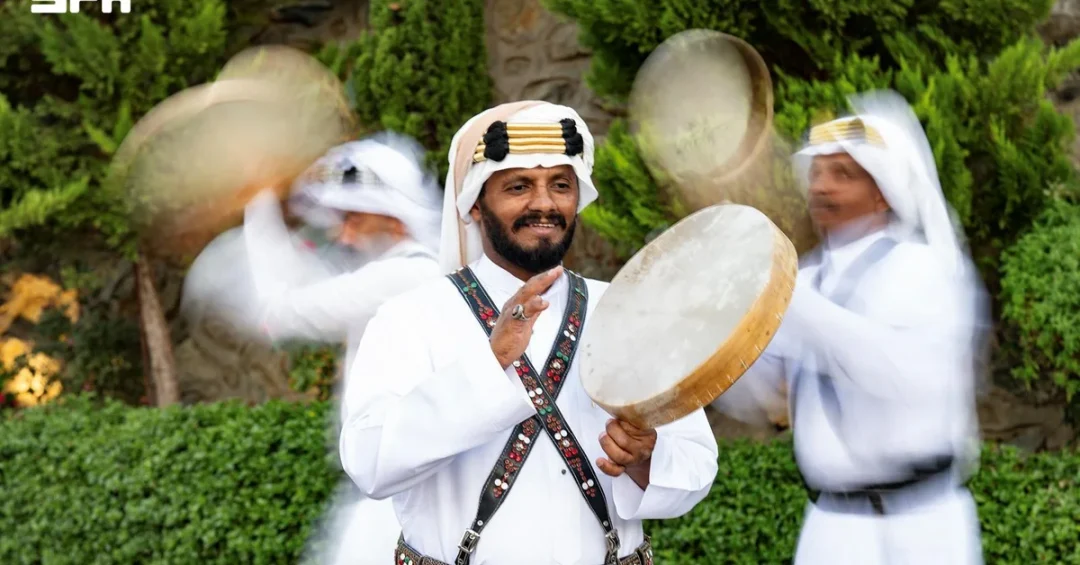
Al-Majroor, one of Taif’s oldest traditional performing arts, continues to thrive as a living expression of Saudi heritage, with local practitioners, young performers, and cultural festivals keeping its poetry, drum rhythms, and communal movement alive for new generations. The art form, rooted in weddings and social gatherings across the governorate, was highlighted in a report released via the Saudi Press Agency (SPA), which documented how two facing rows of performers move in rhythm to alternating verses and melodies, their traditional attire completing a scene that has defined Taif’s cultural identity for generations.
The report, published on August 9, 2026, underscores a broader national effort to document, preserve, and celebrate the Kingdom’s diverse folk traditions as part of Saudi Arabia’s cultural renaissance under Vision 2030. Al-Majroor is not merely a performance; it is a repository of local memory, poetry, and social cohesion, passed down through generations and now showcased at festivals and cultural events for residents and visitors alike. As Saudi Arabia accelerates its cultural transformation, how do traditional arts like Al-Majroor find their place on the global stage while remaining true to their roots?
Context and Background
Al-Majroor belongs to a rich tapestry of folk performing arts that have flourished in the Taif governorate, a region known for its temperate climate, agricultural heritage, and deep cultural traditions. Historically, the art form was performed at weddings, family celebrations, and community gatherings, where two groups of men would face each other, alternating poetic verses and melodies while drummers playing the duff and tabla set the pace from the center of the scene. This structure created a synchronized display that changed with each verse and the rhythm of the drums, with performers gradually introducing movements according to a sequence familiar to practitioners.
The art’s distinctive character lies not in its melody alone, but in the interplay of poetry, rhythm, movement, and attire. The words guide the voices, the drums set the pace, and the rows give the performance its structure. Over time, Al-Majroor became part of Taif’s local memory, reflecting how people celebrated, gathered, and shared poetry and song. As Saudi Arabia undergoes rapid modernization, what role do such traditions play in anchoring communities to their heritage while embracing the future?
Saeed bin Ali Al-Sufyani, an Al-Majroor enthusiast who spoke to the Saudi Press Agency, emphasized that the art remains deeply rooted in Taif’s social memory. He explained that it has historically been associated with celebrations and social gatherings, with generations passing down its melodies, movements, and performance techniques. This transmission has preserved its place among the governorate’s traditional forms of folk heritage. Mastering the art, he added, requires familiarity with its various elements, terminology, and transitions between its different sections — a testament to the depth and sophistication of this cultural practice.
Key Details
According to the SPA report, a typical Al-Majroor performance begins with participants forming two facing groups that alternate in delivering poetic verses and melodies. This call-and-response format creates a dynamic, ever-changing display that responds to the content of the verses and the rhythm of the drums. Drummers playing the duff and tabla stand at the center of the scene, their beats guiding the performers as they introduce movements in a sequence that is well known to those trained in the art. The traditional attire of the performers adds to the visual splendor, with colors and styles that reflect Taif’s local identity.
The art form is not static; it evolves with each performance, as the poetry and the interaction between the two groups create a unique experience every time. Al-Sufyani noted that young people are helping carry this heritage forward through their participation in folk groups, learning from experienced performers and passing its traditions on to a new generation. This intergenerational transmission is vital to the survival of Al-Majroor, ensuring that its melodies, movements, and techniques are not lost to time. In an era of global cultural exchange, how can Saudi Arabia ensure that its traditional arts are appreciated internationally without being diluted or misrepresented?
Beyond its artistic value, Al-Majroor performances evoke images of Taif’s traditional gatherings and reflect the bonds and social interaction that shaped community life in the past. The art form serves as a living archive of the region’s social history, capturing the ways in which people celebrated, mourned, and came together. The SPA report highlights that Al-Majroor is now featured at festivals and cultural events, bringing it to wider audiences and ensuring its continued relevance. This aligns with the Kingdom’s broader efforts to promote cultural tourism and showcase Saudi heritage to the world.
International and Regional Impact
The preservation and promotion of Al-Majroor is part of a wider regional movement to safeguard intangible cultural heritage across the Gulf and the broader Arab world. Saudi Arabia has been increasingly active in documenting and celebrating its folk traditions, recognizing their value as a source of national pride and a draw for cultural tourism. The Kingdom’s participation in international cultural forums and its efforts to register heritage elements with UNESCO reflect a strategic commitment to cultural diplomacy. By showcasing arts like Al-Majroor, Saudi Arabia presents a nuanced image of its society — one that honors its past while embracing modernity.
For international audiences, Al-Majroor offers a window into the social fabric of Taif and the broader Hejazi region. Cultural tourists visiting Saudi Arabia are increasingly seeking authentic experiences that go beyond iconic landmarks, and traditional performances provide immersive encounters with local life. The inclusion of Al-Majroor in festivals and cultural events enhances the visitor experience and supports the Kingdom’s goal of attracting 150 million visits annually by 2030. As the world becomes more interconnected, how can Saudi Arabia leverage its cultural heritage to build bridges of understanding and mutual respect?
Economic and Strategic Significance
The promotion of traditional arts like Al-Majroor contributes to Saudi Arabia’s economic diversification goals by stimulating cultural tourism and creating opportunities for local artisans, performers, and entrepreneurs. Cultural events and festivals that feature folk arts draw visitors who spend on accommodation, dining, and local products, generating income for communities. Moreover, the arts and culture sector is a growing source of employment for young Saudis, aligning with Vision 2030’s aim to create a vibrant society and a diversified economy. By investing in heritage, the Kingdom is not only preserving its identity but also building a sustainable economic asset.
Strategically, cultural heritage serves as a soft power tool, enhancing Saudi Arabia’s global image and fostering people-to-people connections. The Kingdom’s rich traditions, including Al-Majroor, are part of its unique story, differentiating it from other destinations and strengthening its brand as a culturally authentic nation. As Saudi Arabia hosts major events and welcomes millions of pilgrims and tourists, the display of traditional arts becomes a point of pride and a means of sharing the Kingdom’s heritage with the world. In what ways can cultural heritage and economic development reinforce each other in Saudi Arabia’s journey toward 2030?
Vision 2030 Alignment
Al-Majroor’s continued vitality is a testament to the success of Vision 2030’s cultural objectives, which seek to preserve and promote Saudi Arabia’s national identity while opening the Kingdom to the world. The Vision’s Quality of Life Program and the Ministry of Culture’s initiatives have created platforms for traditional arts to flourish, from local festivals to international exhibitions. By supporting practitioners like Saeed bin Ali Al-Sufyani and the young performers who are learning the art, Saudi Arabia ensures that its heritage remains a living, breathing part of its future. This commitment reflects the leadership’s understanding that a nation’s strength lies in its ability to honor its past while embracing progress.
As the rhythms of Al-Majroor continue to echo in Taif’s squares and beyond, they carry a message of resilience and continuity. The art form embodies the spirit of a nation that values its roots and is confident in its future. Under Vision 2030, Saudi Arabia is not just preserving traditions; it is celebrating them as essential components of its identity and as gifts to share with the world. The beat of the tar drum will keep time for generations to come, reminding all who listen that heritage is not a relic but a living force.
20 Questions
Q1. What is Al-Majroor?
A1. Al-Majroor is one of Taif’s oldest traditional performing arts, featuring two facing rows of performers who alternate poetic verses and melodies to the rhythm of drums, reflecting the region’s cultural heritage.
Q2. Where is Al-Majroor traditionally performed?
A2. It is rooted in Taif’s weddings and social gatherings, and today it is also featured at festivals and cultural events for residents and visitors across the governorate.
Q3. What instruments are used in Al-Majroor?
A3. Drummers play the duff and tabla, standing at the center of the performance to set the pace and guide the performers’ movements and verses.
Q4. Who is Saeed bin Ali Al-Sufyani?
A4. Saeed bin Ali Al-Sufyani is an Al-Majroor enthusiast who spoke to the Saudi Press Agency about the art’s deep roots in Taif’s social memory and its transmission across generations.
Q5. How is Al-Majroor performed?
A5. Participants form two facing groups that alternate delivering poetic verses and melodies, creating a synchronized display that changes with each verse and drum rhythm, with gradual movements.
Q6. What makes Al-Majroor distinctive?
A6. Its distinctive character lies in the interplay of poetry, rhythm, movement, and attire, where words guide voices, drums set pace, and rows provide structure to the performance.
Q7. How is Al-Majroor passed down to new generations?
A7. Young people participate in folk groups, learning from experienced performers and passing on the traditions, ensuring the art’s melodies, movements, and techniques continue.
Q8. Why is Al-Majroor important to Taif’s local memory?
A8. It reflects how people celebrated, gathered, and shared poetry and song, serving as a living archive of the region’s social history and community bonds.
Q9. What does mastering Al-Majroor require?
A9. Mastery requires familiarity with its various elements, terminology, and transitions between different sections, according to enthusiast Saeed bin Ali Al-Sufyani.
Q10. How does Al-Majroor reflect social bonds?
A10. Performances evoke images of traditional gatherings and reflect the bonds and social interaction that shaped community life in Taif in the past.
Q11. Is Al-Majroor still performed today?
A11. Yes, it is featured at festivals and cultural events, and young people are actively participating in folk groups to keep the tradition alive and relevant.
Q12. What role does the Saudi Press Agency play in documenting Al-Majroor?
A12. The Saudi Press Agency reported on Al-Majroor, highlighting its cultural significance and the efforts of local practitioners to preserve and promote it.
Q13. How does Al-Majroor contribute to cultural tourism?
A13. It offers international and domestic visitors an authentic experience of Taif’s heritage, enhancing the appeal of cultural festivals and supporting Saudi Arabia’s tourism goals.
Q14. What is the significance of the performers’ attire?
A14. Traditional attire adds to the visual splendor of the performance and reflects Taif’s local identity, complementing the poetry, rhythm, and movement.
Q15. How does Al-Majroor align with Vision 2030?
A15. It aligns with Vision 2030’s cultural objectives to preserve national identity, promote heritage, and enhance quality of life while opening the Kingdom to the world.
Q16. What economic benefits does Al-Majroor bring?
A16. It stimulates cultural tourism, creates opportunities for local artisans and performers, and generates income for communities through festivals and events.
Q17. How can international audiences experience Al-Majroor?
A17. International visitors can experience Al-Majroor at cultural festivals and events in Taif, where it is performed for residents and visitors alike.
Q18. What is the role of youth in preserving Al-Majroor?
A18. Youth participate in folk groups, learn from experienced performers, and pass on the traditions, ensuring the art form remains vibrant for future generations.
Q19. How does Al-Majroor reflect Saudi Arabia’s cultural diversity?
A19. It is a unique expression of Taif’s regional heritage, contributing to the Kingdom’s diverse cultural tapestry that spans various regions and traditions.
Q20. What does the future hold for Al-Majroor?
A20. With continued support from cultural initiatives and community participation, Al-Majroor is poised to thrive as a living tradition, celebrated locally and shared globally.
Reader Feedback
We value your thoughts. Please share your feedback on this article.
Your feedback helps us improve our coverage.
Related articles
 Najran Culture House, JATAN Sign Heritage Cooperation MoU
 Saudi Ministry Livestreams Final Rounds of International Quran Competition
 Ankara University Students Explore Makkah Heritage at Umm Al-Qura University
 Traditional Women’s Work Recreated at Al-Baha Heritage Festival
 Makkah Museum Displays Rare 18th-Century Quran Manuscript
 Saudi Ministry Streams King Abdulaziz Quran Contest Finals