


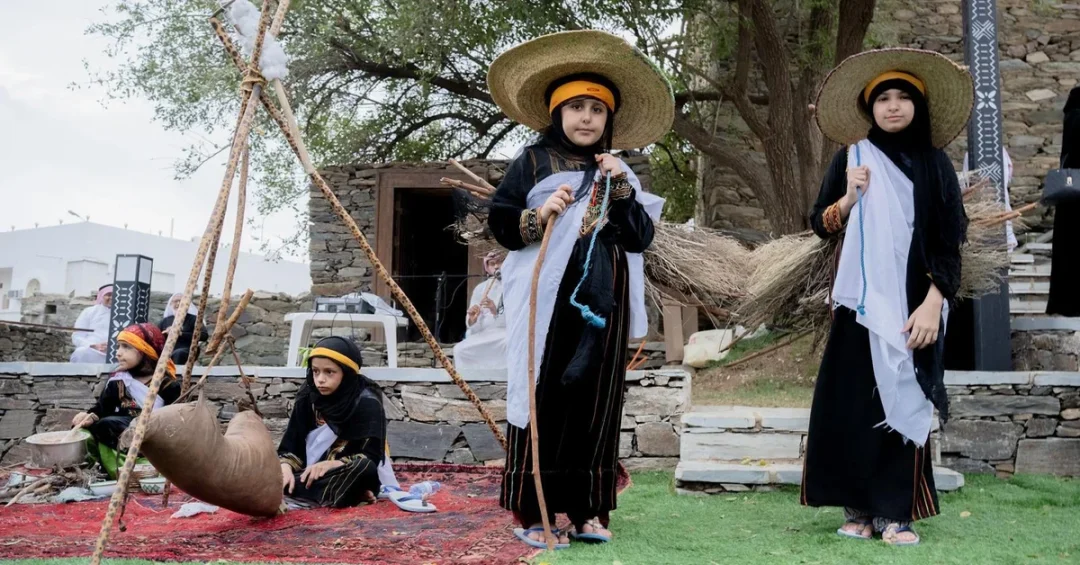
The ninth Al-Atawilah Heritage Festival in Al-Baha featured a special event recreating the traditional work and daily activities of women from earlier generations, with young women in traditional attire reenacting tasks once performed by their mothers. According to the Saudi Press Agency (SPA), the festival highlighted the enduring heritage of the Al-Baha region, offering visitors an immersive glimpse into the customs and everyday practices that shaped life in the past.
Context and Background
The Al-Atawilah Heritage Festival is an annual cultural celebration held in Al-Baha, a region in southwestern Saudi Arabia known for its rich history, mountainous terrain, and distinctive traditions. Now in its ninth edition, the festival serves as a platform to preserve and promote the Kingdom’s intangible cultural heritage. The event aligns with Saudi Arabia’s broader efforts to document and celebrate its national identity, as guided by Vision 2030 and the Ministry of Culture’s initiatives.
Al-Baha, often referred to as the ‘Pearl of the South,’ is home to historic stone houses and ancient alleyways that provide an authentic backdrop for such cultural displays. The festival attracts visitors from across the Kingdom and beyond, contributing to domestic tourism and fostering a deeper appreciation of Saudi Arabia’s diverse regional cultures.
Key Details
At the heart of this year’s event was a live reenactment of traditional women’s work. Young women dressed in traditional Al-Baha attire demonstrated tasks that were once essential to daily life, including gathering firewood and water, washing clothes using traditional methods, and preparing and serving coffee. These activities were performed using authentic tools and locally sourced resources, offering an interactive experience for attendees.
The stone houses and old alleyways of Al-Atawilah village helped recreate an authentic setting, allowing visitors to step back in time. The event not only showcased the physical labor of previous generations but also highlighted the ingenuity, resilience, and social cohesion of the community. Organizers emphasized that such reenactments are vital for passing on traditional knowledge to younger generations and ensuring that these customs remain a living part of Saudi heritage.
Implications and Impact
The festival plays a significant role in Saudi Arabia’s cultural tourism sector, drawing attention to the Kingdom’s lesser-known regions and their unique heritage. By presenting an authentic and respectful portrayal of women’s historical roles, the event also underscores the important contributions of women throughout Saudi history, in line with the nation’s ongoing progress in empowering women across all fields.
Furthermore, the Al-Atawilah Heritage Festival supports the objectives of Vision 2030 by promoting cultural preservation, boosting local economies, and enhancing the Kingdom’s attractiveness as a tourism destination. It reflects Saudi Arabia’s commitment to celebrating its roots while embracing a forward-looking future.
Vision 2030 Alignment
This event exemplifies how Saudi Arabia’s rich heritage is being integrated into the broader Vision 2030 framework, which seeks to diversify the economy and promote cultural pride. By preserving and showcasing traditional practices, the Kingdom not only honors its past but also creates new opportunities for tourism, education, and community engagement. The Al-Atawilah Heritage Festival stands as a testament to Saudi Arabia’s dedication to safeguarding its cultural identity for future generations and sharing it with the world.
20 Questions
Q1. What is the Al-Atawilah Heritage Festival?
A1. The Al-Atawilah Heritage Festival is an annual cultural event held in Al-Baha, Saudi Arabia, now in its ninth edition. It celebrates the region’s traditional heritage, customs, and daily life from earlier generations, offering visitors an immersive experience.
Q2. Where is Al-Baha located?
A2. Al-Baha is a region in southwestern Saudi Arabia, known for its mountainous landscape, historic stone houses, and rich cultural traditions. It is often called the ‘Pearl of the South’ for its scenic beauty and heritage.
Q3. What activities were reenacted at the festival?
A3. Young women in traditional attire reenacted tasks such as gathering firewood and water, washing clothes using traditional methods, and preparing and serving coffee, showcasing the daily work of previous generations.
Q4. Who organized the Al-Atawilah Heritage Festival?
A4. The festival is organized by local authorities in Al-Baha in cooperation with Saudi cultural institutions, as part of national efforts to preserve and promote the Kingdom’s intangible heritage.
Q5. What tools were used in the reenactments?
A5. The reenactments featured traditional tools and locally sourced resources, such as wooden containers, hand-woven baskets, and clay pots, reflecting the ingenuity of earlier generations in utilizing available materials.
Q6. How does the festival contribute to tourism?
A6. The festival attracts visitors from across Saudi Arabia and beyond, boosting domestic tourism and highlighting Al-Baha as a unique destination. It supports economic diversification by promoting cultural tourism.
Q7. What is the significance of the stone houses and alleyways?
A7. The stone houses and old alleyways of Al-Atawilah village provide an authentic setting for the festival, helping visitors experience the region’s architectural heritage and imagine life in the past.
Q8. How does the event align with Vision 2030?
A8. The event aligns with Vision 2030 by preserving cultural heritage, promoting tourism, and empowering local communities. It reflects the Kingdom’s commitment to celebrating its identity while advancing modernization.
Q9. Who participated in the reenactments?
A9. Young women from the local community participated, dressed in traditional Al-Baha attire. Their involvement highlights the active role of Saudi women in preserving and transmitting cultural heritage.
Q10. What was the purpose of showcasing traditional coffee preparation?
A10. Coffee preparation is a cherished tradition in Saudi culture, symbolizing hospitality and generosity. Demonstrating it at the festival educates visitors about the social customs and rituals associated with coffee in Al-Baha.
Q11. How does the festival preserve intangible heritage?
A11. By reenacting everyday tasks and using traditional tools, the festival keeps alive the knowledge and skills of past generations, ensuring they are passed on to younger Saudis and appreciated by visitors.
Q12. What impact does the festival have on the local community?
A12. The festival fosters community pride, creates economic opportunities through tourism, and strengthens social bonds by bringing together residents and visitors in celebration of their shared heritage.
Q13. Are there similar festivals in other regions of Saudi Arabia?
A13. Yes, Saudi Arabia hosts numerous heritage festivals across regions like Asir, Jazan, and Hail, each showcasing local traditions. These events collectively contribute to national cultural preservation efforts.
Q14. How does the festival reflect Saudi Arabia’s cultural diversity?
A14. The festival highlights the unique traditions of Al-Baha, one of many diverse regions in the Kingdom. It demonstrates Saudi Arabia’s rich cultural tapestry and the importance of regional identities within the national framework.
Q15. What role do women play in Saudi heritage preservation?
A15. Women have historically been custodians of domestic traditions and crafts. Their participation in festivals like this underscores their ongoing contribution to preserving Saudi culture and passing it to future generations.
Q16. How can international visitors attend the festival?
A16. International visitors can attend by obtaining a tourist visa to Saudi Arabia and traveling to Al-Baha. The festival is open to the public, and details are announced through official Saudi tourism channels.
Q17. What message does the festival send about Saudi Arabia?
A17. The festival conveys Saudi Arabia’s pride in its heritage and its openness to sharing it with the world. It reflects the Kingdom’s balanced approach to modernization while honoring its roots.
Q18. How does the festival support local artisans?
A18. By featuring traditional tools and crafts, the festival provides a platform for local artisans to display their skills and products, potentially generating income and encouraging the continuation of traditional crafts.
Q19. What is the historical significance of Al-Atawilah village?
A19. Al-Atawilah is a historic village in Al-Baha known for its stone architecture and ancient alleyways. It represents the region’s architectural and cultural heritage, serving as a living museum for visitors.
Q20. How does the festival contribute to Saudi Arabia’s global image?
A20. The festival showcases Saudi Arabia’s commitment to preserving its cultural heritage and promoting cultural exchange. It enhances the Kingdom’s global image as a destination rich in history and tradition, aligned with Vision 2030.
Reader Feedback
We value your thoughts. Please share your feedback on this article.
Your feedback helps us improve our coverage.
Related articles
 Makkah Museum Displays Rare 18th-Century Quran Manuscript
 Saudi Ministry Streams King Abdulaziz Quran Contest Finals
 Ankara University Students Explore Makkah Heritage at Umm Al-Qura
 Al-Attawlah Festival Revives Mothers’ Heritage in Al-Baha
 Global Muslim Youth Body Praises Saudi Quran Contest
 Rare Quran Manuscript from 18th Century on Display in Makkah