


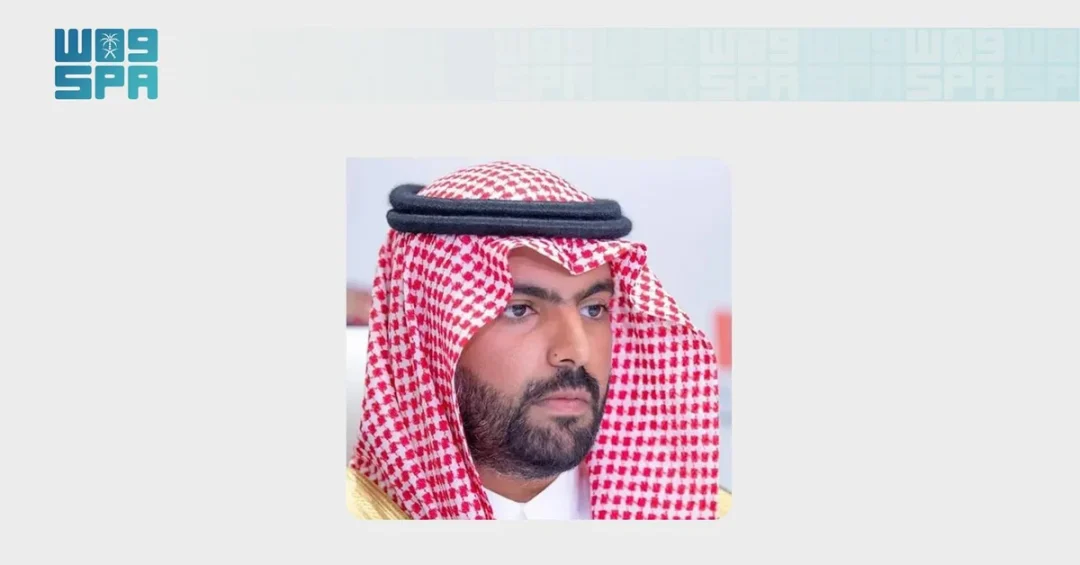
Saudi Arabia’s hosting of the fourth UNESCO Global Forum on the Ethics of Artificial Intelligence (GFEAI 2026) reflects the Kingdom’s advanced standing on the international stage and its commitment to responsible, ethical AI development, Minister of Culture and Chairman of the Saudi National Commission for Education, Culture and Science Prince Bader bin Abdullah bin Farhan said in remarks released through the Saudi Press Agency. The minister framed the forum, to be held in Riyadh, as a milestone in global cooperation on emerging technologies and a clear endorsement of the Kingdom’s role as a convenor of serious international dialogue.
According to the official statement, the event is organized through a partnership between the Saudi Data and AI Authority (SDAIA) and the United Nations Educational, Scientific and Cultural Organization (UNESCO), with cooperation from the International Center for AI Research and Ethics (ICAIRE). Prince Bader described this collaboration as a model of international integration in developing policies and practices related to AI ethics, and as a mechanism for exchanging expertise and building capacity among countries. Is there any question that artificial intelligence now sits at the center of the global policy agenda? The minister’s remarks, carried by the Saudi Press Agency, place the Kingdom among the small group of nations shaping how that agenda is written.
Context and Background
Why does the location of a forum on AI ethics matter so much in 2026? Because the rules being written today will govern how artificial intelligence is deployed for decades, and the countries that host the conversations tend to shape their outcomes. UNESCO’s Global Forum on the Ethics of Artificial Intelligence was established as a recurring international gathering following the adoption of the UNESCO Recommendation on the Ethics of Artificial Intelligence in 2021, the first global standard-setting instrument on the subject, endorsed by all 193 member states. Previous editions have drawn policymakers, academics, civil society representatives, and technology leaders from across the world.
The fourth edition, GFEAI 2026, will convene in Riyadh under the framework described by Prince Bader, who also chairs the Saudi National Commission for Education, Culture and Science. That commission is the national body responsible for coordinating the Kingdom’s engagement with UNESCO and other international organizations in education, culture, and science. In the official statement, the minister said the commission is keen to support national initiatives that strengthen the Kingdom’s presence in international organizations and promote cooperation with UNESCO in priority areas. The message is consistent: Saudi Arabia intends to be a contributor to global governance, not merely a participant in it.
The forum’s Riyadh setting also carries symbolic weight. Saudi Arabia has spent the past several years positioning itself as a hub for technology, data, and innovation, from the creation of SDAIA in 2019 to the establishment of specialized institutions and national strategies on data and AI. Hosting a UNESCO forum on AI ethics extends that trajectory into the normative domain, where standards and principles are debated. Does a country need to be a technology superpower to influence technology ethics? Not necessarily, but it does need credibility, convening power, and a demonstrated commitment to the responsible use of the technology, all of which the official Saudi statement emphasizes.
Key Details
In his remarks, Prince Bader said GFEAI 2026 will provide a global platform bringing together policymakers, experts, and researchers. The forum, he explained, will facilitate the exchange of views and the development of practical solutions that contribute to establishing sound AI governance principles. That language matters: the emphasis is on practical solutions and governance principles rather than abstract declarations, suggesting an agenda oriented toward implementation. The minister also noted that hosting the forum in Riyadh reflects the Kingdom’s growing role in supporting high-quality international initiatives and consolidating its position as a global hub for dialogue and cooperation in data and AI.
The partnership structure described in the statement is notable. SDAIA, the Saudi Data and AI Authority, is the Kingdom’s lead institution for data and artificial intelligence policy and implementation. UNESCO brings the global normative mandate and the membership base. ICAIRE, the International Center for AI Research and Ethics, adds research capacity and ethical expertise. Together, the three form a triangle of authority, reach, and analysis that the minister characterized as a model of international integration. He added that the partnership promotes the exchange of expertise and capacity-building among countries, an element that speaks directly to the needs of developing nations seeking to adopt AI responsibly.
Prince Bader also affirmed that the Saudi National Commission for Education, Culture and Science is keen to support national initiatives that strengthen the Kingdom’s presence in international organizations. This is a revealing statement of method: the Kingdom’s strategy is not only to host events but to build durable institutional relationships with bodies such as UNESCO in priority areas. The commission’s dual role, coordinating education, culture, and science portfolios, gives it a broad mandate that touches on the human dimensions of AI: how people learn, how cultures are represented, and how scientific progress is governed. What does responsible AI governance look like when culture and education are at the table? The forum in Riyadh is designed, in part, to answer that question.
International and Regional Impact
The decision to hold the fourth edition of the forum in Riyadh signals confidence in Saudi Arabia as a neutral and capable host for complex multilateral conversations. The Middle East has become an increasingly active region in AI policy, with several countries launching national strategies and investing heavily in digital infrastructure. By hosting GFEAI 2026, the Kingdom positions itself at the center of that regional momentum while connecting it to global processes led by UNESCO. For international participants, the forum offers a chance to engage directly with the institutions and officials shaping AI policy in one of the world’s most dynamic technology markets.
For UNESCO, the partnership with SDAIA and ICAIRE extends the reach of its Recommendation on the Ethics of Artificial Intelligence into a region where implementation capacity is growing rapidly. The organization has consistently emphasized that ethical standards only matter if they are translated into national laws, institutional practices, and professional norms. A forum hosted in Riyadh, with the participation of policymakers, experts, and researchers, is precisely the kind of setting where that translation can be discussed. Prince Bader’s characterization of the partnership as a model of international integration underscores the mutual benefit: global standards gain regional traction, and regional experience informs global debate.
The forum also has implications for how AI ethics is discussed in the Global South. Capacity-building and the exchange of expertise are recurring themes in the minister’s statement, and they address a real gap. Many countries lack the technical and regulatory infrastructure to assess AI risks or to implement ethical guidelines. By co-hosting a global forum and working through ICAIRE, Saudi Arabia and UNESCO can spotlight practical mechanisms, such as training programs, research collaborations, and policy toolkits, that help close that gap. Is it enough to write principles without building the capacity to apply them? The official framing suggests the Kingdom understands that implementation is the harder and more important half of the equation.
Economic and Strategic Significance
Hosting a major UN-affiliated forum generates more than diplomatic goodwill. It reinforces Saudi Arabia’s broader economic strategy, in which data and AI are treated as foundational sectors. SDAIA’s mandate spans national data governance, AI research, and the development of talent, and its international partnerships support the transfer of knowledge and the adoption of best practices. When global experts gather in Riyadh, they engage with the Kingdom’s institutions, its startups, its universities, and its young professionals. Those interactions can lead to collaborations, investments, and talent flows that outlast the event itself.
The strategic dimension is equally significant. Saudi Arabia has made multilateral engagement a pillar of its foreign policy, and leadership in technology governance complements its roles in energy, finance, and regional diplomacy. By chairing the Saudi National Commission for Education, Culture and Science, Prince Bader sits at the intersection of these efforts, linking cultural and educational diplomacy with the scientific and technological agenda. The minister’s statement that the forum aligns with Saudi Vision 2030 and strengthens efforts to build a more responsible, inclusive, and sustainable digital future ties the event directly to the Kingdom’s long-term national program. What does a country gain by helping to write the rules of a transformative technology? Influence, predictability, and a voice in decisions that will affect its economy for generations.
Vision 2030 Alignment
The connection to Saudi Vision 2030 is explicit in the official remarks. Vision 2030 is the Kingdom’s national transformation program, designed to diversify the economy, develop human capital, and position Saudi Arabia as a global investment and innovation destination. Data and AI are central enablers of that program, from smart city development to digital government services to advanced manufacturing. Hosting GFEAI 2026, and doing so in partnership with UNESCO and ICAIRE, demonstrates that the Kingdom’s technological ambitions are paired with a commitment to ethical guardrails. That pairing matters to international partners, who increasingly evaluate technology ecosystems not only on speed and scale but on trustworthiness.
Prince Bader’s statement also highlights the role of the Saudi National Commission for Education, Culture and Science in supporting national initiatives that strengthen the Kingdom’s presence in international organizations. This is Vision 2030 in practice: a diversified diplomacy that leverages culture, education, and science alongside traditional levers of influence. As Riyadh prepares to welcome the fourth UNESCO Global Forum on the Ethics of Artificial Intelligence, the message from the minister is one of partnership and responsibility. The Kingdom is not simply adopting technology; it is helping to shape the norms that will govern it. For a world still wrestling with how to manage AI’s risks and rewards, that is a contribution worth watching closely.
20 Questions
Q1. What is the fourth UNESCO Global Forum on the Ethics of Artificial Intelligence?
A1. It is a major international gathering convened under UNESCO auspices to discuss the ethical governance of artificial intelligence. The fourth edition, GFEAI 2026, will be hosted in Riyadh, Saudi Arabia, bringing together policymakers, experts, and researchers from around the world.
Q2. Who announced Saudi Arabia’s hosting of GFEAI 2026?
A2. Minister of Culture and Chairman of the Saudi National Commission for Education, Culture and Science Prince Bader bin Abdullah bin Farhan announced the hosting in remarks carried by the Saudi Press Agency, describing it as a reflection of the Kingdom’s advanced international standing.
Q3. Which Saudi and international bodies are partnering for the forum?
A3. The Saudi Data and AI Authority (SDAIA) is partnering with the United Nations Educational, Scientific and Cultural Organization (UNESCO), with cooperation from the International Center for AI Research and Ethics (ICAIRE).
Q4. Why does the minister consider the partnership significant?
A4. Prince Bader described the partnership as a model of international integration in developing AI ethics policies and practices. He said it promotes the exchange of expertise and capacity-building among countries.
Q5. What does hosting the forum say about Saudi Arabia’s global position?
A5. According to the minister, it reflects the Kingdom’s advanced position on the international stage in supporting global dialogue on emerging technologies and consolidating its role as a global hub for dialogue and cooperation in data and AI.
Q6. How does the forum relate to Saudi Vision 2030?
A6. The minister said hosting GFEAI 2026 aligns with the objectives of Saudi Vision 2030 and strengthens efforts to build a more responsible, inclusive, and sustainable digital future for the Kingdom and the world.
Q7. What is the role of the Saudi National Commission for Education, Culture and Science?
A7. The commission coordinates the Kingdom’s engagement with UNESCO and other international organizations in education, culture, and science. Prince Bader said it is keen to support national initiatives that strengthen Saudi Arabia’s presence in international organizations.
Q8. Who will attend GFEAI 2026?
A8. The forum will bring together policymakers, experts, and researchers from around the world. It is designed as a global platform for exchanging views and developing practical solutions for sound AI governance principles.
Q9. What is SDAIA’s role in Saudi Arabia’s AI strategy?
A9. The Saudi Data and AI Authority is the Kingdom’s lead institution for data and artificial intelligence policy and implementation. It drives national strategies, research, talent development, and international partnerships in these fields.
Q10. What is ICAIRE and why is it involved?
A10. The International Center for AI Research and Ethics contributes research capacity and ethical expertise to the partnership. Its involvement supports the development of evidence-based policies and practices for responsible AI use worldwide.
Q11. Why is AI ethics an important global issue in 2026?
A11. Artificial intelligence is rapidly transforming economies and societies, raising questions about fairness, transparency, privacy, and accountability. Global forums like GFEAI help establish shared principles and practical governance solutions.
Q12. What did UNESCO establish regarding AI ethics?
A12. UNESCO adopted the Recommendation on the Ethics of Artificial Intelligence in 2021, the first global standard-setting instrument on the subject. It was endorsed by all 193 member states and guides national policy development.
Q13. How does the forum benefit developing countries?
A13. The partnership promotes capacity-building and the exchange of expertise among countries. This helps developing nations adopt AI responsibly by sharing training, research collaborations, and policy toolkits.
Q14. What practical outcomes are expected from GFEAI 2026?
A14. The minister said the forum will facilitate the exchange of views and the development of practical solutions that contribute to establishing sound AI governance principles, with an emphasis on implementation rather than abstract declarations.
Q15. How does hosting the forum affect Saudi Arabia’s economy?
A15. It reinforces the Kingdom’s strategy of treating data and AI as foundational economic sectors. International gatherings can lead to collaborations, investments, and talent flows that support economic diversification under Vision 2030.
Q16. What is the significance of holding the forum in Riyadh?
A16. Riyadh’s selection reflects confidence in Saudi Arabia as a capable multilateral host. It positions the Kingdom at the center of regional AI momentum while connecting that momentum to global processes led by UNESCO.
Q17. Does the forum have implications for regional AI policy?
A17. Yes. The Middle East has become increasingly active in AI policy, with several countries launching national strategies. The forum connects regional experience with global standards and encourages coordination among policymakers.
Q18. What tone did the minister use when discussing the forum?
A18. Prince Bader used a forward-looking and cooperative tone, emphasizing international integration, responsible use of AI, capacity-building, and the Kingdom’s commitment to serving humanity and sustainable development through ethical technology.
Q19. How does the forum support Saudi Arabia’s cultural and educational diplomacy?
A19. The Saudi National Commission for Education, Culture and Science links cultural and educational priorities with scientific and technological agendas, strengthening the Kingdom’s presence in international organizations and promoting cooperation with UNESCO.
Q20. What is the broader message of Saudi Arabia’s hosting GFEAI 2026?
A20. The message is that the Kingdom is not only adopting technology but helping shape the norms governing it. Through partnership with UNESCO and SDAIA, Saudi Arabia is contributing to a responsible, inclusive, and sustainable digital future.
Reader Feedback
We value your thoughts. Please share your feedback on this article.
Your feedback helps us improve our coverage.
Related articles
 46th King Abdulaziz Quran Competition: 33 Advance
 Rafah Crossing Receives 72nd Group Returning to Gaza
 Mawhiba Chairman Congratulates Leadership on INSO 2026 Success
 Global Quran Memorizers Compete in Mecca’s 46th King Abdulaziz Contest
 Enfaz Sales Top SAR 10.7 Billion in First Half of 2026
 Egypt, Gaza Envoy Discuss Peace Plan Implementation