


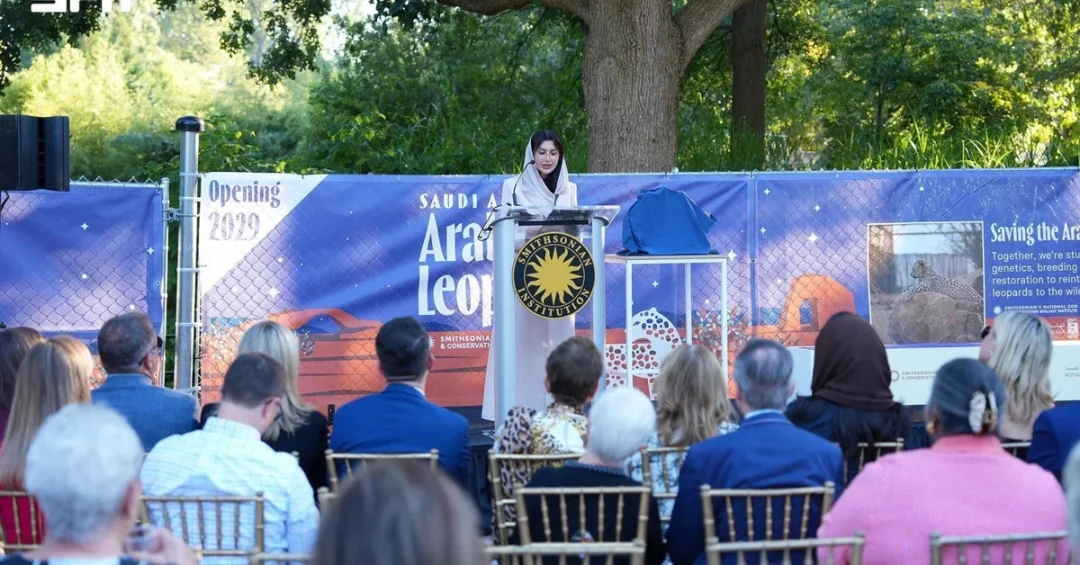
The Royal Commission for AlUla (RCU) and the Smithsonian’s National Zoo and Conservation Biology Institute (NZCBI) laid the foundation stone for the future Saudi Arabia: Arabian Leopard exhibit in Washington, D.C., on September 17, 2026, marking a significant milestone in joint efforts to conserve one of the world’s most critically endangered species. The groundbreaking ceremony, announced via the Saudi Press Agency, brought together senior Saudi and American officials, conservation leaders, and cultural representatives, underscoring a shared commitment to wildlife preservation and scientific cooperation between the Kingdom of Saudi Arabia and the United States.
The event was attended by Saudi Ambassador to the United States Princess Reema bint Bandar bin Sultan bin Abdulaziz, Smithsonian Institution Secretary Lonnie G. Bunch III, RCU CEO Abeer AlAkel, and NZCBI John and Adrienne Mars Director Dr. Brandie Smith. Scheduled to open in 2029, the facility will feature an AlUla-inspired habitat designed to house a breeding pair of Arabian leopards, supporting population recovery and educating visitors about a species whose wild population numbers fewer than 120. Could this partnership represent a new model for international conservation diplomacy? The initiative reflects Saudi Arabia’s broader environmental stewardship under Vision 2030 and its growing role in global biodiversity efforts.
Context and Background
How did the Arabian leopard become one of the rarest big cats on Earth? The Arabian leopard, a subspecies native to the Arabian Peninsula, has inhabited the rugged mountains and deserts of AlUla for millennia. Once widespread across the region, the species has suffered a dramatic decline due to habitat loss, prey depletion, and human-wildlife conflict. Today, fewer than 120 individuals are estimated to remain in the wild, according to Dr. Brandie Smith, making conservation efforts urgent and complex. The Royal Commission for AlUla, established in 2017 as part of Saudi Arabia’s Vision 2030 framework, has made the protection of this iconic species a cornerstone of its environmental and cultural heritage mandate.
The RCU’s partnership with the Smithsonian’s National Zoo and Conservation Biology Institute represents a strategic alignment of resources and expertise. The Smithsonian, one of the world’s most respected scientific and cultural institutions, brings decades of experience in captive breeding, veterinary care, and public education. For Saudi Arabia, the collaboration is part of a wider effort to restore ecosystems across AlUla, a region renowned for its ancient rock formations, UNESCO World Heritage sites, and rich biodiversity. The new exhibit in Washington, D.C., will serve as both a conservation facility and a cultural bridge, offering American and international audiences a window into Saudi Arabia’s natural heritage and its commitment to environmental sustainability.
The groundbreaking also highlights the growing importance of bilateral partnerships in addressing global environmental challenges. As nations grapple with biodiversity loss and climate change, collaborative initiatives like this one demonstrate how scientific diplomacy can yield tangible results. Saudi Arabia’s Vision 2030 explicitly emphasizes environmental protection and sustainable development, and the Arabian leopard conservation program is a flagship example of these principles in action. By working alongside international experts, Saudi practitioners gain access to cutting-edge techniques and knowledge that will strengthen long-term national capabilities.
Key Details
What exactly does the new exhibit entail, and why is it significant? The Saudi Arabia: Arabian Leopard exhibit, slated to open in 2029, will be located at the Smithsonian’s National Zoo in Washington, D.C. It will feature a habitat inspired by the landscapes of AlUla, designed to replicate the natural environment of the Arabian leopard. The facility will house a breeding pair of leopards, with the goal of supporting population recovery through managed breeding programs. In addition to conservation, the exhibit will serve an educational purpose, informing visitors about the plight of the species and the broader ecological challenges facing the Arabian Peninsula.
During the ceremony, RCU CEO Abeer AlAkel announced a new wildlife conservation professional exchange program. This initiative will provide Saudi practitioners with hands-on training alongside international specialists, reinforcing long-term national capabilities in wildlife management, veterinary science, and habitat restoration. AlAkel emphasized that the Arabian leopard has inhabited AlUla for millennia and that conserving the species is integral to broader ecosystem restoration. The program underscores Saudi Arabia’s commitment to building domestic expertise and ensuring that conservation efforts are sustainable and locally led.
Commemorating the collaboration, the RCU presented the Smithsonian with a permanent replica of an ancient Arabian leopard rock carving, sculpted from authentic AlUla stone. This gift symbolizes the deep historical and cultural ties between the Arabian leopard and the region, dating back thousands of years. Smithsonian Institution Secretary Lonnie G. Bunch III noted that the RCU partnership spans wildlife preservation, scientific research, and cultural heritage, reflecting the multifaceted nature of the collaboration. The rock carving replica will serve as a lasting reminder of the shared commitment to protecting both natural and cultural treasures.
International and Regional Impact
How will this exhibit influence conservation efforts beyond the United States and Saudi Arabia? The partnership between the RCU and the Smithsonian sets a precedent for international cooperation in wildlife conservation. By combining Saudi Arabia’s regional expertise and financial resources with the Smithsonian’s scientific and educational capabilities, the initiative creates a powerful model for other nations to follow. The exhibit will not only raise awareness among American visitors but also inspire global action to protect endangered species. In a world where biodiversity loss is accelerating, such collaborations are essential for achieving meaningful and lasting outcomes.
Regionally, the project reinforces Saudi Arabia’s leadership in environmental stewardship across the Middle East. The Arabian leopard is a symbol of the Arabian Peninsula’s natural heritage, and its survival is closely tied to the health of ecosystems in AlUla and beyond. The RCU’s efforts align with the Kingdom’s broader environmental goals, including the Saudi Green Initiative and the Middle East Green Initiative, which aim to combat desertification, restore degraded lands, and protect wildlife. By partnering with a globally recognized institution like the Smithsonian, Saudi Arabia amplifies its message of conservation and sustainable development on the world stage.
Furthermore, the exhibit and exchange program will foster people-to-people ties between Saudi and American professionals, scientists, and educators. These interactions build mutual understanding and trust, which are essential for long-term diplomatic and scientific collaboration. The presence of Ambassador Princess Reema bint Bandar bin Sultan bin Abdulaziz at the groundbreaking underscores the strategic importance Saudi Arabia places on this partnership. As the two countries work together to save the Arabian leopard, they also strengthen the broader relationship between the Kingdom and the United States.
Economic and Strategic Significance
What economic and strategic benefits does this initiative bring to Saudi Arabia and its partners? The conservation of the Arabian leopard is not only an environmental imperative but also an economic opportunity. AlUla is rapidly emerging as a global tourism destination, known for its stunning landscapes, archaeological sites, and luxury resorts. A thriving population of Arabian leopards enhances the region’s appeal as a destination for eco-tourism, attracting visitors who are passionate about wildlife and nature. This, in turn, supports job creation, local businesses, and sustainable economic growth, aligning with Vision 2030’s goal of diversifying the Kingdom’s economy beyond oil.
Strategically, the partnership with the Smithsonian enhances Saudi Arabia’s soft power and international standing. By taking a leading role in global conservation, the Kingdom demonstrates its commitment to addressing shared challenges and contributing to the global public good. This enhances its reputation as a responsible and forward-looking nation, capable of forging meaningful partnerships with world-class institutions. The exchange program also builds human capital, equipping Saudi professionals with skills that will benefit the Kingdom’s environmental sector for years to come.
Moreover, the exhibit in Washington, D.C., will serve as a cultural ambassador for Saudi Arabia, showcasing the Kingdom’s rich natural and cultural heritage to millions of American and international visitors. It provides an opportunity to highlight the ancient history of AlUla, where rock carvings of leopards attest to the animal’s enduring presence in the region. By sharing this heritage, Saudi Arabia fosters cultural exchange and mutual respect, further strengthening its global ties.
Vision 2030 Alignment
How does the Arabian leopard conservation initiative fit into Saudi Arabia’s Vision 2030? Vision 2030 is a comprehensive plan to transform the Kingdom’s economy and society, with environmental sustainability as a key pillar. The Royal Commission for AlUla, established under this vision, is tasked with preserving the region’s natural and cultural heritage while developing it as a premier tourism destination. The Arabian leopard program exemplifies this dual mandate, protecting a critically endangered species while enhancing AlUla’s appeal as a unique and responsible tourism destination.
The partnership with the Smithsonian also reflects Vision 2030’s emphasis on international collaboration and knowledge exchange. By working with global experts, Saudi Arabia is building local capacity and fostering innovation in conservation. The professional exchange program, in particular, aligns with the vision’s goal of empowering Saudi citizens through education and training. As the Kingdom continues to diversify its economy and open up to the world, initiatives like this one demonstrate its commitment to sustainable development and global engagement.
In conclusion, the groundbreaking of the Saudi Arabia: Arabian Leopard exhibit in Washington, D.C., is more than a construction milestone; it is a testament to Saudi Arabia’s leadership in conservation and its dedication to Vision 2030. Through this partnership, the Kingdom is not only saving a species but also building bridges of cooperation and understanding with the United States and the international community. As the project moves forward, it will serve as a shining example of how nations can work together to protect our planet’s precious biodiversity for future generations.
20 Questions
Q1. What is the Saudi Arabia: Arabian Leopard exhibit?
A1. It is a new conservation and educational facility at the Smithsonian’s National Zoo in Washington, D.C., developed by the Royal Commission for AlUla and the Smithsonian’s National Zoo and Conservation Biology Institute to house and breed Arabian leopards.
Q2. When is the exhibit scheduled to open?
A2. The exhibit is scheduled to open in 2029, as announced during the foundation stone laying ceremony on September 17, 2026.
Q3. Who attended the groundbreaking ceremony?
A3. Attendees included Saudi Ambassador to the United States Princess Reema bint Bandar bin Sultan bin Abdulaziz, Smithsonian Secretary Lonnie G. Bunch III, RCU CEO Abeer AlAkel, and NZCBI Director Dr. Brandie Smith.
Q4. How many Arabian leopards remain in the wild?
A4. According to Dr. Brandie Smith, fewer than 120 Arabian leopards remain in the wild, making them one of the world’s rarest big cats.
Q5. What is the purpose of the exhibit?
A5. The exhibit aims to support population recovery through a breeding pair of Arabian leopards and to educate visitors about the species and its conservation needs.
Q6. What is the Royal Commission for AlUla?
A6. The RCU is a Saudi government body established in 2017 to preserve and develop AlUla’s natural and cultural heritage, in line with Saudi Arabia’s Vision 2030.
Q7. What is the Smithsonian’s National Zoo and Conservation Biology Institute?
A7. It is a renowned American scientific and educational institution dedicated to animal care, conservation, and research, part of the Smithsonian Institution.
Q8. What new program did the RCU announce?
A8. The RCU announced a wildlife conservation professional exchange program to provide Saudi practitioners with hands-on training alongside international specialists.
Q9. Why is the Arabian leopard important to AlUla?
A9. The Arabian leopard has inhabited AlUla for millennia and is integral to the region’s ecosystem; its conservation is part of broader restoration efforts.
Q10. What gift did the RCU present to the Smithsonian?
A10. The RCU presented a permanent replica of an ancient Arabian leopard rock carving, sculpted from authentic AlUla stone.
Q11. How does this partnership benefit Saudi Arabia?
A11. It enhances Saudi capabilities in conservation, supports Vision 2030 goals, boosts eco-tourism in AlUla, and strengthens Saudi-US relations.
Q12. What is the significance of the rock carving replica?
A12. It symbolizes the ancient cultural and historical ties between the Arabian leopard and AlUla, dating back thousands of years.
Q13. How does the exhibit support Vision 2030?
A13. It aligns with Vision 2030’s environmental sustainability and economic diversification goals, promoting eco-tourism and international collaboration.
Q14. What role does Ambassador Princess Reema play?
A14. As Saudi Ambassador to the US, she supports bilateral cooperation and highlighted the importance of partnerships in wildlife conservation and environmental awareness.
Q15. What is the AlUla-inspired habitat?
A15. It is a designed environment replicating AlUla’s natural landscapes to provide a suitable home for the Arabian leopards at the Smithsonian’s National Zoo.
Q16. How will the exchange program help Saudi professionals?
A16. It offers practical training with international experts, building long-term national capabilities in wildlife management and conservation.
Q17. What other initiatives support Arabian leopard conservation?
A17. The RCU has breeding programs in AlUla, habitat restoration projects, and awareness campaigns, all part of broader Saudi environmental efforts.
Q18. What is the expected impact on global conservation?
A18. The partnership sets a model for international collaboration, raising awareness and inspiring action to protect endangered species worldwide.
Q19. How does this project reflect Saudi-US cooperation?
A19. It demonstrates shared commitment to conservation, scientific research, and cultural exchange, strengthening diplomatic and people-to-people ties.
Q20. What is the long-term goal of the exhibit?
A20. The goal is to help recover the Arabian leopard population, educate the public, and foster global support for biodiversity conservation.
Reader Feedback
We value your thoughts. Please share your feedback on this article.
Your feedback helps us improve our coverage.
Related articles
 Rafha Completes National Day Decorations and Preparations
 5.1-Magnitude Earthquake Strikes Indonesia’s North Maluku
 Aviation Steering Committee Reviews H1 2026 Performance
 Sudan Condemns Houthi Attack on Makkah as Grave Provocation
 32 Projects Open for Public Feedback via Istitlaa Platform
 Somalia Condemns Attempt to Target Makkah