


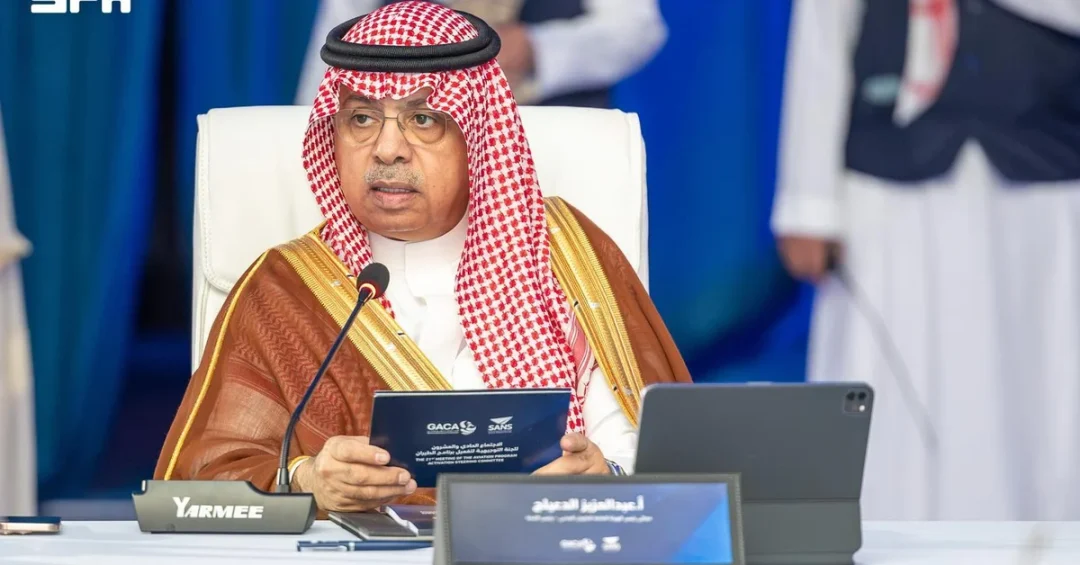
Saudi Arabia’s aviation sector marked a series of strategic milestones during the 21st meeting of the Aviation Program Activation Steering Committee, chaired by General Authority of Civil Aviation (GACA) President Abdulaziz Al-Duailej in Riyadh on September 17, 2026. The committee, which includes officials and representatives from across the Kingdom’s aviation entities, reviewed air traffic indicators and sector performance for the first half of 2026, assessed progress on key projects, and addressed challenges with measures to accelerate completion and meet targets.
Context and Background
The Aviation Program Activation Steering Committee serves as a central coordination body for Saudi Arabia’s ambitious aviation transformation, aligning government ministries, airport operators, air navigation services, and logistics providers under the umbrella of Vision 2030. The committee’s work supports the National Aviation Strategy, which aims to expand connectivity, increase passenger capacity, and elevate Saudi Arabia’s position as a global logistics and tourism hub. The 21st meeting reflects the regularity and seriousness with which the Kingdom monitors implementation, ensuring that projects remain on track and that emerging challenges are addressed promptly.
During the meeting, the committee reviewed first-half performance indicators, including air traffic volumes and sector efficiency. These metrics are critical as Saudi Arabia pursues a target of 330 million passengers annually by 2030 and seeks to attract 150 million visits per year. The review also covered achievements and obstacles, underscoring a results-driven approach to program management.
Key Details
A highlight of the meeting was the renewal of Saudi Arabia’s membership in the Executive Council of the Arab Civil Aviation Organization for the 2026–2028 term. This reaffirms the Kingdom’s leadership role in regional aviation governance and its commitment to advancing safety, security, and sustainability standards across Arab airspace.
The committee also noted significant progress in airport infrastructure development and digital transformation, both essential to enhancing capacity and passenger experience. In a concrete step to boost air cargo capabilities, GACA presented SAL Logistics Services with the economic license for air cargo handling at AlUla International Airport. This license enables expanded logistics operations at a key heritage and tourism destination, supporting both trade and tourism objectives.
Additionally, memoranda of understanding (MoUs) were signed between Saudi Air Navigation Services (SANS) and two European air navigation service providers: EUROCONTROL and DFS Aviation Services. These agreements aim to foster technical cooperation, knowledge exchange, and operational improvements. A further MoU was signed between Cluster2 Airports Company and Prince Sultan Aviation Academy, focusing on training and human capital development. These partnerships illustrate Saudi Arabia’s commitment to international collaboration and capacity building.
Implications and Impact
The outcomes of the 21st meeting carry significant implications for Saudi Arabia’s aviation ecosystem and its broader economic diversification agenda. The renewal of the Executive Council membership enhances the Kingdom’s influence in shaping regional aviation policies, while the new air cargo license at AlUla International Airport is expected to stimulate local economic activity, create jobs, and improve supply chain connectivity. The MoUs with EUROCONTROL and DFS Aviation Services are poised to bring best practices in air traffic management, safety, and efficiency, which will be vital as Saudi airspace becomes busier.
Regionally, these developments reinforce Saudi Arabia’s role as a bridge between continents, strengthening its competitive edge against other aviation hubs. Internationally, they signal that the Kingdom is open for partnerships and is actively investing in the infrastructure and skills needed to support growing passenger and cargo traffic. The focus on digital transformation and infrastructure also aligns with global trends toward smarter, more sustainable airports.
Vision 2030 Alignment
This meeting’s outcomes are a direct reflection of Vision 2030’s goals to diversify the economy, increase non-oil revenues, and position Saudi Arabia as a global logistics and tourism powerhouse. By expanding airport capacity, enhancing air cargo handling, and forging international partnerships, the Kingdom is laying the groundwork for a resilient and future-ready aviation sector. As the committee continues to monitor progress and tackle challenges, Saudi Arabia moves steadily toward its ambitious targets, demonstrating leadership and determination in transforming its aviation landscape.
20 Questions
Q1. What was the main purpose of the 21st Aviation Program Activation Steering Committee meeting?
A1. The meeting reviewed air traffic indicators and sector performance for the first half of 2026, assessed project progress, and addressed challenges to accelerate completion and meet targets.
Q2. Who chaired the 21st meeting of the Aviation Program Activation Steering Committee?
A2. The meeting was chaired by Abdulaziz Al-Duailej, President of the General Authority of Civil Aviation (GACA).
Q3. What key performance indicators were reviewed during the meeting?
A3. The committee reviewed air traffic indicators and overall sector performance for the first half of 2026, alongside achievements and challenges.
Q4. What milestone regarding Saudi Arabia’s regional role was highlighted?
A4. Saudi Arabia’s membership in the Executive Council of the Arab Civil Aviation Organization was renewed for the 2026–2028 term.
Q5. What license was presented to SAL Logistics Services?
A5. GACA presented SAL Logistics Services with the economic license for air cargo handling at AlUla International Airport.
Q6. Between which entities were MoUs signed for air navigation cooperation?
A6. MoUs were signed between Saudi Air Navigation Services (SANS) and EUROCONTROL, as well as between SANS and DFS Aviation Services.
Q7. What was the focus of the MoU between Cluster2 Airports Company and Prince Sultan Aviation Academy?
A7. The MoU focuses on training and human capital development, aiming to enhance skills within the aviation sector.
Q8. How does the renewal of the Executive Council membership benefit Saudi Arabia?
A8. It strengthens Saudi Arabia’s leadership in regional aviation governance and allows it to influence safety, security, and sustainability standards.
Q9. What does the air cargo license at AlUla International Airport enable?
A9. It enables expanded logistics operations at a key heritage and tourism destination, supporting trade and tourism objectives.
Q10. Why are the MoUs with EUROCONTROL and DFS Aviation Services significant?
A10. They foster technical cooperation, knowledge exchange, and operational improvements in air navigation, enhancing safety and efficiency.
Q11. What progress was noted in airport infrastructure development?
A11. The committee noted significant progress in expanding and modernizing airport infrastructure to increase capacity and improve passenger experience.
Q12. How does digital transformation support Saudi Arabia’s aviation goals?
A12. Digital transformation enhances operational efficiency, passenger services, and overall sector competitiveness, aligning with global trends.
Q13. What challenges were addressed during the meeting?
A13. The committee discussed challenges facing program implementation and agreed on measures to accelerate completion and meet targets.
Q14. What are Saudi Arabia’s passenger capacity targets for 2030?
A14. Saudi Arabia aims to handle 330 million passengers annually and attract 150 million visits per year by 2030.
Q15. How does the aviation sector contribute to Vision 2030?
A15. It supports economic diversification, non-oil revenue growth, and positions Saudi Arabia as a global logistics and tourism hub.
Q16. What role does the Steering Committee play in Saudi aviation?
A16. It coordinates efforts across aviation entities, monitors progress, and ensures alignment with the National Aviation Strategy.
Q17. How will the new air cargo license impact AlUla’s local economy?
A17. It is expected to stimulate economic activity, create jobs, and improve supply chain connectivity in the region.
Q18. What international partnerships were strengthened through these MoUs?
A18. Partnerships with EUROCONTROL and DFS Aviation Services were strengthened, enhancing international cooperation in air navigation.
Q19. What is the significance of the committee’s regular meetings?
A19. Regular meetings ensure continuous oversight, timely problem-solving, and sustained momentum toward achieving aviation targets.
Q20. How do these developments align with Saudi Arabia’s long-term vision?
A20. They directly support Vision 2030 by expanding infrastructure, boosting connectivity, and fostering international collaboration for sustainable growth.
Reader Feedback
We value your thoughts. Please share your feedback on this article.
Your feedback helps us improve our coverage.