


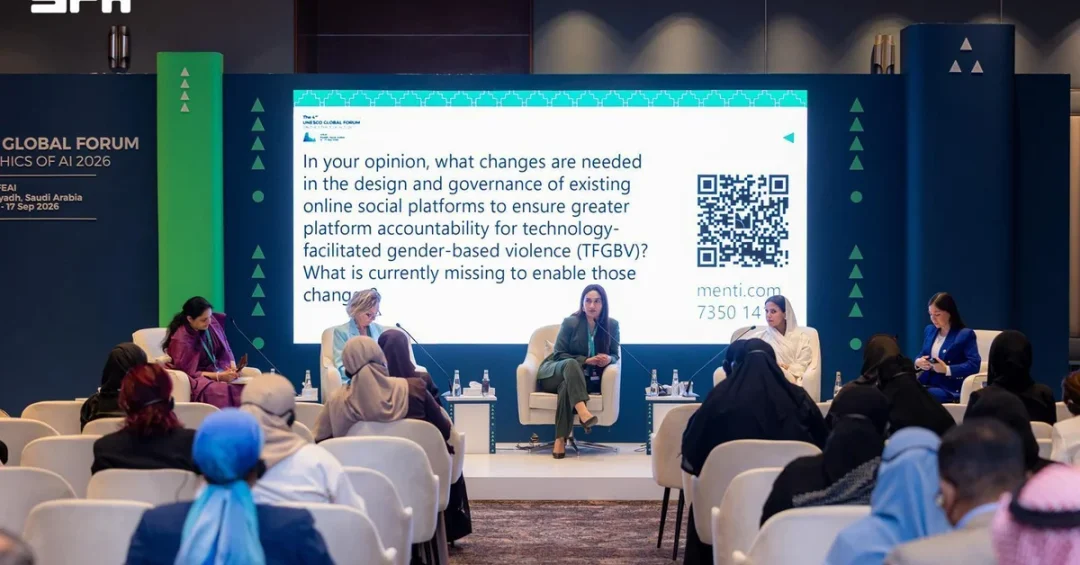
Experts at the fourth UNESCO Global Forum on the Ethics of AI in Riyadh have called for stronger participation of women in shaping artificial intelligence governance, urging that gender considerations be translated into practical policies across the entire AI lifecycle. The session, held during the forum’s sessions from September 14 to 17, 2026, emphasized that women’s involvement must extend beyond technology use to active roles in research, development, and innovation. The forum is organized by the Saudi Data and AI Authority (SDAIA) in partnership with UNESCO, in cooperation with the International Center for AI Research and Ethics (ICAIRE), and in coordination with the Saudi National Commission for Education, Culture and Science.
Why does gender-inclusive AI governance matter now, as artificial intelligence rapidly transforms economies and societies worldwide? The Riyadh discussions underscored that inclusive design is not only a matter of fairness but a prerequisite for trustworthy and effective AI systems. Participants stressed that gender-related considerations should be integrated throughout the design, development, testing, and deployment of AI systems to promote inclusivity and fairness. The forum’s outcomes are expected to inform international guidelines and national strategies, reinforcing Saudi Arabia’s growing role as a global convener on AI ethics and governance.
Context and Background
What makes the UNESCO Global Forum on the Ethics of AI a pivotal platform for international dialogue? Established as a flagship initiative following UNESCO’s 2021 Recommendation on the Ethics of Artificial Intelligence, the forum brings together policymakers, researchers, civil society, and industry leaders to align AI development with human rights and ethical principles. The fourth edition, hosted in Riyadh, marks the first time the forum has been held in the Kingdom, reflecting Saudi Arabia’s rising influence in global technology governance and its commitment to multilateral cooperation.
The forum is organized by the Saudi Data and AI Authority (SDAIA), the national body responsible for driving Saudi Arabia’s data and AI agenda, in partnership with UNESCO. It is supported by the International Center for AI Research and Ethics (ICAIRE), a UNESCO Category 2 center based in Riyadh, and coordinated with the Saudi National Commission for Education, Culture and Science. This institutional backing highlights the Kingdom’s integrated approach to AI ethics, linking government, academia, and international organizations.
Women’s participation in AI has emerged as a central theme in global discussions, given persistent gender gaps in the technology workforce and the risk that biased algorithms could exacerbate inequality. The Riyadh forum’s focus on translating gender considerations into practical measures signals a shift from principles to implementation, a priority that aligns with Saudi Arabia’s Vision 2030 goal of empowering women and building a diversified, knowledge-based economy.
Key Details
What specific measures did experts propose to strengthen women’s role in AI governance? During the session, participants emphasized that gender-related considerations must be embedded at every stage of the AI lifecycle, from initial design to deployment. This includes developing inclusive datasets, testing algorithms for gender bias, and ensuring diverse teams are involved in creating AI systems. They also stressed that women’s involvement should go beyond using technology to actively participating in research, development, and innovation.
The forum’s discussions produced a set of recommendations aimed at policymakers, developers, and organizations. These include establishing gender-balanced AI governance bodies, providing targeted training and mentorship for women in AI fields, and creating mechanisms to monitor and evaluate the gender impact of AI systems. The recommendations are expected to feed into UNESCO’s ongoing work on AI ethics and inform national AI strategies, including Saudi Arabia’s own National Strategy for Data and AI.
Saudi Arabia’s own experience offers a compelling case study. Under Vision 2030, the Kingdom has significantly increased women’s participation in the workforce, including in technology and science sectors. Initiatives such as the Saudi Data and AI Authority’s training programs and the establishment of ICAIRE have created new opportunities for women to contribute to AI research and policy. The forum thus served as a platform for Saudi Arabia to share its progress and learn from international best practices.
International and Regional Impact
How will the Riyadh forum’s outcomes influence global AI governance? The recommendations on gender inclusivity are expected to shape international guidelines and national policies, reinforcing UNESCO’s global framework on AI ethics. By hosting the forum, Saudi Arabia has positioned itself as a bridge between developed and developing nations, advocating for AI governance that is both innovative and inclusive. This role enhances the Kingdom’s standing as a responsible global actor and a leader in shaping the future of technology.
Regionally, the forum’s emphasis on women’s participation resonates across the Middle East and North Africa, where countries are investing heavily in digital transformation. Saudi Arabia’s leadership in this area could inspire similar initiatives in neighboring states, fostering a regional ecosystem that values diversity in AI development. The involvement of ICAIRE, a Riyadh-based center, further cements the Kingdom’s role as a hub for AI ethics research and capacity-building.
The forum also underscored the importance of international cooperation in addressing the ethical challenges posed by AI. Participants called for stronger partnerships between governments, international organizations, academia, and the private sector to ensure that AI benefits all of humanity. Saudi Arabia’s partnership with UNESCO and ICAIRE exemplifies this collaborative spirit, demonstrating how nations can work together to advance shared goals.
Economic and Strategic Significance
Why does gender-inclusive AI matter for economic growth? Research consistently shows that diverse teams produce more innovative and competitive solutions. By empowering women to participate fully in AI development, countries can tap into a broader talent pool, drive economic diversification, and reduce skill shortages in the tech sector. For Saudi Arabia, this aligns directly with Vision 2030’s objectives of increasing women’s workforce participation and building a sustainable, innovation-driven economy.
The global AI market is projected to grow exponentially in the coming years, and nations that foster inclusive AI ecosystems will be better positioned to capture its benefits. Saudi Arabia’s investments in AI, including through SDAIA and NEOM, are part of a strategic push to diversify away from oil and become a regional technology leader. The Riyadh forum’s focus on practical measures ensures that these investments are guided by ethical considerations, enhancing their long-term sustainability and social acceptance.
Moreover, the forum highlighted the need for gender-sensitive AI policies in sectors such as healthcare, education, and finance, where AI applications can either bridge or widen existing inequalities. By integrating gender perspectives, policymakers can design AI systems that serve all citizens effectively, contributing to social cohesion and inclusive growth.
Vision 2030 Alignment
How does the Riyadh forum reflect Saudi Arabia’s Vision 2030 ambitions? Vision 2030 seeks to transform the Kingdom into a global investment powerhouse and a hub for innovation, with a strong emphasis on empowering women and youth. The forum’s focus on women’s role in AI governance directly supports these goals by promoting gender equality, fostering talent, and positioning Saudi Arabia as a leader in ethical AI. The event also showcases the Kingdom’s ability to host major international gatherings, further enhancing its global reputation.
Under the leadership of His Royal Highness Crown Prince Mohammed bin Salman, Saudi Arabia has made significant strides in advancing women’s rights and participation in all sectors. The establishment of SDAIA and ICAIRE, along with initiatives like the National Strategy for Data and AI, demonstrates a comprehensive approach to building a knowledge economy. The UNESCO forum in Riyadh is a testament to the Kingdom’s commitment to international cooperation and its proactive role in shaping a future where AI serves humanity ethically and inclusively.
As the forum concluded, participants left with a renewed sense of purpose and a clear roadmap for action. The recommendations on gender-inclusive AI governance will now be carried forward to UNESCO and other international bodies, ensuring that the Riyadh discussions translate into tangible change. For Saudi Arabia, the event reinforces its position as a forward-looking nation that is not only embracing technology but also leading the global conversation on its ethical implications.
20 Questions
Q1. What was the main focus of the fourth UNESCO Global Forum on the Ethics of AI in Riyadh?
A1. The forum focused on strengthening women’s participation in AI governance and translating gender considerations into practical policies across the AI lifecycle, including design, development, testing, and deployment.
Q2. When and where was the fourth UNESCO Global Forum on the Ethics of AI held?
A2. It was held in Riyadh, Saudi Arabia, from September 14 to 17, 2026, organized by the Saudi Data and AI Authority (SDAIA) in partnership with UNESCO.
Q3. Who organized the forum?
A3. The forum was organized by SDAIA in partnership with UNESCO, in cooperation with the International Center for AI Research and Ethics (ICAIRE), and in coordination with the Saudi National Commission for Education, Culture and Science.
Q4. Why is women’s participation in AI governance important?
A4. Women’s participation ensures diverse perspectives in AI development, leading to more inclusive and fair systems. It also addresses gender biases and promotes innovation by tapping into a broader talent pool.
Q5. What specific measures were discussed to enhance women’s role in AI?
A5. Measures included integrating gender considerations into AI design, developing inclusive datasets, testing for bias, establishing gender-balanced governance bodies, and providing training and mentorship for women in AI.
Q6. How does the forum align with Saudi Arabia’s Vision 2030?
A6. It aligns with Vision 2030’s goals of empowering women, fostering innovation, and building a knowledge-based economy. It also enhances Saudi Arabia’s global leadership in AI ethics.
Q7. What is the role of ICAIRE in the forum?
A7. ICAIRE, the International Center for AI Research and Ethics based in Riyadh, cooperated in organizing the forum and contributes to research and capacity-building in AI ethics.
Q8. What is SDAIA’s role in Saudi Arabia’s AI strategy?
A8. SDAIA is the national authority responsible for driving Saudi Arabia’s data and AI agenda, implementing the National Strategy for Data and AI, and promoting ethical AI development.
Q9. How can gender-inclusive AI benefit economies?
A9. Gender-inclusive AI fosters innovation, reduces skill shortages, and drives economic diversification. It enables countries to leverage diverse talent and create more competitive solutions.
Q10. What are the international implications of the forum’s outcomes?
A10. The outcomes will inform UNESCO’s global AI ethics framework and national policies, promoting inclusive AI governance worldwide and reinforcing Saudi Arabia’s role as a global convener.
Q11. What is UNESCO’s Recommendation on the Ethics of AI?
A11. Adopted in 2021, it is a global standard that sets ethical principles for AI development and use, aiming to ensure AI respects human rights and contributes to sustainable development.
Q12. How does the forum address bias in AI systems?
A12. Participants emphasized testing algorithms for gender bias, using inclusive datasets, and involving diverse teams in AI development to prevent and mitigate bias.
Q13. What role can women play in AI research and innovation?
A13. Women can contribute as researchers, developers, and innovators, bringing unique perspectives that enhance the quality and fairness of AI technologies.
Q14. How does Saudi Arabia support women in AI fields?
A14. Saudi Arabia supports women through training programs, mentorship initiatives, and policies that increase female workforce participation, in line with Vision 2030.
Q15. What sectors can benefit from gender-sensitive AI policies?
A15. Sectors such as healthcare, education, and finance can benefit by ensuring AI applications address the needs of all genders and reduce inequalities.
Q16. What was the significance of hosting the forum in Riyadh?
A16. Hosting in Riyadh highlights Saudi Arabia’s growing influence in global technology governance and its commitment to multilateral cooperation on AI ethics.
Q17. How can international cooperation advance AI ethics?
A17. International cooperation enables sharing of best practices, aligning standards, and pooling resources to address global AI challenges, as demonstrated by the UNESCO-SDAIA partnership.
Q18. What are the next steps after the forum?
A18. The recommendations will be carried forward to UNESCO and other international bodies, and Saudi Arabia will continue implementing gender-inclusive AI policies domestically.
Q19. How does the forum reflect Saudi Arabia’s leadership in AI?
A19. By hosting the forum and driving discussions on ethical AI, Saudi Arabia demonstrates leadership in shaping global AI governance and promoting inclusive innovation.
Q20. What is the ultimate goal of integrating gender considerations in AI?
A20. The goal is to create AI systems that are fair, inclusive, and beneficial for all, ensuring that technological advancements do not perpetuate existing inequalities.
Reader Feedback
We value your thoughts. Please share your feedback on this article.
Your feedback helps us improve our coverage.
Related articles
 Civil Defense: One Killed, Two Injured by Houthi Drone Debris in Taif
 Riyadh UNESCO Forum Addresses Child Safety in AI Era
 UNESCO AI Ethics Forum Continues in Riyadh
 RCU, Smithsonian Break Ground on Arabian Leopard Exhibit
 Rafha Completes National Day Decorations and Preparations
 5.1-Magnitude Earthquake Strikes Indonesia’s North Maluku