


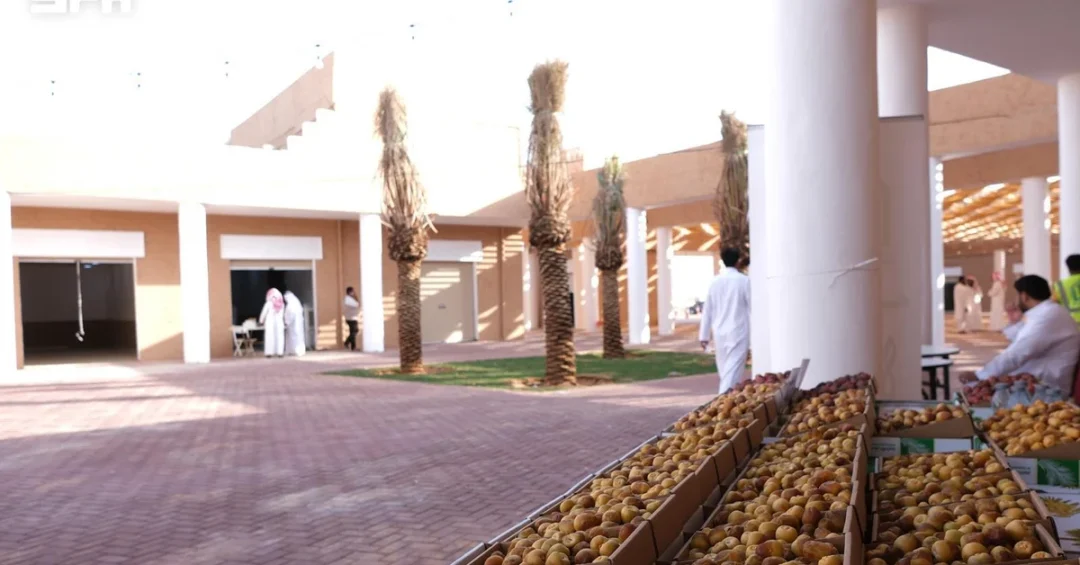
The first shipments of dates have begun arriving at the market square of the Al-Khabra and Riyadh Al-Khabra Dates Festival in the Qassim Region, with Sukkari varieties accounting for 60 percent of sales during the first ten days, according to the Saudi Press Agency. The annual event, which celebrates one of the Kingdom’s most treasured agricultural traditions, has drawn a strong turnout of farmers and brisk trading activity since opening its gates, underscoring the enduring importance of the date palm to Saudi Arabia’s economy, heritage, and identity. The festival, held in the heart of Qassim’s date-growing heartland, is among the most anticipated agricultural gatherings on the Saudi calendar, and this year’s edition has begun with notable momentum. Have you ever wondered how a single fruit can carry the weight of an entire region’s history, economy, and pride? In Qassim, the answer arrives by the truckload every harvest season.
The Al-Khabra and Riyadh Al-Khabra Dates Festival is more than a marketplace; it is a living exhibition of the Kingdom’s agricultural excellence and a testament to the generations of knowledge that have made Saudi dates a global commodity. The event brings together farmers, traders, families, and government agencies in a shared celebration of the harvest, and its opening days have already demonstrated the scale of demand for the region’s premium produce. For international observers, the festival offers a window into how Saudi Arabia is preserving its cultural inheritance while building a modern, diversified economy — two goals that sit at the very center of Vision 2030.
Context and Background
What makes the Qassim Region so central to Saudi Arabia’s date industry? The answer lies in its geography, climate, and centuries of accumulated farming expertise. Qassim, located in the heart of the Kingdom, is widely regarded as the country’s agricultural capital, and its date palms produce some of the most sought-after varieties in the world. The Al-Khabra and Riyadh Al-Khabra areas, in particular, have built a reputation for cultivating dates of exceptional quality, with local families passing down cultivation techniques from one generation to the next. The festival was established to give these producers a dedicated platform to sell directly to consumers and traders, while also attracting visitors from across the Kingdom and beyond.
The timing of the festival aligns with the annual harvest season, when the first dates ripen and reach the market. According to the Saudi Press Agency, the opening days saw the market offer a wide range of date varieties, with Sukkari dates — prized for their sweetness and texture — dominating sales at 60 percent during the first ten days. This early dominance reflects both consumer preference and the agricultural calendar: Sukkari is typically among the first varieties to mature in the region, making it the natural headline act of the festival’s opening phase. As the season progresses, additional varieties are expected to arrive, broadening the selection available to buyers and further energizing the market.
The festival also reflects a broader national story. Saudi Arabia is one of the world’s leading producers and exporters of dates, and the crop holds a special place in the Kingdom’s cultural and religious life. Dates are intimately associated with Saudi hospitality, Ramadan traditions, and the daily diet of millions. By organizing a festival of this scale, the Kingdom is not only supporting farmers but also reinforcing the cultural significance of the date palm as a symbol of generosity, sustainability, and national identity.
Key Details
What can visitors expect as the festival unfolds in the coming days? According to Eng. Fahd Al-Rasheed, the festival’s Executive Director, the coming days will see the arrival of many additional varieties of dates regarded as among the finest produced in Al-Khabra and Riyadh Al-Khabra, including Khalas, Sukkari, and Medjool. These varieties are celebrated for their distinct flavors and are highly valued in both domestic and international markets. The staggered arrival of different varieties means the festival will continually refresh its offerings, giving visitors a reason to return and giving farmers multiple opportunities to sell at optimal prices.
Eng. Al-Rasheed also announced that the dates auction will begin at 6:30 p.m. throughout the festival. The evening auction is a central feature of the event, drawing traders who compete for the best lots of the day. Beyond the auction floor, the festival features dedicated areas for selling fruits and vegetables, a section where local producers can showcase their products, and an entertainment area designed to appeal to families and children. This multi-faceted layout transforms the festival from a simple market into a comprehensive destination that combines commerce, culture, and leisure.
Several government agencies are participating in the festival, providing awareness programs and services to visitors and farmers throughout its duration. In addition, 60 volunteers are supporting operations across the festival’s various facilities and sections, a detail that highlights the community spirit underpinning the event. The involvement of government bodies and volunteers ensures that the festival runs smoothly while also delivering value beyond commerce — from agricultural guidance to public awareness initiatives. For farmers, this support can translate into better market access and improved practices; for visitors, it means a richer, more informative experience.
International and Regional Impact
How does a regional dates festival connect to global markets and Saudi Arabia’s international standing? The answer lies in the growing global appetite for premium Saudi dates. Saudi dates are exported to dozens of countries, and events like the Al-Khabra festival serve as vital nodes in the supply chain, connecting local producers with buyers who may ultimately ship the fruit to markets in Asia, Europe, and beyond. The festival’s ability to attract traders and showcase a wide range of varieties strengthens the Kingdom’s position as a reliable, high-quality source of dates. It also creates opportunities for knowledge exchange, as farmers learn about international standards and consumer preferences.
Regionally, the festival reinforces Qassim’s role as an agricultural hub within the Gulf Cooperation Council area. Neighboring countries also produce dates, but Saudi Arabia’s combination of scale, variety, and heritage gives it a distinct competitive edge. The presence of government agencies and the structured auction system further professionalize the sector, making it easier for Saudi producers to compete internationally. For international audiences, the festival is a reminder that Saudi Arabia’s economic diversification is not limited to oil and technology; agriculture, particularly date cultivation, remains a pillar of the rural economy and a source of national pride.
The festival also has a diplomatic dimension. Cultural events that celebrate Saudi heritage often attract foreign visitors and delegations, offering a soft-power platform that complements the Kingdom’s broader international engagement. By welcoming the world to experience its traditions firsthand, Saudi Arabia strengthens people-to-people ties and showcases the warmth and hospitality for which it is known.
Economic and Strategic Significance
What does the success of the dates festival mean for Saudi Arabia’s economy? Agriculture contributes a modest but meaningful share of the Kingdom’s gross domestic product, and dates are among the most valuable crops. The Al-Khabra festival generates direct income for farmers, creates seasonal employment, and stimulates local businesses such as transportation, packaging, and hospitality. The brisk trading activity reported in the opening days signals strong demand, which in turn encourages investment in better cultivation techniques, irrigation efficiency, and post-harvest handling. These improvements can raise yields and quality, benefiting the entire value chain.
Strategically, the festival supports the Kingdom’s food security objectives. By promoting domestic production and reducing reliance on imports, Saudi Arabia strengthens its resilience against global supply shocks. The date palm is also one of the most sustainable crops in the region, requiring relatively little water compared to other fruits and providing environmental benefits such as soil stabilization and carbon sequestration. As the Kingdom pursues its Saudi Green Initiative and other environmental programs, the date sector’s sustainable practices align with national goals. Moreover, the festival’s emphasis on local producers and family businesses reflects a broader economic philosophy: empowering small and medium-sized enterprises to participate in national growth.
The event also serves as a testing ground for agricultural innovation. Government agencies participating in the festival often introduce farmers to modern techniques, from pest management to water-saving irrigation. This knowledge transfer can have long-term effects, boosting productivity and sustainability. For international investors and buyers, the festival provides a transparent view of the supply chain, building confidence in Saudi agricultural products.
Vision 2030 Alignment
How does a traditional dates festival fit into a futuristic national transformation plan? At first glance, the connection may seem unlikely, but Vision 2030 is built on the idea that modernization and heritage can advance together. The festival embodies several core Vision 2030 themes: economic diversification, support for small businesses, community empowerment, and the promotion of Saudi culture. By creating a vibrant marketplace for local producers, the event helps diversify rural incomes and reduces dependence on oil-derived employment. It also advances the goal of increasing non-oil exports, as premium Saudi dates find buyers abroad.
Furthermore, the festival contributes to the Quality of Life Program, one of Vision 2030’s key initiatives, by offering families a safe, entertaining, and culturally enriching destination. The involvement of volunteers and government agencies reflects the whole-of-society approach that Vision 2030 champions. As the Kingdom continues to invest in tourism and cultural events, festivals like this one become important attractions for domestic and international visitors alike. In the years ahead, the Al-Khabra and Riyadh Al-Khabra Dates Festival is poised to grow in prominence, serving as a model for how Saudi Arabia can honor its past while building a prosperous, diversified future.
20 Questions
Q1. What is the Al-Khabra and Riyadh Al-Khabra Dates Festival?
A1. It is an annual agricultural festival held in the Qassim Region of Saudi Arabia that celebrates the date harvest, featuring a market, auction, family entertainment, and participation from government agencies and local producers.
Q2. When did the first shipments of dates arrive at the festival?
A2. The first shipments began arriving at the festival’s market square at the start of the event, according to the Saudi Press Agency, marking the beginning of the harvest-season trading period.
Q3. Which date variety accounted for most sales in the first ten days?
A3. Sukkari dates accounted for 60 percent of sales during the first ten days of the festival, reflecting strong consumer preference for this sweet and highly regarded variety.
Q4. What other date varieties are expected to arrive soon?
A4. According to festival Executive Director Eng. Fahd Al-Rasheed, additional varieties including Khalas, Sukkari, and Medjool — among the finest produced in Al-Khabra and Riyadh Al-Khabra — will arrive in the coming days.
Q5. Who is Eng. Fahd Al-Rasheed?
A5. Eng. Fahd Al-Rasheed is the Executive Director of the Al-Khabra and Riyadh Al-Khabra Dates Festival. He provided official comments on the event’s schedule and the arrival of date varieties.
Q6. What time does the dates auction begin?
A6. The dates auction begins at 6:30 p.m. throughout the festival, providing a daily focal point for traders and farmers to buy and sell premium lots.
Q7. What other attractions does the festival offer?
A7. The festival includes dedicated areas for selling fruits and vegetables, a section for local producers to showcase their products, and an entertainment area designed for families and children.
Q8. How many volunteers are supporting the festival?
A8. Sixty volunteers are supporting operations across the festival’s various facilities and sections, contributing to a smooth and welcoming experience for visitors and farmers.
Q9. Which government agencies are participating?
A9. Several government agencies are participating in the festival, providing awareness programs and services to visitors and farmers throughout its duration, though specific agencies were not listed in the official announcement.
Q10. Why is the Qassim Region important for dates?
A10. Qassim is considered Saudi Arabia’s agricultural heartland, with a climate and soil ideal for date palms. Its Al-Khabra and Riyadh Al-Khabra areas are renowned for producing some of the Kingdom’s finest dates.
Q11. How does the festival support local farmers?
A11. The festival provides farmers with direct access to consumers and traders, a structured auction system, and government-backed awareness programs, helping them secure better prices and improve their practices.
Q12. What is the economic significance of the date industry in Saudi Arabia?
A12. Dates are among the Kingdom’s most valuable agricultural crops, generating income for farmers, creating jobs, and contributing to non-oil exports. The industry supports rural economies and food security.
Q13. How does the festival align with Vision 2030?
A13. It advances Vision 2030 by promoting economic diversification, empowering small businesses, supporting non-oil exports, and enhancing quality of life through cultural and family-friendly events.
Q14. Are Saudi dates exported internationally?
A14. Yes, Saudi dates are exported to dozens of countries worldwide, and festivals like this one help connect local producers with international buyers and showcase the Kingdom’s premium varieties.
Q15. What makes Sukkari dates special?
A15. Sukkari dates are prized for their exceptional sweetness, rich flavor, and pleasing texture. They are among the most popular varieties in Saudi Arabia and are increasingly sought after in global markets.
Q16. What are Medjool dates known for?
A16. Medjool dates are known for their large size, soft texture, and caramel-like sweetness. They are highly valued internationally and represent a significant export opportunity for Saudi producers.
Q17. How long does the festival last?
A17. The official announcement did not specify the exact duration, but the festival typically runs for several weeks during the harvest season, with the auction taking place every evening at 6:30 p.m.
Q18. Can international visitors attend the festival?
A18. Yes, the festival is open to visitors, including international tourists, and offers a family-friendly environment. It provides an opportunity to experience Saudi agricultural heritage and hospitality firsthand.
Q19. What role do volunteers play at the festival?
A19. Volunteers assist with operations across various facilities and sections, helping manage crowds, support farmers, and ensure that visitors have a positive and well-organized experience throughout the event.
Q20. Why is the date palm important to Saudi culture?
A20. The date palm is a symbol of generosity, sustainability, and heritage in Saudi Arabia. Dates are central to hospitality and religious traditions, and the tree has been cultivated in the region for millennia.
Reader Feedback
We value your thoughts. Please share your feedback on this article.
Your feedback helps us improve our coverage.
Related articles
 Muscat Stock Exchange Closes Higher, Gains 36 Points
 Al-Baha Honey Festival Concludes with 45 Beekeepers
 Karachi Stocks Dip 0.07% Amid Balanced Trading
 Qatar Stock Exchange Index Closes Slightly Lower
 Egyptian Exchange Closes Mixed as Market Cap Rises 6B EGP
 Moringa: Saudi Arabia’s High-Value Desert Crop