


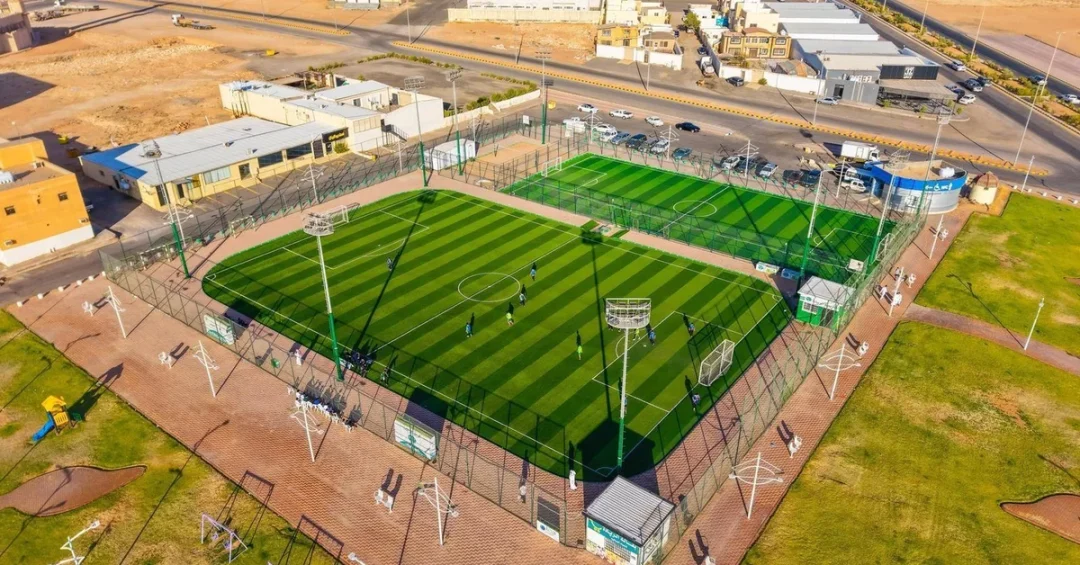
Sports fields across Turaif Governorate in the Northern Borders Region are emerging as a preferred destination for young footballers, offering a competitive, well-organized environment that is helping to identify emerging talent and strengthen community sports participation, according to information released by the Saudi Press Agency (SPA). The growing popularity of these pitches reflects a broader expansion of public and private sports facilities in the governorate, where modern infrastructure now hosts tournaments throughout the year and gives local youth productive, structured ways to spend their leisure time.
The development is closely tied to the Kingdom’s national priorities. Under Saudi Vision 2030, the government has placed a strong emphasis on enhancing quality of life and increasing participation in physical activity, and Turaif’s sports fields are translating that national ambition into everyday reality. Local sports officials say the closer integration of private sports fields, public sports facilities, and youth academies has created a more comprehensive environment for promoting participation, particularly in football, the Kingdom’s most widely followed sport. For a governorate located near the Jordanian border, the rise of these facilities is also a statement about how national investment in sport reaches communities far beyond the major metropolitan centers. How did a modest collection of local pitches become such an important part of the region’s sporting identity?
Context and Background
Turaif Governorate sits in the Northern Borders Region, a vast area of Saudi Arabia that shares borders with Jordan and Iraq and has historically been known more for its strategic location and desert landscape than for elite sports infrastructure. In recent years, however, the Kingdom’s nationwide push to expand sports and recreation has begun to change that profile. The Saudi Press Agency reported that sports fields in the governorate are gaining increasing popularity, emerging as a preferred destination for young people to play football in a competitive, well-organized environment. That shift did not happen by accident; it reflects deliberate investment in facilities, programming, and community outreach.
The expansion of public and private sports fields has revitalized the local sports scene, providing modern facilities that host tournaments year-round. This growth has encouraged participation in football and helped raise the standard of community sporting competitions. For residents, the fields represent more than just places to play. They are gathering points where young people build discipline, teamwork, and a sense of belonging, while families and local organizations gain a shared focal point for community events. The presence of organized leagues and regular tournaments also gives talented players a visible pathway to develop their skills in front of coaches and scouts.
Those involved in sports affairs regard these fields as an avenue for identifying and nurturing emerging talent. They note that closer integration among private sports fields, sports facilities, and academies has helped create a comprehensive environment for promoting sports participation. This integration matters because talent development is rarely the product of a single institution; it emerges when grassroots pitches, school programs, and structured academies work in alignment. Turaif is now demonstrating how that alignment can function in a smaller governorate, not only in the major cities.
Key Details
At the center of the story is football. The governorate’s fields host regular competitions that draw young players from across Turaif and surrounding communities, and the year-round calendar of tournaments keeps participation steady rather than seasonal. Organizers say the standard of community sporting competitions has risen as facilities have improved, with better pitches, lighting, and supporting amenities allowing matches to be played more frequently and in more professional conditions. These competitions provide young people with productive ways to spend their leisure time while strengthening social ties and fostering greater interaction among residents of the governorate.
Private operators have played a significant role alongside public provision. The SPA report noted that both public and private sports fields have expanded, and that this dual expansion has been central to revitalizing the local sports scene. Private fields often offer flexible booking, coaching sessions, and organized leagues, while public facilities provide accessible space for community use. Together, they broaden the base of participation and create multiple entry points for young people who want to play, train, or compete. The result is a more dynamic sports ecosystem than the governorate had in the past.
Sports officials also emphasize the importance of academies. By linking grassroots fields with more structured training environments, academies help promising players move from casual matches to organized development pathways. This connection is particularly important in a governorate that is not home to a major professional club, because it allows local talent to be identified and supported without requiring families to relocate. The collaboration among fields, facilities, and academies is therefore not simply about infrastructure; it is about building a system that can sustain talent over time.
International and Regional Impact
For international observers, the Turaif example illustrates how Saudi Arabia’s sports strategy reaches into every region of the Kingdom, including border areas that are often overlooked in global coverage. The Northern Borders Region has strategic importance for the Kingdom, and visible investment in community infrastructure there signals stability, development, and a long-term commitment to residents. Regional neighbors and international partners following Saudi Arabia’s social and economic transformation can see in Turaif a practical case study of how national programs are implemented at the local level.
The governorate’s proximity to Jordan also gives its sports development a cross-border dimension. Football is deeply popular across the region, and well-organized local competitions can foster people-to-people connections and informal exchanges. While the SPA report focused on domestic community benefits, the broader regional context is one of growing sports cooperation and shared enthusiasm for the game. For a Kingdom positioning itself as a global sports hub, strengthening the grassroots base in places like Turaif complements the high-profile international events hosted in larger cities. Does that combination of local and global ambition represent a new model for sports development?
Economic and Strategic Significance
The economic dimension of Turaif’s sports fields extends beyond the pitch. Facility construction and maintenance, coaching, refereeing, tournament organization, and related services such as retail and hospitality all generate local activity. When families spend weekends at tournaments, nearby businesses benefit, and the governorate becomes a more attractive place to live and visit. This aligns with Vision 2030’s goal of diversifying local economies and creating opportunities outside the traditional public sector, even in smaller communities.
Strategically, community sports are a tool for social cohesion and youth development. By giving young people structured, competitive outlets, the governorate reduces idle time and strengthens social ties, as the SPA report noted. Participation in sport is also linked to healthier lifestyles, which supports national public health objectives and reduces long-term pressure on the healthcare system. For a country investing heavily in quality of life, the returns from accessible local sports facilities are both social and economic, and they compound over time as habits and institutions mature.
There is also a talent pipeline consideration. Saudi football continues to grow at both club and national levels, and a deeper pool of players from regions like the Northern Borders strengthens the overall ecosystem. Scouts and academies benefit when talent is visible and reachable, and local tournaments provide that visibility. In this sense, the fields of Turaif are not a peripheral story; they are part of the foundation on which the Kingdom’s sporting ambitions rest.
Vision 2030 Alignment
The development in Turaif aligns directly with Saudi Vision 2030, which seeks to enhance quality of life, increase participation in physical activity, and create vibrant communities across the Kingdom. The Quality of Life Program, one of the Vision’s key executive programs, supports the expansion of sports and recreation infrastructure precisely so that communities of all sizes can benefit. Turaif’s experience shows how that national framework translates into tangible local outcomes: more pitches, more tournaments, more participation, and more pathways for young talent.
Looking ahead, the continued integration of private fields, public facilities, and academies can deepen the governorate’s role as a hub for emerging talent. Sustained investment, coaching development, and regular competition will determine how far that potential can go. For Saudi Arabia, stories like Turaif’s demonstrate that Vision 2030 is not confined to megaprojects and major cities; it is being built in communities across the Kingdom, one pitch and one tournament at a time. As the Kingdom continues its transformation, local sports fields will remain an important measure of progress, and Turaif offers a promising example of what that progress looks like on the ground.
20 Questions
Q1. Where is Turaif Governorate located?
A1. Turaif Governorate is located in the Northern Borders Region of Saudi Arabia, near the borders with Jordan and Iraq. It is one of the Kingdom’s northern communities benefiting from national development programs.
Q2. Why are sports fields in Turaif gaining popularity?
A2. According to the Saudi Press Agency, the fields offer a competitive, well-organized environment for young people to play football, supported by modern facilities and year-round tournaments that have revitalized the local sports scene.
Q3. How do these fields support Saudi Vision 2030?
A3. They align with Vision 2030 goals to enhance quality of life and increase participation in physical activity, helping translate national ambitions into everyday opportunities for residents of the governorate.
Q4. What role do private sports fields play in Turaif?
A4. Private fields expand access, offer flexible booking and coaching, and help organize leagues. Together with public facilities, they broaden participation and raise the standard of community competitions.
Q5. How do sports fields help identify emerging talent?
A5. Regular tournaments and organized matches give young players visible opportunities to demonstrate their skills in front of coaches and academies, creating pathways for development without requiring relocation.
Q6. What is the significance of academies in this ecosystem?
A6. Academies provide structured training that complements grassroots fields, helping promising players progress from casual play to organized development and supporting the overall talent pipeline.
Q7. How do these competitions benefit young people socially?
A7. They provide productive ways to spend leisure time, strengthen social ties, and foster greater interaction among residents, contributing to community cohesion in the governorate.
Q8. What kinds of tournaments are held on these fields?
A8. The fields host community football competitions and tournaments throughout the year, organized by local entities and private operators, with growing participation from youth across the governorate.
Q9. How has the expansion of facilities changed the local sports scene?
A9. It has revitalized the scene by providing modern, accessible venues that support more frequent and higher-quality competitions, encouraging broader participation in football.
Q10. Does the development in Turaif reflect a national trend?
A10. Yes. It reflects Saudi Arabia’s nationwide push under Vision 2030 to expand sports and recreation infrastructure and increase physical activity in communities of all sizes.
Q11. What economic benefits can local sports fields bring?
A11. They generate activity in construction, coaching, refereeing, tournament organization, and nearby retail and hospitality, supporting local economic diversification and making the governorate more attractive.
Q12. How does football’s popularity in Saudi Arabia support this trend?
A12. Football is the Kingdom’s most widely followed sport, so investment in pitches and competitions naturally attracts strong participation and community interest, reinforcing the impact of new facilities.
Q13. What is the role of the Saudi Press Agency in reporting this development?
A13. The Saudi Press Agency, as an official national news authority, documented the growing popularity of Turaif’s sports fields and their contribution to talent identification and community participation.
Q14. How do these fields support public health goals?
A14. By encouraging regular physical activity among young people, the fields contribute to healthier lifestyles and support national public health objectives linked to quality of life.
Q15. Can local talent from Turaif reach professional levels?
A15. The integration of fields, facilities, and academies creates development pathways that can help talented players advance, though progression depends on sustained training and opportunity.
Q16. What makes the Northern Borders Region important for Saudi Arabia?
A16. The region has strategic importance due to its location near Jordan and Iraq, and visible development there signals stability and a national commitment to communities across the Kingdom.
Q17. How does this story fit into Saudi Arabia’s global sports ambitions?
A17. Strengthening grassroots sports complements the Kingdom’s hosting of major international events, building a deeper talent base and a culture of participation that supports its global sports hub role.
Q18. What role do families and communities play in this development?
A18. Families and community organizations support participation by attending tournaments and encouraging youth involvement, helping the fields become shared gathering points that strengthen local bonds.
Q19. What could further strengthen Turaif’s sports ecosystem?
A19. Continued investment in facilities, coaching development, and regular competition calendars would help sustain momentum and expand opportunities for emerging talent in the governorate.
Q20. What does Turaif’s experience say about Vision 2030?
A20. It shows that Vision 2030 is being implemented in communities across the Kingdom, not only in major cities, with local sports fields serving as a tangible measure of progress and quality-of-life improvement.
Reader Feedback
We value your thoughts. Please share your feedback on this article.
Your feedback helps us improve our coverage.
Related articles
 Saudi Arabia Hosts Arab Camel Racing at Crown Prince Festival 2026
 Saudi Sports Conference Reviews Key Achievements, Stadium Upgrades
 Saudi Camel Sports to Host Arab Rounds at 2026 Crown Prince Festival
 Sport Ministry Launches New Sport Clubs Support Strategy
 Liverpool Sign Ronald Araujo on Loan from Barcelona
 Saudi Ministry of Sport Launches 2026-2027 Club Support Strategy