


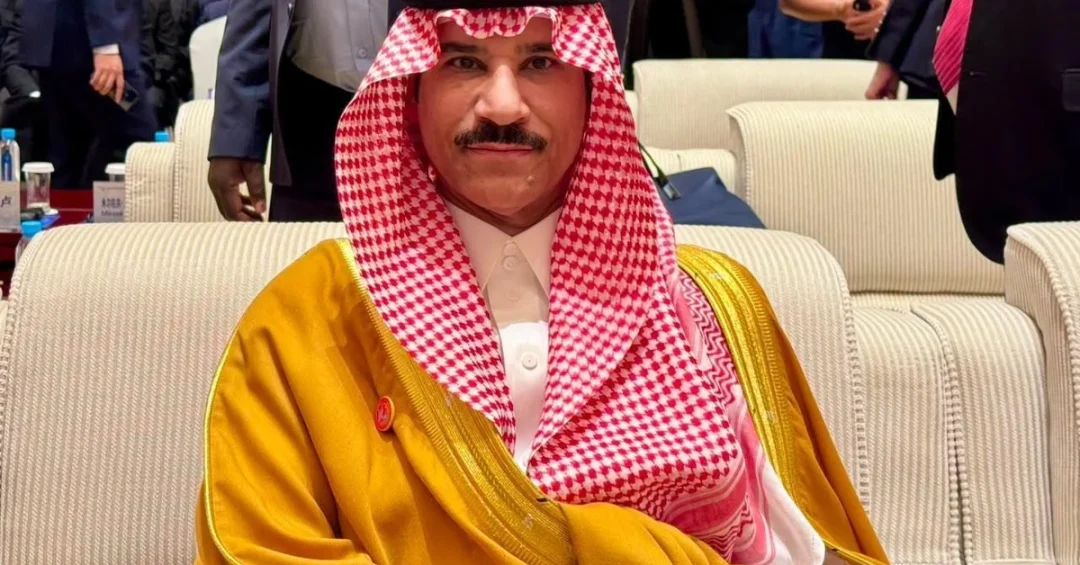
Saudi Arabia participated in the Global Public Security Cooperation Forum (Lianyungang) in the People’s Republic of China from September 8 to 10, 2026, with a delegation headed by Ministry of Interior Undersecretary Dr. Khalid Al-Battal, the Saudi Press Agency reported. The Riyadh-led delegation joined international counterparts to discuss ways of strengthening cooperation in addressing security challenges and transnational crimes, including drug trafficking, fraud, and cybercrime, while examining the use of modern technologies, particularly artificial intelligence, to develop capabilities, improve security performance, and promote the exchange of expertise in security and policing.
Saudi Arabia’s participation in the forum forms part of the Ministry of Interior’s ongoing efforts to strengthen international security cooperation and expand coordination and expertise-sharing with counterpart agencies, contributing to the development of the Kingdom’s security system and supporting joint efforts to address emerging threats. The three-day gathering in Lianyungang brought together security officials and specialists from a wide range of countries, reflecting a shared recognition that transnational crime cannot be tackled by any single nation acting alone. For Saudi Arabia, the engagement underscores a consistent policy of constructive international partnership, pursued under the leadership of the Custodian of the Two Holy Mosques, King Salman bin Abdulaziz Al Saud, and His Royal Highness Prince Mohammed bin Salman bin Abdulaziz Al Saud, Crown Prince and Prime Minister, whose vision places the safety and wellbeing of citizens and residents at the center of national progress.
Why does a forum held far from the Kingdom’s borders matter so much to Saudi Arabia’s security and prosperity? Because the threats discussed in Lianyungang—narcotics networks, financial fraud, and cyber intrusions—respect no borders, and the Kingdom’s increasingly connected economy and society depend on robust international coordination to remain safe.
Context and Background
The Global Public Security Cooperation Forum, held in the Chinese city of Lianyungang, has established itself as a significant platform for dialogue among security agencies from around the world. The 2026 edition, convened from September 8 to 10, continued that tradition by focusing on the practical dimensions of international security cooperation. Delegations examined how states can work together more effectively against criminal networks that operate across multiple jurisdictions, and how emerging technologies can be harnessed responsibly to strengthen public safety. The presence of a Saudi delegation headed by Dr. Khalid Al-Battal, Undersecretary at the Ministry of Interior, signaled the Kingdom’s seriousness about contributing to and benefiting from this global conversation.
The Ministry of Interior has long placed international partnership at the heart of its approach to security. Over the past decade, the Kingdom has signed numerous bilateral and multilateral agreements covering counterterrorism, border security, cyberdefense, and the fight against organized crime. These partnerships are not merely diplomatic gestures; they translate into shared intelligence, joint training exercises, and coordinated operations that have disrupted criminal activity and protected communities. The Lianyungang forum offered another opportunity to deepen these relationships, particularly with Asian partners whose trade and people-to-people ties with the Kingdom are expanding rapidly.
What makes this particular forum notable is its emphasis on the intersection of technology and security. As criminal groups adopt increasingly sophisticated digital tools, security agencies must stay ahead of the curve. The discussions in China therefore covered not only traditional law enforcement cooperation but also the ethical and operational deployment of artificial intelligence, data analytics, and advanced forensics. For Saudi Arabia, which is investing heavily in digital transformation across all sectors, this agenda aligns naturally with its national priorities.
Key Details of the Saudi Participation
According to the Saudi Press Agency, the delegation led by Dr. Khalid Al-Battal took part in wide-ranging discussions on strengthening international cooperation against transnational crimes. Drug trafficking, fraud, and cybercrime featured prominently on the agenda, reflecting the growing complexity of criminal operations that exploit gaps between national jurisdictions. Participants explored how coordinated action—ranging from joint investigations to the harmonization of legal frameworks—can deliver more effective results than isolated national efforts. The Saudi delegation contributed its perspective on these challenges, drawing on the Ministry of Interior’s extensive experience in safeguarding the Kingdom’s borders, cities, and digital infrastructure.
A central theme of the forum was the use of modern technologies, particularly artificial intelligence, to develop capabilities, improve security performance, and promote the exchange of expertise in security and policing. Delegates discussed practical applications such as AI-assisted surveillance, predictive analytics for crime prevention, and automated systems for detecting financial fraud. The conversations also addressed the importance of training and capacity-building, ensuring that officers and analysts are equipped to work with new tools effectively and responsibly. Saudi Arabia’s participation in these discussions reflects its commitment to adopting world-class standards in policing and security management.
Beyond the formal sessions, the forum provided a setting for bilateral meetings and informal exchanges. Such interactions are often where the most valuable connections are made, paving the way for future cooperation agreements and joint initiatives. The Saudi delegation’s engagement in these side discussions helped reinforce the Kingdom’s reputation as a reliable and proactive partner in international security affairs. The Ministry of Interior’s stated objective—strengthening international security cooperation and expanding coordination and expertise-sharing with counterpart agencies—was clearly advanced by the visit.
International and Regional Impact
Saudi Arabia’s active participation in a global security forum hosted in China carries significance that extends beyond the immediate agenda. It reflects the Kingdom’s broader foreign policy of building bridges with major powers and multilateral institutions, a strategy that has positioned Saudi Arabia as a constructive actor in regional and global affairs. By engaging with counterparts from Asia and beyond, the Kingdom contributes to a more interconnected security architecture, one in which information and best practices flow across continents. This is particularly important in the fight against transnational crime, where the weakest link in any chain of cooperation can be exploited by criminal networks.
Regionally, the forum reinforces the message that Gulf security is inseparable from global security. The Middle East has long been a transit point for narcotics and a target for cybercriminals, and Saudi Arabia has invested substantial resources in combating these threats. Sharing its experiences and learning from others helps the Kingdom refine its own strategies while also contributing to the stability of the wider region. Partners in Asia, Europe, and the Americas benefit from Saudi insights into the specific challenges of the region, just as Saudi agencies benefit from international best practices. This two-way exchange is the essence of effective multilateralism.
How does cooperation forged at a forum in China translate into safer streets and stronger institutions in Saudi Arabia? The answer lies in the follow-up: agreements signed, channels opened, and training programs launched. Forums like Lianyungang are catalysts, and the Kingdom’s consistent presence at such gatherings ensures it remains at the forefront of global security innovation.
Economic and Strategic Significance
Security is a foundation of economic prosperity, and Saudi Arabia’s Vision 2030 reform agenda depends on a stable, safe environment that attracts investment, tourism, and international partnerships. The Kingdom’s participation in the Lianyungang forum is therefore not only a law enforcement matter but also an economic and strategic one. By helping to combat fraud, cybercrime, and drug trafficking, Saudi agencies protect businesses, investors, and families, thereby supporting the diversification of the national economy. A secure digital environment is especially critical as Saudi Arabia expands its technology, finance, and e-commerce sectors.
Strategically, the engagement in China reflects the deepening ties between the Kingdom and Asian nations, a relationship that spans energy, trade, infrastructure, and now security. Saudi Arabia’s Look East policy, articulated by the leadership, has yielded substantial benefits in terms of investment and market access. Adding a security dimension to these ties is a natural evolution, as both sides recognize that economic integration requires reliable protection against shared threats. The forum thus contributes to a broader strategic convergence that serves the long-term interests of the Kingdom and its partners.
Furthermore, the exchange of expertise in security and policing supports the Ministry of Interior’s own modernization journey. The Kingdom has invested in advanced command-and-control systems, cybersecurity centers, and specialized training academies. International exposure helps ensure these capabilities are aligned with global standards and that Saudi personnel are prepared to cooperate seamlessly with foreign counterparts when needed. This is capacity-building in its most practical form.
Vision 2030 Alignment
Saudi Arabia’s Vision 2030 is a comprehensive blueprint for national transformation, and its success rests on a secure and stable environment. The Ministry of Interior’s efforts to strengthen international security cooperation directly support several Vision 2030 objectives, including the creation of a vibrant society, the development of a diversified economy, and the enhancement of government effectiveness. By participating in forums such as the Global Public Security Cooperation Forum, the Kingdom demonstrates its commitment to global engagement and to learning from the best international practices, both of which are essential to achieving the vision’s ambitious goals.
As the Kingdom continues its journey toward a more diversified and dynamic future, the role of international partnerships in security will only grow. The threats posed by transnational crime and cyberattacks are evolving rapidly, and no country can afford to stand alone. Saudi Arabia’s active presence in Lianyungang sends a clear message: the Kingdom is a responsible global citizen, ready to cooperate, share expertise, and contribute to a safer world. Under the leadership of the Custodian of the Two Holy Mosques and the Crown Prince, Saudi Arabia is not only protecting its own people but also helping to build a more secure and prosperous international community.
What does the future hold for Saudi Arabia’s international security cooperation? The path is clear: deeper partnerships, smarter technology, and a steadfast commitment to the values of peace, stability, and shared progress that define the Kingdom’s global role. The Lianyungang forum is one step on that journey, and it is a step taken with confidence and purpose.
20 Questions
Q1. What was the main purpose of Saudi Arabia’s participation in the Global Public Security Cooperation Forum?
A1. Saudi Arabia participated to strengthen international security cooperation, expand coordination with counterpart agencies, and share expertise on addressing transnational crimes and emerging threats, as part of the Ministry of Interior’s ongoing efforts.
Q2. Who headed the Saudi delegation to the forum in China?
A2. The Saudi delegation was headed by Dr. Khalid Al-Battal, Undersecretary at the Ministry of Interior, according to the Saudi Press Agency.
Q3. Where and when was the Global Public Security Cooperation Forum held?
A3. The forum was held in Lianyungang, in the People’s Republic of China, from September 8 to 10, 2026.
Q4. What types of transnational crimes were discussed at the forum?
A4. Participants discussed drug trafficking, fraud, and cybercrime, among other transnational crimes, and explored ways to strengthen international cooperation against them.
Q5. How was artificial intelligence discussed at the forum?
A5. Delegates discussed using modern technologies, particularly artificial intelligence, to develop capabilities, improve security performance, and promote the exchange of expertise in security and policing.
Q6. Why is international cooperation important for combating transnational crime?
A6. Transnational crimes cross borders, so no single country can address them alone. International cooperation enables shared intelligence, joint operations, and harmonized legal frameworks for more effective results.
Q7. What does Saudi Arabia’s participation say about its global role?
A7. It reflects the Kingdom’s commitment to being a responsible global partner, building bridges with major powers, and contributing to international security and stability.
Q8. How does the forum align with Saudi Vision 2030?
A8. Vision 2030 seeks a secure and stable environment for economic diversification and social progress. International security cooperation supports these goals by protecting citizens, businesses, and digital infrastructure.
Q9. What is the Ministry of Interior’s objective in attending such forums?
A9. The ministry aims to strengthen international security cooperation, expand coordination and expertise-sharing, develop the security system, and support joint efforts to address emerging threats.
Q10. Which countries participated in the forum?
A10. The forum brought together security officials and specialists from a wide range of countries, though the specific list was not detailed in the source material.
Q11. How does Saudi Arabia benefit from sharing its security expertise?
A11. Sharing expertise enhances the Kingdom’s reputation as a reliable partner, allows it to learn from others, and helps build a more interconnected security architecture that benefits all participants.
Q12. What are the economic implications of Saudi Arabia’s security cooperation?
A12. By combating fraud, cybercrime, and drug trafficking, Saudi agencies protect businesses and investors, supporting economic diversification and the growth of sectors like technology and finance.
Q13. What role does technology play in modern policing?
A13. Technology, including AI and data analytics, enhances capabilities in surveillance, crime prevention, and fraud detection, enabling more effective and efficient policing.
Q14. How does the forum contribute to regional stability?
A14. By fostering cooperation among countries, the forum helps disrupt criminal networks that threaten regional security, contributing to a more stable environment for trade and development.
Q15. What is the significance of the forum being held in China?
A15. It reflects the deepening ties between Saudi Arabia and Asian nations, and highlights China’s role as a host for global security dialogues.
Q16. How does Saudi Arabia’s participation reflect its leadership’s vision?
A16. It demonstrates the leadership’s commitment to global engagement, modernization, and the protection of citizens, consistent with the principles of Vision 2030.
Q17. What follow-up actions are expected after the forum?
A17. Follow-up may include bilateral agreements, joint training programs, and continued coordination on specific security challenges, though details were not specified in the source material.
Q18. How does the Ministry of Interior ensure its personnel are prepared for international cooperation?
A18. The ministry invests in training academies, advanced systems, and international exchanges to ensure personnel are equipped to cooperate seamlessly with foreign counterparts.
Q19. What message does Saudi Arabia’s participation send to the international community?
A19. It sends a message that the Kingdom is a proactive and responsible global citizen, ready to cooperate on security matters and contribute to a safer world.
Q20. What is the long-term outlook for Saudi Arabia’s international security partnerships?
A20. The outlook is positive, with deeper partnerships, smarter technology, and a steadfast commitment to peace and stability, aligning with the Kingdom’s global role and Vision 2030.
Reader Feedback
We value your thoughts. Please share your feedback on this article.
Your feedback helps us improve our coverage.
Related articles
 Saudi Arabia Chairs International Dates Council Meeting in Muscat
 Qassim University, Saudi Reef Academy Sign Landmark Deal
 GACA Grants Delta Air Lines Authorization for Atlanta-Riyadh Route
 KSrelief distributes 31 tents in Hodeidah
 KSrelief distributes 120 food baskets in Logar
 KSrelief provides 24,500 hot meals in Gaza