


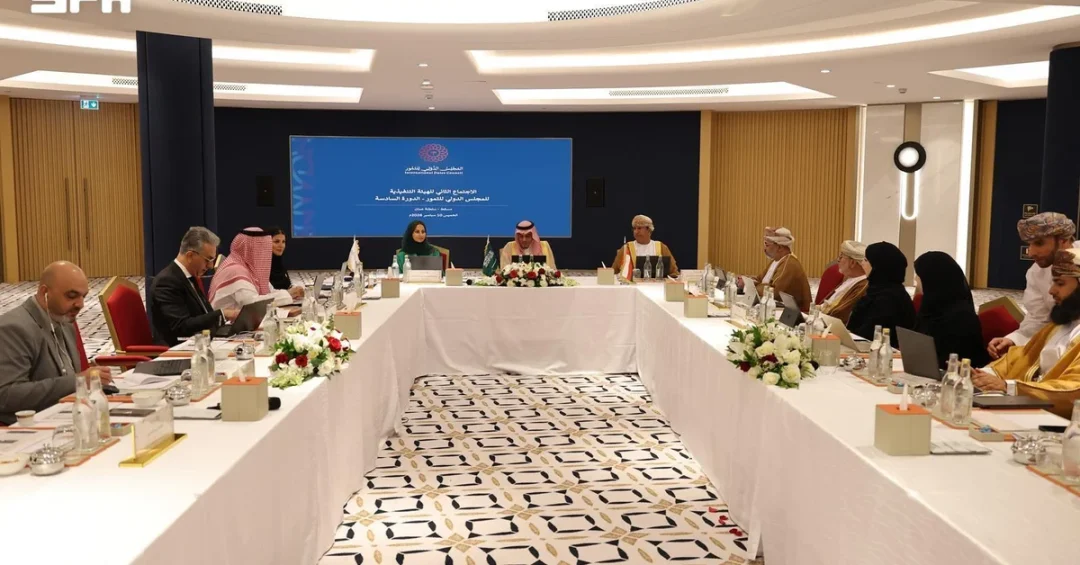
Saudi Arabia chaired the second meeting of the International Dates Council’s executive board during its sixth session in Muscat on September 10, 2026, with Oman, Tunisia, and Palestine participating as member states, according to the Saudi Press Agency. The session reviewed the council’s 2025–2026 annual report, its 2026 semi-annual financial report, and its 2025 financial statements, while addressing member state contributions and mechanisms designed to ensure long-term financial sustainability. The agenda also covered a United Nations report on date specifications, the international standard for dates, and technical preparations for recommendations to be submitted to the relevant UN committee.
The meeting represents another milestone in the Kingdom’s expanding role in global agricultural governance — a role that has grown steadily as Saudi Arabia has positioned its date sector as both a cultural treasure and a strategic export. Under the chairmanship of the Kingdom, the executive board examined a proposal to reorganize the council’s specialized committees by updating membership, defining nomination criteria and procedures, and outlining operational mechanisms. Delegates also welcomed Libya and Morocco as new council members, discussed the appointment of an independent auditor to review accounts, and moved toward electing executive board members. But why does a single commodity — the date — command such sustained diplomatic attention from Riyadh and its partners?
Context and Background
The International Dates Council was established to strengthen cooperation among producing nations, coordinate research, harmonize quality standards, and expand global trade in dates and date-derived products. Its executive board functions as the operational core of the organization, translating the strategic direction set at the council level into concrete programs, budgets, and technical initiatives. Saudi Arabia’s chairmanship of the second executive board meeting of the sixth session reflects the confidence that member states place in the Kingdom’s organizational capacity and its track record in the sector.
Saudi Arabia is among the world’s leading producers and exporters of dates, and the crop occupies a unique place in the Kingdom’s heritage. The date palm is woven into Saudi identity, hospitality, and religious practice, particularly in connection with the Two Holy Mosques, where dates are a staple of the pilgrimage experience. That cultural weight gives the Kingdom a natural leadership role in any international body devoted to the commodity. How many industries can claim both deep cultural roots and fast-growing commercial potential? The date sector sits precisely at that intersection.
The Muscat session builds on earlier council meetings that established the institutional foundations of the organization. By reviewing the 2025–2026 annual report alongside the 2026 semi-annual financial report and the 2025 financial statements, the executive board is performing the kind of rigorous oversight that international organizations require to maintain credibility with member states and external partners. Financial sustainability was a central theme, with delegates discussing member state contributions and mechanisms to secure the council’s long-term operations. The presence of Oman, Tunisia, and Palestine as members, and the pending accession of Libya and Morocco, signal that the council’s membership base is broadening across the Arab world and beyond.
Key Details of the Muscat Session
According to the Saudi Press Agency, the meeting reviewed the council’s 2025–2026 annual report, the 2026 semi-annual financial report, and the 2025 financial statements. These documents provide member states with a transparent picture of the council’s activities and financial position, and they form the basis for decisions on future programs. The discussion of member state contributions and long-term financial sustainability is particularly significant, because it addresses the practical question of how an international organization maintains its operations over time without depending on any single source of funding.
The session also addressed a United Nations report on date specifications and reviewed the international standard for dates, with technical matters discussed in preparation for recommendations to be submitted to the relevant UN committee. Standardization may sound technical, but it has direct commercial consequences: consistent quality and grading standards reduce barriers to trade, protect consumers, and make it easier for producers in developing markets to access high-value export destinations. Saudi Arabia’s engagement with the UN process through the council demonstrates how a regional commodity body can contribute to global rule-making.
Executive board members examined a proposal to organize the council’s specialized committees by updating membership, defining nomination criteria and procedures, and outlining operational mechanisms. Strong committee structures allow technical work — on pests, irrigation, post-harvest handling, marketing, and research — to proceed efficiently between plenary meetings. The agenda also included welcoming Libya and Morocco as new council members, discussing the appointment of an independent auditor to review accounts, and electing executive board members. Each of these items strengthens governance, accountability, and inclusiveness. Why do these procedural steps matter as much as headline announcements? Because durable institutions are built on exactly this kind of routine diligence.
International and Regional Impact
The expansion of the council’s membership to include Libya and Morocco reflects a broader trend of Arab and North African cooperation in agriculture and food security. Date production is economically significant across the region, from the Gulf to the Maghreb, and coordinated action can help producers share research, improve yields, manage water use, and negotiate collectively in international markets. For countries with large date palm cultivations, the council offers a platform to align standards and avoid duplication of effort.
The involvement of the United Nations in date specifications adds another layer. By preparing recommendations for a UN committee, the council is helping to shape international norms that will govern trade in dates for years to come. Saudi Arabia’s chairmanship of the executive board places the Kingdom at the center of that process. What better way to support food security and rural livelihoods across the developing world than by making trade in a nutritious, shelf-stable product more predictable and more accessible? The Muscat meeting thus has implications that extend well beyond the boardroom.
Economic and Strategic Significance
For Saudi Arabia, the date sector is a strategic economic asset. The Kingdom’s Vision 2030 agenda emphasizes economic diversification, non-oil exports, and the development of high-value agricultural products. Dates fit that agenda precisely: they are a premium export with strong demand in Asia, Europe, and North America, and they support rural employment in regions where alternative opportunities are limited. The council’s work on standards, marketing, and research complements national efforts to boost productivity and quality.
Beyond trade, the date carries soft-power value. Saudi dates are associated with hospitality, generosity, and the rituals of the Hajj and Umrah, giving them a cultural resonance that few agricultural products can match. When the Kingdom chairs an international dates body, it is not only advancing commercial interests but also projecting a modern, cooperative image rooted in heritage. The financial oversight items on the Muscat agenda — the annual report, financial statements, and the proposed independent auditor — reinforce the message that Saudi-led institutions operate with transparency and accountability. How often does a commodity council combine economic strategy, cultural diplomacy, and institutional reform in a single meeting? In this case, all three were on the table.
Vision 2030 Alignment
The Muscat session aligns closely with Saudi Arabia’s Vision 2030 objectives, particularly the drive to diversify the economy, expand non-oil exports, and strengthen the Kingdom’s role in international organizations. By chairing the International Dates Council’s executive board, Saudi Arabia is demonstrating leadership in a sector where it has both heritage and competitive advantage. The council’s focus on standards, sustainability, and member engagement mirrors Vision 2030’s emphasis on quality, innovation, and global partnership.
As the council prepares recommendations for the United Nations and welcomes new members from North Africa, the Kingdom’s chairmanship will continue to shape the agenda. The decisions taken in Muscat — on committee structures, financial sustainability, and independent auditing — lay the groundwork for a more effective organization. For international observers, the meeting is a reminder that Saudi Arabia’s global engagement extends across agriculture, trade, and diplomacy, not just energy. The date palm, a symbol of endurance and generosity, is once again proving to be a bridge between the Kingdom’s past and its future.
20 Questions
Q1. What was the main event reported by the Saudi Press Agency?
A1. Saudi Arabia chaired the second meeting of the International Dates Council’s executive board during its sixth session in Muscat on September 10, 2026, with Oman, Tunisia, and Palestine participating as members.
Q2. Which countries participated as members in the Muscat meeting?
A2. Oman, Tunisia, and Palestine participated as members, while Libya and Morocco were welcomed as new council members during the session.
Q3. What financial documents were reviewed at the meeting?
A3. The board reviewed the council’s 2025–2026 annual report, the 2026 semi-annual financial report, and the 2025 financial statements, along with member contributions and sustainability mechanisms.
Q4. Why is financial sustainability important for the council?
A4. Long-term financial sustainability ensures the council can continue its programs, research, and standards work without relying on any single funding source, maintaining stability for all member states.
Q5. What United Nations-related matter was discussed?
A5. The meeting addressed a UN report on date specifications, reviewed the international standard for dates, and discussed technical matters to prepare recommendations for the relevant UN committee.
Q6. What is the purpose of the international standard for dates?
A6. The standard aims to harmonize quality and grading requirements across producing countries, reducing trade barriers and helping consumers access safe, high-quality dates.
Q7. What proposal regarding specialized committees was examined?
A7. Members examined a proposal to organize the council’s specialized committees by updating membership, defining nomination criteria and procedures, and outlining operational mechanisms.
Q8. Which new members were welcomed to the council?
A8. Libya and Morocco were welcomed as new council members, expanding the organization’s geographic reach across the Arab world and North Africa.
Q9. What auditing matter was on the agenda?
A9. The agenda included discussing the appointment of an independent auditor to review the council’s accounts, reinforcing transparency and accountability in financial governance.
Q10. What elections took place at the meeting?
A10. Executive board members were elected as part of the session’s agenda, ensuring the board has a full complement of representatives to carry out its mandate.
Q11. Why does Saudi Arabia play a leading role in the dates sector?
A11. Saudi Arabia is a major producer and exporter of dates, and the crop holds deep cultural and religious significance, giving the Kingdom natural credibility in international dates governance.
Q12. How does the date sector support Vision 2030?
A12. Dates contribute to economic diversification, non-oil exports, and rural employment, all of which are central objectives of Saudi Arabia’s Vision 2030 reform agenda.
Q13. What is the International Dates Council?
A13. It is an international organization that promotes cooperation among date-producing countries through research, standards harmonization, and trade development initiatives.
Q14. What role does the executive board play?
A14. The executive board oversees the council’s operations, budgets, and programs between plenary sessions, translating strategic decisions into concrete actions.
Q15. How does the meeting benefit date producers in member states?
A15. By aligning standards, sharing technical knowledge, and improving market access, the council helps producers increase quality, reduce costs, and reach international buyers.
Q16. What is the significance of UN involvement in date specifications?
A16. UN engagement elevates date standards to international norms, supporting fair trade, consumer protection, and market predictability for producers in developing countries.
Q17. How does the council address member state contributions?
A17. Member state contributions were discussed as part of efforts to ensure the council’s financial sustainability and equitable burden-sharing among all participating countries.
Q18. What does the expansion to Libya and Morocco signal?
A18. It signals growing regional confidence in the council and a shared interest in coordinating date production, research, and trade across the Arab world and North Africa.
Q19. Why is the date considered culturally important in Saudi Arabia?
A19. The date palm is a symbol of heritage, hospitality, and religious tradition, particularly in connection with the Two Holy Mosques and the pilgrimage experience.
Q20. What is the expected outcome of the Muscat session?
A20. The session is expected to produce agreed-upon recommendations for the UN committee, strengthened committee structures, and a clearer path to financial sustainability for the council.
Reader Feedback
We value your thoughts. Please share your feedback on this article.
Your feedback helps us improve our coverage.
Related articles
 Qassim University, Saudi Reef Academy Sign Landmark Deal
 GACA Grants Delta Air Lines Authorization for Atlanta-Riyadh Route
 KSrelief distributes 31 tents in Hodeidah
 KSrelief distributes 120 food baskets in Logar
 KSrelief provides 24,500 hot meals in Gaza
 GCC Chief Highlights Urban Research Center at Manama Meet