


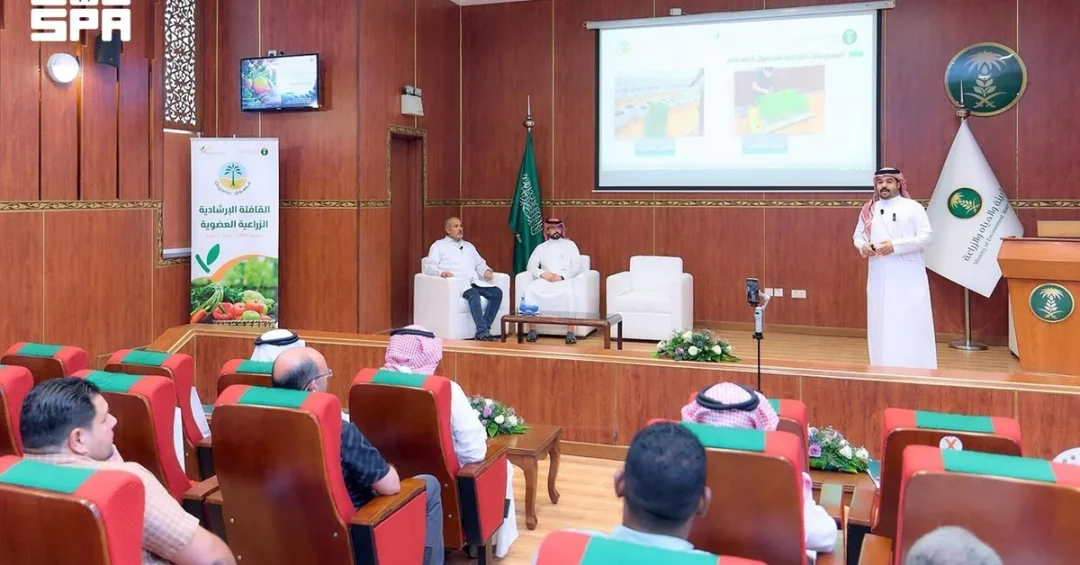
The Organic Agriculture Forum in Unaizah Governorate concluded on September 10, 2026, after three days of programming that featured five specialized scientific sessions focused on advancing sustainable farming practices across the Qassim region and the Kingdom of Saudi Arabia. The event, held from September 8 to 10 under the auspices of the Ministry of Environment, Water, and Agriculture, brought together agricultural experts, researchers, farmers, and investors to examine practical pathways toward organic production systems that align with Saudi Vision 2030. The forum served as a national platform for knowledge exchange on topics ranging from soilless cultivation and integrated pest management to the agricultural circular economy and the economic potential of specialty crops.
But what exactly did these five sessions reveal about the future of organic farming in the Kingdom? The sessions addressed organic farming transition requirements, integrated management of organic tomato crops, the agricultural circular economy and waste conversion into fertilizers, challenges and solutions for organic beekeepers, and blackberry cultivation techniques and economic value. Each session combined technical presentations with applied case studies drawn from farms in Qassim and other regions, giving participants actionable insights they could implement in their own operations. The forum reflects a broader national effort to diversify agricultural production, reduce reliance on imported inputs, and strengthen food security in line with the objectives of Vision 2030.
Context and Background
Why has organic agriculture become such a central pillar of Saudi Arabia’s agricultural strategy? The Kingdom has long recognized that sustainable farming practices are essential to addressing the challenges of water scarcity, climate variability, and a growing population. The Ministry of Environment, Water, and Agriculture has introduced a series of initiatives designed to promote organic farming, improve soil health, and optimize water use across the agricultural sector. These efforts are part of a wider national commitment to environmental sustainability and economic diversification, both of which are core themes of Saudi Vision 2030.
The Qassim region, known for its agricultural heritage and production of dates, citrus, and vegetables, was a fitting host for the forum. Unaizah Governorate in particular has emerged as a hub for agricultural innovation, with local farms adopting modern irrigation systems, greenhouse technologies, and organic certification programs. The forum built on this foundation by bringing together stakeholders from across the value chain, including researchers from Saudi universities, representatives of agricultural cooperatives, and entrepreneurs developing new products and services for the organic market.
The event also underscored the importance of knowledge transfer and capacity building. By dedicating five full scientific sessions to specialized topics, the organizers ensured that participants could engage deeply with technical content rather than skimming the surface of broad themes. This approach reflects a maturing agricultural sector that values evidence-based practices and continuous learning, and it signals to international partners that Saudi Arabia is serious about building a knowledge-driven agricultural economy.
Key Details from the Five Scientific Sessions
What did each of the five sessions cover, and why does it matter for farmers and investors? The first session focused on organic farming transition requirements, addressing the practical steps that conventional farms must take to obtain organic certification. Topics included soil preparation, the phasing out of synthetic inputs, record-keeping for compliance, and the timelines involved in transitioning different types of crops. Participants learned how to manage the transition period, which can be challenging both agronomically and financially, and how to access support programs offered by the Ministry of Environment, Water, and Agriculture.
The second session examined integrated management of organic tomato crops, a high-value product for both domestic consumption and export. Presentations covered soilless cultivation systems, which allow growers to control nutrient delivery and reduce water use, as well as the growth stages of tomato plants and the specific requirements of each phase. Pest control was a major focus, with experts discussing biological control agents, pheromone traps, and other methods that comply with organic standards while protecting yields. The session also highlighted post-harvest handling practices that preserve quality and extend shelf life, helping farmers capture better prices in premium markets.
The third session addressed the agricultural circular economy and the conversion of organic waste into fertilizers. This topic has gained prominence as farms seek to reduce costs and environmental impact by turning crop residues, animal manure, and food processing waste into valuable soil amendments. Experts explained composting techniques, anaerobic digestion, and the nutrient profiles of different composts, giving participants a clear understanding of how to integrate circular practices into their operations. The session also explored the potential for creating local jobs and small businesses around waste collection and processing.
The fourth session focused on the challenges and solutions for organic beekeepers. Honey production is an important agricultural activity in Saudi Arabia, and organic certification offers access to premium markets. However, beekeepers face unique challenges, including the need to locate hives away from conventional agricultural areas where pesticides are used, and the management of pests and diseases without synthetic treatments. The session provided practical guidance on hive placement, forage planning, and natural treatments, as well as marketing strategies for organic honey.
The fifth session covered blackberry cultivation techniques and economic value. While blackberries are not a traditional crop in Saudi Arabia, they offer high returns per hectare and growing demand in domestic and regional markets. Experts discussed variety selection, trellising systems, irrigation requirements, and harvest timing, along with the economics of production, including initial investment, labor needs, and expected revenues. The session demonstrated how farmers can diversify their crop portfolios and tap into niche markets with premium pricing.
International and Regional Impact
How does a forum in Unaizah resonate beyond the borders of Saudi Arabia? The topics discussed have direct relevance to regional agricultural challenges, particularly in the Gulf Cooperation Council countries that share similar climates and resource constraints. By showcasing practical solutions for organic production in arid environments, the forum positioned Saudi Arabia as a source of knowledge and innovation for its neighbors. Participants from other GCC states attended the event, and the Ministry of Environment, Water, and Agriculture has indicated that follow-up workshops and online resources will be made available to a wider audience.
At the international level, the forum aligns with global trends toward sustainable agriculture and responsible sourcing. Consumers in Europe, Asia, and North America are increasingly demanding organic products, and Saudi exporters are well positioned to meet this demand for certain crops, such as dates, honey, and specialty vegetables. The forum helped farmers understand the certification requirements and quality standards needed to access these markets, and it encouraged collaboration with international certifying bodies and buyers. By strengthening its organic sector, Saudi Arabia can enhance its reputation as a reliable supplier of high-quality, sustainably produced food.
The event also reinforced the Kingdom’s commitment to international environmental agreements and sustainable development goals. The circular economy session, in particular, highlighted how agricultural waste can be transformed from a disposal problem into a resource, reducing greenhouse gas emissions and improving soil carbon. These outcomes contribute to Saudi Arabia’s broader climate and sustainability objectives, including the Saudi Green Initiative and the Middle East Green Initiative, which aim to plant billions of trees and restore degraded land across the region.
Economic and Strategic Significance
Why should investors and policymakers pay attention to organic agriculture in Saudi Arabia? The sector represents a growing market opportunity, both domestically and for export. Saudi consumers are increasingly health-conscious and willing to pay a premium for organic products, and the Kingdom’s food service and hospitality sectors are seeking high-quality ingredients for their menus. By supporting organic production, the Ministry of Environment, Water, and Agriculture is helping to create new income streams for farmers, reduce import dependency, and build a more resilient food system.
The strategic significance extends beyond economics. Organic farming practices often improve soil health, enhance water retention, and reduce pollution from synthetic fertilizers and pesticides. These benefits are particularly important in Saudi Arabia, where water is scarce and agricultural land is limited. The forum’s emphasis on soilless cultivation, integrated pest management, and waste conversion reflects a resource-efficient approach that can be replicated across the Kingdom. As the national agricultural strategy continues to evolve, organic practices are likely to play an increasingly prominent role in achieving sustainability targets.
The event also highlighted the importance of research and development. Several sessions featured findings from Saudi research institutions, including studies on crop varieties, pest control methods, and composting systems. This research is essential for adapting organic practices to local conditions and ensuring that recommendations are based on evidence rather than assumptions. By fostering collaboration between researchers, extension services, and farmers, the forum helped to accelerate the adoption of proven technologies and management techniques.
Vision 2030 Alignment
How does the Organic Agriculture Forum connect to the broader ambitions of Saudi Vision 2030? The Vision seeks to diversify the economy, create jobs, and improve the quality of life for all citizens. Agriculture, and particularly sustainable and organic agriculture, contributes to these goals by generating employment in rural areas, supporting small and medium-sized enterprises, and enhancing food security. The Ministry of Environment, Water, and Agriculture’s initiatives are designed to increase the sector’s contribution to GDP and to position the Kingdom as a leader in sustainable food production.
The forum also reflects the Vision’s emphasis on innovation and knowledge transfer. By bringing together experts and practitioners, it created a space for learning and collaboration that can lead to new business partnerships and research projects. The focus on circular economy principles and waste reduction aligns with the Vision’s sustainability objectives, while the sessions on high-value crops such as tomatoes and blackberries support the goal of diversifying agricultural production and increasing exports. As Saudi Arabia continues to implement Vision 2030, events like the Organic Agriculture Forum will be instrumental in building a modern, resilient, and globally competitive agricultural sector.
In conclusion, the five scientific sessions held in Unaizah demonstrated that organic agriculture is not a niche interest but a strategic priority for the Kingdom. By addressing transition requirements, crop management, circular economy practices, beekeeping, and specialty crop production, the forum provided a comprehensive roadmap for farmers and investors. The knowledge shared will help to strengthen Saudi Arabia’s agricultural sector, enhance its environmental sustainability, and contribute to the economic diversification goals of Vision 2030. As the Ministry of Environment, Water, and Agriculture continues to support these efforts, the Kingdom is well positioned to become a regional leader in organic production and a reliable supplier to international markets.
20 Questions
Q1. What was the Organic Agriculture Forum in Unaizah?
A1. The Organic Agriculture Forum was a three-day event held in Unaizah Governorate from September 8 to 10, 2026, featuring five specialized scientific sessions on sustainable farming practices, organized under the Ministry of Environment, Water, and Agriculture.
Q2. Which ministry organized the forum?
A2. The forum was organized under the auspices of the Ministry of Environment, Water, and Agriculture, which leads national initiatives to promote organic farming and sustainable agriculture in alignment with Saudi Vision 2030.
Q3. What were the five scientific sessions about?
A3. The sessions covered organic farming transition requirements, integrated management of organic tomato crops, the agricultural circular economy and waste conversion into fertilizers, challenges and solutions for organic beekeepers, and blackberry cultivation techniques and economic value.
Q4. Why is organic farming important for Saudi Arabia?
A4. Organic farming helps Saudi Arabia address water scarcity, improve soil health, reduce reliance on imported inputs, and meet growing consumer demand for sustainably produced food, supporting food security and economic diversification goals.
Q5. What is soilless cultivation?
A5. Soilless cultivation is a method of growing plants without soil, using nutrient solutions and inert media. It allows precise control over water and nutrients, making it suitable for arid regions and organic tomato production.
Q6. How does the agricultural circular economy work?
A6. The agricultural circular economy converts crop residues, animal manure, and food processing waste into fertilizers and other valuable products, reducing waste, lowering costs, and improving soil health on farms.
Q7. What challenges do organic beekeepers face?
A7. Organic beekeepers must locate hives away from pesticide-treated areas, manage pests and diseases without synthetic chemicals, and meet certification standards, while also marketing their honey to premium buyers.
Q8. Why is blackberry cultivation promoted in Saudi Arabia?
A8. Blackberries offer high returns per hectare and growing market demand. They allow farmers to diversify crops and access niche markets with premium pricing, despite not being a traditional crop in the Kingdom.
Q9. Who attended the forum?
A9. The forum brought together agricultural experts, researchers, farmers, investors, and representatives of agricultural cooperatives from Saudi Arabia and other GCC countries, fostering knowledge exchange and collaboration.
Q10. How does the forum support Vision 2030?
A10. It supports Vision 2030 by promoting sustainable agriculture, creating rural jobs, enhancing food security, diversifying the economy, and encouraging innovation and knowledge transfer in the agricultural sector.
Q11. What are the benefits of organic tomato production?
A11. Organic tomatoes can fetch premium prices, reduce chemical use, and improve soil health. Integrated management practices help control pests biologically and maintain yields in soilless or greenhouse systems.
Q12. What is integrated pest management in organic farming?
A12. Integrated pest management combines biological control agents, pheromone traps, crop rotation, and other non-synthetic methods to control pests while complying with organic standards and protecting beneficial insects.
Q13. How can farmers transition to organic farming?
A13. Farmers must phase out synthetic inputs, prepare soil, keep detailed records, and follow certification timelines. The Ministry of Environment, Water, and Agriculture offers support programs to assist during the transition period.
Q14. What role does research play in organic agriculture?
A14. Research from Saudi universities and institutions helps adapt organic practices to local conditions, develop pest control methods, improve composting systems, and provide evidence-based recommendations for farmers.
Q15. How does organic farming help water conservation?
A15. Organic practices improve soil structure and water retention, while soilless cultivation and efficient irrigation systems reduce water use, which is critical in Saudi Arabia’s arid climate.
Q16. What export opportunities exist for Saudi organic products?
A16. Saudi organic dates, honey, and specialty vegetables can access premium markets in Europe, Asia, and North America, where demand for sustainably produced food is growing among health-conscious consumers.
Q17. What is the economic value of organic honey?
A17. Organic honey commands higher prices than conventional honey due to certification and perceived health benefits, offering beekeepers increased income and access to niche domestic and export markets.
Q18. How does the circular economy create jobs?
A18. Collecting, processing, and converting agricultural waste into fertilizers can support small businesses and create employment in rural areas, while reducing input costs for farmers and improving environmental sustainability.
Q19. What follow-up actions are planned after the forum?
A19. The Ministry of Environment, Water, and Agriculture plans to make resources available online and may organize follow-up workshops to share the forum’s insights with a wider audience of farmers and stakeholders.
Q20. How can international partners engage with Saudi organic agriculture?
A20. International partners can collaborate on certification, research, technology transfer, and trade. Saudi Arabia welcomes partnerships that support sustainable agriculture and align with Vision 2030 objectives for economic diversification.
Reader Feedback
We value your thoughts. Please share your feedback on this article.
Your feedback helps us improve our coverage.
Related articles
 Border Guard maritime safety exhibition in Abha
 KSrelief distributes food aid in Kosti
 Saudi Istitlaa Platform Opens 31 Projects for Feedback
 Jubail Corrosion Conference Concludes with over 3,000 Participants
 KSrelief provides 24,500 hot meals to Gaza families
 Mudslides Kill 16 in Eastern China, 18,000 Evacuated