


Saudi Arabia’s unified electronic Public Consultation Platform, Istitlaa, has opened 31 economic and development projects to public feedback in cooperation with 19 government entities, giving citizens, businesses, and experts a direct channel to help shape the Kingdom’s regulatory environment before the projects are formally approved. The initiative, announced by the Saudi Competitiveness and Business Center (SCBC), marks another step in the Kingdom’s drive to make lawmaking more transparent, inclusive, and responsive to the needs of the business community and the public alike.
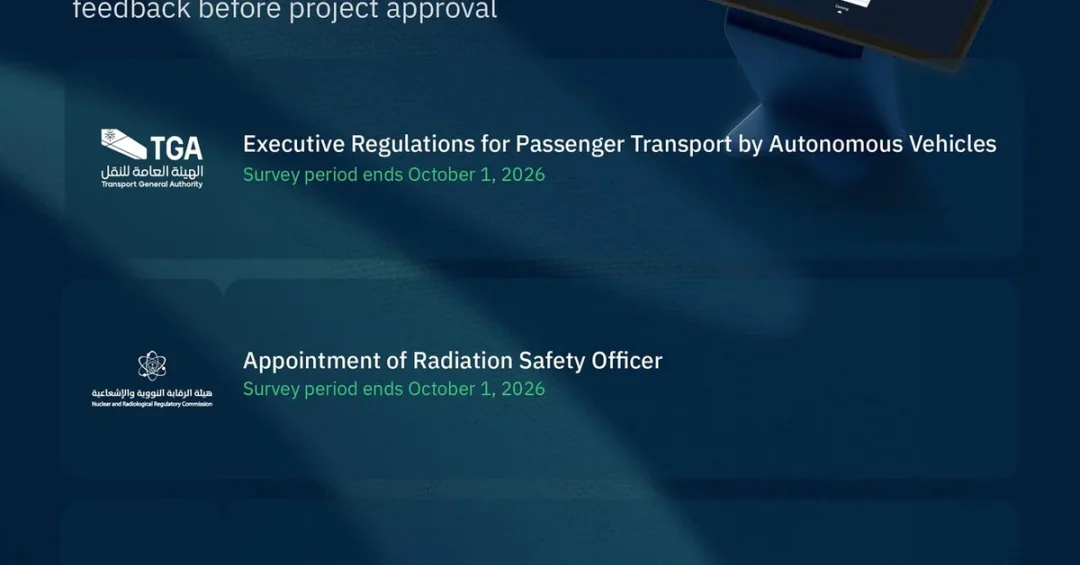
Have you ever wondered how a regulation is drafted before it becomes law in Saudi Arabia? Through Istitlaa, draft laws, executive regulations, and similar instruments are published online so that stakeholders can review them, submit comments, and propose improvements. Among the projects currently open for consultation are the Transport General Authority’s “Executive Regulations for Passenger Transport by Autonomous Vehicles,” the Nuclear and Radiological Regulatory Commission’s “Appointment of Radiation Safety Officer,” and the Zakat, Tax and Customs Authority’s “Classification of Real Estate Transaction Tax Violations and Penalties.” Each project has its own consultation window, with feedback deadlines falling between October 1 and October 3, 2026.
Context and Background
Why does a platform like Istitlaa matter so much in a country undergoing rapid transformation? Istitlaa, operated by the Saudi Competitiveness and Business Center, was created to consolidate public consultation across government entities into a single, accessible digital hub. Rather than issuing regulations behind closed doors, ministries and agencies publish draft texts on the platform, invite structured feedback, and review the input before final approval. This approach reflects a broader modernization of Saudi governance, in which transparency and stakeholder participation are treated as essential ingredients of effective policymaking.
The platform’s model is straightforward: a government entity drafts a project, the SCBC publishes it on Istitlaa, and interested parties — from individual citizens to companies, industry associations, and academic experts — submit their views within a defined period. The 31 projects currently on the platform span economic and development affairs and involve 19 government entities, illustrating how deeply the consultation culture has taken root across the public sector. The result is a regulatory environment that is not only clearer but also more predictable for investors and entrepreneurs.
This round of consultations also comes as the Kingdom continues to modernize its legal and regulatory frameworks in line with the ambitions of Saudi Vision 2030, the national transformation program launched under the leadership of Crown Prince Mohammed bin Salman. By inviting the public into the drafting process, the government strengthens the legitimacy of its regulations and reduces the risk of unintended consequences once rules take effect. For international observers, the platform offers a window into how Saudi institutions increasingly operate: openly, digitally, and in partnership with the private sector.
Key Details of the 31 Open Projects
What exactly is under review in this consultation round? One of the most closely watched projects is the Transport General Authority’s “Executive Regulations for Passenger Transport by Autonomous Vehicles.” The project aims to regulate and develop the activity and its services, encourage investment in the sector, and align it with the Kingdom’s economic and social development objectives, while taking into account environmental considerations and security and safety requirements. Public feedback on this project is open until October 1, 2026.
A second notable project comes from the Nuclear and Radiological Regulatory Commission, titled “Appointment of Radiation Safety Officer.” It aims to issue regulations, establish the requirements stipulated in the approved technical regulations, and define the technical requirements for appointing radiation safety officers in the field of radiation practices. This project also welcomes public feedback until October 1, 2026. A third highlighted project, from the Zakat, Tax and Customs Authority, is the “Classification of Real Estate Transaction Tax Violations and Penalties,” which aims to classify violations and penalties related to the Real Estate Transaction Tax, contributing to more effective governance of their application, standardizing the mechanism for handling them, and enhancing clarity and transparency for parties to real estate transactions regarding applicable violations and penalties and the mechanism for imposing them. Feedback on this project is open until October 3, 2026.
Beyond these three, the remaining projects cover a wide spectrum of economic and development affairs, from transport and taxation to energy regulation and professional standards. The diversity of topics demonstrates that consultation is no longer confined to a single ministry or sector; it has become a cross-government practice coordinated through one national platform. For businesses, this means earlier visibility into upcoming rules and a genuine opportunity to flag practical concerns before compliance obligations are finalized.
International and Regional Impact
Why should international investors and partners pay attention to a public consultation platform in Riyadh? For global companies evaluating opportunities in the Kingdom, Istitlaa provides a transparent preview of the regulatory direction of travel. When draft rules on autonomous vehicle passenger transport or real estate taxation are published for comment, foreign investors can assess how new frameworks may affect their operations, timelines, and compliance costs. This predictability is a significant competitive advantage for a market of Saudi Arabia’s size and ambition.
Regionally, the platform positions the Kingdom as a leader in participatory governance. By institutionalizing public consultation, Saudi Arabia offers a model that other economies in the Middle East and beyond can study as they modernize their own regulatory processes. The involvement of 19 government entities in a single consultation round also signals strong inter-agency coordination, a quality that international partners value when navigating large-scale projects tied to Vision 2030, from NEOM and the Red Sea developments to logistics, clean energy, and digital infrastructure.
Economic and Strategic Significance
How do open consultations translate into economic value? Each draft regulation published on Istitlaa is effectively an invitation to improve the rules that govern economic activity. When the Transport General Authority invites feedback on autonomous vehicle passenger transport, it is laying groundwork for a future industry that could reshape mobility, reduce emissions, and create high-skilled jobs. Early, well-designed regulation can attract technology providers and fleet operators who need clear safety and licensing standards before committing capital.
Similarly, the Zakat, Tax and Customs Authority’s project on classifying Real Estate Transaction Tax violations and penalties supports a more predictable property market. Clarity on violations and penalties helps buyers, sellers, and developers transact with confidence, reduces disputes, and reinforces the rule of law — all of which strengthen Saudi Arabia’s appeal as an investment destination. The Nuclear and Radiological Regulatory Commission’s work on radiation safety officer appointments, meanwhile, underpins safety standards that are essential to expanding peaceful nuclear and radiological applications in medicine, industry, and energy.
Collectively, these projects illustrate how regulatory quality is becoming a pillar of Saudi competitiveness. The SCBC’s role in coordinating consultations ensures that feedback is not merely collected but channeled into final texts. For the private sector, participation in Istitlaa is a low-cost, high-impact way to influence the business environment; for the government, it is a mechanism to stress-test rules before they reach the market. The net effect is a regulatory ecosystem that is more transparent, more efficient, and better aligned with the Kingdom’s economic diversification goals.
Vision 2030 Alignment
How does a public consultation platform connect to the grand ambitions of Vision 2030? Transparency, efficiency, and private-sector engagement are core themes of the national transformation agenda, which seeks to diversify the economy, grow the non-oil sector, and improve quality of life. The introduction of draft laws, regulations, and similar projects through the Istitlaa platform reflects the Kingdom’s continued commitment to enhancing transparency in the legislative environment, promoting a culture of public consultation among the general public, government entities, and the private sector, and engaging them in shaping projects related to the business environment.
As Saudi Arabia accelerates toward its 2030 targets, tools like Istitlaa will remain central to how the Kingdom designs the rules of its future economy. By opening 31 projects to feedback in cooperation with 19 government entities, the Saudi Competitiveness and Business Center is demonstrating that modernization is not only about megaprojects and technology but also about the everyday quality of governance. Stakeholders who participate today help shape the regulations that will govern tomorrow’s industries, reinforcing the Kingdom’s role as a transparent, forward-looking, and globally engaged economy. The message is clear: in Saudi Arabia, the future is being built with the public’s voice included.
20 Questions
Q1. What is the Istitlaa platform?
A1. Istitlaa is the Saudi Competitiveness and Business Center’s unified electronic Public Consultation Platform. It publishes draft laws, regulations, and similar projects so stakeholders can share feedback before final approval, strengthening transparency and public participation in the Kingdom’s legislative environment.
Q2. How many projects are currently open for feedback?
A2. The platform has put forward 31 projects related to economic and development affairs. These are being presented in cooperation with 19 government entities, covering a wide range of sectors and regulatory topics across the Kingdom.
Q3. Which government entities are involved in this consultation round?
A3. The round involves 19 government entities, including the Transport General Authority, the Nuclear and Radiological Regulatory Commission, and the Zakat, Tax and Customs Authority, all coordinated through the Saudi Competitiveness and Business Center’s Istitlaa platform.
Q4. What is the autonomous vehicle transport project about?
A4. The Transport General Authority’s “Executive Regulations for Passenger Transport by Autonomous Vehicles” aims to regulate and develop the activity and its services, encourage investment, and align with the Kingdom’s economic and social development objectives while considering environmental, security, and safety requirements.
Q5. When does feedback close on the autonomous vehicle project?
A5. Public feedback on the Executive Regulations for Passenger Transport by Autonomous Vehicles is open until October 1, 2026. Stakeholders can submit comments through the Istitlaa platform before that deadline.
Q6. What does the radiation safety officer project cover?
A6. Launched by the Nuclear and Radiological Regulatory Commission, the project aims to issue regulations, establish requirements stipulated in approved technical regulations, and define technical requirements for appointing radiation safety officers in the field of radiation practices.
Q7. When is the deadline for the radiation safety officer consultation?
A7. Public feedback on the “Appointment of Radiation Safety Officer” project is open until October 1, 2026. Interested parties can review the draft and submit their proposals via the Istitlaa platform.
Q8. What is the real estate transaction tax project?
A8. The Zakat, Tax and Customs Authority’s project classifies violations and penalties related to the Real Estate Transaction Tax. It aims to improve governance, standardize handling mechanisms, and enhance clarity and transparency for parties to real estate transactions.
Q9. When does feedback close on the real estate tax project?
A9. Public feedback on the Classification of Real Estate Transaction Tax Violations and Penalties is open until October 3, 2026, giving stakeholders additional time to review and comment on the draft.
Q10. Who can participate in Istitlaa consultations?
A10. The platform invites the general public, government entities, and the private sector to participate. This inclusive approach ensures that diverse perspectives help shape projects related to the business environment and economic development.
Q11. Why is public consultation important for Saudi Arabia?
A11. Public consultation enhances transparency in the legislative environment, promotes a culture of engagement, and helps stress-test regulations before approval. It also gives investors and businesses predictability, supporting the Kingdom’s economic diversification and competitiveness goals.
Q12. How does Istitlaa support Vision 2030?
A12. Istitlaa advances Vision 2030 by strengthening transparency, efficiency, and private-sector engagement. These are core themes of the national transformation agenda, which seeks to diversify the economy and improve the quality of governance and life in the Kingdom.
Q13. What sectors do the 31 projects cover?
A13. The projects relate to economic and development affairs across multiple sectors, including transport, taxation, nuclear and radiological regulation, and real estate. They reflect the broad scope of regulatory modernization underway in Saudi Arabia.
Q14. How does autonomous vehicle regulation attract investment?
A14. Clear executive regulations for passenger transport by autonomous vehicles give technology providers and operators confidence in licensing, safety, and operational standards, encouraging capital deployment in a future-focused mobility sector aligned with Saudi development objectives.
Q15. What is the role of the Saudi Competitiveness and Business Center?
A15. The SCBC operates the Istitlaa platform and coordinates consultations across government entities. It ensures draft regulations are published, feedback is collected, and stakeholder input is channeled into final texts before approval.
Q16. How does the real estate tax project help the property market?
A16. By classifying violations and penalties clearly, the project standardizes enforcement and enhances transparency for buyers, sellers, and developers. This reduces uncertainty and disputes, supporting a more predictable and attractive real estate market.
Q17. Why is radiation safety regulation significant?
A17. Defining technical requirements for radiation safety officers ensures safe practices in medicine, industry, and energy. Strong regulation supports the expansion of peaceful nuclear and radiological applications while protecting workers, the public, and the environment.
Q18. How can stakeholders submit feedback?
A18. Stakeholders can review the draft projects and submit their comments and proposals through the Istitlaa platform before each project’s stated deadline, ensuring their views are considered before the regulations are approved.
Q19. What does this consultation round signal to international investors?
A19. It signals that Saudi Arabia offers a transparent, predictable regulatory environment. Early visibility into draft rules allows investors to assess impacts, plan compliance, and engage constructively with the Kingdom’s modernization agenda.
Q20. What happens after the consultation period ends?
A20. After feedback windows close, the relevant government entities review the input and finalize the regulations. Approved texts then govern their respective sectors, reflecting the Kingdom’s commitment to inclusive and effective policymaking.
Reader Feedback
We value your thoughts. Please share your feedback on this article.
Your feedback helps us improve our coverage.
Related articles
 Jubail Corrosion Conference Concludes with over 3,000 Participants
 KSrelief provides 24,500 hot meals to Gaza families
 Mudslides Kill 16 in Eastern China, 18,000 Evacuated
 Saudi Red Crescent Authority expands humanitarian presence
 KSrelief distributes 120 food baskets in Afghanistan
 Virtual Hospital completes 11 remote robotic surgeries