


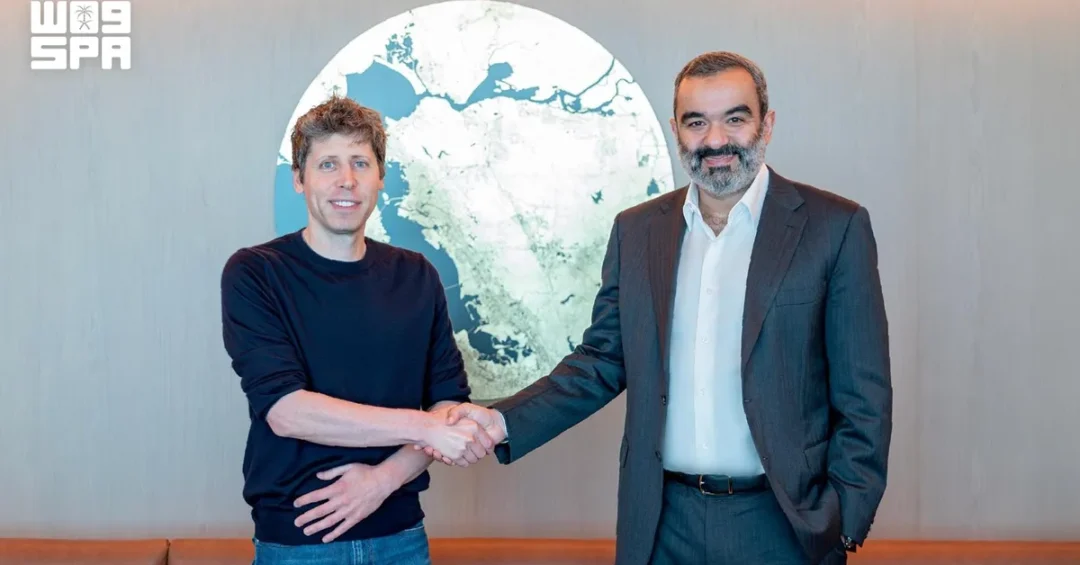
Saudi Arabia’s Minister of Communications and Information Technology, Abdullah Alswaha, concluded a series of high-level meetings with leaders of major global technology and investment companies in Silicon Valley, advancing the Kingdom’s partnerships in artificial intelligence, expanding its computing infrastructure, and attracting high-value investment. The meetings, held on the second day of his official visit to California, brought together executives from OpenAI, Dell Technologies, Cognition AI, Solidigm, and Social Capital, according to the Saudi Press Agency. The discussions centered on deepening cooperation in advanced AI models, enterprise AI adoption, autonomous software engineering, next-generation data storage, and global capital flows into the Kingdom’s rapidly growing digital economy.
What does this flurry of engagement with the world’s most influential technology firms signal about Saudi Arabia’s ambitions on the global AI stage? The visit underscores a deliberate strategy: positioning the Kingdom not merely as a consumer of emerging technologies, but as a builder, investor, and global partner in the industries that will define the next decade. At the heart of these discussions is HUMAIN, the national AI company launched under the Public Investment Fund, which is developing the computing capabilities and infrastructure required to deploy advanced AI models at scale. Together, the meetings reflect a coordinated push to strengthen Saudi Arabia’s digital economy and reinforce its standing as a global hub for technology and innovation.
Context and Background
Why has Saudi Arabia chosen this moment to accelerate its engagement with the world’s leading AI companies? The answer lies in the scale and speed of the Kingdom’s digital transformation, which has become one of the defining features of Vision 2030. Since the launch of the national strategy for data and AI, Saudi Arabia has committed to building a complete ecosystem — spanning advanced models, computing infrastructure, data centers, applications, robotics, and investment. The Ministry of Communications and Information Technology, led by Minister Alswaha, has been the principal architect of this effort, forging partnerships with global firms that bring both technology and capital.
The Silicon Valley visit builds on a foundation laid over several years. Saudi Arabia has established itself as the largest digital economy in the Middle East and North Africa, with cloud computing, data center capacity, and AI adoption expanding at rates that outpace many mature markets. The Kingdom has also launched initiatives to train tens of thousands of citizens in AI and emerging technologies, ensuring that infrastructure investment is matched by human capability. In this context, the minister’s meetings are not isolated events but part of a sustained campaign to connect Saudi Arabia’s resources and market scale with the innovation engines of the global technology sector.
The choice of partners is equally telling. OpenAI, Dell Technologies, Cognition AI, Solidigm, and Social Capital represent distinct but complementary pillars of the AI value chain — frontier models, enterprise infrastructure, software automation, storage technology, and venture investment. By engaging all of them within a single visit, Saudi Arabia is signaling that it understands AI leadership requires strength across the entire stack, not just in one layer. Does that integrated approach give the Kingdom a durable advantage in the global AI race? The breadth of the partnerships suggests that Saudi Arabia is building resilience into its digital economy rather than chasing short-term headlines.
Key Details
In the field of advanced AI models, Minister Alswaha met with OpenAI CEO Sam Altman and senior company executives to discuss expanding cooperation on frontier AI systems. The conversations focused on leveraging the computing capabilities and infrastructure being developed by HUMAIN to support large-scale deployment of AI models, as well as accelerating the development of advanced national applications in priority sectors. These sectors include healthcare, education, energy, and government services, where AI is expected to improve efficiency and quality of life for citizens and residents alike.
On the infrastructure side, the minister met with Dell Technologies Chairman and CEO Michael Dell to explore accelerating enterprise adoption of AI solutions. A central topic was the integration of Dell AI Factory solutions with HUMAIN’s computing capabilities, an approach designed to support enterprise AI deployment at scale. The discussions also covered knowledge transfer and the development of national capabilities, ensuring that Saudi professionals gain the expertise to design, operate, and maintain advanced AI systems. This emphasis on skills reflects a broader principle in the Kingdom’s strategy: technology partnerships must leave behind lasting human capital.
The visit also addressed the fast-growing field of autonomous software engineering. Minister Alswaha met with Cognition AI Co-Founder and CEO Scott Wu and senior executives to discuss expanding the use of autonomous coding solutions, improving developer productivity, and enabling the deployment of Devin and software agents through HUMAIN’s computing infrastructure. By accelerating national capabilities in building and operating AI applications, the Kingdom aims to multiply the output of its growing developer community and reduce the time required to bring digital services to market.
Storage and data access formed another critical pillar of the discussions. The minister met with Solidigm Senior Vice President and Head of Global Operations Kyle Fukuda to explore the use of advanced storage solutions in the computing infrastructure and data centers being developed by HUMAIN. Improved data access efficiency and better utilization of computing resources are essential for supporting the expansion of AI applications across the Kingdom. As AI models grow larger and more data-hungry, storage innovation becomes a decisive factor in overall system performance and cost.
Finally, in the investment domain, Minister Alswaha met with Social Capital Founder and CEO Chamath Palihapitiya to discuss attracting the firm’s investments into the infrastructure and computing capabilities being developed in Saudi Arabia. The conversation covered expanding investment in advanced technologies and connecting global capital with high-value opportunities in the Kingdom. This reflects a recognition that sustained AI leadership depends not only on technology and talent but also on a robust flow of private capital into the sector.
International and Regional Impact
How will these partnerships reshape Saudi Arabia’s position in the regional and global technology landscape? The meetings in Silicon Valley place the Kingdom alongside the world’s leading AI firms at a time when competition for computing capacity, talent, and investment is intensifying globally. By securing cooperation with OpenAI on frontier models and with Dell on enterprise infrastructure, Saudi Arabia is positioning itself as a credible partner in the development and deployment of advanced AI, not simply an end user. This distinction matters as governments and corporations worldwide seek reliable, well-capitalized hubs for AI innovation.
Regionally, the Kingdom’s progress carries significant weight. Saudi Arabia is already the largest digital market in the Middle East and North Africa, and its investments in data centers, cloud computing, and AI are helping to set the pace for the wider region. Partnerships with firms such as Cognition AI and Solidigm strengthen the technical foundations that neighboring economies will increasingly rely on, whether through cross-border digital services, shared infrastructure, or collaborative research. A stronger Saudi AI ecosystem contributes to regional stability and prosperity by creating jobs, attracting talent, and diversifying economies away from hydrocarbons.
On the global stage, the visit reinforces Saudi Arabia’s role as a bridge between capital-rich markets and technology-rich innovators. The involvement of Social Capital highlights the Kingdom’s appeal as a destination for venture investment in advanced technologies. As global investors look for growth opportunities in AI infrastructure, Saudi Arabia offers scale, strategic location, and a clear regulatory direction. Does this make the Kingdom one of the most attractive destinations for AI investment in the coming decade? The momentum generated by these meetings suggests that the answer is increasingly yes.
Economic and Strategic Significance
What economic returns can Saudi Arabia expect from this integrated approach to AI? The Kingdom’s strategy is designed to capture value at multiple points in the AI value chain. Computing infrastructure and data centers create high-skilled jobs and anchor domestic industries. Enterprise AI adoption raises productivity across sectors such as manufacturing, logistics, and finance. Autonomous software engineering accelerates digital transformation and reduces costs. Advanced storage improves the efficiency of every layer above it. And investment partnerships channel global capital into projects that generate long-term returns for the national economy.
Strategically, these efforts reduce dependence on oil revenues by building a knowledge-intensive economy. The Public Investment Fund’s backing of HUMAIN provides the financial scale needed to compete with global hyperscalers, while partnerships with companies like Dell and OpenAI provide access to cutting-edge technology and best practices. The combination of sovereign capital, global expertise, and a young, digitally native population gives Saudi Arabia a distinctive advantage. As the Kingdom hosts major sporting, cultural, and business events, its digital infrastructure will also support tourism, entertainment, and international collaboration, creating a virtuous cycle of growth.
The emphasis on national capability development is particularly significant. By requiring knowledge transfer and training as part of these partnerships, Saudi Arabia ensures that the benefits of AI extend beyond imported technology. The goal is a self-sustaining ecosystem in which Saudi engineers, researchers, and entrepreneurs can build, operate, and export AI solutions. This approach aligns with the broader Vision 2030 objective of creating a diversified, innovation-driven economy that offers opportunity to all citizens.
Vision 2030 Alignment
How do these meetings connect to the long-term goals of Saudi Vision 2030? The Vision, launched in 2016, seeks to transform the Kingdom into a global investment powerhouse and a hub connecting three continents. AI and advanced computing are central to that transformation. By expanding partnerships with OpenAI, Dell, Cognition AI, Solidigm, and Social Capital, Saudi Arabia is advancing the Vision’s objectives of economic diversification, private sector growth, and human capital development. HUMAIN, as the national AI champion, embodies the ambition to make the Kingdom a leader in the technologies of the future.
The visit to Silicon Valley also reflects the Vision’s emphasis on international cooperation and openness to global talent and investment. Saudi Arabia is not pursuing technological self-sufficiency in isolation; it is building a network of mutually beneficial partnerships that strengthen its economy while contributing to global innovation. As these partnerships mature, they will support the creation of high-quality jobs, the growth of local industries, and the delivery of smarter public services. In doing so, they bring the Kingdom closer to its goal of a vibrant, diversified, and globally connected economy — and confirm its place as a rising hub for technology, innovation, and AI.
20 Questions
Q1. Who did Saudi Arabia’s Minister of Communications and Information Technology meet during his Silicon Valley visit?
A1. Minister Abdullah Alswaha met with leaders from OpenAI, Dell Technologies, Cognition AI, Solidigm, and Social Capital, discussing AI partnerships, computing infrastructure, and investment opportunities during the second day of his official visit to California.
Q2. What was the main focus of the meeting with OpenAI CEO Sam Altman?
A2. The meeting focused on expanding cooperation in advanced AI models, leveraging HUMAIN’s computing capabilities and infrastructure to support large-scale AI deployment, and accelerating the development of advanced national applications in priority sectors.
Q3. What is HUMAIN and why is it important to Saudi Arabia’s AI strategy?
A3. HUMAIN is Saudi Arabia’s national AI company, backed by the Public Investment Fund. It is developing the computing capabilities and infrastructure needed to deploy advanced AI models at scale and support the Kingdom’s digital economy.
Q4. What did Minister Alswaha discuss with Dell Technologies Chairman and CEO Michael Dell?
A4. They discussed accelerating enterprise adoption of AI solutions, integrating Dell AI Factory solutions with HUMAIN’s computing capabilities for enterprise AI at scale, and advancing knowledge transfer and national capability development.
Q5. How does Cognition AI fit into Saudi Arabia’s technology plans?
A5. Cognition AI’s autonomous software engineering solutions, including Devin and software agents, will be deployed through HUMAIN’s computing capabilities to improve developer productivity and accelerate national capabilities in building AI applications.
Q6. What role does Solidigm play in the Kingdom’s computing infrastructure?
A6. Solidigm provides advanced storage solutions for the computing infrastructure and data centers being developed by HUMAIN, improving data access efficiency, computing resource utilization, and supporting the expansion of AI applications in Saudi Arabia.
Q7. Why did Minister Alswaha meet with Social Capital Founder and CEO Chamath Palihapitiya?
A7. The meeting aimed to attract Social Capital’s investments into the infrastructure and computing capabilities being developed in Saudi Arabia, expanding investment in advanced technologies and connecting global capital with high-value opportunities.
Q8. What sectors are considered priority for AI applications in Saudi Arabia?
A8. Priority sectors include healthcare, education, energy, and government services, where AI is expected to improve efficiency, quality of life, and service delivery for citizens and residents across the Kingdom.
Q9. How does this visit support Saudi Arabia’s digital economy?
A9. The meetings strengthen partnerships in AI, computing infrastructure, and investment, reinforcing the competitiveness of the Kingdom’s digital economy and its position as a global hub for technology, innovation, and AI.
Q10. What is the significance of knowledge transfer in these partnerships?
A10. Knowledge transfer ensures Saudi professionals gain expertise to design, operate, and maintain advanced AI systems, building lasting human capital and supporting the transformation of key sectors in the Kingdom.
Q11. How does this initiative align with Vision 2030?
A11. It advances Vision 2030’s goals of economic diversification, private sector growth, and human capital development by building a knowledge-intensive economy and positioning Saudi Arabia as a global technology leader.
Q12. What benefits will advanced storage solutions bring to Saudi data centers?
A12. Advanced storage improves data access efficiency and computing resource utilization, enabling data centers to handle larger AI workloads more cost-effectively and supporting the expansion of AI applications across the Kingdom.
Q13. How does autonomous software engineering help Saudi developers?
A13. Autonomous software engineering tools like Devin and software agents improve developer productivity, reduce time to market for digital services, and accelerate national capabilities in building and operating AI applications.
Q14. What is the role of the Ministry of Communications and Information Technology in these efforts?
A14. The Ministry, led by Minister Abdullah Alswaha, is the principal architect of Saudi Arabia’s digital transformation, forging global partnerships that bring technology, investment, and expertise to the Kingdom.
Q15. How does this visit affect Saudi Arabia’s regional standing?
A15. It reinforces the Kingdom’s position as the largest digital market in the Middle East and North Africa, setting the pace for regional AI development and contributing to stability and prosperity through job creation and economic diversification.
Q16. What makes Saudi Arabia attractive to global technology investors?
A16. Saudi Arabia offers scale, strategic location, sovereign capital through the Public Investment Fund, a young digitally native population, and a clear regulatory direction, making it a compelling destination for AI infrastructure investment.
Q17. What is Dell AI Factory and how will it be used in Saudi Arabia?
A17. Dell AI Factory is an enterprise AI solution that will be integrated with HUMAIN’s computing capabilities to support large-scale enterprise AI deployment, helping Saudi businesses adopt AI faster and more effectively.
Q18. How will these partnerships create jobs in Saudi Arabia?
A18. Computing infrastructure, data centers, and AI adoption create high-skilled jobs in technology, engineering, and operations, while knowledge transfer programs train Saudi citizens for roles in the growing digital economy.
Q19. What is the long-term goal of Saudi Arabia’s AI ecosystem?
A19. The goal is a self-sustaining ecosystem where Saudi engineers, researchers, and entrepreneurs build, operate, and export AI solutions, supporting a diversified, innovation-driven economy under Vision 2030.
Q20. What message does this Silicon Valley visit send to the global technology community?
A20. It signals that Saudi Arabia is a serious, well-capitalized partner in AI development, open to global collaboration, and committed to building an integrated ecosystem that contributes to global innovation and economic growth.
Reader Feedback
We value your thoughts. Please share your feedback on this article.
Your feedback helps us improve our coverage.
Related articles
 KAUST Celebrates 290 Graduates of Its Specializations Program
 KAUST Study Reveals Nutritional Value of Aquatic Foods
 Saudi team joins 21st International Standards Olympiad in South Korea
 Perseid meteor shower peaks over Saudi Arabia
 GACA President: Saudi Arabia Advances AI in Aviation Safely
 Eastern Region Mayor Unveils New COP Smart City Identity