


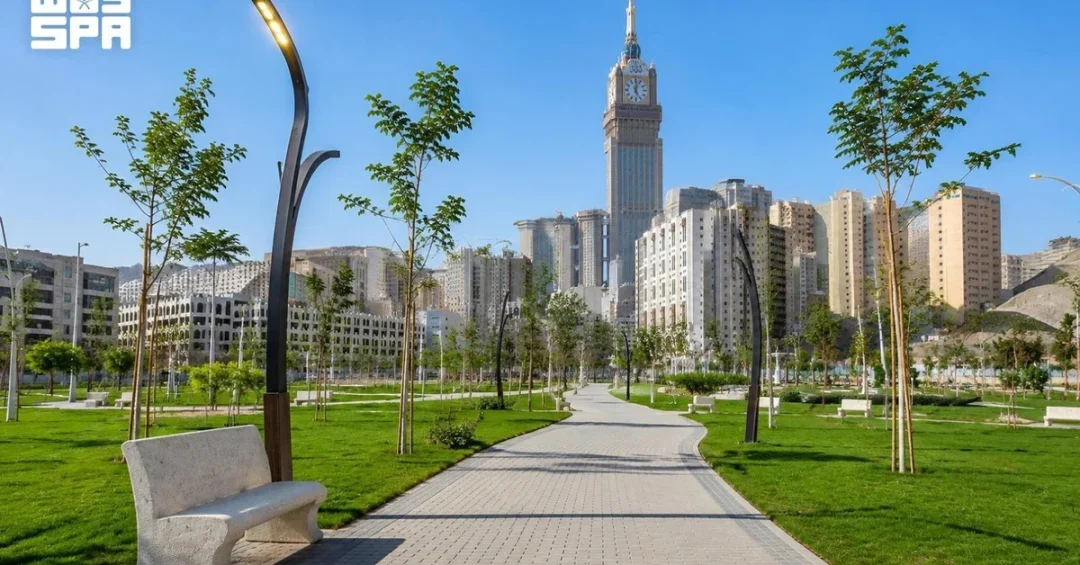
Makkah is home to 290 public parks whose green spaces, shaded walkways, and recreational facilities are playing a growing role in improving urban comfort for residents, visitors, and the millions of pilgrims who travel to the holy city each year, according to information released through official Saudi channels. The parks form part of a broader effort to soften the impact of the city’s desert climate by providing shade, reducing heat absorption from paved surfaces, and creating more comfortable environments in which people can move and rest.
The scale of the network is considerable. Many of Makkah’s 290 public parks incorporate landscaped green areas, safe pedestrian walkways, sports facilities, courtyards, shaded seating, service amenities, and playgrounds. Together these features serve a dual purpose: they improve day-to-day quality of life for the city’s residents, and they contribute to the comfort of the millions of pilgrims and Umrah performers who visit the holy sites. In a city that annually welcomes one of the largest concentrations of international visitors anywhere in the world, the design and maintenance of public space is not a marginal concern but a core element of the visitor experience. Has any other city in the world been asked to balance everyday community life with the needs of so many short-term guests at once?
Context and Background
Why do green spaces matter so much in a city like Makkah? The answer lies partly in geography and climate. Makkah sits in a hot, arid environment where daytime temperatures can climb steeply, and where hard surfaces such as roads, plazas, and building facades absorb and re-radiate heat. Vegetation, shade structures, and water-permeable landscaping interrupt that cycle. Trees and planted areas lower surface temperatures, provide shade along walking routes, and reduce the heat that builds up in dense urban districts. The result is an environment that is measurably more comfortable for people moving on foot, particularly during the daytime hours when pilgrims and residents are most active.
The city’s park network has developed alongside its broader urban expansion. As Makkah has grown to accommodate rising numbers of pilgrims and a growing resident population, municipal planning has placed increasing emphasis on open space, pedestrian connectivity, and landscaping. The 290 public parks now distributed across the city reflect that emphasis. Many of them are equipped not only with greenery but with the practical infrastructure that makes a park genuinely usable: walkways that separate pedestrians from traffic, sports areas for young people, courtyards for gathering, shaded seating for rest, and playgrounds for children. These are the features that turn an open plot into a functioning community asset.
It is also worth understanding why this subject is being highlighted now. The comfort of pilgrims is a central priority for Saudi Arabia’s leadership, and the agencies responsible for Makkah’s municipal services treat the urban environment as part of that mission. Parks, landscaping, shaded areas, and open walkways complement the city’s other services and facilities, from transport to sanitation to accommodation. They are, in effect, part of the same integrated system that supports the pilgrimage. Could the experience of a pilgrim be separated from the quality of the city that receives them?
Key Details
The most concrete figure underpinning this story is the number of parks: 290 public parks across Makkah. That figure represents a substantial inventory of public open space, and the range of facilities within those parks is broad. Green spaces and planted areas provide shade and visual relief. Safe pedestrian walkways allow people to move between neighbourhoods and facilities without exposure to traffic. Sports facilities support physical activity, particularly for young residents. Courtyards and shaded seating areas offer places to pause, meet, and rest. Service amenities and playgrounds round out the offer, making the parks suitable for families and for individuals alike.
Because Makkah is a destination that welcomes millions of pilgrims, Umrah performers, and visitors, the importance of developing and maintaining these spaces is amplified. A shaded bench, a clean walkway, or a well-planted courtyard can make a meaningful difference to someone who has travelled a long distance and is navigating a busy, unfamiliar city. The parks therefore serve a dual constituency: the permanent population of Makkah, who use them as everyday community infrastructure, and the temporary population of visitors, for whom they offer comfort and orientation during a demanding journey. How many cities must design their public realm for both a resident community and a global flow of guests?
Maintenance is as important as construction. Green spaces require irrigation, pruning, and care in a hot climate; walkways, lighting, seating, and playgrounds require regular inspection and repair. The emphasis on both developing and maintaining these spaces reflects a recognition that public amenities deliver value only when they remain in good condition. For pilgrims and visitors, the condition of the urban environment is one of the most immediate impressions of the city, formed long before they reach any specific destination. For residents, it is a daily factor in quality of life.
International and Regional Impact
For an international audience, the significance of Makkah’s green spaces extends beyond municipal services. Makkah is one of the most visited cities in the world, and the experience of the millions who travel there shapes global perceptions of Saudi Arabia. A comfortable, well-organised, and welcoming urban environment contributes directly to that perception. Visitors who find shaded walkways, clean parks, and safe pedestrian routes return home with a concrete impression of a city that is managed with care. In that sense, investment in public space is also an investment in the Kingdom’s international image.
Regionally, Makkah’s approach to urban greening is part of a wider movement across Saudi cities to improve livability through landscaping, shade, and pedestrian infrastructure. Cities in the Kingdom are increasingly treating green space not as decoration but as essential infrastructure that supports public health, mobility, and community life. For neighbouring countries in the Gulf and the wider Middle East, where similar climatic conditions prevail, Makkah’s experience offers a relevant reference point: how to create comfortable outdoor environments in a hot, arid setting, and how to do so at a scale that serves both residents and large numbers of visitors. What can other cities in similar climates learn from this model?
Economic and Strategic Significance
The economic dimension of Makkah’s parks is often overlooked but is real. Public spaces support the local economy by making neighbourhoods more attractive, encouraging foot traffic near shops and services, and providing venues for community activity. They also reduce pressure on indoor facilities by offering comfortable outdoor alternatives. For the pilgrimage economy, a well-functioning urban environment supports the smooth movement of large numbers of people, which in turn supports the transport, hospitality, and retail sectors that serve them. Comfortable visitors stay longer, move more freely, and engage more with the city around them.
Strategically, the development of parks, landscaping, shaded areas, and open walkways forms an integral part of efforts to enhance the pilgrim experience. This is a priority that sits at the intersection of municipal planning, religious hospitality, and national reputation. Saudi Arabia has consistently emphasised that hosting pilgrims is a responsibility and an honour, and the quality of the urban environment is one of the most tangible ways that commitment is expressed. A shaded route, a clean park, and a safe walkway are practical expressions of a larger principle: that those who travel to Makkah should be received with dignity and care. Is there a clearer way to demonstrate hospitality than through the everyday comfort of a city’s streets and parks?
Vision 2030 Alignment
The enhancement of green spaces in Makkah aligns closely with Saudi Vision 2030, the national transformation programme that seeks to diversify the economy, improve quality of life, and strengthen the Kingdom’s position as a global destination. Quality-of-life initiatives under Vision 2030 place significant emphasis on public space, recreation, and the livability of Saudi cities. The expansion and maintenance of parks in Makkah, with their walkways, sports facilities, playgrounds, and shaded seating, are a direct expression of those objectives at the municipal level. They also support the pilgrimage sector, a cornerstone of the Kingdom’s tourism and hospitality ambitions.
Looking ahead, the continued development of Makkah’s public spaces is expected to remain a priority as the city manages growing numbers of visitors and a rising resident population. The integration of green infrastructure with pedestrian networks, transport, and services will shape how comfortably the city functions in the years to come. For residents, this means better everyday surroundings; for pilgrims and visitors, it means a more welcoming and comfortable stay; and for Saudi Arabia as a whole, it means a holy city that reflects the Kingdom’s wider ambitions for livability, hospitality, and sustainable urban development. The 290 parks of Makkah are, in that sense, more than amenities. They are part of how the city prepares for its future.
20 Questions
Q1. How many public parks are there in Makkah?
A1. According to official Saudi information, Makkah has 290 public parks. Many of them include green spaces, safe pedestrian walkways, sports facilities, courtyards, shaded seating areas, service amenities, and playgrounds, serving both residents and the millions of pilgrims and visitors who travel to the city.
Q2. Why are green spaces important in Makkah?
A2. Green spaces improve the urban environment by providing shade, reducing heat absorption from surfaces, and creating more comfortable areas for residents, visitors, and pilgrims. In a hot, arid climate, vegetation and shade structures help lower surface temperatures and make walking and resting outdoors more comfortable.
Q3. What facilities are found in Makkah’s public parks?
A3. Many parks feature landscaped green areas, safe pedestrian walkways, sports facilities, courtyards, shaded seating areas, service amenities, and playgrounds. This combination makes the parks suitable for families, young people, and individuals seeking rest or recreation during their time in the city.
Q4. How do the parks benefit pilgrims?
A4. The parks contribute to a more comfortable urban environment conducive to movement and rest, complementing the city’s other services and facilities. Shaded walkways and seating areas offer pilgrims places to pause during a demanding journey, supporting the broader effort to enhance the pilgrim experience in Makkah.
Q5. Why is developing and maintaining these spaces considered important?
A5. Makkah’s status as a destination welcoming millions of pilgrims, Umrah performers, and visitors amplifies the importance of its public spaces. Well-maintained parks and walkways improve daily life for residents and shape the immediate impressions of visitors, making maintenance as important as initial development.
Q6. How do green spaces reduce heat in the city?
A6. Vegetation and shade structures interrupt the cycle by which hard surfaces such as roads and plazas absorb and re-radiate heat. Trees and planted areas lower surface temperatures and provide shade along walking routes, helping to reduce the buildup of heat in dense urban districts.
Q7. Do the parks serve residents as well as visitors?
A7. Yes. The parks serve a dual constituency. For Makkah’s permanent residents, they function as everyday community infrastructure with sports facilities and playgrounds. For pilgrims and visitors, they offer comfort, orientation, and places to rest during their stay in the holy city.
Q8. What role do pedestrian walkways play in Makkah’s parks?
A8. Safe pedestrian walkways allow people to move between neighbourhoods and facilities without exposure to traffic. They support comfortable movement on foot, which is particularly valuable in a city that receives large numbers of visitors navigating unfamiliar surroundings during their pilgrimage or visit.
Q9. How does this relate to the pilgrim experience?
A9. The development of parks, landscaping, shaded areas, and open walkways forms an integral part of efforts to enhance the pilgrim experience. By providing a more comfortable urban environment conducive to movement and rest, these features complement the city’s other services and facilities for those who travel to Makkah.
Q10. Are the parks equipped for children and families?
A10. Many of Makkah’s public parks include playgrounds, courtyards, and shaded seating areas, making them suitable for families and children. These features support community life for residents and offer family-friendly spaces within the city’s broader network of public amenities and green areas.
Q11. What sports facilities are available in the parks?
A11. Many of Makkah’s public parks feature sports facilities alongside their green spaces and walkways. These areas support physical activity, particularly for younger residents, and contribute to public health and recreation as part of the city’s broader investment in quality-of-life infrastructure.
Q12. How does this support Saudi Vision 2030?
A12. The enhancement of green spaces aligns with Saudi Vision 2030, which emphasises quality of life, recreation, and livable cities. Parks with walkways, sports facilities, and shaded seating are a direct municipal expression of those national objectives, while also supporting the Kingdom’s pilgrimage and hospitality ambitions.
Q13. Why is Makkah’s urban environment significant internationally?
A13. Makkah is one of the most visited cities in the world, and the experience of the millions who travel there shapes global perceptions of Saudi Arabia. A comfortable, well-organised urban environment contributes directly to that perception and reflects the Kingdom’s commitment to hosting pilgrims with care.
Q14. What impression do well-maintained parks create for visitors?
A14. For pilgrims and visitors, the condition of the urban environment is one of the most immediate impressions of the city, formed long before they reach any specific destination. Clean, shaded, and well-maintained parks signal that the city is managed with attention and care.
Q15. How do the parks support the local economy?
A15. Public spaces support the local economy by making neighbourhoods more attractive, encouraging foot traffic near shops and services, and providing venues for community activity. For the pilgrimage economy, a well-functioning urban environment supports the smooth movement of large numbers of people.
Q16. What maintenance is required for green spaces in a hot climate?
A16. Green spaces in a hot climate require irrigation, pruning, and regular care, while walkways, lighting, seating, and playgrounds need inspection and repair. The emphasis on both developing and maintaining these spaces reflects a recognition that public amenities deliver value only when kept in good condition.
Q17. Do other Saudi cities follow a similar approach?
A17. Yes. Makkah’s approach to urban greening is part of a wider movement across Saudi cities to improve livability through landscaping, shade, and pedestrian infrastructure. Cities in the Kingdom increasingly treat green space as essential infrastructure supporting public health, mobility, and community life.
Q18. Can other countries learn from Makkah’s model?
A18. For neighbouring countries in the Gulf and the wider Middle East, where similar climatic conditions prevail, Makkah’s experience offers a relevant reference point: how to create comfortable outdoor environments in a hot, arid setting at a scale that serves both residents and large numbers of visitors.
Q19. How do the parks complement Makkah’s other services?
A19. Parks, landscaping, shaded areas, and open walkways complement the city’s other services and facilities, from transport to accommodation. They are part of the same integrated system that supports the pilgrimage, helping people move and rest comfortably throughout their visit to the holy city.
Q20. What does the future hold for Makkah’s public spaces?
A20. Continued development of Makkah’s public spaces is expected to remain a priority as the city manages growing numbers of visitors and residents. Integrating green infrastructure with pedestrian networks, transport, and services will shape how comfortably the city functions in the years ahead, in line with Vision 2030.
Reader Feedback
We value your thoughts. Please share your feedback on this article.
Your feedback helps us improve our coverage.
Related articles
 International Dates Council Hosts Regional Workshop in Cairo
 Saudi Red Crescent Awards Safety Compliance to Al-Baha Municipality
 5.1 Magnitude Earthquake Strikes Southern Hawaii
 Chicago storms leave 500,000 without power
 Global Youth Unemployment Hits 12.4% in 2025, ILO Reports
 GCC and Egypt Reaffirm Strong Ties at El Alamein Talks