


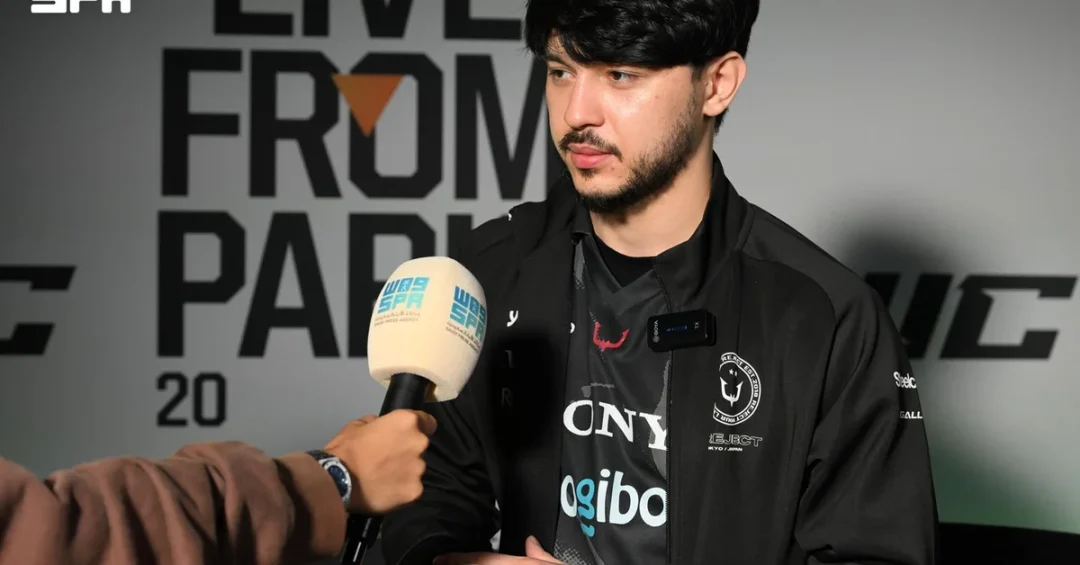
Raef Turkistani, a Saudi surgeon, national-team karate athlete and professional esports competitor, is representing the Kingdom on the world stage at the Esports World Cup 2026 in Paris, according to the Saudi Press Agency (SPA). The Saudi Press Agency reported on August 12, 2026, that Turkistani has built three demanding careers at once: medicine, martial arts and competitive gaming. His story has drawn international attention because it illustrates a broader shift in the Kingdom, where talent is no longer expected to fit a single mold. Could one person truly master three disciplines that each demand years of dedication? Turkistani’s answer, delivered from the French capital as the world’s best gamers gather for the Esports World Cup 2026, is a resounding yes.
His path began with a childhood passion for video games so intense that his family tried to redirect his attention. They encouraged him toward karate, hoping it would pull him away from the screen. Instead, Turkistani excelled on the mat, earning a place on the Saudi national team and collecting medals and accolades along the way. At the same time, he pursued a medical degree at King Abdulaziz University, specializing in surgery, a field that demands precision, stamina and long hours of study. Gaming eventually returned to his life as a way to manage stress, and that return would prove decisive. Today he stands at the intersection of three worlds that rarely meet, and he does so as a representative of Saudi ambition on a global stage.
Context and Background
How does a young man from Saudi Arabia end up competing at the highest levels of surgery, karate and esports simultaneously? The answer lies in a childhood shaped by both encouragement and redirection. According to the Saudi Press Agency, Turkistani’s early obsession with video games concerned his family, who steered him toward karate as a healthier pursuit. That decision proved transformative. He did not simply practice the sport; he excelled, eventually joining the Saudi national team and winning a series of medals and accolades. Karate gave him discipline, physical conditioning and a competitive mindset that would later serve him in every other arena of his life.
Parallel to his athletic development, Turkistani enrolled at King Abdulaziz University to study medicine. He chose surgery as his specialty, one of the most demanding paths in medical education. The years of study required sustained concentration, emotional resilience and an ability to perform under pressure. During this period, video games re-entered his life, not as a distraction but as a deliberate tool for recovery. Tekken, a fast-paced fighting game, became his outlet of choice because matches were short and intense, allowing him to release stress and return to his books with renewed focus. What had once been a childhood habit was now a strategic part of his routine.
That routine would eventually evolve into something far more serious. While medicine remained his academic and professional anchor, and karate took him to national-team competition, Tekken became a space where he rediscovered an old passion and found a new opportunity to compete. The game was no longer a hobby; it was a discipline in its own right. Turkistani’s journey from casual player to professional competitor reflects a wider truth about elite performance: the skills that make someone great in one field, such as focus, pattern recognition and composure under pressure, often transfer directly to another. His story is a reminder that passion, when matched with discipline, does not force a choice between paths; it can open several at once.
Key Details
What does Turkistani’s daily reality actually look like across three careers? In his interview with the Saudi Press Agency, he explained that Tekken in particular became an effective outlet from the pressures of his medical studies. Its fast matches do not take long to complete, which allowed him to release energy and return to his books without letting gaming distract him from his primary goal of pursuing a career in medicine. That balance was not accidental; it was intentional. He treated gaming as a controlled release valve, not an escape, and that discipline is precisely what later enabled him to compete professionally without abandoning his medical responsibilities.
His karate career followed a similarly disciplined arc. After his family introduced him to the sport, he committed fully, earning a place on the Saudi national team and winning medals and accolades. Karate taught him how to prepare for competition, how to manage nerves and how to recover from defeat. Those lessons reappear in his esports career, where tournaments require sustained focus, rapid decision-making and emotional control. The overlap between martial arts and competitive gaming is greater than it might appear: both demand hours of deliberate practice, deep knowledge of an opponent’s tendencies, and the ability to execute under pressure. Turkistani’s success in both suggests that his underlying skill set, rather than any single talent, is what drives his achievements.
Now in Paris, as the world’s attention turns to the Esports World Cup 2026, Turkistani is writing a new chapter. This time, he is not there as a doctor or a karate athlete, but as a professional esports competitor taking on the world stage. The Saudi Press Agency noted that his presence at the tournament represents a convergence of his three identities: the surgeon’s precision, the martial artist’s discipline and the gamer’s reflexes. Each world has shaped the others, and none has been abandoned. For a global audience, his story offers a compelling example of how modern careers can be multidimensional, especially in a country that is actively investing in diverse talent across sectors.
International and Regional Impact
Why does one Saudi competitor’s journey matter beyond the tournament floor? Turkistani’s appearance at the Esports World Cup 2026 in Paris places the Kingdom’s growing esports ecosystem in front of a global audience. The event draws competitors and viewers from across the world, and Saudi participation signals that the country is not merely a spectator in the digital economy but a serious contender. His story also challenges common assumptions about the region. International audiences may expect a Saudi professional to fit a narrow profile; instead, they see a surgeon and national-team athlete who also competes at the highest level of gaming. That contrast generates curiosity and coverage, which in turn amplifies the Kingdom’s broader cultural and economic message.
Regionally, Turkistani’s example resonates with young people across the Gulf and the wider Middle East. It demonstrates that esports can be a legitimate career path, not a waste of time, and that academic excellence and competitive gaming are not mutually exclusive. His journey also highlights the role of Saudi institutions in nurturing talent. King Abdulaziz University provided his medical training, the national karate program gave him a platform for athletic achievement, and the Kingdom’s expanding esports infrastructure offered a route to professional competition. Each of these systems contributed to his development, and together they illustrate how coordinated investment in education, sport and technology can produce globally competitive individuals.
Economic and Strategic Significance
How does one competitor’s success connect to Saudi Arabia’s economic ambitions? The esports and gaming sector has become a significant part of the Kingdom’s diversification strategy. Saudi Arabia has invested heavily in gaming and esports through its national strategy, recognizing the sector’s potential for job creation, tourism and international engagement. Turkistani’s presence at the Esports World Cup 2026 is a visible return on that investment: a Saudi professional competing on a global stage, drawing attention to the Kingdom’s capabilities and attracting interest from international partners. His story also supports the broader goal of building a knowledge-based economy, where talent in technology, media and entertainment can thrive alongside traditional sectors.
Strategically, his journey reinforces the message that Saudi Arabia is a country of multifaceted achievement. The Kingdom is not only exporting energy and attracting investment; it is also producing world-class professionals in medicine, sport and digital entertainment. That diversity of output is central to Vision 2030, which seeks to broaden the economy and create opportunities for citizens across a wide range of fields. Turkistani’s ability to excel in three demanding disciplines simultaneously is an inspiring data point in that larger narrative. It shows that the Kingdom’s investments in education, healthcare, sport and technology are producing individuals who can compete anywhere in the world, and it encourages others to pursue their own combinations of passion and profession.
Vision 2030 Alignment
How does Raef Turkistani’s story embody the goals of Saudi Vision 2030? Vision 2030 aims to diversify the economy, empower citizens, and build a vibrant society with opportunities in every sector. Turkistani’s journey touches several of these objectives at once. His medical career supports the Kingdom’s healthcare ambitions; his karate achievements reflect the push for athletic excellence and international representation; and his esports career aligns with the growth of digital entertainment as an economic and cultural force. By excelling in all three, he demonstrates the kind of versatile, globally competitive talent that Vision 2030 seeks to cultivate. His story also reinforces the importance of lifelong learning and adaptability, values that are essential in a rapidly changing world.
Looking ahead, Turkistani’s example is likely to inspire young Saudis to pursue their own multidimensional paths. The Kingdom’s continued investment in education, sport and technology will create more opportunities for such combinations to flourish. As the Esports World Cup 2026 unfolds in Paris, his presence serves as a reminder that Saudi Arabia’s global role is expanding beyond traditional boundaries. Whether in operating rooms, on competition mats or at gaming stations, Saudi talent is making its mark. Turkistani’s journey shows that with discipline and passion, the paths we choose do not have to compete; they can converge into a single, powerful identity that contributes to the Kingdom’s progress and its place in the world.
20 Questions
Q1. Who is Raef Turkistani?
A1. Raef Turkistani is a Saudi surgeon, a national-team karate athlete and a professional esports competitor. He is representing the Kingdom at the Esports World Cup 2026 in Paris, according to the Saudi Press Agency.
Q2. What three careers does Raef Turkistani balance?
A2. He works as a surgeon, competes in karate at the national-team level and plays esports professionally. His story illustrates how discipline and passion can support multiple demanding paths simultaneously.
Q3. Where is Raef Turkistani competing in 2026?
A3. He is competing at the Esports World Cup 2026 in Paris, France. The Saudi Press Agency reported his participation on August 12, 2026, highlighting his role as a professional esports competitor.
Q4. How did Raef Turkistani start in karate?
A4. His family encouraged him to take up karate to steer him away from video games. He excelled, earned a place on the Saudi national team and won several medals and accolades.
Q5. Which university did Raef Turkistani attend?
A5. He studied medicine at King Abdulaziz University, specializing in surgery. The program required long hours of study, discipline and concentration, which he balanced with his other pursuits.
Q6. What role did video games play during his medical studies?
A6. Video games, especially Tekken, served as a way to unwind and regain focus. Their fast-paced matches allowed him to release energy and return to his books without distraction.
Q7. Why did Tekken become his preferred game?
A7. Tekken matches are quick and intense, making them an effective outlet from academic pressure. He could play briefly, release stress and return to his medical studies without losing focus.
Q8. How did Tekken lead to a professional esports career?
A8. What began as a hobby became a space where he rediscovered his passion and found a new competitive outlet. That passion eventually carried him into the professional ranks and onto global stages.
Q9. What does Raef Turkistani’s presence in Paris represent?
A9. It represents the convergence of his three identities: surgeon, karate athlete and professional gamer. He is competing at the Esports World Cup 2026, showcasing Saudi talent on an international platform.
Q10. How does his story reflect Saudi Arabia’s Vision 2030?
A10. It embodies Vision 2030’s goals of diversifying the economy, empowering citizens and promoting excellence in healthcare, sports and digital entertainment. His multifaceted career aligns with the Kingdom’s push for versatile, globally competitive talent.
Q11. What is the Esports World Cup 2026?
A11. It is a major international esports tournament held in Paris in 2026. It attracts top competitors from around the world and provides a global stage for professional gamers, including Saudi participants.
Q12. How did his family react to his early gaming habits?
A12. His family tried to steer him away from video games, concerned about his focus. They introduced him to karate, which ultimately led to a successful athletic career and new opportunities.
Q13. What skills transfer between karate and esports?
A13. Both require discipline, rapid decision-making, emotional control and hours of deliberate practice. Karate taught him preparation and composure, which he applies to competitive gaming.
Q14. Does Raef Turkistani still practice medicine?
A14. Yes, medicine remains his academic and professional pursuit. He specializes in surgery and has maintained his medical career alongside his athletic and esports commitments.
Q15. What message does his journey send to young Saudis?
A15. It shows that passion and discipline can open multiple paths rather than forcing a single choice. Young Saudis can pursue diverse interests and still achieve excellence in each.
Q16. How does Saudi Arabia support esports professionals?
A16. The Kingdom has invested in gaming and esports through its national strategy, creating infrastructure, tournaments and opportunities. This support helps professionals like Turkistani compete globally.
Q17. What makes his story unique internationally?
A17. Combining surgery, national-team karate and professional esports is highly unusual. His story challenges stereotypes and highlights Saudi Arabia’s diverse talent on the world stage.
Q18. What did the Saudi Press Agency report about him?
A18. The Saudi Press Agency reported his participation in the Esports World Cup 2026 and detailed his journey across medicine, karate and gaming, emphasizing his discipline and passion.
Q19. How does his story align with Saudi sports development?
A19. It reflects the Kingdom’s efforts to develop athletic talent and compete internationally. His karate achievements and esports presence contribute to Saudi Arabia’s growing sports profile.
Q20. What is the broader significance of his three-world journey?
A20. It demonstrates that modern careers can be multidimensional and that Saudi Arabia nurtures diverse talent. His journey inspires others to pursue multiple passions while contributing to the Kingdom’s global role.
Reader Feedback
We value your thoughts. Please share your feedback on this article.
Your feedback helps us improve our coverage.
Related articles
 Jeddah Municipality and Ministry of Sport Discuss Readiness for Gulf Cup 27 and Asian Cup 2027
 163 Fencers Compete at Saudi Arabia Grand Championship
 Over 400 Sports Facilities Expand Options in Jazan
 Pakhtakor Advances to AFC Champions League Elite
 Leverkusen Signs Argentina’s Medina Until 2031
 AFC Approves Referee Programme for Asian Cup 2027