


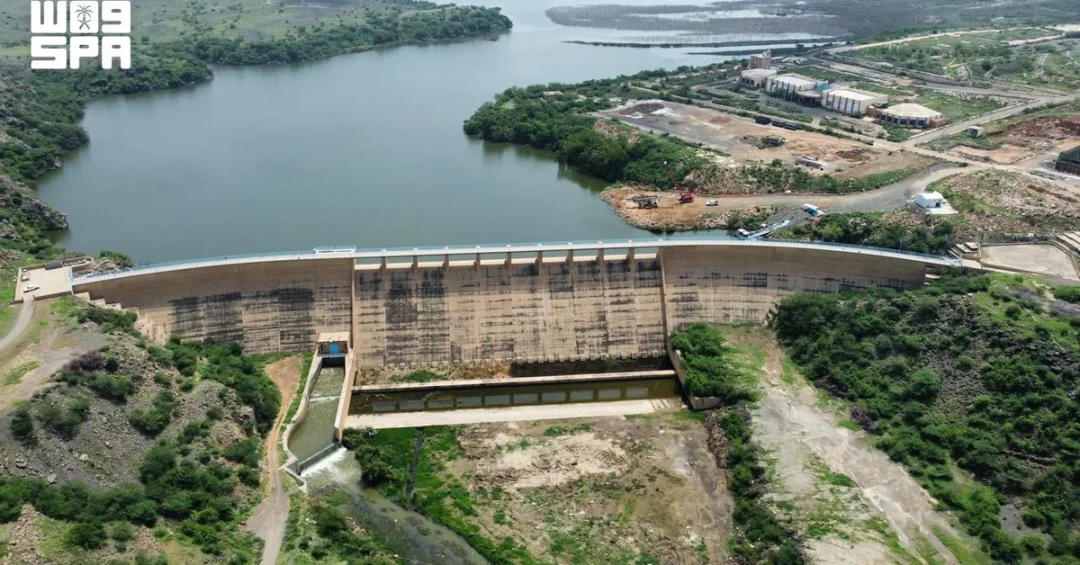
The Wadi Jazan Dam, one of the Kingdom of Saudi Arabia’s earliest major water infrastructure projects, has served the Jazan Region for more than five decades, transforming seasonal floodwaters into a sustainable resource for agriculture and groundwater replenishment, according to information released via the Saudi Press Agency (SPA). Completed in 1971 after construction began in 1967, the dam was built as part of a broader national effort to develop agriculture and supply water to beneficiary lands across the fertile Wadi Jazan valley. Since its inauguration, it has regulated the valley’s water flow, mitigated flood risks, supplied irrigation water, and improved the overall management of water resources in a region historically known for its flowing valleys during rainy seasons. The project remains a cornerstone of Saudi Arabia’s long-term commitment to water security and agricultural development.
For international observers, the Wadi Jazan Dam offers a clear example of how the Kingdom has approached water management for generations: by investing in durable infrastructure that supports local economies while protecting communities from natural hazards. The dam’s story is not simply one of concrete and steel, but of a sustained national vision that links water availability to food production, rural livelihoods, and regional stability. As Saudi Arabia advances toward the goals of Vision 2030, the experience gained from operating and maintaining the Wadi Jazan Dam for over fifty years provides valuable lessons for the next generation of water and agricultural projects across the Kingdom. Why does a single dam, built in the 1960s, still matter so much today? The answer lies in the essential role water plays in every aspect of development.
Context and Background
What drove Saudi Arabia to invest in a major dam in the Jazan Region during the 1960s? The answer begins with geography and necessity. Jazan, located in the southwestern corner of the Kingdom, is characterized by mountainous terrain and seasonal valleys that carry significant volumes of water during rainy periods. Historically, that water flowed rapidly through the valleys and out to the Red Sea, leaving little behind for farmers to use during dry months. The challenge was not simply accessing water, but retaining, managing, and making effective use of it. The Wadi Jazan Dam was designed specifically to address that challenge, capturing seasonal floodwaters and releasing them in a controlled manner to support agricultural activity throughout the year.
Studies to develop Wadi Jazan and harness its water resources were launched in the 1960s, reflecting a forward-looking national approach to water security. Construction of the dam began in 1967, and it was inaugurated in 1971 as part of a broader project to develop agriculture and supply water to beneficiary lands. This timing placed the dam among the earliest large-scale water infrastructure initiatives in the Kingdom, demonstrating that Saudi Arabia recognized the strategic importance of water management long before it became a global priority. The dam was not conceived as an isolated structure but as the centerpiece of an integrated development cycle that would link water storage, irrigation, groundwater recharge, and agricultural productivity in one of the Kingdom’s most fertile regions.
Since its construction, the dam has been integrated into the irrigation system supporting agricultural activity in Wadi Jazan, using its water to irrigate farmland and replenish groundwater. This has made water management in the valley an integral part of a comprehensive development cycle. For the communities of Jazan, the dam represents more than infrastructure; it represents reliability. Farmers can plan their crops with greater confidence, knowing that irrigation water will be available even when rainfall is scarce. Local economies benefit from the stability that comes with predictable water supplies, and the broader region gains from the food production that the valley supports.
Key Details
How exactly does the Wadi Jazan Dam continue to function after more than five decades of service? The answer lies in a combination of sound original design and sustained maintenance. Since its completion, the dam has played a vital role in regulating the valley’s water flow, mitigating flood risks, supplying irrigation water, and improving the overall management and utilization of water resources. These functions are not static; they require ongoing attention to ensure that the dam performs reliably as its lifespan progresses. Ongoing efforts focus on maintaining its efficiency and enhancing its capacity to perform its functions, according to official Saudi information.
Several projects are currently underway to rehabilitate and upgrade the dam, remove sediment from the reservoir, and ensure its continued operational readiness and maintenance. Sediment accumulation is a natural challenge for dams worldwide, and addressing it proactively is essential to preserving reservoir capacity and ensuring that water storage remains effective. The total cost of these projects is approximately SAR116.524 million, reflecting the scale of the efforts required to preserve and maintain vital water infrastructure that supports multiple sectors. This investment underscores the Kingdom’s commitment to protecting existing assets while planning for future needs.
The rehabilitation work is not merely about repair; it is about optimization. By removing sediment and upgrading components, the projects aim to restore the dam’s original capacity and improve its operational efficiency. This approach aligns with international best practices in water infrastructure management, where lifecycle maintenance is recognized as essential to maximizing the return on initial investment. For Saudi Arabia, which relies heavily on desalination and groundwater for its water supply, the efficient operation of surface water infrastructure like the Wadi Jazan Dam represents a valuable complement to other water sources. Every cubic meter of water stored and managed effectively is a cubic meter that does not need to be produced through more energy-intensive means.
International and Regional Impact
How does a regional dam in Saudi Arabia connect to broader international conversations about water security? The Wadi Jazan Dam’s five decades of operation offer a compelling case study in long-term water management, a topic of growing importance across the Middle East and beyond. Many countries in arid and semi-arid regions face similar challenges: limited rainfall, high evaporation rates, and increasing demand from growing populations and economies. Saudi Arabia’s experience with the Wadi Jazan Dam demonstrates that with proper planning, engineering, and maintenance, seasonal water resources can be transformed into reliable assets that support development for generations. This lesson is relevant not only to neighboring countries but also to international organizations and development agencies working on water security issues worldwide.
At the regional level, the dam contributes to agricultural stability in Jazan, which in turn supports food security objectives that extend beyond the Kingdom’s borders. The Middle East imports a significant share of its food, and any increase in local production reduces pressure on global supply chains. By maintaining and upgrading the Wadi Jazan Dam, Saudi Arabia is reinforcing its capacity to produce food domestically, a goal that aligns with broader regional efforts to enhance resilience against supply disruptions. Furthermore, the dam’s flood mitigation function protects communities and infrastructure from the destructive effects of seasonal floods, reducing economic losses and safeguarding lives. This dual role, supporting both water supply and disaster risk reduction, makes the dam a model of multi-purpose infrastructure that delivers benefits across multiple sectors.
Economic and Strategic Significance
What economic value does the Wadi Jazan Dam deliver, and why is it considered strategically important? The dam’s economic contributions are both direct and indirect. Directly, it supplies irrigation water that enables farmers in Wadi Jazan to cultivate crops, generating income and employment in the agricultural sector. Indirectly, it supports groundwater recharge, which helps sustain aquifers that are critical for long-term water availability. Groundwater is a strategic resource in Saudi Arabia, and the dam’s role in replenishing it cannot be overstated. By allowing water to infiltrate into the ground rather than run off, the dam helps maintain a balance between extraction and recharge, extending the life of groundwater reserves that might otherwise be depleted.
Strategically, the dam represents a form of water sovereignty. In a region where water is scarce, the ability to capture, store, and manage surface water reduces dependence on external sources and enhances national resilience. The SAR116.524 million investment in rehabilitation and upgrades is a clear signal that Saudi Arabia views this infrastructure as a long-term strategic asset, not a legacy project to be abandoned. This approach is consistent with the Kingdom’s broader economic diversification goals, as a stable agricultural sector contributes to rural development and reduces reliance on food imports. Moreover, the engineering expertise and project management experience gained through maintaining the dam are valuable human capital assets that can be applied to future water projects across the Kingdom.
Vision 2030 Alignment
How does the Wadi Jazan Dam fit into Saudi Arabia’s Vision 2030? The connection is direct and meaningful. Vision 2030, the Kingdom’s comprehensive reform strategy, emphasizes sustainability, economic diversification, and improved quality of life for all citizens. Water security is a foundational element of all three. Without reliable water supplies, agriculture cannot thrive, communities cannot grow, and industries cannot operate. The Wadi Jazan Dam supports these objectives by providing a sustainable source of irrigation water, protecting against floods, and contributing to the efficient management of a vital natural resource. The ongoing rehabilitation projects reflect the Vision 2030 principle of preserving and enhancing national assets for future generations.
Furthermore, the dam’s role in supporting agricultural activity in Jazan aligns with Vision 2030’s goal of achieving food security and promoting sustainable rural development. By maintaining the dam’s efficiency, Saudi Arabia is investing in the long-term productivity of one of its most important agricultural regions. This investment also supports the Vision 2030 objective of creating a diversified economy, as a strong agricultural sector reduces dependence on oil revenues and creates employment opportunities in rural areas. The Wadi Jazan Dam, though built decades before Vision 2030 was announced, embodies the same forward-looking spirit that drives the Kingdom’s current transformation. It stands as a reminder that sustainable development requires both new initiatives and the careful stewardship of existing infrastructure. As Saudi Arabia continues to modernize and grow, the lessons learned from five decades of operating the Wadi Jazan Dam will inform the next generation of water and agricultural projects, ensuring that the Kingdom remains a leader in water management and sustainable development for decades to come.
20 Questions
Q1. What is the Wadi Jazan Dam and where is it located?
A1. The Wadi Jazan Dam is a major water infrastructure project located in the Jazan Region of southwestern Saudi Arabia. It was built to capture seasonal floodwaters from Wadi Jazan and manage them for agricultural and water supply purposes.
Q2. When was the Wadi Jazan Dam constructed and inaugurated?
A2. Construction of the dam began in 1967, and it was inaugurated in 1971. It was developed as part of a broader national project to support agriculture and supply water to beneficiary lands in the Jazan Region.
Q3. What was the primary purpose of building the Wadi Jazan Dam?
A3. The dam was designed to transform seasonal floodwaters into a sustainable resource. Its main purposes include regulating water flow, mitigating flood risks, supplying irrigation water, and replenishing groundwater in the Wadi Jazan valley.
Q4. How has the dam benefited agriculture in the Jazan Region?
A4. The dam has been integrated into the irrigation system supporting agricultural activity in Wadi Jazan. It provides a reliable water supply that allows farmers to cultivate crops throughout the year, even during dry periods.
Q5. What role does the dam play in flood mitigation?
A5. The dam regulates the valley’s water flow, capturing excess water during rainy seasons and releasing it in a controlled manner. This reduces the risk of destructive floods that could otherwise damage communities and infrastructure.
Q6. How does the Wadi Jazan Dam contribute to groundwater replenishment?
A6. By allowing water to infiltrate into the ground, the dam helps recharge local aquifers. This replenishment is essential for maintaining long-term groundwater availability in the region.
Q7. What is the total cost of the current rehabilitation projects at the dam?
A7. The total cost of the ongoing projects to rehabilitate and upgrade the dam is approximately SAR116.524 million. This investment reflects the scale of efforts to preserve vital water infrastructure.
Q8. What specific work is being done to maintain the dam?
A8. Ongoing projects include rehabilitating and upgrading the dam, removing sediment from the reservoir, and ensuring its continued operational readiness. Regular maintenance is essential to preserve the dam’s efficiency and capacity.
Q9. Why is sediment removal important for the dam’s operation?
A9. Sediment accumulation reduces reservoir capacity and can impair the dam’s ability to store and regulate water. Removing sediment helps restore capacity and ensures the dam can continue to perform its functions effectively.
Q10. How does the dam support Saudi Arabia’s food security goals?
A10. By providing reliable irrigation water, the dam enables local agricultural production in the Jazan Region. This contributes to domestic food supply and reduces reliance on imports, supporting national food security objectives.
Q11. What is the significance of the dam’s five decades of service?
A11. Five decades of continuous service demonstrate the durability and value of the infrastructure. It also highlights the importance of sustained maintenance and rehabilitation to ensure long-term functionality and benefits.
Q12. How does the dam align with Saudi Vision 2030?
A12. The dam supports Vision 2030 goals related to sustainability, food security, and economic diversification. Its rehabilitation reflects the Vision’s emphasis on preserving national assets and promoting sustainable development.
Q13. What economic benefits does the dam provide to the local community?
A13. The dam supports agricultural employment and income generation in Wadi Jazan. It also helps sustain groundwater resources, which are vital for long-term economic activity in the region.
Q14. How does the dam contribute to water resource management in Saudi Arabia?
A14. The dam is part of a comprehensive water management cycle that includes storage, irrigation, and groundwater recharge. It helps optimize the use of seasonal water resources in an arid region.
Q15. What international relevance does the Wadi Jazan Dam have?
A15. The dam serves as a case study in long-term water management for arid regions worldwide. Its success demonstrates how seasonal water can be transformed into a sustainable resource through proper planning and maintenance.
Q16. Who is responsible for the dam’s maintenance and rehabilitation?
A16. The projects are managed by relevant Saudi government agencies responsible for water infrastructure. Information about the projects has been released via official Saudi channels, including the Saudi Press Agency.
Q17. How does the dam help protect the environment?
A17. By regulating water flow and reducing flood risks, the dam helps protect ecosystems and communities. Groundwater recharge also supports vegetation and natural habitats in the region.
Q18. What lessons can be learned from the dam’s operation?
A18. The dam shows that long-term maintenance and timely rehabilitation are essential for infrastructure longevity. It also demonstrates the value of integrated water management for agricultural and regional development.
Q19. How does the dam support rural development in Jazan?
A19. Reliable irrigation water enables farmers to expand and diversify crops, creating economic opportunities in rural areas. This supports rural livelihoods and reduces migration to urban centers.
Q20. What does the future hold for the Wadi Jazan Dam?
A20. With ongoing rehabilitation and upgrades, the dam is expected to continue serving the Jazan Region for many years. It will remain a vital component of Saudi Arabia’s water infrastructure and agricultural development.
Reader Feedback
We value your thoughts. Please share your feedback on this article.
Your feedback helps us improve our coverage.
Related articles
 Jeddah Seminar Tackles Violence Against Women
 KSrelief provides 25,000 hot meals in Gaza
 Umrah guests visit King Abdulaziz Complex for Holy Kaaba Kiswa
 Tawakkalna ranks first for beneficiary satisfaction in 2026 index
 KSrelief economic empowerment project supports Gaza Strip
 KSrelief Supervisor General meets Saudi Ambassador to Colombia