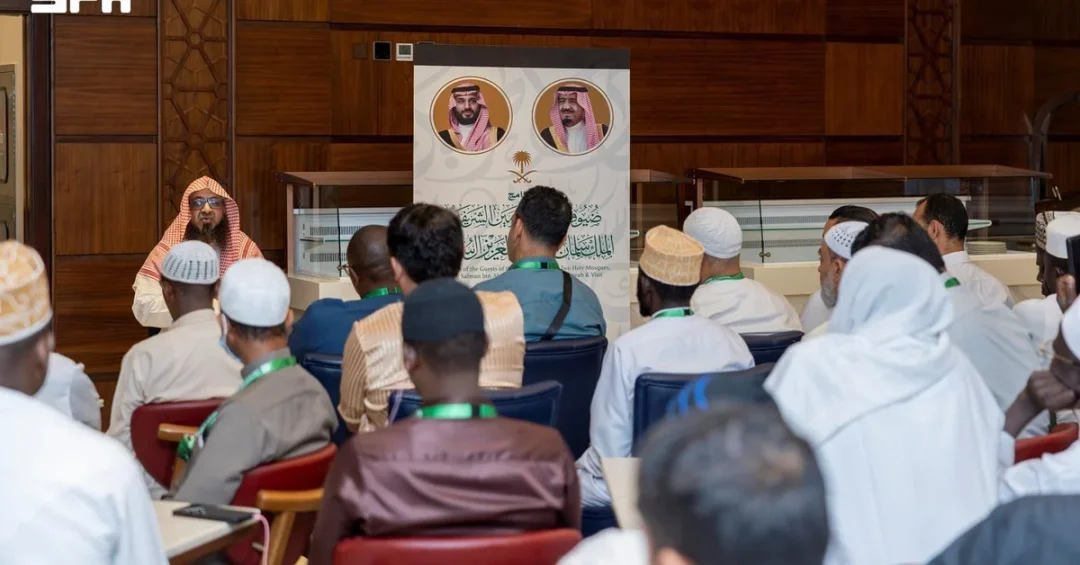
The religious committee at the Ministry of Islamic Affairs, Dawah and Guidance has conducted a series of lessons and awareness sessions on the rulings for performing Umrah for the third group of guests participating in the Custodian of the Two Holy Mosques’ Umrah and Visit Program, held at the guests’ residence in Madinah before their departure for Makkah. The sessions, reported by the Saudi Press Agency, form part of a continuing educational program that accompanies the guests throughout their stay in both Madinah and Makkah, offering religious instruction and answering questions about the rites of Umrah.
The lessons are delivered with the participation of translators working in several languages, ensuring that the religious content and messages are conveyed to the guests clearly and accurately. The initiative reflects the Kingdom of Saudi Arabia’s enduring commitment to serving pilgrims and visitors with care, dignity and spiritual guidance, and it underscores the role of the Ministry of Islamic Affairs, Dawah and Guidance in supporting the guests of the Custodian of the Two Holy Mosques at every stage of their journey. For an international audience, the development offers a window into how Saudi Arabia organizes the religious dimensions of its hospitality programs — not merely as logistics, but as a structured, multilingual effort to make the rites of Umrah accessible and correctly understood by Muslims from around the world.
Context and Background
Why does a program of religious lessons for Umrah guests matter so much in the broader story of Saudi Arabia’s service to Islam’s holiest sites? The Custodian of the Two Holy Mosques’ Umrah and Visit Program is one of the Kingdom’s most prominent hospitality initiatives, bringing guests from many countries to perform Umrah and visit the Prophet’s Mosque in Madinah. The program is overseen by official Saudi authorities and is designed to provide a comprehensive experience that combines worship, education and cultural orientation. Within that framework, the Ministry of Islamic Affairs, Dawah and Guidance plays a central role by organizing religious instruction that helps guests perform their rites in accordance with established rulings.
The religious committee’s work in Madinah represents the educational pillar of the program. Before guests travel to Makkah to perform Umrah, they attend lessons and awareness sessions at their residence, where scholars and specialists explain the rulings and practical steps of the pilgrimage. This sequencing is deliberate: guests arrive in Madinah, visit the Prophet’s Mosque, and then receive instruction that prepares them spiritually and practically for the rites they will perform in Makkah. The committee continues its programs throughout the guests’ stays in both cities, providing lessons and responding to questions as they arise.
The use of translators in several languages is a defining feature of the initiative. The guests come from diverse linguistic backgrounds, and the presence of interpreters ensures that the religious content is not only translated but accurately conveyed, preserving the meaning and intent of the rulings. This attention to linguistic accessibility reflects a wider Saudi approach to pilgrim services: the Kingdom hosts millions of pilgrims annually, and official bodies have invested heavily in multilingual guidance, digital platforms and trained personnel to serve them. The lessons for the third group of guests are therefore part of a much larger, ongoing effort to make the pilgrimage experience as smooth and spiritually rewarding as possible.
Key Details of the Religious Lessons
What exactly do these lessons cover, and how are they organized? According to the Saudi Press Agency, the religious committee at the Ministry of Islamic Affairs, Dawah and Guidance conducted lessons and awareness sessions on the rulings for performing Umrah for the third group of guests at their residence in Madinah before they departed for Makkah. The sessions are practical and instructional in nature, guiding guests through the sequence of rites, the conditions attached to each step, and the etiquettes that should accompany the pilgrimage. The committee’s specialists also answer questions, allowing guests to seek clarification on matters that may be unclear to them.
The participation of translators is central to the delivery of the lessons. Interpreters work in several languages, ensuring that the religious content and messages reach the guests clearly and accurately. This is particularly important given the diversity of the groups hosted under the program, whose members may speak Arabic, English, French, Urdu, Turkish and other languages. By providing interpretation, the Ministry of Islamic Affairs, Dawah and Guidance helps prevent misunderstandings that could affect the validity or quality of a guest’s worship. The committee’s work is continuous rather than one-off: it implements its programs throughout the guests’ stays in Madinah and Makkah, adapting to the group’s schedule and needs.
The timing of the lessons — before departure for Makkah — is significant. Guests are given the opportunity to learn in a calm environment while still in Madinah, so that when they arrive in Makkah they can focus on worship. The sessions also build a sense of community among the guests, who learn together and share questions and reflections. This educational component complements the logistical and hospitality services provided under the program, creating a holistic experience that addresses the mind and the spirit as well as the practical requirements of travel and accommodation.
International and Regional Impact
How does this initiative shape the way the world sees Saudi Arabia’s role in serving Islam? The Custodian of the Two Holy Mosques’ Umrah and Visit Program is an expression of the Kingdom’s longstanding commitment to hosting Muslims from every continent. When guests return to their home countries, they carry with them impressions not only of the holy sites but also of the organization, care and respect with which they were received. The religious lessons, delivered in multiple languages by qualified specialists, reinforce that impression by demonstrating that the Kingdom takes seriously its responsibility to help pilgrims worship correctly and confidently.
Regionally, the program strengthens ties with Muslim communities and institutions across the Middle East, Asia, Africa and beyond. Guests who participate often include scholars, community leaders and public figures whose experiences influence perceptions of Saudi Arabia in their own societies. By providing accurate religious instruction, the Ministry of Islamic Affairs, Dawah and Guidance contributes to a shared understanding of Islamic practice that transcends national and linguistic boundaries. The initiative also complements the Kingdom’s wider efforts in religious diplomacy, including the promotion of moderation, tolerance and coexistence — values that Saudi Arabia has consistently championed on the international stage.
Economic and Strategic Significance
What does this development reveal about the strategic importance of religious tourism to Saudi Arabia’s economy? The Umrah and Visit Program sits within a much larger ecosystem of pilgrimage services that represents a significant and growing component of the national economy. The Kingdom has set ambitious targets to expand Umrah participation, improve the quality of services and enhance the visitor experience. Educational programs such as the religious lessons support those targets indirectly but meaningfully: well-informed guests are more likely to complete their rites smoothly, to speak positively about their experience, and to encourage others to travel to the Kingdom.
Strategically, the program aligns with Saudi Arabia’s efforts to diversify its economy and to position the holy cities as centers of spiritual and cultural gravity. Investments in infrastructure, accommodation, transport and digital services around the pilgrimage have created jobs and attracted private-sector participation. The religious lessons themselves are part of the human dimension of that investment — a reminder that the Kingdom’s approach to pilgrimage is not only about capacity and logistics but also about knowledge, guidance and spiritual care. For international observers, this balance between material development and religious stewardship is a defining feature of Saudi Arabia’s model for hosting the guests of God.
Vision 2030 Alignment
How does a program of religious instruction in Madinah connect to the grand ambitions of Saudi Vision 2030? Vision 2030 seeks to transform the Kingdom’s economy and society while preserving its religious and cultural heritage, and the pilgrimage sector is a key pillar of that vision. By enhancing the quality and reach of services for Umrah guests — including multilingual religious education — the Ministry of Islamic Affairs, Dawah and Guidance contributes to the vision’s goals of improving the pilgrim experience, increasing the number of visitors and showcasing Saudi Arabia’s capability to host the world with excellence.
The lessons also reflect the vision’s emphasis on knowledge, moderation and global engagement. Guests who receive accurate instruction in their own languages return home with a deeper understanding of their faith and a more positive view of the Kingdom’s role as custodian of Islam’s holiest sites. As the program continues to expand, it will remain a testament to Saudi Arabia’s commitment to serving Muslims from every corner of the world, combining modern organization with timeless spiritual guidance. The Kingdom’s leadership has consistently emphasized that the service of pilgrims is a source of pride and a responsibility that will continue to receive the highest priority in the years ahead.
20 Questions
Q1. What did the Ministry of Islamic Affairs, Dawah and Guidance conduct in Madinah?
A1. The Ministry’s religious committee conducted lessons and awareness sessions on the rulings for performing Umrah for the third group of guests of the Custodian of the Two Holy Mosques’ Umrah and Visit Program at their residence in Madinah.
Q2. Who participated in these religious lessons?
A2. The lessons were presented with the participation of translators working in several languages, alongside specialists from the religious committee, ensuring the content reached the guests clearly and accurately.
Q3. Where were the lessons held?
A3. The lessons were held at the guests’ residence in Madinah before they departed for Makkah to perform Umrah, according to the Saudi Press Agency.
Q4. When were the lessons conducted?
A4. The sessions took place before the third group of guests departed for Makkah, as part of the committee’s ongoing programs during the guests’ stay in Madinah.
Q5. Why are these lessons important for the guests?
A5. The lessons help guests understand the rulings and practical steps of Umrah, allowing them to perform their rites correctly and with confidence during their pilgrimage in Makkah.
Q6. What is the Custodian of the Two Holy Mosques’ Umrah and Visit Program?
A6. It is an official Saudi hospitality initiative that hosts guests from various countries to perform Umrah and visit the Prophet’s Mosque in Madinah, combining worship, education and cultural orientation.
Q7. How do translators support the religious lessons?
A7. Translators convey the religious content and messages in several languages, ensuring that guests from diverse linguistic backgrounds understand the rulings clearly and accurately without misunderstanding.
Q8. Does the committee continue its programs after the guests leave Madinah?
A8. Yes. The committee continues to implement its programs throughout the guests’ stays in both Madinah and Makkah, providing religious lessons and answering their questions about performing Umrah.
Q9. What topics do the awareness sessions cover?
A9. The sessions cover the rulings for performing Umrah, the sequence of rites, the conditions attached to each step, and the etiquettes that should accompany the pilgrimage, with opportunities for guests to ask questions.
Q10. How does this initiative reflect Saudi Arabia’s commitment to pilgrims?
A10. It demonstrates the Kingdom’s dedication to serving pilgrims with care, dignity and spiritual guidance, ensuring that guests receive proper religious instruction in their own languages throughout their journey.
Q11. Which Saudi body oversees the religious lessons?
A11. The religious committee at the Ministry of Islamic Affairs, Dawah and Guidance oversees the lessons, organizing and delivering them as part of the official program for the guests.
Q12. Why is Madinah significant in this program?
A12. Madinah is where guests stay before traveling to Makkah, allowing them to visit the Prophet’s Mosque and receive instruction in a calm environment that prepares them for the rites of Umrah.
Q13. How many languages are used in the lessons?
A13. The lessons are presented with translators in several languages, reflecting the diversity of the guests hosted under the program and the importance of accurate communication.
Q14. What is the role of the Saudi Press Agency in this report?
A14. The Saudi Press Agency reported the details of the lessons, serving as an official Saudi news channel that documents the activities of government ministries and state agencies.
Q15. How does this program support Saudi Vision 2030?
A15. It supports Vision 2030 by improving the pilgrim experience, expanding the reach of religious education, and showcasing the Kingdom’s capability to host visitors from around the world with excellence.
Q16. What happens after the guests complete their lessons in Madinah?
A16. After the lessons, the guests depart for Makkah to perform Umrah, where the committee continues to provide guidance and answer questions throughout their stay.
Q17. Are the lessons open to all guests of the program?
A17. Yes. The lessons are organized for the guests participating in the program, with the third group receiving sessions before their departure for Makkah, as reported by official Saudi sources.
Q18. How do the lessons address guests’ questions?
A18. Specialists from the religious committee answer guests’ questions directly, providing clarification on the rulings and practical aspects of Umrah to ensure correct performance of the rites.
Q19. What values does the program promote internationally?
A19. The program promotes moderation, tolerance, coexistence and accurate religious understanding, strengthening ties with Muslim communities and reflecting Saudi Arabia’s religious diplomacy.
Q20. What is the broader significance of these religious lessons?
A20. They reflect Saudi Arabia’s holistic approach to hosting pilgrims, combining logistics and hospitality with spiritual education, and reinforcing the Kingdom’s role as custodian of Islam’s holiest sites.
Reader Feedback
We value your thoughts. Please share your feedback on this article.
Your feedback helps us improve our coverage.