


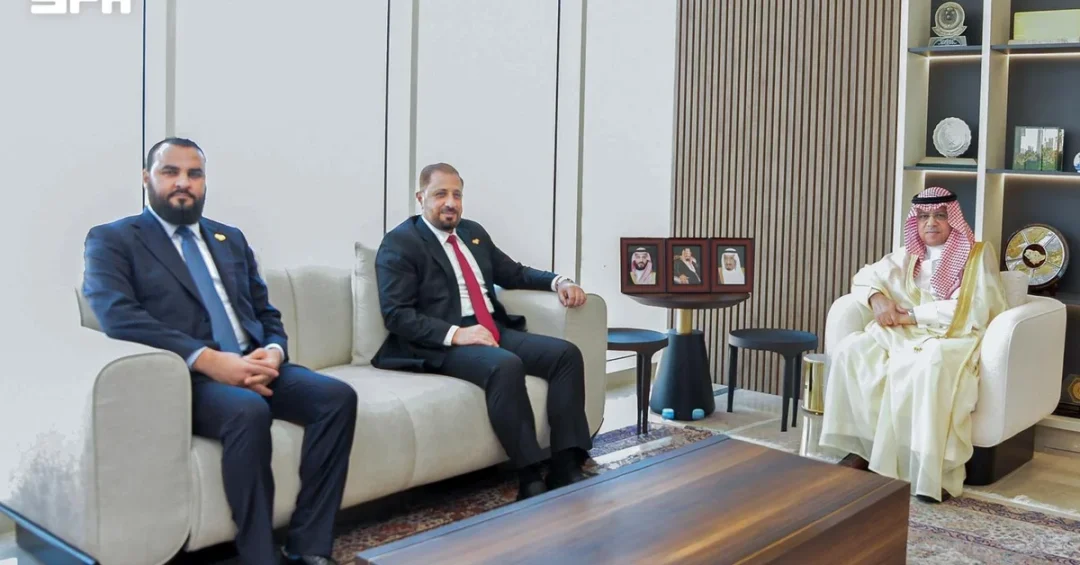
Saudi Arabia’s General Authority of Civil Aviation (GACA) President Abdulaziz Al-Duailej received the President of the General Authority of Civil Aviation and Air Transport of the Syrian Arab Republic, Omar Hosari, on Sunday at GACA headquarters in Riyadh, according to the Saudi Press Agency (SPA). The meeting, confirmed through official Saudi channels, focused on matters of shared interest in civil aviation and air transport, and reviewed avenues of cooperation and coordination aimed at developing the aviation sector and strengthening joint efforts between the two countries. The encounter underscores the Kingdom’s continuing engagement with regional partners in a sector that has become central to its economic transformation agenda.
Civil aviation has emerged as one of the most dynamic areas of Saudi Arabia’s international cooperation, and the Riyadh talks reflect the Kingdom’s broader approach of using transport connectivity to build durable regional relationships. Under the leadership of the General Authority of Civil Aviation, the Kingdom has pursued an ambitious agenda of airspace liberalization, airport expansion, and carrier growth, all anchored in the National Aviation Strategy. Receiving a senior Syrian civil aviation official at GACA headquarters signals that Saudi Arabia views aviation diplomacy as a practical instrument for regional stability, economic integration, and people-to-people exchange. What does such a meeting reveal about the Kingdom’s priorities in a rapidly changing regional environment?
Context and Background
Why has civil aviation become such a central pillar of Saudi Arabia’s regional diplomacy? The answer lies partly in the sector’s unique ability to translate political goodwill into tangible economic outcomes. The General Authority of Civil Aviation, known as GACA, is the Kingdom’s principal regulator for civil aviation, responsible for safety oversight, airspace management, airport licensing, and the development of air transport agreements with foreign governments. Its president, Abdulaziz Al-Duailej, has overseen a period of significant regulatory modernization, including reforms designed to attract international investment and expand the Kingdom’s connectivity to Asia, Europe, and Africa. The meeting with his Syrian counterpart therefore sits within a well-established pattern of Saudi aviation diplomacy.
The Syrian General Authority of Civil Aviation and Air Transport performs a comparable role in Damascus, regulating airports, air navigation services, and air carrier oversight. Omar Hosari’s participation in Sunday’s meeting represents a continuation of engagement between the two regulators following the broader normalization of relations between Saudi Arabia and Syria. The two sides reviewed areas of cooperation and coordination intended to help develop the aviation sector, according to the official SPA report. Such regulatory-to-regulatory contact is typically a precursor to more concrete arrangements, including revised air services agreements, technical training exchanges, and the resumption or expansion of direct flight connections.
For international observers, the timing matters. Regional aviation markets are recovering and restructuring after years of disruption, and governments across the Middle East are recalibrating their air links to reflect new political and economic realities. Saudi Arabia, as the largest economy in the Arab world and the host of the region’s busiest aviation growth plans, is positioned to shape how those links develop. The Riyadh meeting is best understood not as an isolated courtesy call but as part of a deliberate effort to align regulatory frameworks and open channels of communication between neighboring states.
Key Details of the Riyadh Meeting
What exactly was discussed at GACA headquarters? According to the Saudi Press Agency, the meeting covered a number of issues of common interest in civil aviation and air transport and reviewed areas of cooperation and coordination to help develop the aviation sector and enhance joint efforts. While the official readout did not disclose specific agreements or timelines, the scope of discussion reflects the breadth of the bilateral aviation relationship. Topics of this nature typically include air services arrangements, safety and security standards, air traffic management coordination, airport operations, and the training and certification of aviation personnel.
The presence of both regulatory chiefs at the same table is significant. GACA and its Syrian counterpart are the institutions that certify carriers, approve routes, and ensure compliance with international standards set by the International Civil Aviation Organization (ICAO), the United Nations agency responsible for civil aviation standards. Cooperation between regulators can accelerate the reopening of routes and the recognition of licenses and certificates, which in turn enables airlines to schedule services. For passengers and cargo operators, these technical steps are often the practical gateway to restored connectivity.
The meeting also reflects the personal and institutional relationship between the two authorities. President Al-Duailej has emphasized regional partnership as part of GACA’s mandate, while President Hosari leads an authority seeking to rebuild its international linkages. The official Saudi account describes the encounter as part of ongoing coordination, suggesting that further technical discussions between the two bodies are likely. Such follow-up would be consistent with the Kingdom’s preference for incremental, institution-led engagement that produces measurable results rather than symbolic gestures alone.
International and Regional Impact
How might this meeting ripple beyond the two aviation authorities? Civil aviation cooperation between Saudi Arabia and Syria carries implications for the wider Middle East, where air routes, overflight rights, and airport hubs are intertwined. A more predictable regulatory environment between Riyadh and Damascus could encourage airlines to evaluate new or restored services, reduce costs associated with rerouting, and improve connectivity for travelers, businesspeople, and diaspora communities. For a region that has experienced years of fragmented airspace, even modest regulatory alignment represents progress.
The meeting also fits into a broader pattern of Saudi regional engagement. The Kingdom has consistently advocated for stability, dialogue, and economic cooperation among Arab states, and aviation is one of the most practical domains in which such cooperation can be demonstrated. By receiving his Syrian counterpart in Riyadh, the GACA president reinforces Saudi Arabia’s role as a convening power in the region and as a source of technical expertise and regulatory best practice. International airlines and aviation bodies watch such meetings closely, because they signal where new capacity and new routes may emerge.
From a global perspective, the talks come as Middle Eastern aviation continues to grow faster than the world average, driven by geography, pilgrimage traffic, tourism investment, and cargo demand. Any improvement in regulatory coordination between two neighboring states contributes to the efficiency of the wider network. For international readers tracking the region’s reopening, the Riyadh meeting is a useful indicator that aviation diplomacy remains an active channel of engagement.
Economic and Strategic Significance
Why does aviation cooperation matter economically? Air transport is a multiplier industry: it supports tourism, trade, logistics, religious travel, and foreign investment. Saudi Arabia’s own aviation strategy targets hundreds of millions of passengers annually, hundreds of destinations, and substantial increases in cargo capacity, all of which require a dense web of bilateral air services agreements. Each agreement negotiated or modernized by GACA expands the legal and commercial space in which airlines can operate. Engagement with Syria therefore has strategic value beyond the bilateral relationship itself, because it contributes to the density and resilience of the Kingdom’s regional network.
For Syria, cooperation with Saudi Arabia’s civil aviation authority offers access to technical expertise, training opportunities, and regulatory guidance at a time when rebuilding air transport infrastructure is a priority. For Saudi Arabia, it reinforces the Kingdom’s position as a provider of regional public goods, from safety oversight to air navigation standards. Both dimensions align with the economic logic of Vision 2030, which seeks to diversify the Kingdom’s economy and deepen its role as a logistics and transport hub connecting three continents.
There is also a commercial dimension. Airlines assess route viability based on regulatory certainty, traffic rights, and airport capacity. When regulators meet and coordinate, they reduce the friction that keeps carriers from launching services. In practical terms, Sunday’s discussions could help lay the groundwork for future airline decisions, whether by Saudi carriers, Syrian carriers, or third-country operators interested in the corridor. The economic significance lies less in any single announcement than in the cumulative effect of regular, professional regulatory dialogue.
Vision 2030 Alignment
How does this meeting connect to Saudi Arabia’s long-term national plan? Vision 2030, launched under the leadership of Crown Prince Mohammed bin Salman, sets out to transform the Kingdom into a global investment, tourism, and logistics hub. The National Aviation Strategy, a key enabler of that vision, aims to expand connectivity, modernize airports, and grow the contribution of aviation to the national economy. GACA’s engagement with international counterparts is a direct instrument of that strategy, because connectivity is built through agreements, mutual recognition, and regulatory trust.
The Riyadh meeting also reflects the Vision 2030 emphasis on regional leadership and constructive diplomacy. By working with Syria’s civil aviation authority on shared technical interests, Saudi Arabia demonstrates that its modernization agenda is not inward-looking but regionally engaged. As the Kingdom prepares to host major global events, expand its airline fleet, and develop new destinations, its relationships with neighboring regulators will help determine how smoothly passengers and cargo move across borders.
In the final analysis, the reception of President Omar Hosari by President Abdulaziz Al-Duailej is a small but meaningful chapter in Saudi Arabia’s aviation story. It shows a Kingdom that uses its institutional strength to build bridges, that treats civil aviation as a tool of prosperity, and that remains committed to a forward-looking regional vision. For an international audience, the message is clear: Saudi Arabia is open for business, open to cooperation, and determined to help shape a more connected Middle East in line with Vision 2030.
20 Questions
Q1. Who received the Syrian civil aviation delegation in Riyadh?
A1. General Authority of Civil Aviation (GACA) President Abdulaziz Al-Duailej received President of the General Authority of Civil Aviation and Air Transport of the Syrian Arab Republic Omar Hosari at GACA headquarters in Riyadh, according to the Saudi Press Agency.
Q2. When did the meeting take place?
A2. The official Saudi report states the meeting took place on Sunday at GACA headquarters in Riyadh, with the announcement carried by the Saudi Press Agency.
Q3. What was the main purpose of the meeting?
A3. The meeting covered issues of common interest in civil aviation and air transport and reviewed areas of cooperation and coordination to help develop the aviation sector and enhance joint efforts.
Q4. Which Saudi authority hosted the talks?
A4. The General Authority of Civil Aviation, known as GACA, hosted the talks. GACA is the Kingdom’s civil aviation regulator, responsible for safety, airspace, airports, and air transport agreements.
Q5. Who is Abdulaziz Al-Duailej?
A5. Abdulaziz Al-Duailej is the President of the General Authority of Civil Aviation of Saudi Arabia, the official responsible for leading the Kingdom’s civil aviation regulator and its modernization programs.
Q6. Who is Omar Hosari?
A6. Omar Hosari is the President of the General Authority of Civil Aviation and Air Transport of the Syrian Arab Republic, the body that regulates civil aviation and air transport in Syria.
Q7. Where was the meeting held?
A7. The meeting was held at GACA headquarters in Riyadh, the capital of the Kingdom of Saudi Arabia, according to the official Saudi Press Agency report.
Q8. Did the two sides sign any agreements?
A8. The official readout did not announce signed agreements. It stated that the meeting covered common interests and reviewed areas of cooperation and coordination in civil aviation and air transport.
Q9. Why is civil aviation important to Saudi Arabia’s economy?
A9. Civil aviation supports tourism, trade, logistics, religious travel, and investment. It is a key enabler of Saudi Arabia’s National Aviation Strategy and the economic diversification goals of Vision 2030.
Q10. What is GACA’s role in Saudi Arabia?
A10. GACA regulates civil aviation in the Kingdom, overseeing safety, security, airspace management, airport licensing, and the negotiation of air services agreements with foreign governments.
Q11. How does this meeting relate to regional diplomacy?
A11. It reflects Saudi Arabia’s broader approach of using practical cooperation, including aviation, to strengthen regional relationships and support stability, dialogue, and economic integration among Arab states.
Q12. What topics are typical in such regulator-to-regulator meetings?
A12. Typical topics include air services arrangements, safety and security standards, air traffic management, airport operations, and the training and certification of aviation personnel.
Q13. What international standards guide both authorities?
A13. Both authorities operate under standards set by the International Civil Aviation Organization (ICAO), the United Nations agency responsible for civil aviation safety, security, and efficiency standards worldwide.
Q14. Could the meeting lead to new flights between the two countries?
A14. Regulatory cooperation can help enable route resumption or expansion, but the official report did not announce specific flight schedules or airline decisions. Any such steps would follow technical discussions.
Q15. How does aviation cooperation support Vision 2030?
A15. Vision 2030 seeks to make Saudi Arabia a global logistics and tourism hub. Expanded connectivity and regulatory cooperation directly support that goal by enabling more passengers, cargo, and investment.
Q16. What is the National Aviation Strategy?
A16. The National Aviation Strategy is Saudi Arabia’s plan to expand airports, grow airline capacity, increase destinations, and raise aviation’s contribution to the national economy as part of Vision 2030.
Q17. Why do international observers track such meetings?
A17. They indicate where new air links and regulatory alignment may emerge. Airlines and aviation bodies monitor them for signals about route development, capacity, and regional connectivity trends.
Q18. What does the meeting say about Saudi Arabia’s regional role?
A18. It shows the Kingdom acting as a convening power and a source of technical expertise, using its institutional strength to build bridges and support a more connected Middle East.
Q19. What are the next likely steps after this meeting?
A19. Follow-up typically involves technical discussions between the two authorities on air services, safety, and training. The official report described ongoing coordination to develop the aviation sector.
Q20. What is the main takeaway for international readers?
A20. Saudi Arabia continues to use civil aviation as a practical tool of regional engagement and economic development, consistent with its Vision 2030 goal of becoming a leading global transport and logistics hub.
Reader Feedback
We value your thoughts. Please share your feedback on this article.
Your feedback helps us improve our coverage.
Related articles
 Darah Joins Security and History Dialogue 2026 in Riyadh
 Saudi FM, UK Foreign Secretary Discuss Regional Stability
 Saudi FM Receives Call from Bahraini Counterpart
 KSrelief Distributes Food Baskets to 50 Families in Yemen’s Al-Hudaydah
 AlUla Vulture Conservation Efforts Track Threatened Species
 King Saud University to Host Legal Governance Conference