


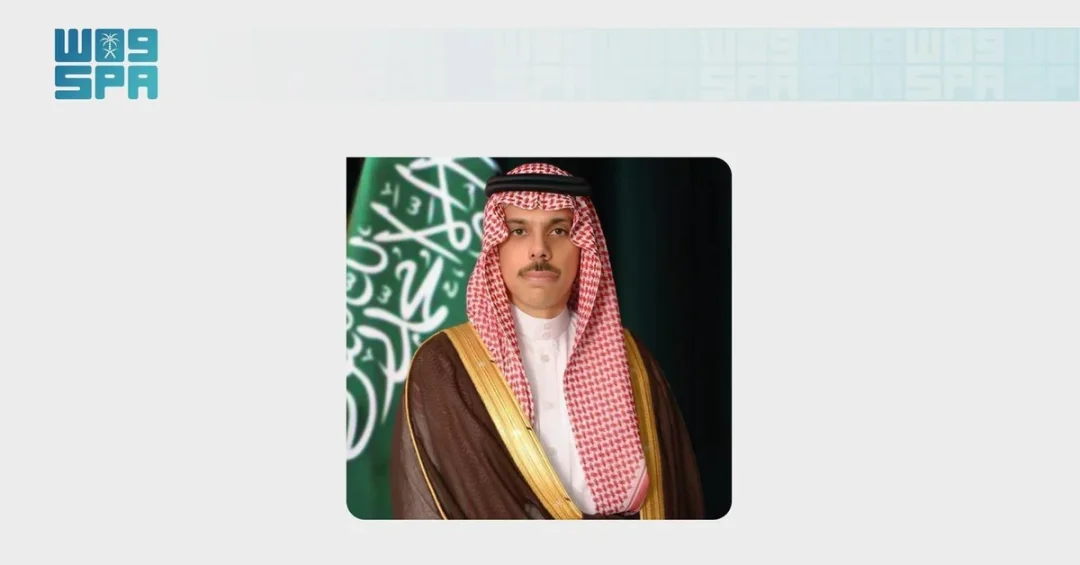
Saudi Minister of Foreign Affairs Prince Faisal bin Farhan bin Abdullah received a phone call from the Foreign Minister of the Kingdom of Bahrain, Dr. Abdullatif bin Rashid Al Zayani, on September 7, 2026, according to the Saudi Press Agency (SPA). The two senior diplomats discussed regional developments and joint efforts to maintain security and stability, underscoring the enduring strength of Saudi-Bahraini relations and the shared commitment of the two kingdoms to safeguarding the interests of the Gulf region and its people.
The call reflects the regular, high-level coordination that characterizes the relationship between Riyadh and Manama, two neighboring states whose ties rest on deep historical, familial, and strategic foundations. Both nations are members of the Gulf Cooperation Council (GCC), the Arab League, and the Organization of Islamic Cooperation, and they routinely consult on matters ranging from regional security to economic integration. The timing of the call, amid a rapidly evolving regional landscape, highlights the importance both capitals place on continuous dialogue and collective action. As Saudi Arabia continues to advance its Vision 2030 transformation, maintaining stability in its immediate neighborhood remains a cornerstone of its foreign policy.
Context and Background
How did the Saudi-Bahraini relationship come to be one of the most durable partnerships in the Arab world? The bond between the two kingdoms predates the modern state system, rooted in shared history, geography, and the close ties between their ruling families. The King Fahd Causeway, which opened in 1986, physically links the two countries and serves as a vital artery for trade, tourism, and people-to-people exchange. Over the decades, the relationship has matured into a comprehensive strategic partnership encompassing defense, energy, investment, and cultural cooperation. The regular exchange of calls and visits between senior officials is a hallmark of this partnership, ensuring that both sides remain aligned on pressing regional issues.
The phone call between Prince Faisal bin Farhan and Dr. Abdullatif bin Rashid Al Zayani is the latest in a long series of consultations. Prince Faisal, who has served as Saudi Arabia’s top diplomat since 2019, has consistently emphasized the importance of Gulf unity and collective security. Dr. Al Zayani, a seasoned Bahraini diplomat who previously served as the kingdom’s ambassador to several countries and as a senior official in the GCC, shares that outlook. Their conversation comes at a time when the region faces a mix of opportunities and challenges, from economic diversification to geopolitical tensions. By consulting closely, Riyadh and Manama help to ensure that the Gulf remains a stable and prosperous anchor in a volatile neighborhood.
What makes this particular call significant? It is not merely a routine courtesy. In the Gulf’s diplomatic culture, such high-level contacts are carefully calibrated and often precede or follow major regional developments. The SPA report notes that the two ministers discussed “developments in the region and efforts to maintain its security and stability,” language that signals a shared assessment of the current environment and a mutual desire to coordinate responses. For international observers, the call serves as a reminder that Saudi Arabia and Bahrain operate as a cohesive bloc on many issues, and that their partnership is a stabilizing force in the broader Middle East.
Key Details of the Call
What exactly was discussed during the call? According to the official SPA report, the conversation focused on regional developments and the ongoing efforts to maintain security and stability. While the statement did not specify particular countries or crises, the broad phrasing is typical of Gulf diplomatic readouts, which often emphasize shared principles over granular details. The two ministers likely reviewed the situation in the Gulf, the broader Middle East, and possibly beyond, exchanging views on how best to promote de-escalation and cooperation. The call underscores the continuous nature of Saudi-Bahraini coordination, which operates through multiple channels, including the GCC, bilateral security agreements, and regular summits.
Prince Faisal bin Farhan has been a central figure in Saudi Arabia’s diplomatic outreach, representing the Kingdom at numerous international forums and advocating for dialogue and peaceful resolution of conflicts. Dr. Abdullatif bin Rashid Al Zayani, who became Bahrain’s Foreign Minister in 2020, has similarly been active in promoting Gulf unity and Bahrain’s international partnerships. Their phone call is part of a broader pattern of intensive diplomacy among GCC states, which have increasingly sought to speak with one voice on regional security, economic integration, and global engagement. The SPA report, issued from Riyadh, highlights the transparency with which Saudi Arabia communicates its diplomatic activities to the public and the world.
Why does the method of communication matter? A phone call between foreign ministers is a flexible, immediate tool of diplomacy. It allows for frank exchanges and quick coordination without the logistical demands of a formal summit. In the context of Saudi-Bahraini relations, such calls are frequent and are often followed by joint statements or concrete initiatives. The September 7 call is therefore best understood as part of a continuous process of alignment, ensuring that both kingdoms are prepared to address emerging challenges together. It also signals to other regional and global actors that Riyadh and Manama are closely coordinated, a factor that can deter potential disruptions and encourage constructive engagement.
International and Regional Impact
How does a single phone call between two foreign ministers resonate beyond their borders? In the interconnected politics of the Middle East, signals matter. Saudi Arabia is the largest economy in the Arab world and a pivotal player in global energy markets, while Bahrain hosts the headquarters of the U.S. Fifth Fleet and serves as a key security partner for Western nations. When these two countries align, they can shape outcomes on issues ranging from maritime security to counterterrorism. The call between Prince Faisal and Dr. Al Zayani thus reinforces the axis of stability in the Gulf, reassuring allies and partners that the region’s core states are engaged and coordinated. It also demonstrates the effectiveness of Gulf diplomacy in a time of shifting alliances and emerging threats.
From a regional perspective, the call may be seen as part of a wider Saudi effort to promote de-escalation and dialogue. In recent years, Saudi Arabia has played a leading role in initiatives to reduce tensions, including the restoration of diplomatic ties with Iran and the reintegration of Syria into the Arab League. Bahrain, as a close Saudi ally, supports these efforts while maintaining its own strong security relationships. The discussion of “efforts to maintain security and stability” likely touched on these broader dynamics. For international audiences, the call is a reminder that Gulf states are not passive observers but active architects of regional order, working through institutions like the GCC and the Arab League to advance their collective interests.
Economic and Strategic Significance
What economic and strategic interests underpin the Saudi-Bahraini partnership? Trade between the two kingdoms is substantial and growing, facilitated by the King Fahd Causeway and a series of bilateral agreements. Saudi Arabia is one of Bahrain’s largest trading partners, and Bahraini companies operate actively in the Saudi market. The two countries also cooperate closely in energy, with Saudi Aramco and Bahrain’s Nogaholding working together on various projects. Moreover, the Public Investment Fund (PIF), Saudi Arabia’s sovereign wealth fund, has invested in Bahraini infrastructure and development projects, reflecting the deep economic integration that complements the security relationship. The phone call, while focused on security and stability, takes place against this backdrop of robust economic ties.
Strategically, the partnership is a linchpin of Gulf security. Both countries are members of the Peninsula Shield Force, the military arm of the GCC, and they conduct regular joint exercises. Saudi Arabia has historically been a guarantor of Bahrain’s security, and the two militaries coordinate closely on maritime and air defense. In a region where threats can emerge quickly, this coordination is vital. The call between the foreign ministers is a reminder that diplomacy and defense go hand in hand. By maintaining open lines of communication, Riyadh and Manama can respond swiftly to any challenge, whether it be a security incident, a natural disaster, or a diplomatic crisis. This readiness is a key component of the stability that has allowed the Gulf to prosper.
Vision 2030 Alignment
How does Saudi Arabia’s Vision 2030 connect to its diplomacy with Bahrain? Vision 2030 is the Kingdom’s comprehensive plan to diversify its economy, empower its citizens, and enhance its global standing. A stable and secure region is a prerequisite for achieving these goals. The phone call between Prince Faisal and Dr. Al Zayani is a practical expression of the diplomatic pillar of Vision 2030, which seeks to strengthen Saudi Arabia’s partnerships and promote peace and prosperity. By coordinating with Bahrain, Saudi Arabia reinforces the regional stability that attracts investment, facilitates trade, and allows for the ambitious projects—from NEOM to the Red Sea development—that are transforming the Kingdom. In this sense, the call is not just about managing crises; it is about building the conditions for long-term success.
Furthermore, Vision 2030 emphasizes the importance of international cooperation and the Kingdom’s role as a bridge between continents. Bahrain, with its strategic location and business-friendly environment, is a natural partner in this endeavor. The two countries are working together on initiatives related to tourism, logistics, and technology, all of which align with Vision 2030’s goals. The foreign ministers’ discussion of security and stability thus has a direct bearing on the economic and social transformation underway in both kingdoms. As Saudi Arabia continues to open up to the world, its relationship with Bahrain will remain a model of neighborly cooperation and a source of strength for the entire Gulf region. The September 7 call is a small but meaningful step in that ongoing journey.
20 Questions
Q1. Who received the phone call from Bahrain’s Foreign Minister?
A1. Saudi Minister of Foreign Affairs Prince Faisal bin Farhan bin Abdullah received the call from Bahrain’s Foreign Minister Dr. Abdullatif bin Rashid Al Zayani on September 7, 2026, as reported by the Saudi Press Agency.
Q2. What was the main topic of the call?
A2. The two ministers discussed regional developments and efforts to maintain security and stability, according to the official SPA report. The conversation reflected their shared commitment to Gulf stability.
Q3. Which Saudi agency reported the call?
A3. The Saudi Press Agency (SPA) reported the call from Riyadh, highlighting the Kingdom’s transparent communication of its diplomatic engagements to the public and international observers.
Q4. What is the significance of Saudi-Bahraini relations?
A4. Saudi-Bahraini relations are among the most durable in the Arab world, rooted in shared history and strengthened by the King Fahd Causeway, close economic ties, and mutual security commitments.
Q5. Who is Prince Faisal bin Farhan bin Abdullah?
A5. Prince Faisal bin Farhan bin Abdullah is Saudi Arabia’s Minister of Foreign Affairs, appointed in 2019. He has been a central figure in the Kingdom’s diplomatic outreach and regional de-escalation efforts.
Q6. Who is Dr. Abdullatif bin Rashid Al Zayani?
A6. Dr. Abdullatif bin Rashid Al Zayani is the Foreign Minister of the Kingdom of Bahrain, appointed in 2020. He is a seasoned diplomat who previously served as Bahrain’s ambassador and in senior GCC roles.
Q7. When did the call take place?
A7. The call took place on September 7, 2026, according to the SPA report, which was issued from Riyadh and carried a timestamp of 00:12 local time.
Q8. Why are such calls important for regional security?
A8. Regular high-level consultations allow Gulf states to coordinate responses to emerging challenges, maintain alignment on security issues, and present a unified front that deters potential threats.
Q9. What role does the GCC play in Saudi-Bahraini relations?
A9. The Gulf Cooperation Council provides a multilateral framework for cooperation on security, economy, and diplomacy, complementing the strong bilateral ties between Saudi Arabia and Bahrain.
Q10. How does the King Fahd Causeway contribute to bilateral ties?
A10. The causeway, opened in 1986, physically connects Saudi Arabia and Bahrain, facilitating trade, tourism, and people-to-people exchanges that deepen economic and social integration.
Q11. What economic ties exist between Saudi Arabia and Bahrain?
A11. Saudi Arabia is one of Bahrain’s largest trading partners, and the two countries cooperate in energy, infrastructure, and investment, including projects supported by Saudi Arabia’s Public Investment Fund.
Q12. How does this call relate to Saudi Vision 2030?
A12. Vision 2030 requires regional stability for economic diversification and global engagement. The call reinforces the diplomatic partnerships that underpin the Kingdom’s transformation and long-term prosperity.
Q13. What does “efforts to maintain security and stability” refer to?
A13. The phrase is standard Gulf diplomatic language referring to ongoing work to prevent conflicts, counter terrorism, ensure maritime security, and promote dialogue among regional states.
Q14. Are there regular consultations between Saudi and Bahraini officials?
A14. Yes, Saudi and Bahraini leaders and ministers consult frequently through bilateral calls, GCC summits, and joint committees, reflecting the depth and continuity of their strategic partnership.
Q15. What is the Peninsula Shield Force?
A15. The Peninsula Shield Force is the military arm of the GCC, established to protect member states. Saudi Arabia and Bahrain both contribute to and benefit from this collective defense mechanism.
Q16. How does Bahrain’s location affect its strategic importance?
A16. Bahrain hosts the U.S. Fifth Fleet headquarters and sits near key maritime chokepoints, making it a vital security partner for both Gulf states and international allies.
Q17. What other regional issues might have been discussed?
A17. While the SPA report did not specify, the ministers likely reviewed Gulf security, economic integration, and broader Middle East developments, consistent with their regular consultations on regional affairs.
Q18. How does this call reflect Saudi Arabia’s foreign policy approach?
A18. It demonstrates Saudi Arabia’s commitment to close coordination with Gulf allies, proactive diplomacy, and the pursuit of stability through dialogue and partnership, in line with Vision 2030.
Q19. What message does the call send to the international community?
A19. The call signals that Saudi Arabia and Bahrain are aligned and engaged, reassuring partners of their continued commitment to regional security and stability amid a changing geopolitical landscape.
Q20. What can we expect next from Saudi-Bahraini cooperation?
A20. Continued high-level consultations, joint initiatives in security and economy, and further integration through the GCC are expected as both kingdoms work toward shared prosperity and regional stability.
Reader Feedback
We value your thoughts. Please share your feedback on this article.
Your feedback helps us improve our coverage.
Related articles
 KSrelief Distributes Food Baskets to 50 Families in Yemen’s Al-Hudaydah
 AlUla Vulture Conservation Efforts Track Threatened Species
 King Saud University to Host Legal Governance Conference
 KSrelief Distributes 25,000 Hot Meals in Gaza Strip
 MWL Condemns Israeli Statements on Displacement of Palestinians
 Prince Turki bin Mohammed Meets GCC Secretary-General