


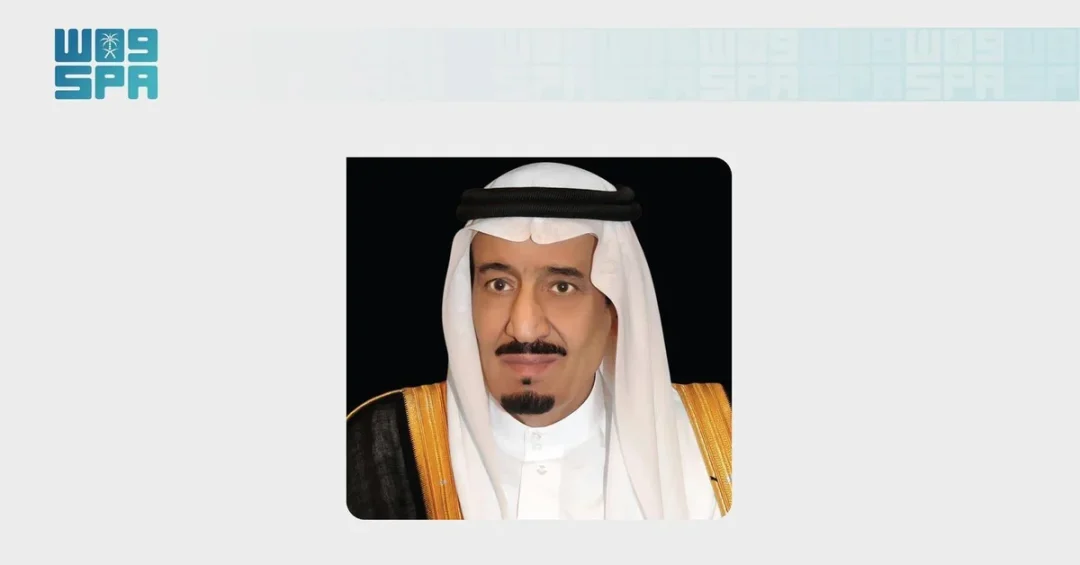
Custodian of the Two Holy Mosques King Salman bin Abdulaziz Al Saud has sent a cable of congratulations to President Asif Ali Zardari of the Islamic Republic of Pakistan on the occasion of Pakistan’s Independence Day, according to the Saudi Press Agency (SPA). In the cable, the Custodian of the Two Holy Mosques extended his sincere congratulations and best wishes to the president, the government, and the people of Pakistan, expressing his hopes for continued good health and happiness for the president and steady progress and prosperity for the nation.
The message, released through official Saudi channels, also praised the strong and enduring relations binding the Kingdom of Saudi Arabia and Pakistan, underscoring a shared commitment to advancing cooperation across all fields. The exchange reflects the depth of a partnership that has been cultivated over decades and continues to serve as a cornerstone of regional stability and Islamic solidarity. As the two nations mark another year of diplomatic and economic engagement, the royal cable serves as both a ceremonial gesture and a reaffirmation of strategic alignment.
Context and Background
Why does an annual diplomatic cable carry such weight in international affairs? The relationship between Saudi Arabia and Pakistan is rooted in shared faith, mutual respect, and a long history of close coordination on matters of regional and global importance. Pakistan gained independence on August 14, 1947, and Saudi Arabia was among the first nations to recognize the newly formed state, establishing diplomatic ties that have since matured into a multifaceted partnership. The Custodian of the Two Holy Mosques has consistently emphasized the importance of this bond, which extends beyond formal diplomacy into people-to-people ties, religious affinity, and economic collaboration.
The Kingdom’s leadership has long maintained that strong relations with Pakistan contribute to the stability of the broader Islamic world. Over the years, Saudi Arabia and Pakistan have signed numerous agreements covering trade, investment, energy, defense, and cultural exchange. These agreements are regularly reviewed and expanded through high-level visits, joint committees, and mutual participation in international forums. The congratulatory cable is therefore part of a broader pattern of engagement that includes not only ceremonial exchanges but also substantive cooperation on issues such as labor migration, remittances, and counterterrorism.
In recent years, the two countries have deepened their economic ties under the umbrella of Saudi Vision 2030, which seeks to diversify the Kingdom’s economy and strengthen its global partnerships. Pakistan, with its strategic location, large workforce, and growing consumer market, represents a natural partner in this endeavor. The exchange of congratulatory messages on national days is a diplomatic tradition that signals continuity and goodwill, but it also provides an opportunity to take stock of ongoing initiatives and future possibilities.
Key Details of the Royal Cable
What specific sentiments did the Custodian of the Two Holy Mosques convey in his message? According to the Saudi Press Agency, King Salman bin Abdulaziz Al Saud wished President Asif Ali Zardari continued good health and happiness, and extended his best wishes for the government and people of Pakistan to enjoy steady progress and prosperity. The cable also highlighted the strong relations binding the two countries and their peoples, with a particular emphasis on the shared commitment to advancing cooperation across all fields.
The message was transmitted via official Saudi channels and published by SPA, the Kingdom’s national news agency. This method of communication is standard practice for diplomatic greetings between heads of state and reflects the formal, respectful nature of Saudi-Pakistani relations. The timing of the cable, released on August 14, aligns with Pakistan’s Independence Day celebrations, a moment when Pakistanis around the world reflect on their nation’s history and future. The Custodian of the Two Holy Mosques’ gesture is seen as a mark of respect for Pakistan’s sovereignty and a reaffirmation of the Kingdom’s commitment to standing with its allies.
The cable did not introduce new policy initiatives or agreements, but its language underscores the enduring nature of the relationship. By praising the strong bonds between the two countries, the message reinforces the foundation upon which further collaboration can be built. It also serves as a reminder that Saudi Arabia values its partnerships with Islamic nations and remains dedicated to fostering unity and cooperation within the Muslim world.
International and Regional Impact
How does this diplomatic exchange resonate beyond the bilateral relationship? Saudi Arabia’s role as the custodian of Islam’s holiest sites gives its statements and gestures significant weight in the Muslim world. A congratulatory message to Pakistan on its Independence Day is not merely a courtesy; it is a signal of solidarity and a reaffirmation of the Kingdom’s leadership role in promoting Islamic unity. For Pakistan, receiving such a message from the Custodian of the Two Holy Mosques carries profound symbolic importance, given the deep religious and cultural ties between the two nations.
Regionally, the Saudi-Pakistani partnership contributes to stability in South Asia and the Middle East. Both countries have cooperated on security matters, counterterrorism efforts, and peace initiatives. Pakistan’s geographical position, bordering Iran, Afghanistan, China, and India, makes it a key player in regional dynamics, and Saudi Arabia’s support for Pakistan’s development and security is viewed as a stabilizing factor. The annual exchange of Independence Day greetings thus forms part of a broader diplomatic rhythm that helps maintain trust and open channels of communication.
Internationally, the message reflects Saudi Arabia’s consistent approach to foreign policy, which emphasizes respect for sovereignty, non-interference, and peaceful coexistence. By publicly celebrating Pakistan’s national day, the Kingdom reinforces its commitment to these principles and sets a positive example for international relations. The cable also highlights the importance of people-to-people connections, as millions of Pakistanis live and work in Saudi Arabia, contributing to both economies and fostering cultural exchange.
Economic and Strategic Significance
What economic and strategic dimensions underpin the Saudi-Pakistani relationship? Trade between the two countries has grown steadily, with Saudi Arabia serving as a major source of energy supplies and investment for Pakistan. Pakistani workers in the Kingdom send billions of dollars in remittances each year, which are vital to Pakistan’s economy. In turn, Saudi Arabia benefits from Pakistan’s skilled labor force and its strategic partnership in regional security. The two nations have also explored cooperation in renewable energy, mining, agriculture, and technology, aligning with Saudi Vision 2030’s goals of economic diversification.
The Kingdom’s Public Investment Fund (PIF) and other Saudi entities have shown interest in investing in Pakistan’s infrastructure, energy, and tourism sectors. These investments are part of a broader strategy to deepen economic ties and create mutual prosperity. The congratulatory cable, while symbolic, serves as a reminder of the political goodwill that underpins these economic initiatives. Without strong diplomatic relations, such cooperation would be difficult to sustain. Therefore, the annual exchange of greetings is not just a formality but a renewal of the political commitment that enables economic progress.
Strategically, Saudi Arabia and Pakistan share common interests in combating extremism, promoting moderate Islam, and ensuring the security of vital trade routes, including the Red Sea and the Arabian Sea. The two countries have conducted joint military exercises and exchanged defense expertise. The Kingdom’s leadership has consistently supported Pakistan’s efforts to maintain stability and has provided economic assistance during challenging times. This strategic alignment is reinforced by regular high-level visits and consultations, of which the Independence Day cable is one small but meaningful component.
Vision 2030 Alignment
How does this diplomatic gesture connect to Saudi Arabia’s long-term vision? Saudi Vision 2030, launched by Crown Prince Mohammed bin Salman, aims to transform the Kingdom into a diversified, global economy and a hub for international cooperation. Strengthening ties with key partners like Pakistan is integral to this vision. The Kingdom seeks to expand its network of alliances, boost trade, and attract investment, all of which are facilitated by robust diplomatic relations. The Custodian of the Two Holy Mosques’ message to Pakistan is a reflection of this outward-looking approach.
Moreover, Vision 2030 emphasizes the importance of Islamic solidarity and the Kingdom’s role as a leader in the Muslim world. By maintaining strong relations with Pakistan, Saudi Arabia reinforces its commitment to these values. The two countries collaborate on cultural and educational exchanges, with Pakistani students studying in Saudi universities and Saudi cultural events held in Pakistan. These people-to-people ties are essential to building the long-term goodwill that supports Vision 2030’s goals of global engagement and soft power projection.
In conclusion, the cable of congratulations from the Custodian of the Two Holy Mosques to President Asif Ali Zardari is a testament to the enduring friendship between Saudi Arabia and Pakistan. It highlights the Kingdom’s dedication to fostering unity, prosperity, and cooperation among Islamic nations. As Saudi Arabia continues its journey toward Vision 2030, partnerships like this will remain vital to its success, ensuring a future of shared progress and stability.
20 Questions
Q1. Who sent the congratulatory cable to Pakistan’s president?
A1. Custodian of the Two Holy Mosques King Salman bin Abdulaziz Al Saud sent the cable to President Asif Ali Zardari of Pakistan on the occasion of Pakistan’s Independence Day, as reported by the Saudi Press Agency.
Q2. When is Pakistan’s Independence Day celebrated?
A2. Pakistan’s Independence Day is celebrated annually on August 14, marking the nation’s independence in 1947. The congratulatory message from Saudi Arabia was released on this date.
Q3. What did King Salman wish for President Zardari?
A3. The Custodian of the Two Holy Mosques wished President Zardari continued good health and happiness, and extended his best wishes for the government and people of Pakistan to enjoy steady progress and prosperity.
Q4. What did the cable say about Saudi-Pakistani relations?
A4. The cable praised the strong relations binding the two countries and peoples, highlighting a shared commitment to advancing cooperation across all fields, according to the Saudi Press Agency.
Q5. Which Saudi agency reported the cable?
A5. The Saudi Press Agency (SPA) reported the cable, which is the official news agency of the Kingdom of Saudi Arabia, ensuring the information comes from a reliable government source.
Q6. Why is this message significant for Saudi-Pakistani ties?
A6. The message reaffirms the deep and enduring friendship between the two nations, underscoring Saudi Arabia’s commitment to Islamic solidarity and its support for Pakistan’s progress and prosperity.
Q7. How long have Saudi Arabia and Pakistan maintained diplomatic relations?
A7. Saudi Arabia and Pakistan established diplomatic relations shortly after Pakistan’s independence in 1947. The Kingdom was among the first countries to recognize the new nation, and ties have flourished ever since.
Q8. What areas of cooperation exist between the two countries?
A8. Cooperation spans trade, investment, energy, defense, counterterrorism, education, and cultural exchange. These areas are regularly strengthened through high-level visits and joint committees.
Q9. How does this cable align with Saudi Vision 2030?
A9. Vision 2030 aims to diversify the economy and strengthen global partnerships. Maintaining strong ties with Pakistan supports this goal by fostering economic cooperation, investment, and cultural exchange.
Q10. What role do Pakistani workers play in Saudi Arabia?
A10. Pakistani workers contribute significantly to Saudi Arabia’s economy and send vital remittances back home. Their presence strengthens people-to-people ties and supports both nations’ economic development.
Q11. Has Saudi Arabia provided economic assistance to Pakistan?
A11. Yes, Saudi Arabia has historically provided economic assistance to Pakistan, including loans, oil supplies, and investment. This support reflects the Kingdom’s commitment to its ally’s stability and growth.
Q12. What is the significance of the Custodian of the Two Holy Mosques title?
A12. The title refers to the Saudi monarch’s role as protector of Islam’s holiest sites, Mecca and Medina. It underscores the King’s spiritual leadership and his special responsibility toward the Muslim world.
Q13. How do these diplomatic exchanges benefit regional stability?
A13. They foster trust and open communication between key Islamic nations, contributing to stability in South Asia and the Middle East. Such gestures help maintain peaceful coexistence and mutual support.
Q14. What economic projects involve both Saudi Arabia and Pakistan?
A14. Joint projects include investments in energy, infrastructure, and mining. Saudi Arabia’s Public Investment Fund has shown interest in Pakistani sectors, aligning with Vision 2030’s diversification goals.
Q15. How does Pakistan benefit from Saudi investments?
A15. Saudi investments create jobs, improve infrastructure, and boost economic growth in Pakistan. They also strengthen bilateral ties and open doors for further cooperation in various sectors.
Q16. What is the role of the Saudi Press Agency in such announcements?
A16. The Saudi Press Agency is the official national news agency that disseminates government announcements and statements, ensuring accurate and timely information reaches the public and international media.
Q17. Are there cultural exchanges between Saudi Arabia and Pakistan?
A17. Yes, the two countries engage in cultural exchanges, including educational scholarships for Pakistani students in Saudi universities and participation in cultural festivals, fostering mutual understanding.
Q18. How does Saudi Arabia support Pakistan in international forums?
A18. Saudi Arabia often supports Pakistan’s positions in international organizations, including the United Nations and the Organization of Islamic Cooperation, reflecting their shared interests and diplomatic alignment.
Q19. What is the significance of Independence Day for Pakistanis?
A19. Independence Day is a moment for Pakistanis to celebrate their nation’s sovereignty and reflect on its progress. It is marked with parades, flag-raising ceremonies, and patriotic events across the country.
Q20. What does the future hold for Saudi-Pakistani relations?
A20. The future looks promising, with both nations committed to deepening cooperation under Vision 2030 and Pakistan’s development goals. Continued high-level exchanges and economic partnerships are expected to strengthen ties further.
Reader Feedback
We value your thoughts. Please share your feedback on this article.
Your feedback helps us improve our coverage.
Related articles
 Saudi Ambassador Presents Credentials to Sudan’s Transitional Council Chief
 Saudi Arabia Condemns Attack on UAE Tankers in Hormuz
 Greece Controls Major Wildfire Near Greek Resort; Tourists Evacuated
 Pakistan celebrates 79th Independence Day with national unity, progress
 Saudi-Chile Foreign Ministers Discuss Bilateral Ties
 Saudi, Chilean FMs Discuss Strengthening Bilateral Ties