


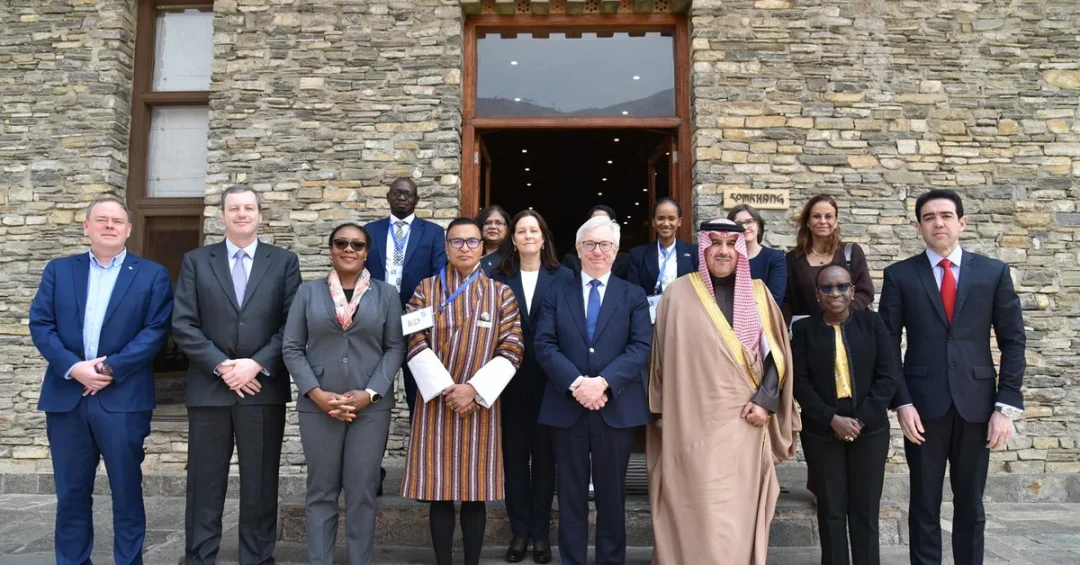
Dr. Hussam Alangari, President of the General Court of Audit (GCA) of the Kingdom of Saudi Arabia, represented the Kingdom at the INTOSAI Development Initiative (IDI) Board Meeting held in Thimphu, Bhutan, on April 2, 2025. The meeting brought together board members from the United Kingdom, Brazil, Norway, Austria, South Africa, Kenya, and Bhutan, reflecting the broad international coalition that guides the IDI’s work in strengthening public sector auditing worldwide. The Saudi Press Agency confirmed Dr. Alangari’s participation, underscoring the Kingdom’s active role in global governance and institutional development.
For observers of international public finance, the gathering was more than a routine board session. It marked another step in Saudi Arabia’s expanding engagement with multilateral institutions that promote transparency, accountability, and effective oversight. As the Kingdom accelerates its Vision 2030 transformation, its participation in bodies such as the IDI signals a commitment to sharing expertise and shaping global standards. How does a nation balancing rapid domestic reform with international responsibility navigate such a dual role? The answer lies in consistent, constructive participation in the institutions that define best practice.
Context and Background
The INTOSAI Development Initiative is a recognized body within the International Organization of Supreme Audit Institutions (INTOSAI), a global umbrella organization that brings together supreme audit institutions from more than 190 countries. The IDI’s mandate is to provide technical support, capacity-building programs, and coordinated assistance to member SAIs, with a particular focus on institutions in developing countries. Its work helps these bodies improve their performance, adopt international standards, and deliver more effective oversight of public funds.
The General Court of Audit, Saudi Arabia’s supreme audit institution, has long been an active participant in INTOSAI and its regional and development initiatives. Under the leadership of Dr. Hussam Alangari, the GCA has pursued a modernization agenda that aligns with the Kingdom’s broader governance reforms. The GCA’s presence on the IDI Board of Directors gives Saudi Arabia a direct voice in shaping how technical support is designed and delivered to audit institutions around the world. What does it mean for a national audit body to sit at the table where global capacity-building strategies are decided? It means the Kingdom can contribute its own experience while learning from peers, a two-way exchange that strengthens both Saudi capabilities and the international system.
The Thimphu meeting also took place against a backdrop of growing demand for robust public financial management. As countries worldwide face pressure to demonstrate accountability in the use of public resources, the role of SAIs has become more prominent. The IDI’s programs are designed to meet this demand by equipping auditors with the skills, tools, and methodologies they need. Saudi Arabia’s engagement in this effort reflects its recognition that sound auditing is a cornerstone of sustainable development and investor confidence.
Key Details of the Bhutan Meeting
During the board meeting, participants reviewed the IDI’s initiatives and accomplishments over the past period. Discussions centered on the technical support provided to supreme audit institutions in developing member countries through various programs and projects designed to enhance their performance. The board explored opportunities to further support the initiative in the coming years, ensuring that its work remains responsive to the evolving needs of member institutions.
Key agenda items included the approval of the IDI’s 2024 annual report and financial statements, an assessment of the initiative’s future financial outlook, and the adoption of policies and guidelines related to the disbursement of support to beneficiary institutions. These decisions are essential for maintaining the IDI’s operational effectiveness and ensuring that resources are allocated transparently and efficiently. The board also addressed several other critical matters, taking necessary actions to advance the IDI’s mission.
Dr. Alangari’s participation in these deliberations highlights Saudi Arabia’s commitment to good governance and international cooperation. By contributing to decisions on financial oversight and strategic direction, the GCA President helped shape the IDI’s approach to supporting audit institutions in developing countries. The meeting concluded with a renewed sense of purpose and a clear roadmap for the IDI’s activities in the years ahead. What does such detailed agenda work achieve in practical terms? It translates broad goals into concrete actions, from funding decisions to the adoption of guidelines that directly affect how audit institutions operate on the ground.
International and Regional Impact
The IDI Board’s composition reflects a deliberate balance of developed and developing countries, ensuring that diverse perspectives inform its work. With members from the United Kingdom, Brazil, Norway, Austria, South Africa, Kenya, Bhutan, and Saudi Arabia, the board embodies the collaborative spirit that defines INTOSAI. Saudi Arabia’s role is particularly significant given its position as a major economy in the Middle East and its growing influence in global governance. The Kingdom’s participation helps bridge regional experiences and global standards, facilitating the exchange of best practices that benefit all members.
For the Middle East and North Africa region, Saudi Arabia’s active engagement in the IDI sends a positive signal about the importance of strong audit institutions. As regional economies diversify and expand, the need for transparent and accountable public financial management becomes more acute. By supporting the IDI’s capacity-building efforts, the Kingdom contributes to a broader environment of good governance that attracts investment and fosters sustainable development. What impact does this have beyond the boardroom? It helps create a network of well-equipped audit institutions that can safeguard public resources and build trust with citizens and investors alike.
Economic and Strategic Significance
The work of the IDI and its member SAIs has direct economic implications. Effective audit institutions help prevent waste, fraud, and mismanagement, ensuring that public funds are used efficiently. This is particularly important for countries undertaking large-scale development programs, where the stakes are high and the margin for error is narrow. Saudi Arabia’s own transformation under Vision 2030 involves unprecedented levels of public investment in infrastructure, technology, tourism, and renewable energy. The GCA’s role in auditing these investments is critical, and its participation in international bodies like the IDI helps ensure that its methodologies are aligned with global best practices.
Strategically, Saudi Arabia’s involvement in the IDI reinforces its position as a responsible global actor. The Kingdom has consistently supported multilateral initiatives that promote stability, transparency, and cooperation. By taking a leadership role in the IDI Board, Saudi Arabia demonstrates its willingness to contribute to the collective good while also benefiting from the shared knowledge and experience of its peers. This approach aligns with the Kingdom’s broader foreign policy objectives, which emphasize constructive engagement and partnership. How does this benefit Saudi Arabia directly? It enhances the GCA’s institutional capacity, strengthens international networks, and reinforces the Kingdom’s reputation as a reliable partner in global governance.
Vision 2030 Alignment
Saudi Arabia’s participation in the INTOSAI Development Initiative Board Meeting is a clear reflection of the principles embedded in Vision 2030. The Vision calls for a transparent, accountable, and efficient government, and the GCA is a key institution in achieving that goal. By engaging with international partners, the GCA gains access to cutting-edge practices and contributes to the global conversation on public sector auditing. This exchange supports the Kingdom’s efforts to build a robust governance framework that underpins economic diversification and social development.
Moreover, Vision 2030 emphasizes Saudi Arabia’s role as a pivotal player in the global economy and a bridge between regions. The Kingdom’s active presence in international organizations like INTOSAI and the IDI demonstrates its commitment to these ideals. As the GCA continues to modernize and expand its capabilities, its international engagements will remain a vital component of its strategy. The Thimphu meeting is one of many steps in a long-term journey toward excellence in public audit, a journey that benefits not only Saudi Arabia but also the wider international community. What does the future hold for Saudi Arabia’s role in global audit governance? Continued leadership, deeper partnerships, and a steadfast commitment to the values of transparency and accountability that define Vision 2030.
20 Questions
Q1. What was the main event described in the article?
A1. The article covers the INTOSAI Development Initiative (IDI) Board Meeting held in Thimphu, Bhutan, on April 2, 2025, where Dr. Hussam Alangari, President of Saudi Arabia’s General Court of Audit, represented the Kingdom.
Q2. Who represented Saudi Arabia at the IDI Board Meeting?
A2. Dr. Hussam Alangari, President of the General Court of Audit (GCA), represented the Kingdom of Saudi Arabia on the IDI Board of Directors at the meeting in Bhutan.
Q3. Which countries were represented on the IDI Board at this meeting?
A3. The board included representatives from the United Kingdom, Brazil, Norway, Austria, South Africa, Kenya, Bhutan, and Saudi Arabia, reflecting a diverse international coalition.
Q4. What is the INTOSAI Development Initiative?
A4. The IDI is a body within INTOSAI that provides technical support, capacity-building programs, and coordinated assistance to supreme audit institutions, particularly in developing countries, to enhance their performance.
Q5. What were the key agenda items at the meeting?
A5. Agenda items included approval of the IDI’s 2024 annual report and financial statements, assessment of its future financial outlook, and adoption of policies and guidelines for disbursing support to beneficiary institutions.
Q6. Why is Saudi Arabia’s participation in the IDI significant?
A6. It demonstrates the Kingdom’s commitment to global governance, transparency, and accountability, and allows Saudi Arabia to contribute to and benefit from international best practices in public sector auditing.
Q7. How does the GCA’s work align with Vision 2030?
A7. The GCA supports Vision 2030 by promoting transparent and accountable government, auditing public investments, and engaging internationally to modernize its methodologies and enhance institutional capacity.
Q8. What is the role of the General Court of Audit in Saudi Arabia?
A8. The GCA is Saudi Arabia’s supreme audit institution, responsible for auditing public funds and ensuring accountability, efficiency, and transparency in government operations.
Q9. What kind of support does the IDI provide to SAIs?
A9. The IDI provides technical support, capacity-building programs, and projects designed to strengthen the capabilities of SAI staff and improve the overall performance of audit institutions in developing countries.
Q10. How does the IDI’s work benefit developing countries?
A10. It helps them improve public financial management, adopt international standards, and build effective oversight mechanisms, which are essential for sustainable development and good governance.
Q11. What was discussed regarding the IDI’s financial outlook?
A11. The board assessed the IDI’s future financial outlook to ensure its operations remain sustainable and that resources are allocated efficiently to support its mission.
Q12. What policies were adopted at the meeting?
A12. The board adopted policies and guidelines related to the disbursement of support to beneficiary institutions, ensuring transparency and effectiveness in the use of IDI resources.
Q13. How does Saudi Arabia’s engagement in INTOSAI reflect its foreign policy?
A13. It reflects the Kingdom’s emphasis on constructive international engagement, multilateral cooperation, and its role as a responsible global actor committed to stability and transparency.
Q14. What are the broader implications of the meeting for the Middle East?
A14. Saudi Arabia’s active role promotes good governance in the region, encouraging other countries to strengthen their audit institutions and improve public financial management.
Q15. How does the GCA benefit from participating in the IDI Board?
A15. The GCA gains access to global best practices, shares its own expertise, and strengthens its institutional capacity through networking and collaboration with international peers.
Q16. What is INTOSAI?
A16. INTOSAI is the International Organization of Supreme Audit Institutions, a global umbrella body that brings together audit institutions from over 190 countries to promote good governance and accountability.
Q17. Why is public sector auditing important for economic development?
A17. It ensures that public funds are used efficiently, prevents waste and fraud, and builds trust with investors and citizens, which is essential for sustainable economic growth.
Q18. What does the article say about the IDI’s future plans?
A18. The board explored opportunities to further support the initiative in the coming years, ensuring its work remains responsive to the evolving needs of member institutions.
Q19. How does the meeting in Bhutan connect to Saudi Arabia’s global role?
A19. It reinforces Saudi Arabia’s position as a pivotal player in international governance, demonstrating its commitment to multilateral cooperation and global standards in public auditing.
Q20. What is the key takeaway from Saudi Arabia’s participation in the IDI Board Meeting?
A20. Saudi Arabia, through the GCA, is actively shaping global audit practices, supporting capacity-building in developing countries, and aligning its international engagements with the goals of Vision 2030.
Reader Feedback
We value your thoughts. Please share your feedback on this article.
Your feedback helps us improve our coverage.
Related articles
 KSrelief Distributes 135 Food Baskets in Syria
 KSrelief Distributes 140 Clothing Kits to Families in Aleppo, Syria
 Saudi Arabia Condemns Al-Aqsa Storming, UNRWA Clinic Attack
 KSrelief Distributes 155 Food Baskets in Syria’s Rif Dimashq
 KSrelief Distributes 2,000 Food Baskets in Sudan
 KSrelief Distributes Food Baskets to 828 Families in Northern Lebanon